What Wastewater Does a Warri Data Center Actually Need to Treat?
A data center in Warri needs a reuse-first treatment plan for cooling-tower blowdown, construction fill-and-flush water, equipment wash-down, humidification bleed-off, chiller purge and generator-related wastewater. These streams should be segregated before treatment. A typical design uses physical filtration to remove suspended solids, ultrafiltration for membrane protection, and reverse osmosis where dissolved solids must be reduced for cooling-tower reuse. At 4 cycles of concentration, blowdown is approximately 25% of makeup-water volume, making recovery economically important. Conventional RO commonly reaches about 75–80% recovery before scaling becomes limiting. Final equipment selection requires Warri source-water analysis, permitted-discharge limits, cooling chemistry and a quantified brine-disposal plan.
The procurement scope should begin with a flow map, not a reverse-osmosis skid. Continuous cooling-tower blowdown, construction fill-and-flush water, equipment wash-down, humidification bleed-off, chiller purge, glycol-bearing closed-loop discharges and generator coolant water have different flow patterns, contaminants and disposal routes. A stream that bypasses the recovery train remains part of the permitted-discharge calculation, even if it does not pass through the main treatment skid.
Cooling-tower blowdown is normally the largest continuous recovery opportunity. It contains concentrated dissolved solids, suspended matter and residual cooling chemicals. Genesis Water Technologies (2026) gives a screening composition range of 1,200–6,000 mg/L TDS and 10–50 mg/L suspended solids. Those values are not a Warri guarantee; they are reference points that must be replaced by site testing.
Glycol-bearing closed loops require separate management. Fill, flush and maintenance discharges can differ sharply from ordinary cooling blowdown, so they should not be blended automatically with the continuous stream. The data-center wastewater and cooling-blowdown planning guide provides the broader stream-separation context.
| Stream | Operating pattern | Main design issue | Procurement action |
|---|---|---|---|
| Cooling-tower blowdown | Continuous | Dissolved solids, suspended solids and residual treatment chemicals | Measure flow and seasonality; test before sizing recovery equipment |
| Construction fill-and-flush | Episodic | Construction chemicals and variable solids | Define temporary storage, treatment and discharge conditions |
| Equipment wash-down | Intermittent | Suspended solids and cleaning residues | Segregate from blowdown and identify destination |
| Humidification bleed-off and chiller purge | Variable | Uncertain composition and flow peaks | Install metering and sample before treatment selection |
| Glycol closed-loop discharge | Commissioning and maintenance | Glycol and potentially sharp water-quality changes | Keep segregated; define dedicated handling |
| Generator coolant water | Episodic | Coolant and contamination risk | Confirm generator configuration and waste route |
Why Warri Projects Should Treat Blowdown as a Water Resource
Cooling-tower blowdown should be evaluated as recoverable water because reducing it lowers external freshwater demand and the volume that must be permitted, sampled and disposed of. The quantitative case starts with cycles of concentration, not with a treatment-equipment catalogue.
Genesis Water Technologies (2026) gives the blowdown ratio as 1/(CoC−1). At 4 cycles, blowdown is 25% of makeup-water volume; at 6 cycles, it is 20%. Moving from 4 to 6 cycles therefore reduces blowdown by five percentage points, or 20% relative to the 4-cycle volume—not 50%. That comparison is useful for screening, but it cannot be transferred directly to Warri without checking the cooling chemistry, makeup quality, scaling and fouling constraints.
Water Usage Effectiveness, or WUE, should be handled carefully. Genesis Water Technologies (2026) defines it as annual site water usage divided by IT equipment energy. The metric does not identify the reuse potential of individual discharge streams, so it should sit alongside—not replace—a measured water balance covering makeup, evaporation, blowdown, reuse and final discharge.
Reuse can also improve operational resilience where external supply is unreliable. It reduces the volume exposed to intake interruption and creates a controlled internal water source. The lower-water data-centre developments in India offer relevant planning context, but not a Warri design basis.
IDE Technology (2026) states that a 100 MW facility can use up to 2 million litres per day. That is a scale reference only. Warri demand must be calculated from the selected cooling configuration, ambient conditions, IT load, evaporation and operating mode.
Build the Warri Treatment Train from the Discharge End Backwards
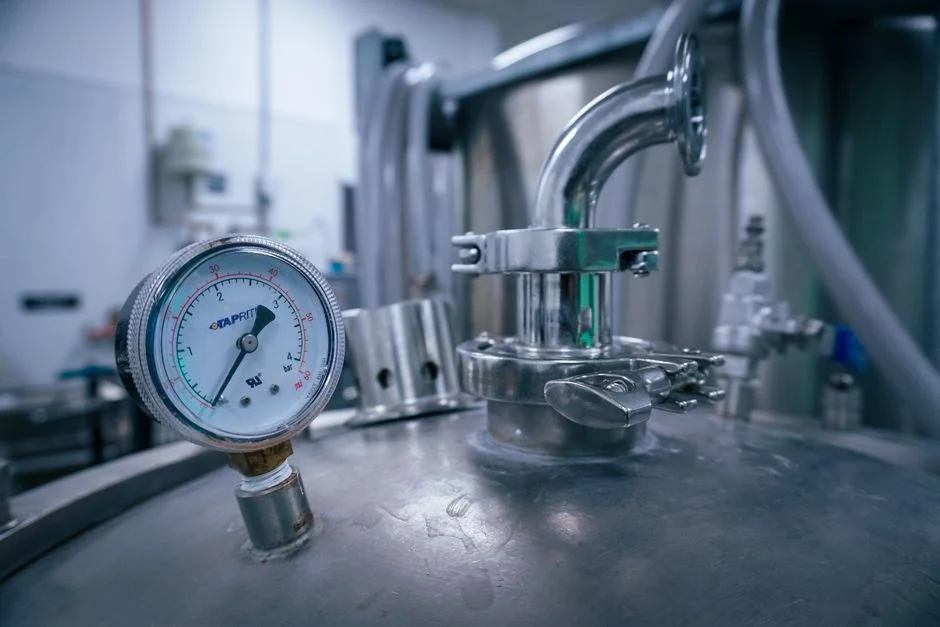
The defensible sequence is segregation and equalisation, physical filtration, UF where membrane protection is required, RO for dissolved-solids removal, post-treatment or blending, reuse, and managed residual concentrate. Each step should have a defined destination and failure response.
- Segregate and equalise: meter each continuous and episodic stream, prevent incompatible chemistry from mixing, and provide sufficient equalisation for membrane-feed variability.
- Remove suspended solids: use side-stream filtration where the cooling configuration supports it.
- Protect the membranes: install UF where feed data and membrane guarantees justify it.
- Remove dissolved solids: use RO when the reuse destination requires low-TDS permeate.
- Post-treat and reuse: neutralise or control residual chemicals as required, then blend or send the permeate to the designated application.
- Manage the concentrate: define the final disposal route before claiming water recovery.
Genesis Water Technologies (2026) uses side-stream filtration at 1–5% of circulation flow and self-cleaning spiral filters at 10–25 micron as the physical-separation reference. The appropriate duty must be checked against the actual cooling-loop arrangement and solids loading.
HydropureWater’s Maiduguri reference uses 0.01–0.1 micron PVDF UF, 10–30 psi operating pressure and 90–95% recovery. These are contextual benchmarks, not a Warri guarantee; feed temperature, turbidity, fouling potential and membrane compatibility must be verified. A supplier’s UF pretreatment for data-center blowdown should therefore be priced around site data and an agreed acceptance basis.
The same Maiduguri reference gives RO screening values of 150–400 psi, 50–85% recovery and 10–50 mg/L permeate TDS. HydropureWater also describes 95–99% dissolved-solids rejection for the duty. These figures frame the preliminary comparison; they do not replace a Warri feed analysis or membrane projection.
Antiscalant selection, recovery and cleaning strategy must respond to actual silica, hardness, calcium sulfate and seasonal variability. An automatic chemical-dosing system should be sized from the approved chemistry programme rather than copied from a generic blowdown design.
RO concentrate is a separate management problem. The industrial reverse osmosis system for blowdown recovery creates permeate, but it does not eliminate the concentrate; its volume, chemistry, transport and receiving route must be included in the permit and life-cycle assessment.
| Stage | Reference parameters | What the Warri buyer must verify |
|---|---|---|
| Side-stream filtration | 1–5% of circulation flow; 10–25 micron spiral filters — Genesis Water Technologies (2026) | Actual circulation rate, solids profile, backwash or cleaning waste |
| UF pretreatment | 0.01–0.1 micron PVDF; 10–30 psi; 90–95% recovery — HydropureWater Maiduguri reference | Warri feed temperature, turbidity, SDI, biological loading and membrane compatibility |
| RO | 150–400 psi; 50–85% recovery; 10–50 mg/L permeate TDS; 95–99% rejection — HydropureWater Maiduguri reference | Silica, hardness, calcium sulfate, temperature, scaling projection and cleaning frequency |
| Concentrate management | No single Warri value established | Quantity, chemistry, storage, transport, receiver and permit conditions |
Choose Between Diversion, Partial Reuse and Zero-Liquid-Discharge
Choose the treatment objective before comparing equipment quotations. Direct discharge, partial reuse, partial zero liquid discharge and full ZLD create different capital, operating, staffing and residual-disposal obligations.
IDE Technology (2026) reports that conventional brackish-water RO commonly plateaus around 75–80% recovery before scaling becomes difficult to manage. Increasing recovery then requires a different design, more equipment and greater process-control capability. A quoted recovery percentage is therefore incomplete unless the supplier states the feed chemistry, recovery basis and concentrate route on which it depends.
HydropureWater’s Maiduguri reference states that partial ZLD can reduce liquid waste by 80–90%. It cites full ZLD at $3–8 million capital expenditure and $5–15 per 1,000 US gallons operating cost. These are contextual benchmarks from a different Nigerian location, not Warri quotations or guarantees.
The decision also depends on source-water chemistry, discharge infrastructure, municipal treatment capacity, grid reliability, operator capability and the freshwater-reduction target. A site with no technically acceptable liquid-discharge route may need partial ZLD; a site with a permitted discharge route may obtain better lifecycle value from controlled partial reuse and managed brine.
IDE Technology’s high-recovery approach separates controlled salt precipitation from membrane recovery. Sparingly soluble salts are removed as dense solids, while the remaining brine is managed separately. That avoids relying indefinitely on membrane osmotic limits, but it creates a solid-waste stream rather than making the salts or water disappear.
For high-salinity RO concentrate, the MVR treatment for high-salinity RO concentrate reference is relevant to option screening, but no MVR or ZLD equipment should be selected without an energy, brine and solid-waste assessment for Warri.
| Objective | Water-recovery approach | Principal benefit | Principal residual risk | Key procurement check |
|---|---|---|---|---|
| Permitted direct discharge | Treatment sufficient for the stated outlet limit | Simplest route where the permit and receiving system allow it | Ongoing discharge volume and permit compliance | Require worst-case blend and peak-flow calculations |
| Partial blowdown-to-makeup reuse | Filtration, optional UF and RO, then blending | Reduces freshwater demand and permitted discharge | RO concentrate and membrane fouling | Guarantee permeate quality, recovery and cleaning basis |
| Partial ZLD | RO plus further concentration and managed residual brine | Reduces liquid waste while retaining some reuse | Concentrate transport and receiver dependence | Require a documented brine chain of custody |
| Full ZLD | Maximum recovery with evaporation and solids handling | Eliminates the liquid-discharge route if achieved | High energy demand, solid waste and complexity | Test the energy case under grid interruption |
Cost, Energy and Supply-Chain Risks in Warri
A Warri bid is comparable only when it states the complete treatment scope and the conditions behind every price and performance claim. Equipment cost alone can conceal the cost of pretreatment, chemicals, membranes, power, civil works and residual management.
HydropureWater’s Maiduguri references give $250,000–500,000 for a 50,000 GPD RO skid, $50,000–200,000 for side-stream filtration and $1.50–3.00 per 1,000 US gallons for cited RO operating cost. All three are non-Warri reference figures. The operating figure includes energy, chemicals, membrane replacement and maintenance in the cited Maiduguri context, but a Warri quotation still requires the site analysis, flow, power conditions and disposal route.
The buyer’s total-cost model should also include antiscalant, biocide and other chemicals; pretreatment; power; operator labour; civil works; sampling; membrane cleaning; brine transport; disposal; and the cost of alternative freshwater and discharge services. It should not assume that recovered permeate is automatically usable without accounting for blending, storage and chemistry control.
Open Engineering Inc (2026) found that the wastewater scenario had about twice the global-warming potential of the freshwater case, with treatment energy accounting for roughly 80% of the difference. Its UF-plus-RO wastewater energy exceeded five times the freshwater energy, while higher cycles of concentration reduced blowdown and chemical consumption. The engineering implication is specific: recovery reduces water demand, but the treatment energy and chemistry must be evaluated rather than omitted from the business case.
Warri-specific logistics should be explicit in the total-cost-of-ownership analysis: diesel generation, variable power quality, local spare-parts availability, membrane transport and chemical supply. No Warri tariff or diesel premium should be assumed without current site evidence.
The related wastewater-management engineering and operating-cost guide can support control and operating-cost review, but its figures should not be transferred to Warri without matching scope and date.
Specify, Test and Commission the Treatment Plant
The permit-compliant design starts with a measured site water balance, not a catalogue recovery rate. Before final equipment selection, require flow data for makeup, evaporation, blowdown, reuse, discharge, storage and emergency dumps under peak and minimum cooling loads. The balance should also identify how each episodic stream enters the permitted outlet.
Require at least seasonal testing of source water and blowdown for pH, conductivity, TDS, TSS, hardness, silica, residual oxidising biocide and temperature. The testing programme should establish the data used to select antiscalant, UF or RO, and the operating limits for scaling, fouling and biological growth.
Supplier submissions should include feed-water compatibility data, guaranteed permeate and concentrate quality, the recovery basis, controls philosophy, alarm response, membrane-cleaning intervals and documented references in comparable industrial duties. The RO and UF membrane and filter-element supply scope should identify membrane materials, replacement intervals and locally supportable spares.
Require a three-year membrane-replacement and consumables allowance, spare-parts list, installation boundary, commissioning acceptance tests and operator-training scope. Acceptance testing should challenge the controls and alarms rather than demonstrate only nominal permeate flow.
Finally, align the treatment train with the permitted outlet and approved chemical programme. Equipment cannot compensate for uncontrolled scaling, biological fouling, an incorrect discharge assumption or a brine route that has not been accepted by the relevant authority.
Frequently Asked Questions
What will cooling-tower blowdown treatment cost for a data center in Warri?
No defensible Warri price can be issued before the source-water analysis, peak flow, recovery target and residual-disposal route are known. HydropureWater’s 2026 Maiduguri references cite $250,000–500,000 for a 50,000 GPD RO skid, $50,000–200,000 for side-stream filtration and $1.50–3.00 per 1,000 US gallons for cited RO operating cost. These are contextual Maiduguri benchmarks, not quotations. A Warri bid should itemise equipment, pretreatment, dosing, civil works, power, membranes, chemicals, commissioning, operator training and brine handling.
How should treatment capacity be sized for a Warri data center?
Start with the measured cooling water balance. Blowdown flow follows makeup flow and cycles of concentration, but membrane capacity must also be checked against peak blowdown, required recovery, feed quality and operating redundancy. For example, the cited blowdown equation gives 25% of makeup at 4 cycles and 20% at 6 cycles; it does not establish the size of UF or RO by itself. Obtain peak and minimum flow data plus seasonal source-water testing before requesting a guaranteed-duty quotation.
How should a supplier be selected for data-center wastewater treatment?
Select against demonstrated feed compatibility, guaranteed permeate and concentrate quality, controls, membrane guarantees, service support and the residual-management plan—not the highest quoted recovery alone. Ask for references on comparable industrial duties, an operating philosophy, cleaning intervals, alarm response, a three-year consumables allowance and a complete installation boundary. The supplier must also identify who handles RO concentrate and any crystallization solids once they leave the treatment plant.
What permits and compliance checks are needed before commissioning in Warri?
An engineered reuse and discharge plan is not a permit. Before commissioning, obtain the applicable effluent-discharge authorisation and verify current requirements with the relevant Nigerian and Delta authorities, including the discharge destination and conditions for TDS, residual oxidant, temperature and other regulated parameters. The final equipment selection and commissioning protocol should match the approved outlet, chemical programme, flow assumptions and residual-waste route. Confirm all applicable requirements directly; no permit condition should be inferred from another Nigerian city’s framework.