
Why Abuja changes the data center water equation in 2026
Abuja sits in a guinea-savannah climate with annual rainfall of 1,400–1,600 mm, but the wet season is concentrated between May and October while the harmattan (November–March) drives long dry periods when Gurara and Jabi reservoir levels drop and borehole yield falls by an estimated 20–35% relative to wet-season baseline. A facility designed against a global template that assumes steady municipal supply will not survive this seasonal swing without storage and recovery. The pathogens documented at the University of Abuja Teaching Hospital in Gwagwalada — Pseudomonas aeruginosa, Klebsiella pneumoniae, Escherichia coli, Staphylococcus aureus, Staphylococcus epidermidis and Enterobacter species (Amos et al., 2024) — are the same organisms that colonise poorly controlled cooling loops, so a biocide program in Abuja cannot be designed against a generic Legionella-only assumption. Grid reliability in the FCT still forces most operators to run diesel or gas generators for 8–18 hours per day, and the jacket cooling and exhaust scrubbers on those gensets add a second, smaller wastewater stream to the treatment train that a UAE or Ireland reference design never had to absorb. The Federal Ministry of Environment (FMEnv) and NESREA regulate industrial effluent under the National Environmental (Effluent Limitation) Regulations 2009, and sectoral guidelines apply to power and ICT infrastructure — so discharge to a public drain without a permit is no longer a workable option for any operator who expects to renew their licence in 2026 and beyond.
What cooling blowdown actually looks like at an Abuja site
Cooling tower blowdown in Abuja is a brackish, chemically dosed stream that concentrates everything the cooling loop is trying to reject. Total dissolved solids (TDS) typically land between 1,200 and 6,000 mg/L depending on cycles of concentration and the makeup source — borehole-fed Abuja sites skew toward the upper end because Gurara/Jabi-derived groundwater hardness regularly runs 150–300 mg/L as CaCO₃ and seasonal concentration pushes the circulating water past 4 cycles. Silica, calcium and alkalinity scaling risk is amplified by high ambient wet-bulb temperatures of 28–31 °C during the dry season, which push operators toward 5–7 cycles of concentration to control evaporation loss and that is exactly the regime where silica breakthrough starts to govern recovery. Suspended solids of 10–50 mg/L, residual oxidising biocide (typically chlorine or bromine at 0.1–0.5 mg/L free residual), non-oxidising biocide rotation, corrosion inhibitors and phosphate-based scale inhibitors all accumulate in the blowdown stream. The blowdown volume at 4 cycles of concentration is roughly 25–30% of makeup; for the ~2 million-litre/day cooling demand of a 100 MW facility (per IDE 2026), that translates to 500,000–600,000 litres/day of treatable water per day — a stream large enough to justify a membrane recovery skid and too large to ignore from a permit standpoint.
| Parameter | Typical Abuja blowdown range | Driver / source |
|---|---|---|
| TDS | 1,200–6,000 mg/L | Cycles of concentration × makeup hardness |
| Hardness (as CaCO₃) | 600–2,000 mg/L | Gurara/Jabi groundwater 150–300 mg/L × cycles |
| Silica (SiO₂) | 40–180 mg/L | Silica tracks evaporation; spikes in harmattan |
| Suspended solids | 10–50 mg/L | Corrosion products, biofilm, airborne dust (harmattan) |
| Free residual oxidant | 0.1–0.5 mg/L Cl₂/Br₂ | Daily biocide program |
| pH | 7.5–8.8 | Alkalinity + alkaline scale inhibitor chemistry |
| Volume @ 4 cycles | 25–30% of makeup | ~500,000–600,000 L/day per 100 MW (IDE 2026) |
Treatment train: UF, RO, and where MVC fits
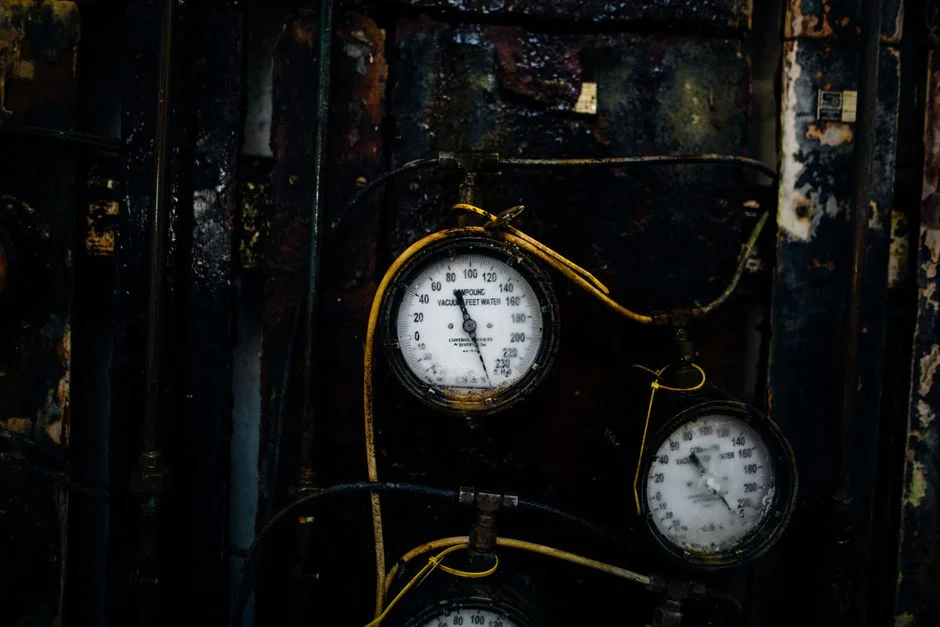
The treatment train is sized to take blowdown from the cooling loop and convert it back into usable makeup without ever letting silica, hardness or biological fouling set the recovery ceiling. Side-stream filtration is the first guard: a self-cleaning spiral or multimedia filter sized at 1–5% of circulation flow keeps suspended solids in the blowdown below the 10–15 micron feed requirement for the downstream membranes (per Genesis Water Technologies 2026, capital cost $50,000–$200,000 installed). The next stage is UF pretreatment ahead of RO using 0.01–0.1 micron PVDF hollow-fibre membranes, operating at 10–30 psi with 90–95% recovery and automatic backwash; chemical cleaning is required only every 1–3 months. Reverse osmosis then takes the bulk of the dissolved solids out, conservatively operated at 50–75% local recovery because Abuja feed silica and hardness force a more cautious design than the global 75–80% benchmark. Permeate at 10–50 mg/L TDS is suitable for blending back as cooling tower makeup, and the concentrate becomes the next problem to solve. Antiscalant dosing specifically formulated for high-silica tropical feed, paired with pH adjustment to 6.5–7.0, keeps RO recovery above 70% without accelerated membrane scaling. Mechanical vapour compression only enters the picture when the site is forced toward zero liquid discharge (ZLD); for a 10,000–30,000 GPD brine concentrator, capex sits at $1–3M and energy at 15–25 kWh per 1,000 gallons of distillate (per Genesis Water Technologies 2026). For an Abuja build in 2026, the most defensible architecture is UF + brackish-water RO with conservative local recovery, holding MVC as a Phase 3 trigger rather than a Day 1 commitment.
| Unit operation | Function | Operating window | Indicative capex |
|---|---|---|---|
| Side-stream filtration (spiral / multimedia) | Drop TSS to <10–15 µm | 1–5% of circulation flow | $50,000–$200,000 |
| Ultrafiltration (PVDF hollow fibre) | Bacteria, virus, colloidal removal | 10–30 psi, 90–95% recovery | Bundle of RO skid |
| Brackish water RO | Dissolved solids, silica, hardness | 150–400 psi, 50–75% local recovery | $250,000–$500,000 @ 50,000 GPD |
| Antiscalant + pH adjustment | Keep silica and CaCO₃ below saturation | 2–5 mg/L dose, pH 6.5–7.0 | $5,000–$15,000 dosing skid |
| Mechanical vapour compression (optional) | Brine concentration, distillate recovery | 95–98% brine recovery, 15–25 kWh/1,000 gal | $1–3M @ 10,000–30,000 GPD |
Comparing the three end-use strategies
The end-use choice drives capex, so the engineer has to pick the right one before specifying pumps and membranes. Cooling tower makeup reuse is the highest-value option, typically achieving 60–85% recovery and directly displacing fresh water — the path most Abuja hyperscalers should default to in 2026 because it shrinks both the borehole draw and the FMEnv permit surface. Non-potable on-site reuse (irrigation, equipment washdown, toilet flushing) accepts lower recovery but spreads the capital across more end uses — useful for an Abuja campus with significant landscaping and a desire to demonstrate corporate water stewardship. Discharge compliance only becomes the right choice when reuse is genuinely infeasible and discharge fees are bearable; the global benchmark of $5–15 per 1,000 gallons in water-stressed regions (per Genesis Water Technologies 2026) is a reasonable proxy for what Abuja municipal treatment will charge once FMEnv enforces stricter permits, so the opex math usually breaks against pure discharge. ZLD is technically possible — Genesis cites 95–99% overall water recovery and 20–30% dissolved solids in the final brine — but reserved for sites where groundwater protection zones, generator cooling constraints or a hyperscaler corporate mandate make any liquid discharge unacceptable.
| Strategy | Typical recovery | Best fit | Watch-out |
|---|---|---|---|
| Cooling tower makeup reuse | 60–85% | Hyperscale Abuja builds, default 2026 choice | Silica scaling above 70% local recovery |
| Non-potable on-site reuse | 40–70% | Campus sites with landscaping, washdown demand | Cross-connection control, plumbing segregation |
| Discharge compliance | n/a (volume reduced) | Remote sites with low permit scrutiny | Discharge fees $5–15/1,000 gal (Genesis 2026) |
| Zero liquid discharge | 95–99% | Groundwater protection zones, ZLD-mandated sites | $3–8M capex, $5–15/1,000 gal OPEX |
Capex, opex, and a phased build for Abuja economics
A 50,000 GPD RO skid sized for an Abuja 5–10 MW edge site lands at roughly $250,000–$500,000 installed, with OPEX of $1.50–$3.00 per 1,000 gallons including energy, antiscalant and membrane replacement (per Genesis Water Technologies 2026). Convert those dollar lines into local economics using a 2026 industrial tariff band of roughly ₦140–₦220/kWh, and the conclusion is that energy — at 60–70% of OPEX — is the single biggest driver of payback, so the naira-denominated electricity rate and generator-hours per month directly determine whether the project clears an internal hurdle rate. Full ZLD ($3–8M capex, $5–$15 per 1,000 gallons OPEX) is rarely justified on a first build, so the financially defensible posture is to defer MVC and crystallisation until FMEnv tightening or a second-phase expansion forces the issue. The pragmatic build order is: Phase 1 (months 0–6) side-stream filtration plus UF plus an antiscalant and biocide dosing skid to stabilise the loop and drop TSS; Phase 2 (months 12–18) the industrial RO system sized for Abuja blowdown recovery, commissioned once the first 6–12 months of operating data confirm silica and hardness baselines; Phase 3 (only on trigger) MVC and crystallisation. For a parallel ZLD cost reference, the MVR evaporator OPEX and ROI guide provides a usable benchmark.
| Build phase | Scope | Indicative capex (USD) | Indicative OPEX (USD/1,000 gal) | Indicative OPEX (₦/m³ at ₦180/kWh) |
|---|---|---|---|---|
| Phase 1 (0–6 mo) | Side-stream filtration + UF + chemical program | $80,000–$200,000 | $0.30–$0.80 | ₦45,000–₦120,000 |
| Phase 2 (12–18 mo) | 50,000 GPD RO skid + post-neutralisation | $250,000–$500,000 | $1.50–$3.00 | ₦225,000–₦450,000 |
| Phase 3 (triggered) | MVC brine concentrator + crystalliser | $1,000,000–$3,000,000 | $5.00–$15.00 | ₦750,000–₦2,250,000 |
| Full ZLD (if mandated) | RO + MVC + crystalliser, integrated | $3,000,000–$8,000,000 | $5.00–$15.00 | ₦750,000–₦2,250,000 |
Meeting FMEnv and NESREA discharge requirements
The FMEnv National Environmental (Effluent Limitation) Regulations 2009 set parameter limits for pH, total suspended solids, BOD, COD, total residual chlorine, heavy metals and oil & grease, and the project design must demonstrate margin to those limits at peak flow rather than just hitting them on the average day. Blowdown discharge to a public drain in the FCT requires an effluent discharge permit, and the permit conditions for ICT and power infrastructure typically include TDS, residual oxidant and temperature limits that an RO plus post-neutralisation train can meet comfortably without exotic polishing. The regulatory arithmetic is straightforward: the more blowdown that is converted to cooling tower makeup, the smaller the volume that has to be permitted, the lower the sampling burden, and the easier the renewal cycle — which is why a reuse-first design is also a compliance-first design. A comparable GCC industrial discharge compliance blueprint is available in the Oman guide for cross-reference.
Frequently Asked Questions
How much cooling water does a 1 MW data center in Abuja need per day?
For an Abuja 1 MW facility using evaporative cooling at typical PUE 1.3–1.5 and ambient wet-bulb 28–31 °C, expect roughly 8,000–20,000 litres/day of makeup and 2,000–6,000 litres/day of blowdown at 4 cycles, scaling linearly with IT load.
Is reverse osmosis alone enough, or is mechanical vapour compression mandatory?
RO alone is sufficient for the dominant Abuja design case where 50–75% local recovery is reused as cooling tower makeup; MVC becomes mandatory only when ZLD is required, the site sits inside a groundwater protection zone, or generator cooling constraints force a zero-discharge posture.
What is the realistic capex in naira for a 50,000 GPD blowdown RO system?
At $250,000–$500,000 installed (per Genesis Water Technologies 2026) and a 2026 exchange band of roughly ₦1,500–₦1,800/$, the naira capex lands between ₦375M and ₦900M, with OPEX of $1.50–$3.00 per 1,000 gallons dominated by energy at ₦140–₦220/kWh.
Can cooling tower blowdown be discharged to the Abuja municipal sewer without treatment?
No — FMEnv requires an effluent discharge permit for any industrial stream entering a public drain, and the permit conditions typically include TDS, residual chlorine and temperature limits that untreated 1,200–6,000 mg/L blowdown will not meet, so RO or equivalent polishing is required before any sewer discharge.
Which permits apply first for a new Abuja data center wastewater system?
Operators should secure an FMEnv effluent discharge permit (or demonstrate zero discharge via reuse) and a NESREA compliance certificate before commissioning; site-specific water abstraction registration with the FCT Water Board and a generator-stack emissions permit run in parallel and are usually required before the facility is energised.