What Changes When SMIC Acquires an Indian Plant?
Wastewater requirements for an SMIC plant acquisition in India depend on the acquired plant’s existing consents, wastewater streams, discharge destinations and proposed operating changes—not the buyer’s identity alone. The transaction team must map each stream to direct discharge, an authorised industrial sewer connection or an approved reuse route, then confirm with the Central and state authorities whether existing consents remain valid or require transfer, amendment or a fresh application. It must also verify pretreatment limits, monitoring, financial assurance, closure obligations and treatment-capital exposure before closing. India-specific limits, flows and treatment costs cannot be inferred from the Gujarat reference project or from SMIC’s status as a semiconductor manufacturer.
The controlling test is document-specific: has the owner, operator, responsible person, permitted flow, discharge point, production configuration or another consent fact changed? A change may affect whether an existing authorisation remains available, but the supplied research does not establish an automatic new-consent or automatic transfer rule for every SMIC plant acquisition in India.
Keep three questions separate throughout diligence:
- Authority approval: What must the Central Pollution Control Board, the relevant state pollution control board, sewer authority or another authority approve?
- Treatment and monitoring: What treatment, monitoring, reporting and capital works are required for the verified discharge route?
- Commercial allocation: Which party bears pre-closing violations, remediation, capital expenditure, surcharges, monitoring and closure costs?
The second question is regulatory and technical. The third belongs in the purchase agreement, escrow, indemnity, holdback or seller covenant. Further SMIC acquisition wastewater due diligence provides a transaction-oriented review sequence, but the Indian plant’s own records must control.
The Indiana wastewater-operator source concerns professional certification under Indiana rules, not an Indian industrial acquisition. The 404 academic result provides no usable acquisition evidence. Neither source supports a conclusion about Indian consent transfer, treatment requirements or closing risk. For a Hungary example, see the comparison of SMIC acquisition requirements outside India.
Build the India Wastewater Consent Map
An Indian plant’s wastewater risk cannot be established without the complete consent and connection file from every authority controlling the destination of each stream. Request the full record from the Central Pollution Control Board and the relevant state pollution control board, then reconcile it against the site’s physical drains, outfalls and sewer connections.
The file should identify the consent category, named holder and responsible person, validity status, conditions, permitted outlets, monitoring points, compliance history, pending correspondence, capital commitments and financial assurance. Add state groundwater-control records, water-abstraction approvals, hazardous-waste documentation, stormwater instruments and trade-effluent records wherever those routes are used. Obtain every municipal or industrial sewer agreement, industrial-user approval, local pretreatment limit, surcharge rule, connection approval, reserved-capacity position and monitoring condition.
Then request the operating record: sampling reports, chain-of-custody documents, flow data, calibration records, production-change history, deviation reports, enforcement notices, vendor contracts, closure estimates and site plans. These records expose whether the legal discharge route matches actual plant practice.
| Evidence file | Questions to resolve before closing | Transaction consequence |
|---|---|---|
| Central Pollution Control Board and state pollution control board file | Who is the authorised party, what are the consent conditions, and does ownership or operation change the authorisation? | Define the required authority action and whether it is a signing or closing condition. |
| Groundwater, water-abstraction, hazardous-waste and stormwater records | Do these instruments cover the site, current activities and proposed operating changes? | Identify site-specific permits, capital works and post-closing compliance obligations. |
| Industrial sewer or trade-effluent documentation | Is each non-domestic connection authorised, and are local limits, monitoring and surcharges enforceable? | Separate connection feasibility from legal permission to discharge. |
| Operating and compliance records | Do flow, chemistry and destination data represent the acquired production configuration? | Establish the treatment design basis, compliance history and remediation exposure. |
| Closure, financial-assurance and enforcement records | What obligations remain open, and has any regulator raised a concern? | Allocate funding through price, escrow, indemnity or seller covenant. |
Do not treat a filing receipt, physical sewer connection or generic semiconductor description as proof that post-closing compliance is secured. The related semiconductor acquisition consent review reinforces the need to verify status with the issuing authority rather than infer it from an application.
Map Every Wastewater Stream Before Selecting Equipment
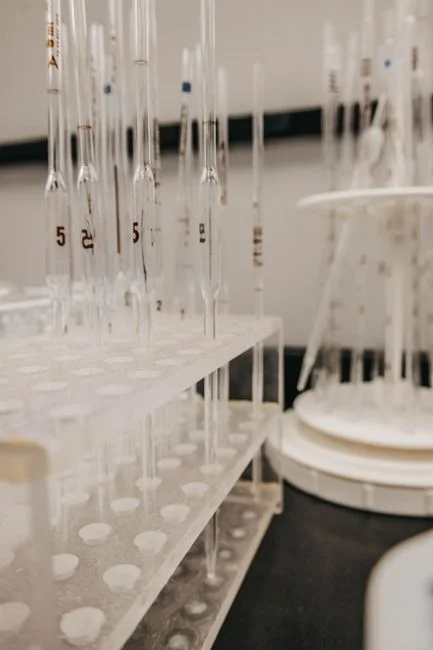
Wastewater treatment plant due diligence should begin with a measured inventory of stream origins, destinations and variability—not with a preferred treatment machine. A candidate inventory should cover process rinse and wash water, equipment-cleaning wastewater, laboratory drains, cooling-tower blowdown, non-contact cooling water, once-through cooling water, domestic sewage and stormwater.
For each stream, record its production origin, segregation, flow variability, chemistry, sampling method, current destination and required treatment route. Determine whether the stream can remain separate, must be combined or can be recovered in-plant. Use recent, site-specific data that represents the acquired production configuration. Historical results may be unsuitable if chemistry, flows, controls or operating practices have changed.
| Stream category | Minimum site evidence | Decision output |
|---|---|---|
| Process rinse and wash water | Source-by-source sampling, flow records, chemical-use history and segregation map | Separate or combined treatment and applicable destination controls. |
| Equipment-cleaning wastewater | Cleaning chemistry, batch frequency, concentration data and discharge route | Equalisation, solids or oil removal requirements and collection controls. |
| Laboratory drains | Drain segregation, analytical results and hazardous-waste interface | Permitted outlet and any separate treatment or waste controls. |
| Cooling-tower blowdown | Blowdown flow, cycles, chemistry and existing reuse or discharge arrangement | Recovery objective, pretreatment and reject-management route. |
| Non-contact and once-through cooling water | Flow allocation, sampling points, treatment status and destination | Whether the stream is within the consent and monitoring boundary. |
| Domestic sewage and stormwater | Drainage plan, contamination assessment and sewer or outfall mapping | Separate legal route; no assumption that combined treatment cures a discharge issue. |
BW Water’s 2026 Gujarat semiconductor-fab reference reports a treatment and reclaim system handling flow rates exceeding 1,600 cubic metres per hour. That figure is a recent market reference for that project, not the expected flow, required capacity or legal benchmark for the acquired facility. It provides no contaminant concentrations or permit limits for the target plant.
Do not infer either flow or chemistry from semiconductor manufacturing, the Gujarat project or SMIC’s identity. The India cooling-blowdown review offers a useful separation of stream and destination, but only acquired-site evidence can establish the design basis.
Choose the Correct Discharge or Reuse Route
Each stream must remain assigned to one legally verified pathway: direct discharge, indirect discharge through an industrial sewer, or a specifically approved reuse arrangement. The availability of a reuse option does not establish compliance for a stream that remains subject to direct-discharge or sewer controls.
| Route | Authority evidence to obtain | Technical obligations to verify | Closing risk |
|---|---|---|---|
| Direct discharge | Consent, amendments, outfalls, receiving environment, groundwater provisions, monitoring records and written authority position | Pretreatment, compliant monitoring, flow control and required capital works | Invalid or conditioned consent, exceedance history and unfunded capital obligations |
| Industrial sewer | Industrial-user agreement, local pretreatment limits, connection approval, monitoring duties, surcharge rules and reserved-capacity confirmation | Stream-by-stream pretreatment and controls required before the sewer connection | Physical connection without authorisation, capacity constraints and variable treatment cost |
| Reuse | Source, intended end use, treatment basis, risk assessment, alternative primary disposal method, location and authority approval | Verified recovery train, storage, distribution, monitoring and rejection or residual handling | Reuse is unavailable or cannot support the proposed production change |
For direct discharge, verify the receiving environment, authorised outfalls, consent conditions, monitoring duties, groundwater provisions, compliance history and required capital works. Ask the issuing authority in writing whether the consent remains valid after the proposed change in owner or operator and whether transfer, amendment or a fresh application is required.
For indirect discharge, confirm authorisation separately for every relevant stream under the industrial-user agreement. Confirm local limits, pretreatment controls, monitoring, surcharge triggers, connection conditions and receiving capacity. A pipe connected to a sewer is not evidence that the stream may lawfully enter it.
For reuse, establish the source, end use, treatment basis, risk assessment, alternative primary disposal method and physical location before assuming on-site recovery is approvable. Request a written authority position where ownership, operator, flow, source, end use or production changes create material uncertainty. The site-specific permit and closure risk framework illustrates this route-first method, while its US authority references must not be imported into India.
Match Treatment Technology to Verified Risk
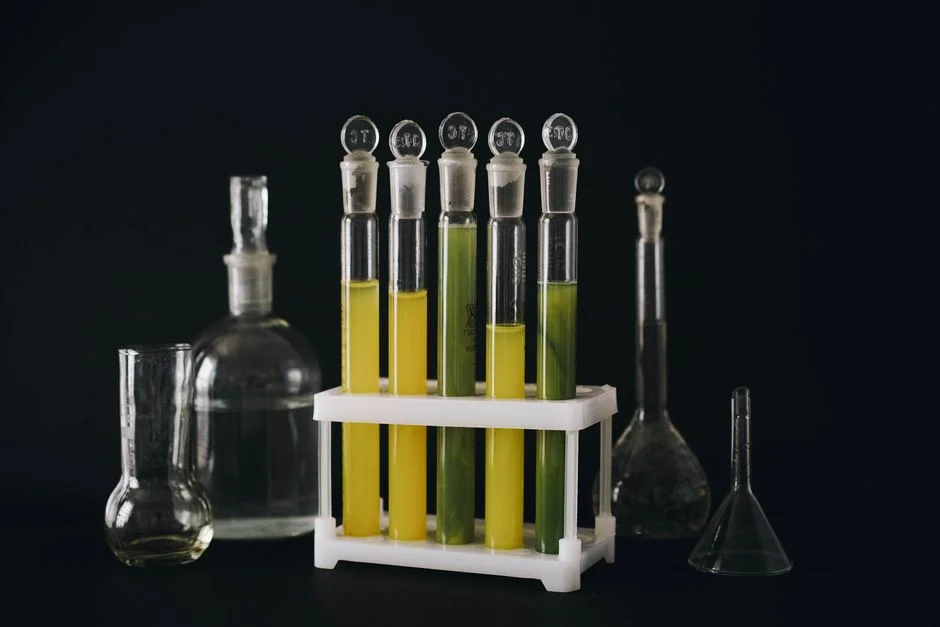
Treatment technology should be selected only after the legal route, consent or sewer limits, design flow, contaminant profile, monitoring duty, recovery objective and expansion assumptions are documented. No technology cures an unresolved discharge authorisation.
| Candidate technology | Potential treatment objective | Evidence required before selection | Limitation |
|---|---|---|---|
| DAF | Removal of removable suspended solids, oil and grease, FOG or colloidal matter | Stream-specific analytical results, flow data, settleability evidence and governing outlet limits | Does not establish discharge permission or remove all dissolved contaminants. |
| MBR | Biological treatment, membrane separation and a low-turbidity reuse objective | Biodegradability, feed chemistry, treatment objectives, monitoring and reject assessment | Does not replace direct-discharge, sewer or reuse controls. |
| Industrial RO | Dissolved-contaminant removal and water recovery | Feed chemistry, recovery target, pretreatment basis and reject-disposal route | Sizing is indefensible without feed-water data and a valid destination for the reject. |
A DAF system for solids, oil and FOG removal is a candidate where the acquired plant’s data demonstrates the relevant removable contaminants. An MBR system for low-turbidity reuse is a candidate only when biological performance, membrane suitability and the recovery objective support that route. Industrial RO can provide membrane polishing where dissolved contaminants and water recovery justify it, but feed chemistry, recovery, pretreatment and reject management must be established first.
Require every supplier proposal to identify the governing consent or sewer limit, design basis, analytical evidence, treatment train, monitoring, redundancy, capital scope, assumptions and buyer-side approvals. Use the electronics wastewater supplier selection guide to test whether the proposal is route-specific rather than a catalogue package.
Resolve Closing Conditions and Cost Exposure
A closing risk register should connect each consent, sewer agreement and operating obligation to evidence, authority action, treatment or monitoring duty, capital exposure and negotiated liability. “Permit transfer risk” is too broad to support an investment decision.
| Risk item | Required action | Possible allocation mechanism | Decision required |
|---|---|---|---|
| Consent validity or approval | Obtain the authority’s file and written position; establish the required sequence | Condition precedent, seller covenant, special indemnity or closing holdback | Must approval occur before signing, before closing or may it follow closing? |
| Pre-closing violations and remediation | Review notices, monitoring deviations, sampling records and contamination evidence | Specific indemnity, escrow, price reduction or seller-funded remediation | Which historic breaches transfer to the buyer? |
| Treatment and monitoring capital | Connect the required works to the verified stream, route and authority condition | Purchase-price adjustment, capex contribution, seller obligation or buyer assumption | Is the obligation already required, newly triggered or uncertain? |
| Sewer surcharges and capacity | Obtain tariff rules, surcharge triggers, reserved capacity and connection obligations | Closing adjustment, seller covenant or post-closing reimbursement | What exposure follows the proposed production change? |
| Closure and financial assurance | Review closure estimates, instruments and outstanding correspondence | Escrow, holdback, assumption or indemnity | Who funds the obligation and when? |
| Delayed, conditioned or refused approval | Define fallback operations, delayed-closing mechanics and price protection | Condition precedent, walk-away right, holdback or seller obligation | What happens if the authority does not approve the planned route? |
Do not use unrelated US or Texas cost figures, or the Gujarat flow reference, to estimate the Indian project’s price or capital requirement. The supplied research contains no defensible India SMIC acquisition cost basis, site flow profile or effluent-limit schedule.
Scope the budget only after stream characterisation, route selection, treatment objectives, site-capacity review and consultation with the relevant authorities. Keep regulatory approval, treatment capital and transaction liability separate until counsel and the parties assign each one. The industrial ETP and DAF decision guide can structure equipment evaluation, but it cannot supply missing Indian project data.
Frequently Asked Questions
Does an SMIC plant acquisition in India automatically require a new Central Pollution Control Board consent or state pollution control board consent?
No automatic rule is established by the supplied research. Review the existing consent, named holder, responsible party, production configuration, flow, discharge points and proposed owner or operator changes with the relevant authorities, and obtain a written position on continuation, transfer, amendment or a fresh application.
Can the Gujarat project flow be used to price treatment for the acquired plant?
No. BW Water’s 2026 Gujarat reference reports flows exceeding 1,600 cubic metres per hour for that semiconductor-fab project. It does not establish the acquired plant’s flow, chemistry, legal limits or capital cost. Request site-specific flow and analytical data, verify the discharge route and obtain scoped proposals against that evidence.
What should a wastewater-equipment supplier provide before a system is selected or priced?
Require the governing consent or sewer limit, design-flow evidence, analytical dataset, treatment train, monitoring, redundancy, capital scope, reject-management plan, assumptions and unresolved regulatory approvals. If those items are absent, the proposal is a conceptual quotation rather than a defensible equipment selection.
How should regulatory approval, treatment capital and transaction liability be separated in the acquisition agreement?
The regulator determines what the site may lawfully do. The purchase agreement should separately allocate pre-closing violations, remediation, capital works, monitoring, surcharges, financial assurance and closure funding through conditions, covenants, indemnities, escrow or holdback. A broader India wastewater treatment planning review can help structure technical inputs, but it does not allocate legal liability.