What Campus Wastewater Changes About Screw Press Design
Size a screw press for university campus wastewater design around peak sludge drawdown, not average daily sludge production. Campus flows vary with occupancy, laboratory and teaching schedules, dining operations, and collection practices, so the basis must include actual and future peak flows, solids concentration, polymer demand, operating hours, footprint, and required cake dryness for the selected disposal route. A screw press can suit decentralized campus plants because it supports enclosed, quiet, largely unattended operation, but conditioning, pretreatment, redundancy, and downstream solids handling remain critical.
The design must distinguish a campus wastewater treatment plant that produces sludge for on-site dewatering from a residence or laboratory building that merely sends wastewater to a municipal sewer. The former has to define a solids-handling train, operator interface, utilities demand, and approved outlet. The latter usually has no on-site biosolids dewatering duty.
Average daily flow is not a defensible press size. Water & Wastewater reports that municipal plants commonly draw sludge from secondary clarifiers over a 4–8 hour daily window, with instantaneous rates reaching 3–6 times the 24-hour average. A university designer must establish whether the press will run continuously, during scheduled drawdown periods, or in a duty/standby configuration.
Academic calendars, dormitory occupancy, weekend reductions, food-service loads, decentralized collection, laboratory discharges, and final disposal route all belong in the design basis. That makes the underground integrated sewage-treatment layout relevant only where the proposed installation must fit a constrained campus site or treat flow close to its source.
Decide Whether a Screw Press Fits the Campus Treatment Train
A screw press should be selected when its operating profile, footprint, and cake characteristics align with the campus’s available staff, space, and disposal plan. In a typical configuration, conditioned sludge is pumped into a cylindrical filter basket. A slow-rotating auger progressively reduces the basket’s available volume, forcing water through the screen and moving thickened sludge toward a pneumatically adjustable discharge cone.
The campus attraction is enclosed dewatering, low-speed operation, low noise, and potential for timer-controlled or unattended service. The trade-off is cake dryness. HUBER reports typical dry-solids results of 18–25% for its Q-PRESS. Water & Wastewater gives a wider industry comparison of 15–22% total solids for screw presses treating activated sludge against 20–28% for high-speed centrifuges.
If the disposal route rewards maximum dryness, a centrifuge may merit comparison. If quiet operation, compact installation, lower energy demand, and simpler maintenance are more important, a screw press may be more suitable. A plate-and-frame filter press alternative should be evaluated when batch operation and labor-intensive cake discharge fit the campus operating model; additional thickening should be considered when the objective is to reduce upstream volume, not to produce press cake.
| Criterion | Screw press | High-speed centrifuge | Campus decision point |
|---|---|---|---|
| Cake solids | 15–22% TS for activated sludge; HUBER reports 18–25% DS for Q-PRESS | 20–28% TS for activated sludge | Confirm the required dryness with the sewer authority, hauler, composter, or other receiving route |
| Energy use | 0.5–2.0 kWh per tonne dry solids | 30–80 kWh per tonne dry solids | Compare local electricity prices and available operating hours |
| Operating profile | Slow rotation; suited to unattended or timer-controlled operation | Continuous, high-speed operation | Match the equipment to drawdown windows and staff coverage |
| Physical arrangement | Enclosed and compact | Requires a more specialized high-speed installation | Check building area, access, foundations, drainage, and maintenance clearances |
| Main caution | Lower cake dryness and screen wear on abrasive sludge | Energy demand, vibration, noise, and major overhaul exposure | Base selection on actual sludge, local utilities, and whole-life costs |
Planning values are industry guidance from Water & Wastewater and HUBER, not guaranteed campus-project results.
Build the Design Basis from Actual Campus Sludge
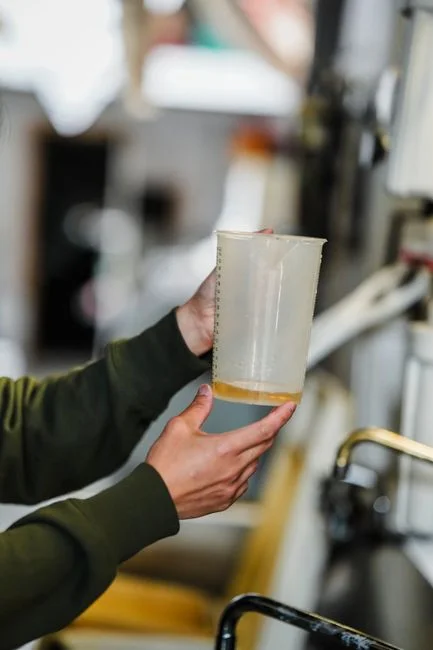
A defensible campus design starts with representative sludge rather than a generic solids assumption. The dataset should include solids concentration, solids capture performance, pH, fiber content, grit, temperature where relevant, and variation through the academic calendar. If the upstream process includes digestion, the anaerobic digester process and sludge characteristics affect conditioning and cake behavior; if the plant uses membrane bioreactors, the MBR wastewater treatment process also changes the solids and return-flow basis.
Use a mass balance. Reconcile average sludge production, the selected 4–8 hour drawdown window, peak instantaneous flow of 3–6 times average reported by Water & Wastewater, upstream thickening performance, return flows, and future campus growth. The quantity reaching the press must be the conditioned feed after preparation—not simply the total solids calculated from plant records.
Specify pretreatment according to observed debris and grit. A campus collection system can introduce plastics, ropes, fibrous material, and other objects, but the research does not support requiring one particular device for every installation. Where a risk exists, evaluate a mechanical screening solution such as the rotary mechanical bar screen against the actual collection system and maintenance access.
Actual-sludge bench testing should establish polymer type, dose, mixing, and acceptable screen-basket opening. Generic literature cannot reliably predict the optimum for campus sludge. Water & Wastewater gives 3–8 kg polymer per tonne of dry solids as an activated-sludge planning reference, not a guaranteed dose. The automatic chemical dosing system must then be sized and controlled against the verified program.
| Design input | Information required | Why it matters |
|---|---|---|
| Representative sludge | Solids concentration, capture performance, pH, fibers, grit, temperature, and calendar variability | Defines conditioning needs, feed behavior, wear risk, and achievable cake quality |
| Drawdown profile | Average sludge production, 4–8 hour drawdown window, and peak rate of 3–6 times average | Prevents average-flow sizing from overloading the press during a campaign |
| Upstream performance | Thickening or other preparation, unit reliability, and filtrate return | Establishes the actual conditioned feed and downstream hydraulic impact |
| Polymer program | Bench-tested product, dose, mixing, and operating range | Controls cake dryness, filtrate quality, and operating cost |
| Debris protection | Observed grit, plastics, ropes, and fibers; available upstream screening | Supports a project-specific pretreatment decision |
Size the Press for Peak Drawdown and Product Goals
Size the press against the required feed rate during both the normal drawdown period and the selected peak campaign, then determine whether one machine or a duty/standby arrangement provides acceptable resilience. The essential checks are conditioned-sludge feed rate, dry-solids loading, operating hours, future growth, polymer mixing capacity, filtrate-return impact, and cake-discharge frequency.
The selected capacity must remain compatible with the building and the schedule. Water & Wastewater gives typical screw-press dimensions of 1.5–4 m long and 0.5–1.5 m in diameter for units treating 5–50 m³/hour. These are footprint references, not universal sizing rules. Confirm the vendor’s feed basis, solids loading, motor duty, and installed clearances. A lamella clarifier or other upstream process change should be evaluated through its effect on feed, return flow, and loading rather than selected from nominal flow alone; a high-efficiency sedimentation tank is therefore an upstream design reference, not a substitute for the press mass balance.
Confirm dryness against the actual destination: sewer discharge, permitted land application, composting, landfill, incineration, or another approved route. A lower-solids cake can incur higher transport and disposal costs, while a higher-solids target can require more polymer or a different technology.
HUBER reports that pump feeding removes large volumes of sludge water in the pre-dewatering zone and can treat sludge below 1% solids without prior thickening. That is a manufacturer-specific capability that must be verified against the campus feed and selected configuration. Also test startup and shutdown performance. HUBER states that its press retains dewatering and filtrate performance during those phases, which is relevant to short, scheduled campus campaigns.
| Sizing check | Required question | Decision output |
|---|---|---|
| Hydraulic loading | What feed rate occurs during the normal drawdown and peak campaign? | Selected machine capacity and operating schedule |
| Dry-solids loading | What dry-solids mass must be processed per hour? | Verified capacity on the vendor’s solids basis |
| Resilience | What happens if the press or its drive is unavailable? | Single-machine, duty/standby, or contingency decision |
| Product route | What cake dryness does the receiving route require? | Acceptance criterion and fallback route |
| Startup and shutdown | Does performance remain stable during a short campaign? | Specified operating modes and hold-up behavior |
Specify Controls, Utilities, Access, and Redundancy
Specify monitoring and control of feed rate, flocculant dosing and mixing, screw speed, sludge-feed pressure, pneumatic discharge-cone counterpressure, and drive load. HUBER’s control-loop precedent permanently monitors process-relevant parameters and automatically adjusts them to keep its Q-PRESS within its optimum operating range with minimal operator intervention.
The installation should be designed as an operating system, not as a machine in a vacant bay. Resolve electrical supply, compressed air, filtrate drainage, polymer preparation, chemical storage, washwater, odor control, and cake collection before equipment release. Where odor or containment is important, an enclosed arrangement supports campus siting, but ventilation and access must be engineered with the equipment.
Provide safe access to the screw press filter basket, screw, drive, and discharge area. HUBER offers axially divided filter baskets for which only the upper half is removed during maintenance, with the lower half remaining in the filtrate chamber; this is a useful access precedent, not a mandatory campus configuration. Removable or split components should be evaluated against maintenance time, lifting requirements, and available staff.
Redundancy depends on the consequence of missing a drawdown campaign, maintenance access, and staffing. The research does not support a universal duty/standby rule. Request a failure-mode review covering power loss, polymer interruption, drive overload, washwater availability, and downstream cake handling.
Noise and speed also affect location selection. HUBER reports its Q-PRESS below 70 dB(A) and below 1 rpm, while also stating that noise protection is unnecessary for screw presses in its application. These are manufacturer benchmarks rather than guaranteed project values; require the vendor to document the proposed machine’s conditions. The associated dewatering valves and filter-media components should be selected for the actual installation rather than added after the main equipment is fixed.
Commission for Variable Campus Operating Conditions
Commissioning should separate equipment faults from feed-conditioning faults. Before introducing sludge, verify screen-basket integrity, screw-flight clearances, discharge-cone operation, and filtrate drainage under the manufacturer’s specified ambient conditions. These checks follow the commissioning sequence described by Water & Wastewater.
Confirm the polymer program through bench-scale testing with actual campus sludge before the full commissioning campaign. The same source states that generic literature cannot reliably predict the optimum polymer type or dose, and that commissioning with an unoptimized program can produce poor cake dryness that is wrongly attributed to the press. Verify the configured automatic chemical dosing system against that bench-tested program before connecting it to the full duty cycle.
Use the supplied commissioning benchmark: begin at 50% of design hydraulic loading and ramp to 100% over 2–4 days. During that ramp, record filtrate clarity, cake moisture, and screen differential pressure. Define acceptance indicators and operating limits for feed rate, polymer dose, screw speed, drive load, filtrate return, cake solids, and downtime.
Training should cover normal startup and shutdown, semester drawdown, weekend operation, emergency hold-up, polymer preparation, basket inspection, and fault response. Assign maintenance responsibilities, identify critical spares, and retain records that distinguish temporary process adjustment from a genuine equipment defect.
For a campus, the commissioning plan should also identify how partially filled equipment will be managed during holidays and academic breaks, how cake will be stored without creating an odor or access problem, and what happens if the receiving route is unavailable. Those operating scenarios determine whether timer-based automation is sufficient or whether a more attended campaign is required.
Compare Lifetime Value Before Awarding the Equipment Order

Compare the screw press with alternative dewatering equipment on site-specific capital cost, polymer consumption, electricity, labor, washwater, maintenance, screen and screw wear, cake transport, and final-disposal cost. Water & Wastewater gives screw-press energy use of 0.5–2.0 kWh per tonne dry solids against 30–80 kWh per tonne for centrifuges. These are comparative planning values, not guaranteed bids, and they exclude the site’s actual tariff, duty profile, and equipment efficiency.
Polymer can dominate the comparison. The same source reports that it typically represents 50–65% of screw-press variable O&M cost, so a lower purchase price does not establish the lower lifetime cost if the selected system uses more polymer. Require a dose and mixing guarantee based on actual campus sludge.
Maintenance exposure also differs. Water & Wastewater identifies screen-basket replacement every 3–7 years, depending on sludge abrasivity, and screw-flight wear over 5–10 years in municipal sludge service. These horizons must be adjusted using observed campus grit, fibers, solids loading, and operating hours. Vendor quotations should state what wear condition, service life, and replacement scope each figure covers.
The BDP Suffern installation is a useful example, not a transferable guarantee: BDP reports 23–30% discharge cake solids and 200% increased throughput with pre-thickeners. Request the equivalent project-specific evidence through the sludge dewatering equipment cost and supplier decision framework.
| Cost category | Information to obtain | Procurement requirement |
|---|---|---|
| Capital equipment | Machine, polymer equipment, screens, cake handling, controls, installation, and utilities | Use a common feed basis and scope boundary |
| Polymer | Bench-tested dose, product cost, mix-water demand, and expected operating range | State dosage assumptions and test conditions |
| Energy and labor | Connected load, duty hours, campaign staffing, and cleaning requirements | Price continuous and scheduled operation separately |
| Maintenance | Screen and screw life, spare-parts list, support terms, and major-overhaul scope | Define service assumptions and exclusions |
| Cake and disposal | Cake moisture, transport method, receiving charges, and permitted route | Include destination cost sensitivity in the comparison |
Require each bidder to state performance boundaries, feed basis, guarantee conditions, test protocol, exclusions, commissioning obligations, controls scope, and site-specific acceptance criteria. A generic dry-solids percentage without feed solids, polymer dose, operating hours, and test duration is not a comparable offer.
Frequently Asked Questions
What is the correct sizing basis for a screw press at a university wastewater treatment plant?
Size around peak sludge drawdown, not average daily production. Water & Wastewater reports municipal drawdown over 4–8 hours and instantaneous rates of 3–6 times the 24-hour average. The equipment selection must also reconcile conditioned-feed rate, dry-solids loading, available operating hours, upstream performance, filtrate return, future growth, and the required cake dryness. Request guarantees on the same feed and operating basis.
What drives the cost of a screw press installation?
The principal comparison categories are capital equipment, polymer, electricity, labor, washwater, preventive maintenance, screen and screw wear, cake handling, transport, and final disposal. Water & Wastewater reports polymer at 50–65% of variable O&M cost and gives screw-press energy use of 0.5–2.0 kWh per tonne dry solids. Ask bidders to price the verified polymer program, actual duty schedule, maintenance horizon, and receiving-route cost; do not accept a price without its feed and operating assumptions.
How should a buyer select a screw-press supplier?
Require a site-specific performance basis, guarantee boundaries, feed definition, polymer assumptions, controls scope, commissioning plan, test protocol, exclusions, and maintenance support. The commissioning evidence should include the 50% startup loading and 2–4 day ramp described by Water & Wastewater. Also ask how the supplier will support training, spares, fault diagnosis, and future changes in campus sludge characteristics.
What compliance risk follows from choosing the wrong cake destination?
The project must verify the selected sewer-discharge, land-application, composting, landfill, incineration, or other approved route with the receiving authority, and obtain the applicable local permit or sewer requirements. Cake dryness alone does not establish compliance. The supplied research provides no universal campus limit, so the designer should request the receiving authority’s current solids, consistency, contaminant, sampling, and transport conditions before specifying the required cake quality.