
What Happens Inside an Anaerobic Digester
An anaerobic digester breaks down organic matter in a sealed, oxygen-free tank through four microbial stages — hydrolysis, acidogenesis, acetogenesis and methanogenesis — producing biogas (40–70% methane) and stabilised digestate. At mesophilic temperatures of 37–38°C, pH near 7.0 and hydraulic retention times of 18–22 days, industrial digesters routinely achieve 85% or higher COD removal and biogas yields of 20–148 mL per gram of total dissolved solids, depending on feedstock strength.
The digester itself is a sealed, continuously or batch-fed vessel with three engineered features that make the biology work: a mixing system (mechanical impeller, gas recirculation, or hydraulic shear), a heating jacket or internal heat exchanger to hold temperature inside the narrow mesophilic window, and a gas-collection dome that maintains slight positive pressure while routing biogas to a holder. The vessel ranges from less than 1 m³ for a single-family unit to more than 5,000 m³ for industrial plants (per Planete-Energies). Feed enters through the top or side, digestate exits from the bottom or side at the same volumetric rate, and gas is captured from the headspace.
Inside that vessel, four microbial stages run in sequence. Hydrolysis breaks long-chain polymers (proteins, carbohydrates, lipids) into monomers — sugars, amino acids, long-chain fatty acids. Acidogenic bacteria then ferment those monomers into volatile fatty acids (VFAs), alcohols, hydrogen and CO₂. Acetogens oxidise the VFAs and alcohols further into acetate, hydrogen and CO₂. Finally, methanogenic archaea combine acetate and H₂/CO₂ into methane, closing the carbon cycle into a gas phase that physically separates from the liquid. The Planete-Energies narrative puts residence time at "at least 20 days" and methane content at 40–70% CH₄ (per Planete-Energies, 2025-08).
Performance responds sharply to small physical-chemical interventions. The DUT optimisation study showed that adding magnetite nanoparticles at 0.42 g/L cut the lag phase from 9 days to 3 days by accelerating interspecies electron transfer between acetogens and methanogens (per DUT, 2024). For an engineer, that single data point reframes the digester as not just a biology tank but a tunable reactor whose kinetics respond to conductive additives — a principle that links directly back to the MBR membrane module engineering guide discussion of how membrane-coupled biology can be tuned at the materials level.
The Four Microbial Stages in Detail
Hydrolysis is the rate-limiting step on high-solids feedstocks. Extracellular enzymes — proteases, amylases, lipases — secreted by fermentative bacteria cleave proteins into amino acids, starches into sugars, and lipids into long-chain fatty acids (LCFAs) plus glycerol. Because these enzymes act on solid surfaces, the rate is governed by particle size, surface area and total suspended solids. Industrial feedstocks above 5–6% total solids routinely show hydrolysis-limited behaviour, which is why mechanical pre-grinding or thermal pre-treatment is standard before a high-rate digester.
Acidogenesis follows immediately. Acidogenic bacteria take up the monomers and excrete volatile fatty acids — primarily acetic, propionic and butyric — plus ethanol, lactate, H₂ and CO₂. This stage is fast (hours, not days) and the bug population tolerates a wide pH range, which is why VFA accumulation shows up as the first sign of stress when the digester sours. If acidogenesis outruns methanogenesis, pH drops below 6.5 and the process fails — a common failure mode in overloaded CSTRs.
Acetogenesis is where thermodynamics get interesting. Syntrophic acetogens oxidise propionate, butyrate and longer VFAs into acetate, H₂ and CO₂. The reaction is endergonic under standard conditions (ΔG° > 0) and only proceeds when methanogens keep the partial pressure of H₂ below 10⁻⁴ atm. That is the physical basis for the often-cited "syntrophic partnership": if methanogens slow down, H₂ rises, acetogenesis stalls, VFAs climb, and the system spirals. The Planete-Energies narrative maps this directly to "long-chain fatty acid inhibition" of microbial groups — the same failure mode the DUT authors observed when COD rose from 4,320 to 18,770 mg/L and pH dropped, dropping contaminant removal by more than 40% (per DUT, 2024).
Methanogenesis closes the loop via two pathways. The acetoclastic pathway — CH₃COOH → CH₄ + CO₂ — accounts for roughly 70% of methane and is carried out primarily by Methanosaeta and Methanosarcina. The hydrogenotrophic pathway — 4H₂ + CO₂ → CH₄ + 2H₂O — accounts for the remaining 30% and is run by Methanobacterium and Methanococcus. Both groups are strict anaerobes, slow-growing (doubling times of 2–12 days), and notoriously sensitive to oxygen, ammonia (>1,500 mg/L free NH₃) and sulphide. The MDPI/UNS comparison held CSTR and UASB reactors at 30–35°C and pH 6.0–8.0 for a 35-day incubation with 5 L of biomass (per MDPI, 2018).
| Stage | Key Reaction | Main Organisms | Typical Time-scale | Failure Indicator |
|---|---|---|---|---|
| Hydrolysis | Polymers → monomers (sugars, amino acids, LCFAs) | Fermentative bacteria (extracellular enzymes) | Hours–days; rate-limiting on high-solids feed | Residual TSS; low gas yield |
| Acidogenesis | Monomers → VFAs + alcohols + H₂ + CO₂ | Acidogenic bacteria | Hours | Rapid pH drop; VFA spike > 5,000 mg/L |
| Acetogenesis | VFAs/LCFAs → acetate + H₂ + CO₂ | Syntrophic acetogens | Days | Propionate accumulation > 1,000 mg/L |
| Methanogenesis | CH₃COOH → CH₄ + CO₂ (~70%); 4H₂ + CO₂ → CH₄ + 2H₂O (~30%) | Methanogenic archaea (strict anaerobes) | 2–12 day doubling time | Low CH₄% in gas; rising NH₃ or H₂S |
Operating Parameters That Govern Digester Performance
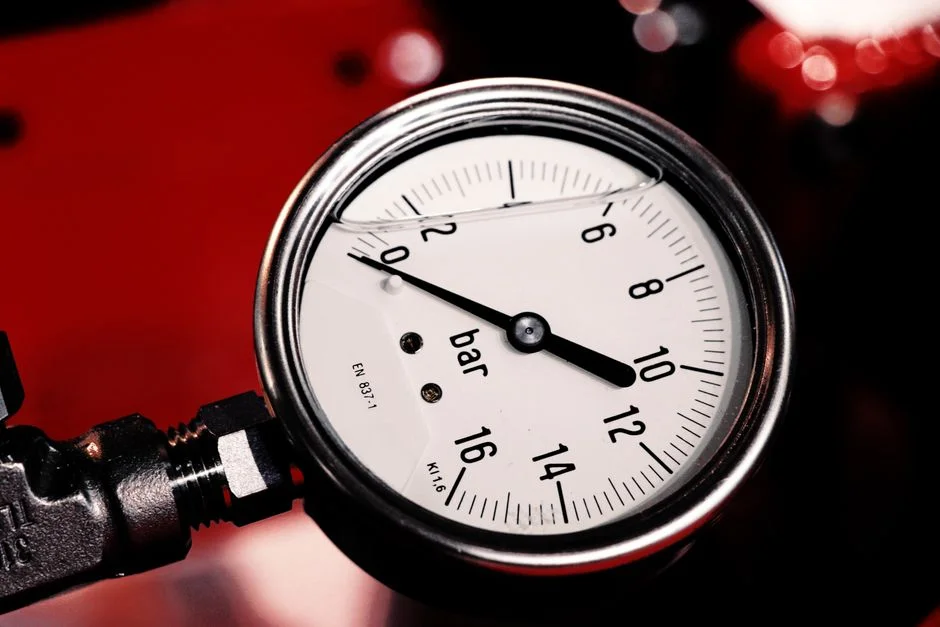
A digester's output is controlled by six numerical levers, and most troubleshooting reduces to identifying which one has moved out of range. The DUT response-surface methodology (RSM) optimum — HRT 21 days, pH 7.01, magnetite 0.42 g/L — achieved a desirability of 0.99 with R² of 0.99 across biogas yield, COD removal and colour removal (per DUT, 2024). That is the kind of fit you can design to.
Temperature sets the rate constant. Mesophilic operation at 35–40°C dominates industry because it is stable, requires less energy, and tolerates moderate ammonia. Thermophilic operation at 50–55°C delivers faster kinetics and higher pathogen kill but is less stable to shock loads and consumes more heat. The MDPI UASB pilots ran at 30–35°C — the lower end of mesophilic — and still hit 85% COD removal and 84.4% BOD removal (per MDPI, 2018).
pH must stay between 6.8 and 7.2 for methanogens to dominate. Below 6.5, acidogens win; above 7.6, free ammonia toxicity rises. HRT is the residence time of the liquid phase and is the most leveraged design knob: too short and biomass washes out, too long and the reactor is over-sized and uneconomic. OLR (organic loading rate) is the mass of volatile solids fed per cubic metre per day — for CSTRs treating industrial effluent, 1–4 kg VS/m³·d is the typical envelope, with UASB systems pushing higher because of the dense sludge blanket.
| Parameter | Mesophilic Range | Thermophilic Range | DUT Optimum (2024) | MDPI UASB Pilot (2018) |
|---|---|---|---|---|
| Temperature | 35–40°C | 50–55°C | 37–38°C (fermentation) | 30–35°C |
| pH | 6.8–7.2 | 7.0–7.5 | 7.01 | 6.0–8.0 |
| HRT | 18–22 days (high-rate industrial) | 12–18 days | 21 days | 35 days (incubation) |
| OLR (CSTR) | 1–4 kg VS/m³·d | 2–6 kg VS/m³·d | — | — |
| Mixing | Continuous or intermittent | Continuous preferred | — | Mechanical + temperature control |
| Methane content | 40–70% CH₄ | 45–65% CH₄ | Up to 90% with sensors | Reported via 83.57 mL/day average |
Gas yield is the output engineers ultimately care about. The DUT biochemical methane potential tests show that gas yield is highly substrate-dependent: 148 mL CH₄/g TDS for sugar refinery, 76 mL/g TDS for industrial sewage, 64 mL/g TDS for oil refinery, 45 mL/g TDS for municipal wastewater (per DUT, 2024). The MDPI UASB reached an average 83.57 mL/day of biogas (per MDPI, 2018). One operational caution worth flagging: magnetite overloading at 0.8 g/L caused biogas production to collapse from 20 mL/d to 2 mL/d (per DUT, 2024). The lesson is that conductive additives follow a narrow optimum and "more is better" is the wrong mental model. Trace additive control is best handled with an automatic chemical dosing system that holds the dose inside the validated window.
Reactor Types: CSTR, UASB, Egg-Shaped and Plug-Flow
Choosing a reactor geometry is a feed-matching decision. The MDPI comparison put a conventional digester (no temperature control), a CSTR (continuous stirred-tank reactor, temperature-controlled), and a UASB (upflow anaerobic sludge blanket, temperature-controlled) on the same coffee wastewater at 30–35°C and pH 6.0–8.0 for 35 days. The UASB delivered the best COD, BOD and C/N removal (85.00% ± 0.34%, 84.40% ± 5.66%, 97.78% ± 0.57) and the most stable daily biogas at 83.57 mL/day (per MDPI, 2018).
CSTR is the workhorse for high-solids slurries — manure, food waste, co-digestion mixes. It is fully mixed, thermally uniform, and tolerates particulates, but it has the highest reactor volume per kg of COD removed because biomass concentration is limited by washout at the effluent. The MDPI CSTR ran with ~5 L of biomass and 35-day incubation (per MDPI, 2018).
UASB achieves much higher biomass concentrations by letting anaerobic sludge granulate at the bottom and feeding influate upward through the blanket. There is no mechanical mixing; the upflow velocity itself provides hydraulic contact. UASB is the right pick for soluble, high-strength industrial wastewater (food, beverage, sugar, chemical) where TSS is moderate and the COD is in the 5,000–25,000 mg/L range. Its weakness is sensitivity to fats, oils and greases, which smother the granules, and to hydraulic surges that wash the blanket out.
Egg-shaped digesters — the geometry of choice at large municipal works — are designed for improved mixing at low energy cost and for self-concentrating sludge at the bottom, which reduces grit accumulation. HKUST numerical flow work has shown the egg geometry reduces dead zones compared with a flat-bottomed CSTR of equal volume. Plug-flow digesters are the simplest geometry, suited to uniform feedstocks like dairy manure, with low capex but high sensitivity to solids settling and scum formation.
| Reactor Type | Mixing | Best-fit Feed | Strengths | Limits | Reference Performance |
|---|---|---|---|---|---|
| CSTR | Mechanical impeller or gas recirculation | High-solids slurries, manure, food waste, co-digestion | Thermal uniformity; tolerates particulates | Lower biomass density; larger reactor volume | 5 L biomass, 35-day HRT (MDPI, 2018) |
| UASB | Upflow hydraulic, no mechanical mixer | Soluble, high-strength industrial wastewater | High biomass; best COD/BOD/C/N removal | Foaming/FOG sensitivity; surge sensitivity | 85% COD, 84.4% BOD, 97.8% C/N (MDPI, 2018) |
| Egg-shaped | Draft-tube mixers, self-concentrating sludge | Municipal sludge with sand/grit | Reduced dead zones; low grit accumulation | Higher capex; complex fabrication | HKUST CFD flow study |
| Plug-flow | Minimal; piston-flow regime | Uniform feedstocks (dairy manure) | Lowest capex; simple geometry | Sensitive to settling and scum | Common on-farm at < 100 m³ |
For an industrial wastewater stream, the practical matching logic is: low-COD soluble feed (COD 1,000–10,000 mg/L) favours UASB; high-COD soluble feed (COD > 10,000 mg/L) with moderate TSS favours CSTR at HRT > 20 days; particulate-heavy feed (TSS > 5%) needs CSTR with grit removal upstream; municipal sludge with sand/grit and limited footprint favours egg-shaped. The geometry dictates the whole headworks train.
Industrial Applications and Real-World Output
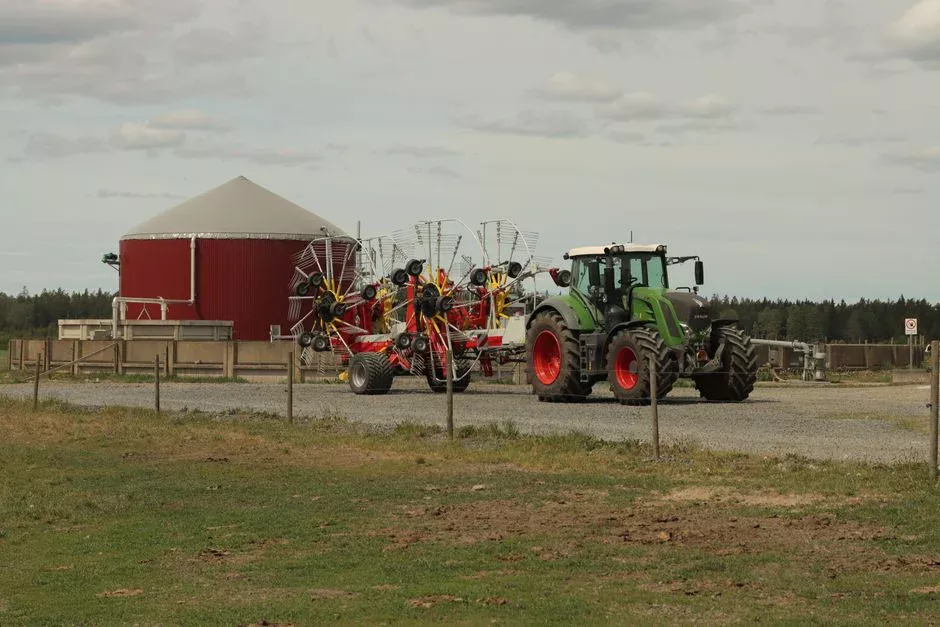
The working principle scales from a 1 m³ household unit to a 5,000 m³ industrial plant without re-engineering — the biology is the same. The DUT work quantifies the substrate-by-substrate yield that drives revenue: sugar refinery wastewater at COD 18,770 mg/L produced the highest gas yield at 148 mL CH₄/g TDS but only 62.8% COD removal, meaning polishing is still required downstream (per DUT, 2024). Industrial sewage at COD 4,320 mg/L produced 76 mL CH₄/g TDS and over 85% COD removal — better effluent quality per unit of organic load (per DUT, 2024).
Scale economics matter as much as biology. The DUT cost-benefit analysis shows payback falling from 24.8 years at 1 L, to 21.9 years at 5 L, to 25.3 years at 10 L, to 19.03 years at 50 L, with benefit-cost ratio rising from 0.05 at 1 L to 0.4 at 50 L (per DUT, 2024). Above 50 L capacity, the ratio can cross 1.0, which is the breakeven for commercial operation. A French dairy farm with 140 cows producing 1,400 t/yr of manure runs a 55 kW digester that delivers 281,000 kWh heat and 117,000 kWh electricity per year, against a €300,000 investment — a 15-year payback (per Planete-Energies, 2025-08). China has more than 40 million household digesters, which is the strongest existing proof that the same working principle scales down to <1 m³ as easily as it scales up to >5,000 m³. For context on industrial-scale integration, the Tesla Gigafactory wastewater process guide shows how this principle slots into a broader site-wide treatment train.
Designing a Digester Around the Working Principle
Specification starts with influent characterisation. A designer needs COD, BOD, TSS, VS, pH and influent temperature to even begin sizing. The DUT study's COD range of 4,320–18,770 mg/L across three substrates shows the spread a single plant may have to handle, including seasonal swings.
Reactor volume follows V = Q × HRT. With Q = 100 m³/d and HRT = 21 days, V ≈ 2,100 m³ — within the industrial bracket once Q is larger or when a safety factor of 1.2–1.5 is added. OLR then back-checks the volume: at OLR = 2 kg VS/m³·d and VS fraction of 0.05 in the feed, 100 m³/d delivers 5,000 kg VS/d, requiring 2,500 m³ — consistent with the V × HRT sizing.
Pretreatment is not optional. A rotary mechanical bar screen at the headworks removes plastics, rags and grit that would otherwise accumulate as scum and floatables inside the digester. A dissolved air flotation system ahead of the digester strips fats, oils and grease (FOG) that smother UASB granules and cause CSTR foaming. Post-treatment requires a plate and frame filter press to dewater the digestate to a handleable cake for disposal or land application — digestate leaves the reactor at 2–5% solids, and a filter press brings it to 20–30% without chemical conditioning.
The gas train closes the loop. Biogas leaves the digester at 40–70% CH₄ (sensors in well-controlled pilots reach 90% per DUT, 2024), saturated with water and contaminated with 1,000–5,000 ppm H₂S. A gas holder buffers production from demand, an H₂S scrubber (iron sponge or biological) drops sulphide below 200 ppm to protect the CHP engine, and either a CHP unit generates electricity and heat on-site or an upgrading membrane separates CO₂ to deliver pipeline-quality biomethane. The automatic chemical dosing system holds pH and trace-additive doses inside the validated operating window — the same control logic that prevents magnetite overloading at 0.8 g/L and the associated biogas collapse from 20 mL/d to 2 mL/d (per DUT, 2024).
Frequently Asked Questions
What are the four stages of anaerobic digestion?
The four stages are hydrolysis, acidogenesis, acetogenesis and methanogenesis. Hydrolysis breaks polymers into monomers, acidogenesis ferments monomers into volatile fatty acids (VFAs) and hydrogen, acetogenesis oxidises VFAs into acetate and hydrogen, and methanogenesis combines acetate and H₂/CO₂ into methane.
What temperature and pH does an anaerobic digester need?
Mesophilic operation at 35–40°C (typically 37–38°C) is the industry default; thermophilic operation runs at 50–55°C. Optimal pH is 6.8–7.2 — below 6.5 the process sours, above 7.6 free ammonia toxicity rises. The DUT optimum sits at 37–38°C and pH 7.01 (per DUT, 2024).
How long does sludge stay in an anaerobic digester?
Hydraulic retention time (HRT) is 18–22 days for high-rate industrial systems and 20–35 days for pilots and CSTRs on difficult feedstocks. The DUT response-surface optimum settled on 21 days, with biogas production peaking between days 9 and 18 (per DUT, 2024).
What percentage of methane is in anaerobic digester biogas?
Conventional digesters produce biogas at 40–70% CH₄, with CO₂ making up most of the balance. Sensor-controlled pilots have reached 90% CH₄ content by stabilising temperature and pH (per DUT, 2024).
What is the difference between CSTR and UASB digesters?
A CSTR (continuous stirred-tank reactor) is fully mixed and handles high-solids slurries; a UASB (upflow anaerobic sludge blanket) uses no mechanical mixer, relies on an upflow velocity through a granular sludge blanket, and excels on soluble high-strength wastewater. In the MDPI comparison, the UASB reached 85% COD removal versus lower values for the CSTR and the conventional digester (per MDPI, 2018).