What Cumming food and beverage plants must control before discharge
Food and beverage plants near Cumming meet sewer pretreatment limits by characterizing each wastewater stream, obtaining the applicable industrial user pretreatment permit and sewer rules, and installing the treatment needed to control regulated pollutants. A typical train equalizes flow, balances pH, removes fats, oils and grease (FOG) and solids, reduces soluble organics, and provides monitoring and records. Dissolved air flotation (DAF) is commonly selected for FOG and floating solids, while chemical dosing supports coagulation and pH control; biological treatment may be required for BOD/COD reduction, ammonia or nutrients. EPA notes that the permit, regulations and applicable control mechanism—not general guidance—control the discharger’s obligations.
The pathway discussed here is indirect discharge to a publicly owned treatment works (POTW), not direct discharge to a surface water or an NPDES-permitted outfall. EPA’s Local Limits Development Guidance, published June 25, 2021, is guidance rather than a regulation. It explains that an indirect discharger’s obligations come from a POTW-issued industrial user permit, an equivalent control mechanism, or applicable regulatory requirements, and that the permit or regulation controls if it conflicts with the guidance.
EPA identifies 40 CFR Parts 122, 123, 124 and 403 as the regulatory framework for POTW pretreatment programs. The plant must determine whether its discharge is subject to categorical pretreatment standards, POTW local limits, categorical prohibitions, or a combination. Potentially relevant parameters include BOD, TSS, pH, ammonia, oil and grease, nitrogen and phosphorus, but the controlling permit determines which parameters apply and what values must be met. A vendor’s equipment range cannot substitute for that review. For a comparable workflow, see How Food & Bev Plants Near Oklahoma City Meet 2026 Pretreatment Limits.
Build a representative wastewater profile
Representative profiles start by separating process streams before combining them, because detergents, disinfectants, sugars, starches, proteins, pulp, seeds and grains create different treatment problems. ALAR’s food and beverage industry guidance identifies cleaning chemicals as a cause of pH change and biological inhibition, sugars and starches as readily degradable BOD sources, and pulp, seeds and grains as suspended solids requiring clarification. Sampling each source separately makes those distinctions visible.
Follow EPA’s sequence: identify pollutants of concern, collect and analyze data, compare actual loadings with allowable limits, and address collection-system concerns. EPA also identifies sampling at the POTW, in the collection system and at industrial users as distinct points for understanding impacts. At the plant, sample representative production, washing, sanitation and clean-in-place flows, then sample after each treatment stage where unit performance must be demonstrated.
| Work item | Evidence to obtain | Why it matters |
|---|---|---|
| Stream map | Separate flow and contaminant source for production, washing, sanitation and clean-in-place waste | Prevents dilution from masking a concentrated or incompatible stream |
| Flow record | Representative flow variability, including production and cleanup periods | Establishes equalization, screening and biological loading conditions |
| Pollutant profile | pH, BOD/COD, suspended solids, FOG, ammonia and nutrients where relevant | Assigns each pollutant to a treatment step |
| Regulatory basis | Current sewer rules, industrial user permit, applicable pretreatment limits, monitoring frequency and approved sampling protocol | Defines enforceable requirements and acceptance criteria |
Obtain the current Cumming-area sewer rules, the plant’s permit or equivalent control mechanism, applicable limits, monitoring frequency and sampling protocol from the authority and the approved industrial-user mechanism. EPA’s June 25, 2021 guidance provides the framework, but it does not establish a Cumming-specific limit. The source-stream characterization approach for industrial facilities is also useful when building a site-specific sampling plan.
Select the pretreatment process that matches the pollutant
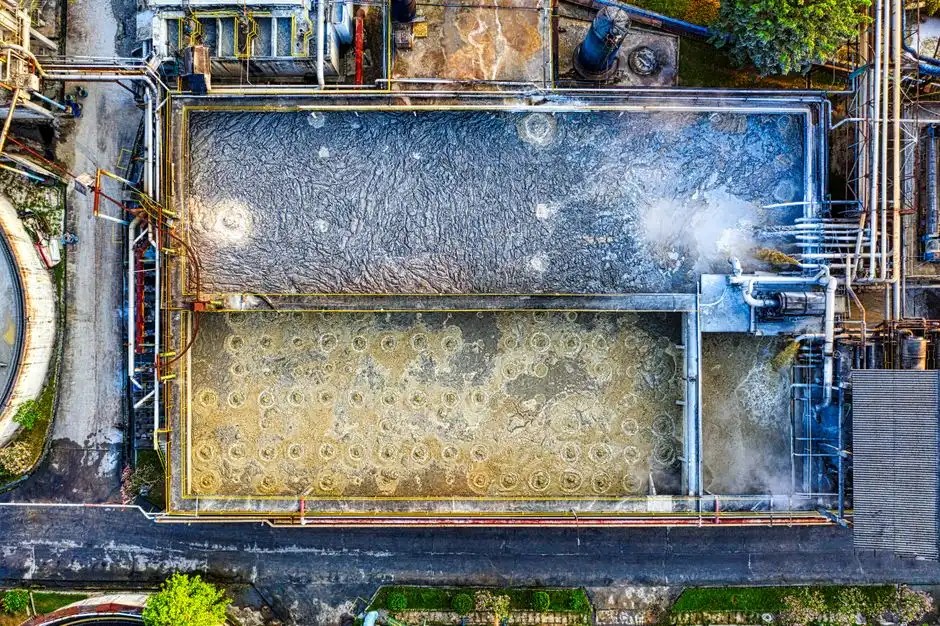
Treatment selection follows the contaminant: FOG and floatable solids require solids separation; soluble organics require biological or equivalent treatment; pH requires controlled neutralization; and prohibited or pass-through discharges require a documented control strategy. Equalization and screening should come first where flow variation or debris could overload downstream units.
| Site condition | Primary unit operation | Engineering decision |
|---|---|---|
| Variable flow or screening debris | Equalization and mechanical screening | Protect pumps, membranes and biological systems from hydraulic and solids shocks |
| High FOG, colloids or floatable solids | DAF with coagulation and flocculation where needed | Verify floatability, skimming and chemical condition with representative wastewater |
| Unstable pH | Automatic chemical dosing and pH neutralization | Confirm probe control, chemical compatibility, mixing and containment |
| High biodegradable BOD/COD | Biological treatment with load management | Check aeration, alkalinity, detention time and inhibition from cleaners or high-strength loads |
| Ammonia or nutrient limits | Treatment configured for the required biological pathway | Do not assume conventional organic removal satisfies nitrogen or phosphorus requirements |
DAF is the preferred unit operation when FOG, oil and grease, colloids or floatable suspended solids are critical. HydropureWater’s published DAF range is 4 to 300 m³/h across 13 standard configurations, with micro-bubble technology and automatic skimming; this is an equipment range, not a Cumming permit limit or recommended plant size. A DAF system for food-processing FOG and solids removal should be sized from representative flow and loading data, not the published model range alone.
Chemical addition supports coagulation, flocculation and pH balance. HydropureWater’s automatic dosing system accepts coagulants, flocculants, pH adjusters and specialty chemicals with PLC-controlled injection. The applicable automatic chemical dosing for pH and coagulation control still needs a site-specific chemical list, storage assessment, compatibility review and control strategy.
Biological treatment addresses biodegradable organics and can support ammonia or nutrient removal when the process is designed for it. ALAR notes that sugars and starches can raise BOD rapidly, while unstable pH can impair nitrification and settling. Coagulation and flocculation may improve fine-solids capture, but chemical selection should follow jar testing and the receiving authority’s requirements.
Disinfection and sludge dewatering are downstream needs, not substitutes for pollutant removal. HydropureWater’s MBR combines activated sludge with submerged PVDF membrane filtration below 1 μm and is offered from 10 to 2,000 m³/day. Review MBBR design for food-processing wastewater when evaluating biological treatment, then validate the selected train with representative wastewater and pilot testing where variability is material.
Verify compliance through monitoring and documentation
Compliance is demonstrated through a permit-to-process map that links every applicable limit or prohibited discharge to its control equipment, operating parameter, responsible operator, monitoring method and record location. That map should be completed before equipment purchase and updated when the permit, process, or operating strategy changes.
- Confirm the current industrial user pretreatment permit, sewer rules and any approved control mechanism.
- Map each requirement to a treatment step and a measurable operating condition.
- Calibrate pH, flow and chemical-dosing instruments, and document calibration status.
- Record representative samples, analytical results, chemical use, bypass events, corrective actions, sludge handling and communications with the POTW.
- Compare results with the site’s approved monitoring and reporting requirements.
EPA’s June 25, 2021 guidance describes control mechanisms, monitoring, sampling and records as parts of pretreatment program administration, but the plant’s permit or equivalent mechanism supplies the enforceable frequencies and methods. For an example of reviewing the requirements attached to a facility acquisition, see the wastewater requirements review for an acquired plant.
Do not wait for a reported exceedance to investigate process drift. Abnormal pH, rising BOD/COD, FOG carryover and solids washout are early warning signals. They should trigger a defined review of stream segregation, chemical dosing, skimming, biological conditions, aeration, alkalinity and instrument performance, with corrective action recorded before the next compliance sample.
Troubleshoot the failure modes before they become exceedances
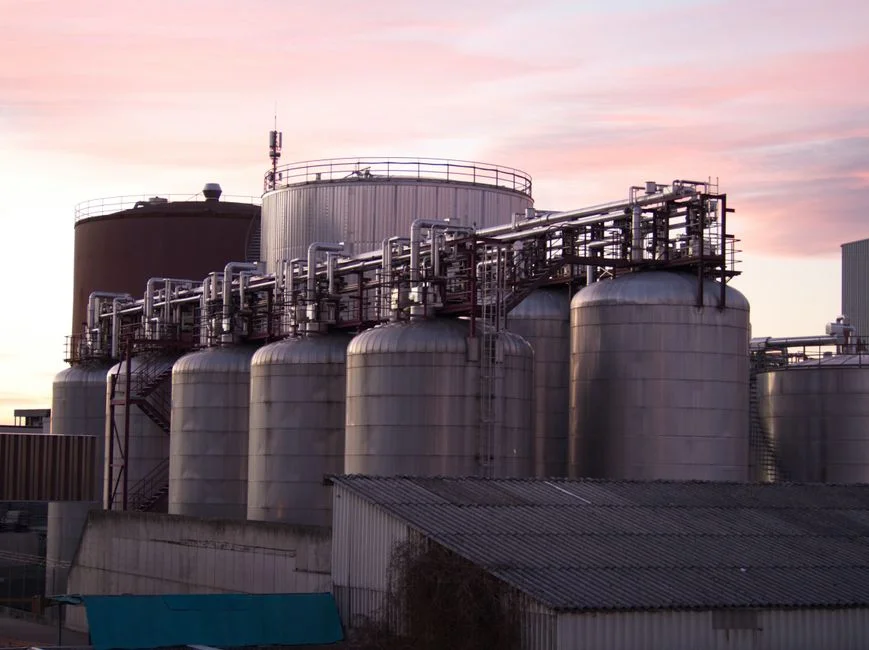
Troubleshooting starts with the observed symptom and tests the most likely upstream cause. Odor treatment, additional disinfection or dewatering cannot correct a missing FOG-removal, pH-control or organic-load unit.
| Symptom | Likely causes to check | Response path |
|---|---|---|
| FOG carryover or poor flotation | Mixed source streams, impaired skimming, poor chemical condition or excess waste activated sludge | Verify segregation, inspect skimming, review chemical dosing and evaluate sludge wasting |
| Unstable pH | CIP chemical inputs, unequalization performance or dosing calibration error | Confirm stream routing, probe operation, mixer performance and dose control |
| Rising BOD/COD with poor settling | Sugar or starch load, insufficient aeration, alkalinity imbalance or treatment inhibition | Test load and toxicity indicators; review biological condition and equalization |
| Odor or hydrogen sulfide concern | Septic or anaerobic conditions in the collection or treatment system | Identify the contributing zone, reduce organic loading and control oxygen, pH and alkalinity |
| Excess sludge or hauling cost | Poor solids capture, excessive wasting, inadequate thickening or dewatering | Review capture and wasting before changing the upstream process |
USP Technologies identifies hydrogen sulfide as a common food and beverage wastewater concern, high BOD/COD as a driver of oxygen depletion and inhibition, and unstable pH or alkalinity as a cause of poor biological treatment. It also identifies DAF use in meat, protein and dairy applications for suspended solids, FOG and other non-soluble contaminants. More context is available in its soft-drink wastewater design guide.
For hydrogen sulfide, locate the septic or anaerobic condition rather than treating odor control as discharge compliance. For sludge cost, first review solids capture, wasting, thickening and dewatering; changing production merely to compensate for a dewatering mismatch can transfer the problem upstream.
Frequently Asked Questions
How do food and beverage plants near Cumming meet pretreatment limits before sewer discharge?
Obtain the current sewer rules and industrial user pretreatment permit or equivalent control mechanism, characterize production, washing, sanitation and clean-in-place streams separately, and assign each regulated pollutant to a verified treatment step. Demonstrate performance through approved sampling, calibrated instruments and a permit-to-process record map.
How much does pretreatment equipment cost for a food and beverage plant near Cumming?
Request a site-specific quotation based on representative flow, pollutant concentrations, required equipment, chemical compatibility, controls, installation conditions, sludge handling and O&M scope. Do not use the published DAF model range as a cost or capacity estimate; capital price cannot be supported without those inputs and a defined treatment train.
How should a buyer qualify a DAF or biological treatment supplier?
Ask for documented food and beverage applications, relevant pilot data, control-system scope, chemical compatibility, O&M support and a clear process guarantee tied to representative wastewater. The published DAF range of 4 to 300 m³/h is a model range only, and final sizing should follow application-specific engineering and validation.
What compliance risks should be checked before purchasing pretreatment equipment?
Have the proposed train reviewed against categorical prohibitions, POTW local limits, pass-through, collection system interference and treatment-plant interference requirements. Ask the receiving authority to confirm applicable requirements, then validate treatment with representative wastewater and pilot data; equipment selection alone does not establish compliance.