Why OKC Food and Beverage Plants Get Surcharged
Surcharges from the City of OKC almost always trace back to one of four wastewater characteristics that municipal treatment plants cannot absorb without pretreatment. Biochemical oxygen demand and chemical oxygen demand in food and beverage wastewater routinely run 10 to 20 times higher than domestic sewage, and discharging that strength without pretreatment risks overloading the local POTW's biology and triggering surcharges (Crystal Clean, S2). pH swings across the day — acidic from fruit or pickle lines, alkaline from CIP caustics — are a primary cause of sewer violations because sewer caps exist to protect pipework, treatment biology, and worker safety (Crystal Clean, S2).
Peak flows during washdowns and shift changes overwhelm systems sized for average conditions, so a treatment program built around averages tends to fail at the worst possible moment (Crystal Clean, S2). Excess nitrogen and phosphorus contributes to eutrophication downstream and is increasingly a focus of municipal discharge limits (USP Technologies, S1). Recognizing which of these four patterns drives a surcharge is the first step before any equipment is sized.
The Two-Layer Rule Set: EPA 40 CFR 403 Plus City of OKC
Federal EPA pretreatment standards establish a national floor because industrial-strength food processing discharge at the concentrations generated can overwhelm municipal treatment processes (Crystal Clean, S2). Local sewer districts — including the City of OKC's FOG and Pretreatment program — typically impose limits stricter than the federal floor, with explicit BOD caps and TSS limits, plus monitoring, sampling, and reporting obligations (Crystal Clean, S2). For categorical industries such as meat and dairy, 40 CFR 403 categorical standards apply on top of local limits; a plant's binding number is the stricter of the two, so the compliance target must be confirmed against both layers before any design starts. Penalties escalate beyond fines: increased monitoring requirements, mandated pretreatment system installation, permit revocation, and in severe cases production shutdown when the POTW's own compliance is threatened (Crystal Clean, S2). The practical mental model is simple — check the federal categorical number, check the OKC local number, design to whichever is tighter, and document the assumption in writing so an auditor sees the reasoning.
Unit Operation 1 — Screening and Headworks Protection
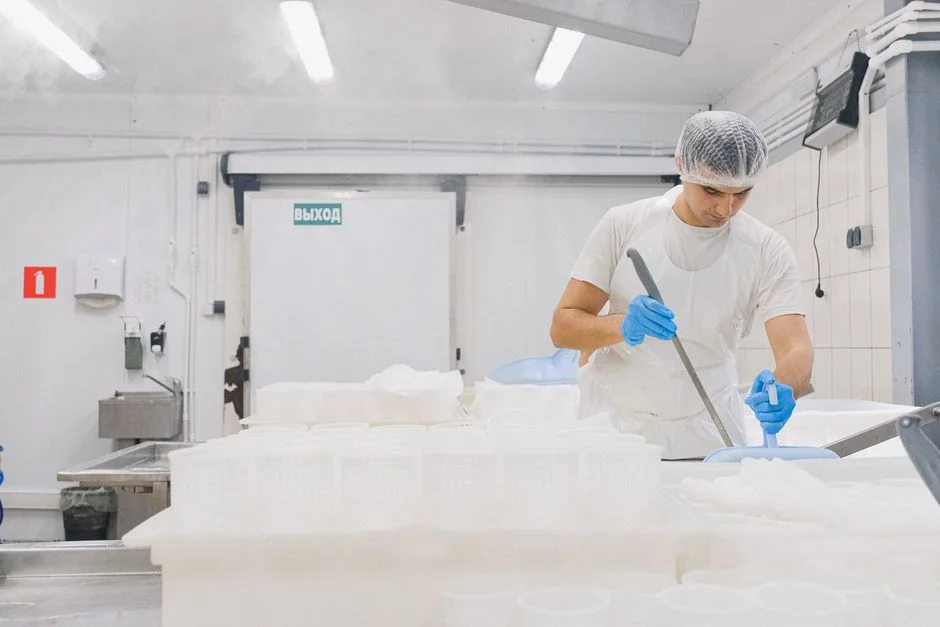
Continuous-duty fine screening at the headworks protects downstream pumps, valves, and biological treatment from rags, plastics, fibrous debris, and large food solids. For an OKC-region food plant, a rotary mechanical bar screen for headworks protection with stainless steel rake teeth and a self-cleaning brush discharge is the typical duty class — it removes suspended solids before they enter the equalization basin and prevents DAF and biological units from fouling prematurely. Skipping or undersizing headworks screening is a common root cause of downstream DAF and biological unit failures; the cost shows up later as unplanned shutdowns, not at the headworks budget line. A reasonable 2026 design target is a screen opening small enough to capture the largest particle that would otherwise jam a DAF recycle pump or scour a lamella plate, sized for peak washdown flow rather than average shift flow.
Unit Operation 2 — Equalization and pH Stabilization
Equalization basins blend intermittent flows and moderate pH to ensure downstream biological treatment functions effectively. Active neutralization systems adjust pH before discharge and are used when swings are too large or fast for a passive basin alone (Crystal Clean, S2). Maintaining proper pH and alkalinity is identified by USP Technologies as critical for effective biological wastewater treatment; instability drives nitrification issues, poor sludge settling, and high ammonia loads (S1). For plants whose pH swings exceed what a passive basin can absorb, PLC-controlled chemical dosing for pH and coagulation tied to a redundant pH probe loop is the standard 2026 approach, with a documented failsafe that diverts out-of-range flow to a holding tank rather than to the sewer. If a batch is too strongly acidic or alkaline to neutralize on site safely, off-site removal by vacuum truck to a permitted treatment facility is a documented alternative (Crystal Clean, S2).
Unit Operation 3 — DAF for FOG and Suspended Solids

DAF is the standard unit operation for separating and removing non-soluble contaminants — suspended solids, fats, oils, and grease — in meat, protein, and dairy wastewater (USP Technologies, S1). Micro-bubble flotation with automatic skimming is the dominant 2026 configuration, available in capacities from small boutique lines up to large process plants. Biological and chemical pretreatment can be added upstream of DAF to improve removal rates; chemical dosing using coagulants, flocculants, and pH adjusters is typically PLC-controlled for stable performance. Beyond meeting sewer limits, an optimized DAF system for FOG and suspended solids removal reduces sludge volume, lowers downstream biological loading, and protects the plant from FOG pass-through that would otherwise trigger surcharges. For plants stepping into DAF design, the table below summarizes the design parameters most often asked about in 2026 vendor discussions; values are the operating ranges USP Technologies and Crystal Clean describe as standard for food and beverage duty, with the note that actual selection must be confirmed against the facility's own waste characterization.
| Parameter | Typical DAF Design Range (F&B duty) | Source |
|---|---|---|
| Target contaminants | Suspended solids, FOG (non-soluble) | USP Technologies, S1 |
| Bubble generation | Micro-bubble dissolved air flotation with automatic skimming | USP Technologies, S1 |
| Upstream chemical stage | Coagulant, flocculant, pH adjustment (PLC-controlled) | Crystal Clean, S2 |
| Effluent destination after DAF | Biological or chemical BOD reduction, then disinfection | Crystal Clean, S2 |
Unit Operation 4 — Biological or Chemical BOD Reduction
Biological treatment uses microorganisms to break down organic matter, while chemical treatments precipitate solids and reduce loading, depending on waste characteristics, volumes, and local discharge limits (Crystal Clean, S2). A dairy or brewery can generate wastewater with BOD levels 10 to 20 times higher than domestic sewage, so without on-site reduction the plant risks surcharges and POTW overload (Crystal Clean, S2). Maintaining supplemental dissolved oxygen in overloaded aeration systems and controlling H2S are two recurring operational challenges for biological treatment of food and beverage wastewater (USP Technologies, S1). Chemical precipitation is often used as a polishing step or for streams that are too toxic or variable for biological treatment; it is typically paired with a lamella clarifier for chemical precipitation polishing for solids separation, and where space is constrained or a tighter effluent is required, an MBR system for biological BOD reduction delivers a membrane-grade effluent suitable for reuse or for sewer discharge under tighter local limits.
Unit Operation 5 — Disinfection Before Sewer Discharge
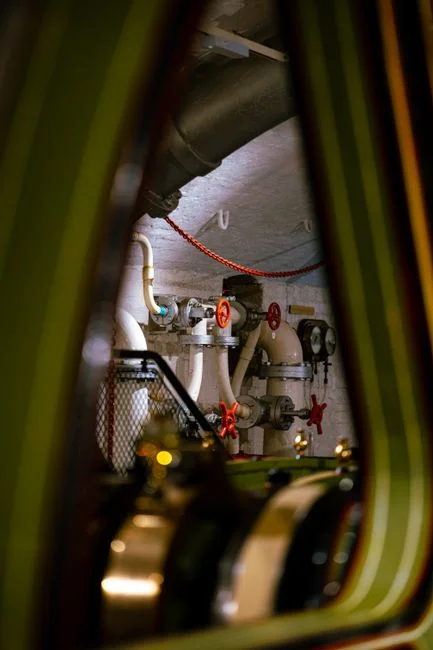
Disinfection standards have become more stringent, so the disinfection step must be selected against the actual permit requirement rather than a generic specification (USP Technologies, S1). For OKC food and beverage plants discharging to the sanitary sewer, common 2026 options include a chlorine dioxide generator for compliant disinfection for reliable microbial control with documented EPA alignment, and a UV-C disinfection unit for chemical-free disinfection where the pathogen target includes chlorine-resistant organisms. If the plant is aiming for water reuse on site rather than discharge, the bar moves to RO polishing or MBR-grade effluent and disinfection is sized for the reuse end use, not the sewer. The right sizing question for 2026 is what the permit and the end use actually require, because over-spec'd disinfection is a common and avoidable OPEX drain in food and beverage plants.
On-Site Pretreatment vs. Off-Site Hauling: A Decision Framework
On-site pretreatment (screening → equalization → DAF → biological/chemical → disinfection) makes sense for high-volume, continuous discharges where hauling logistics would dominate cost and risk. Off-site removal via vacuum truck to a permitted treatment facility is the right call for high-strength liquid waste streams and for strongly acidic or alkaline batches that cannot be safely neutralized on site (Crystal Clean, S2). Sludge and slurry from settling tanks and clarifiers — typically liquid or semi-solid, not dry solids — also route to off-site permitted treatment, which restores the on-site system to full capacity (Crystal Clean, S2). Decision drivers include flow continuity, peak versus average load ratio, CIP chemistry, available footprint, operator skill, EHS risk, and whether the discharge permit requires on-site monitoring that off-site hauling cannot satisfy. The table below frames the choice against the conditions each option handles well; the boundary cases — high-strength but continuous, or low-strength but highly variable — are where plants most often get the call wrong.
| Decision Driver | Favors On-Site Pretreatment | Favors Off-Site Hauling | Source |
|---|---|---|---|
| Flow continuity | Continuous or near-continuous discharge | Intermittent batches or shock loads | Crystal Clean, S2 |
| Waste strength | Moderate BOD/COD that biology can handle | High-strength streams above biological design | Crystal Clean, S2 |
| pH variability | Swings absorbable in equalization + dosing | Batches too acidic or alkaline to neutralize safely | Crystal Clean, S2 |
| Solids handling | Sludge dewatered on site via filter press | Slurry pumped out for off-site permitted treatment | Crystal Clean, S2 |
| Operator skill and footprint | Trained staff, available footprint, permit requires on-site monitoring | Limited footprint, no on-site chemistry capability | Crystal Clean, S2 |
For plants that land on the on-site path, a plate and frame filter press for sludge handling is the standard 2026 choice to convert DAF and clarifier sludge into a handleable cake and minimize off-site sludge volume.
What to Ask a Wastewater Equipment Supplier in 2026
Request a written basis of design that names the design influent (BOD, COD, TSS, FOG, pH, temperature, peak flow) and the design effluent — the stricter of EPA 40 CFR 403 categorical limits, local OKC sewer limits, and any plant reuse targets. Ask for guaranteed removal rates, not typical rates; for DAF that includes FOG and TSS removal, and for biological or chemical BOD reduction a specific outlet concentration under defined loading. Confirm PLC and automation scope, chemical consumption per cubic meter, sludge yield, and how the system alarms and shuts down on pH excursion — the documented high-risk failure modes for food and beverage plants (Crystal Clean, S2). Verify documentation: manifests, service records, and treatment verification create the chain of custody that matters when regulators or auditors visit (Crystal Clean, S2). A useful preparation step is to read a vendor-neutral 2026 buyer's guide for industrial wastewater solution providers and a process-specific DAF system design guide for beverage wastewater before vendor calls, and to keep an energy and OPEX optimization playbook open during proposal review so lifetime cost questions get asked on the first call.
Frequently Asked Questions
What does a food and beverage pretreatment system cost in Oklahoma in 2026?
The supplied research does not include a 2026 capital cost figure for an OKC-region food and beverage pretreatment train. A buyer should request from each shortlisted vendor a line-itemized capex for the full train (screening, equalization, DAF, biological or chemical BOD reduction, disinfection, and sludge handling), plus a separate annual opex for chemicals, power, and labor tied to a stated design flow. A useful sanity check is to ask each vendor to express both numbers against the same influent basis of design so the proposals are directly comparable.
How do I pick the right wastewater equipment supplier for an OKC food plant?
The supplied research does not name or rank specific suppliers. The actionable check is to confirm three things in writing before signing: a documented basis of design that references both 40 CFR 403 categorical standards and the City of OKC FOG and Pretreatment program, guaranteed removal rates rather than typical rates, and a chain-of-custody documentation package (manifests, service records, treatment verification) that holds up to an OKC or state audit (Crystal Clean, S2).