Define the Effluent Treatment Objective Before Choosing Equipment
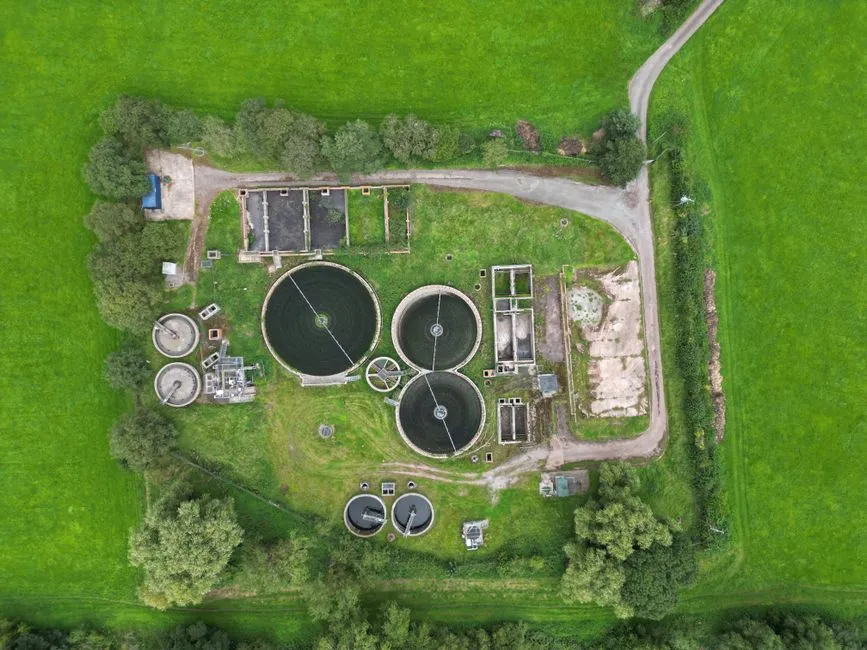
An effluent treatment plant in Ivory Coast is a facility that treats industrial wastewater before discharge or reuse. The right system depends on the wastewater’s flow, pH, COD, BOD, suspended solids, oil and grease, toxicity and reuse target. DAF is commonly evaluated for oil, grease and solids-bearing streams; MBR combines biological treatment with membrane filtration; RO or nanofiltration can provide further polishing where reuse requires it. Because applicable permits and project costs depend on site-specific conditions, buyers should request a process design, performance guarantee and itemized quotation after completing an effluent characterization.
Start by separating the facility’s wastewater sources. Process wastewater may contain production chemicals, product residues or high organic loads; cooling and washing water may have different seasonal concentrations; sanitary sewage has a different biological and solids profile; stormwater can be variable and dilute; a mixed stream requires careful flow and contaminant balancing. A treatment train designed for one stream may be unsuitable for another, especially if the final destination is a controlled discharge, sewer connection, lagoon, irrigation, process-water reuse or a potable-related reuse application.
The reuse objective determines whether polishing is essential. The University of Twente’s thesis, Direct nanofiltration of wastewater treatment plant effluent, identifies nanofiltration as an advanced polishing option for wastewater-treatment-plant effluent intended for agricultural or indirect potable reuse. That finding supports treating nanofiltration as a downstream process, not as a substitute for industrial pretreatment.
Define the design basis in the purchase specification: design flow, operating hours, peak factor, required outlet quality, reuse volume, availability, sampling methods, utilities, and the responsibilities of the owner, operator and supplier. The same discipline applies to an industrial ETP buyer’s guide for Dakar, although the permit and site conditions in Côte d’Ivoire must be verified independently.
Characterize the Wastewater and Select the Right Treatment Train
The wastewater characterization must establish whether the stream requires solids removal, biological treatment, membrane polishing or all three. Request a representative influent analysis covering pH, COD, BOD, suspended solids, dissolved solids, oil and grease, temperature and toxicity where relevant, together with flow records and any discharge or reuse limits.
Temperature variation matters because it changes operating conditions within a treatment plant. A 2024 Scientific Reports textile-industry benchmarking study assessed ETP performance using pH, dissolved oxygen, dissolved solids, suspended solids, density, COD and BOD, and reported deviations in working conditions caused by temperature variation. The study’s textile context is not automatically transferable to every factory, but it supports including temperature in the influent dataset rather than treating it as a minor operating note.
Use that evidence to route the process. Oil-, grease- and solids-rich streams warrant evaluation of an industrial DAF system for oil, grease and solids removal. HydropureWater specifies its DAF equipment for suspended solids, FOG, oil and grease, and colloidal matter across 4–300 m³/h and 13 standard models. An integrated MBR wastewater treatment system is relevant where biological treatment and membrane separation are required in a compact package; the supplied MBR range is 10–2,000 m³/day with submerged PVDF filtration below 1 μm.
Advanced reuse should be specified as a train, not as a single product: biological treatment, DAF or another pretreatment stage where needed, membrane polishing where required, and final disinfection before the approved reuse application.
| Wastewater or objective | Process to evaluate | Reason for inclusion in the train |
|---|---|---|
| Oil, grease, FOG, colloids or removable suspended solids | DAF pretreatment | Remove fractions before they interfere with biological or membrane stages. |
| Biodegradable organic load with required solids separation | MBR | Combine biological treatment with membrane separation in one package. |
| Advanced agricultural or indirect potable reuse concept | Polishing sequence, including nanofiltration where justified | University of Twente research identifies nanofiltration as a polishing option for this reuse context. |
| Microbial-control requirement | Final disinfection | Place microbial control at the end of the selected treatment train. |
Match Equipment Capacity and Treatment Performance to the Project
Equipment capacity is a starting point for process design, not a substitute for hydraulic calculations. Size the plant on average flow, peak flow, operating duration, retention-time requirements and expected seasonal variation. A supplier should show how its selected configuration handles those conditions rather than quote only a nominal treatment rate.
The supplied DAF range is 4–300 m³/h, while the supplied MBR range is 10–2,000 m³/day. These figures use different time bases and must not be compared as like-for-like flow limits. For decentralized sanitary sewage, the WSZ series is specified at 1–80 m³/h, with an anoxic/aerobic, sedimentation and disinfection train suited to the installation concept.
For a reuse project, calculate the required permeate flow and recovery from the selected membrane process. Nominal system capacity does not establish how much reusable water will be produced after backwashing, cleaning, downtime and product-quality constraints.
Before approving equipment, confirm the site envelope, power availability, chemical supply, sludge or residual handling route, maintenance access and future expansion needs. The WSZ underground integrated sewage treatment concept is one option for decentralized sanitary sewage, while an ultrafiltration system for water treatment may be relevant where the selected reuse train requires it.
| Option | Supplied capacity | Primary use in this guide | Sizing caution |
|---|---|---|---|
| DAF | 4–300 m³/h | Oil, grease, FOG, colloid and solids pretreatment | Confirm hydraulic loading and removal performance against the influent analysis. |
| MBR | 10–2,000 m³/day | Integrated biological treatment and membrane separation | Do not compare directly with the hourly DAF range without normalization. |
| WSZ | 1–80 m³/h | Decentralized sanitary sewage treatment | Confirm that the anoxic/aerobic, sedimentation and disinfection train matches the installation concept. |
| Membrane polishing | Not specified in the supplied research | Advanced reuse or other water-quality polishing | Size from the water balance, required permeate flow, recovery and cleaning strategy. |
Build a Treatment and Polishing Process Flow
A defensible process flow starts with screening and equalization where rags, plastics, suspended material or flow variation could overload the treatment train. The GX Series is designed for continuous-duty fine screening of municipal and industrial wastewater. Equalization then needs to be evaluated against batch discharge, production schedules and peak flow.
Place DAF ahead of biological or membrane stages when the influent contains removable oil, grease, FOG, colloids or suspended solids that could impair downstream equipment. The purpose is protection and load reduction, not simply compliance by equipment selection.
Add automatic chemical dosing where pH adjustment, coagulation or flocculation is required. The supplied dosing system is PLC-controlled, skid-mounted, pre-wired and factory-tested. Chemical demand should nevertheless be calculated from the wastewater characteristics, target dose and operating range; the presence of a dosing skid does not establish the required dose or consumption.
Use MBR where integrated biological treatment and membrane separation meet the specified effluent quality and footprint. Add UF, RO or nanofiltration only where the reuse objective requires further separation. The University of Twente source supports nanofiltration for polishing WWTP effluent to EU Water Framework Directive standards in the stated agricultural or indirect potable reuse context.
Disinfection belongs in the final train where microbial control is required. HydropureWater’s chlorine dioxide generator range is 50–20,000 g/h, but the configuration must be sized from design flow and required dose. The GX rotary mechanical bar screen, automatic chemical dosing system and chlorine dioxide generator should be evaluated as parts of an integrated flow rather than isolated products.
Use Cost Benchmarks to Frame Budgets, Not to Fix a Quotation
Available cost evidence can establish a preliminary budget envelope, but it cannot replace a site-specific quotation. HydropureWater’s Ivory Coast hub reports industrial CAPEX of XOF 15M–400M in a 2026 guide. Treat that as a preliminary industrial budgeting range, not a universal Côte d’Ivoire price.
The same hub reports municipal sewage-treatment CAPEX of €1.2M–€8M in 2026. That is relevant only for municipal-scale screening. It also reports broader municipal ranges of €5M–€120M in 2025 and Abidjan project ranges of €587K–$191M in 2025. These figures belong to different project categories and cannot be applied directly to an industrial ETP.
The spread illustrates why scope definition matters: capacity, treatment standard, site works, sludge handling and included systems can change a project’s cost structure. A comparison of industrial ETP and DAF systems should therefore be used to understand process scope, not to manufacture a local price from a different geography.
Require each vendor to separate equipment, civil works, installation, commissioning, controls, chemicals, membranes, sludge handling, spares, freight, import duties, taxes, training and warranty. Then compare life-cycle cost, including energy, chemicals, membrane replacement, consumables, operator labor, residual disposal and downtime. Headline CAPEX alone can conceal the expensive part of the operating cycle.
| Published benchmark | Scope and date | Correct procurement use |
|---|---|---|
| XOF 15M–400M | Industrial project CAPEX example in the HydropureWater Ivory Coast hub, 2026 | Preliminary industrial budget screen only. |
| €1.2M–€8M | Municipal sewage-treatment CAPEX example in the HydropureWater Ivory Coast hub, 2026 | Municipal screening only; do not use as an industrial quotation. |
| €5M–€120M | Broader municipal range reported by the HydropureWater Ivory Coast hub, 2025 | Use to expose scope sensitivity, not to price a factory project. |
| €587K–$191M | Abidjan project range reported by the HydropureWater Ivory Coast hub, 2025 | Require a project-specific itemized quotation before budget approval. |
Plan Installation, Commissioning and Performance Acceptance
Regulatory approval should shape the process design before equipment is purchased. Obtain the applicable discharge authorization, sewer acceptance conditions and reuse approval, and confirm the applicable industrial discharge permit with the relevant authorities. A general national standard alone should not be assumed to determine every parameter, receiving-water condition or reuse requirement.
Define acceptance in stages. Factory acceptance should verify assembly, controls and documented tests. After delivery, installation checks should cover foundations, pipework, valves, electrical protection, access and utilities. Hydraulic testing, control validation and performance testing should use agreed influent and effluent sampling points, with the method, location and responsibility for each measurement stated in advance.
Write guarantees around design flow, specified outlet parameters, operating availability and remediation obligations. “The system will meet environmental norms” is not a measurable guarantee. State the test duration, influent envelope, sampling frequency, parameter limits and remedy for failure.
Require operator and maintenance training, spare-parts lists, access to membranes or media, emergency procedures and a preventive-maintenance schedule. Residual handling must be included: DAF removes oil, FOG and solids fractions, while biological and MBR stages also generate sludge that needs a defined route. A plate-and-frame filter press can be evaluated for dewatering, but its selection should follow residual characterization and the available disposal route.
Questions to Send Before Approving a Supplier Proposal

Comparable proposals require the same design basis, the same discharge or reuse target and the same commercial scope. A process flow diagram, equipment list, duty basis, hydraulic calculations, membrane area or media details, materials of construction and utility requirements should form the minimum technical submission.
Ask each supplier to identify the applicable permit basis, design assumptions, treatment guarantees, exclusions, commissioning responsibilities and local support arrangements. Permit responsibility should be allocated explicitly: identifying a requirement, supporting an application and accepting compliance risk are different obligations.
Use a common RFQ dataset and ask for references on comparable industrial streams, lifecycle documentation, and a risk register covering upset flows, chemical availability, membrane fouling, power interruptions, sludge handling, spare-part lead times and disposal constraints. An MBR versus conventional activated sludge comparison can inform that review, but the final bid comparison must use the project’s actual wastewater and reuse requirements.
| RFQ item | Information required | Decision enabled |
|---|---|---|
| Duty basis | Average flow, peak flow, operating hours, influent envelope and target effluent | Technical completeness and equipment sizing. |
| Process and hydraulic design | Flow diagram, calculations, process assumptions and performance data | Train selection and downstream equipment protection. |
| Compliance basis | Permit or sewer requirements used, responsible parties and required testing | Effluent quality compliance risk. |
| Commercial scope | Itemized costs, exclusions, freight, duties, taxes, installation and commissioning | Comparable total installed cost. |
| Operations and residual handling | Training, spares, maintenance, sludge or FOG route and support arrangements | Operating readiness and life-cycle cost. |
Frequently Asked Questions
What is the cheapest practical ETP option for an industrial facility in Côte d’Ivoire?
There is no defensible lowest-price option without a wastewater analysis, flow profile and discharge or reuse target. Use the HydropureWater Ivory Coast hub’s XOF 15M–400M industrial CAPEX example, dated 2026, only as a preliminary budget range. Ask each bidder to itemize equipment, civil works, installation, utilities, residuals, freight, duties, taxes, commissioning and warranty using the same scope.
Should the project use DAF, MBR or a combined treatment train?
Use DAF when the main requirement is removal of oil, grease, FOG, colloids or suspended solids before biological or membrane treatment. Use MBR when biological treatment and membrane separation are required together. For advanced reuse, a combined train can place biological treatment and suitable pretreatment upstream of membrane polishing and final disinfection.
How should an equipment supplier be selected for an effluent treatment plant in Ivory Coast?
Select against a controlled bid package: one influent dataset, one design-flow basis, one outlet specification, one reuse objective and one commercial scope. Check the supplier’s permit assumptions, process calculations, guarantee terms, commissioning role, local support and references for comparable industrial streams. This is a different check from asking only for a product price or nominal capacity.
What flow and water-quality data must be provided before equipment can be sized?
Provide flow history with average and peak conditions, operating schedules, seasonal variation, pH, COD, BOD, suspended solids, dissolved solids, oil and grease, temperature and relevant toxicity information. For reuse, also provide the required product quality, daily reuse volume, recovery assumptions, source-water variability and operating availability.
How does the selected treatment process affect reuse and compliance risk?
Process selection determines whether the plant can meet the applicable discharge or reuse specification across changing wastewater conditions. Pretreatment reduces the load on downstream biological and membrane stages; polishing may be necessary for demanding reuse; final disinfection addresses microbial control. Freeze those requirements against the permit basis and make them testable in the supply contract rather than assuming one generic configuration is sufficient.