Why Rural Sewage Needs a Different Design in Côte d’Ivoire
Rural sewage treatment in Côte d’Ivoire requires a decentralized approach because the sanitation gap remains wider than the drinking-water gap, and no single configuration fits every village. In 2024, 77% of the population used at least basic drinking-water services, while only 40% used at least basic sanitation, according to World Bank/JMP data summarized in the 2026 Côte d’Ivoire water and sanitation source. National open defecation was 17% in 2024, and UNICEF’s rural estimate was 38%. The appropriate response is therefore not a default technology but a locally matched service chain.
Rural communities commonly depend on boreholes, protected wells, standposts, small piped systems and village water systems, the same source reports. Their sanitation needs face the same fragmented structure: households contain waste, but emptying, transport, treatment and final disposal or reuse may not be arranged. A 2025 study of Braffédon, Lahou-Kpanda, Groguida and Likpillassié on the Grand Lahou coast likewise identified inadequate wastewater management together with insufficient sanitation facilities.
This does not mean a conventional sewer is impossible. It means feasibility must be tested against settlement density, collection economics, flood exposure and the capacity of the institution that will operate the system. A 1980 comparative study of rural development in Tanzania and Côte d’Ivoire provides historical context only; it cannot support present plant sizing or regulatory conclusions. For comparable West African decision-making, rural sewage treatment options in Senegal provide useful procurement context, but Côte d’Ivoire’s permit and site conditions must still be verified independently.
| Planning question | 2026 evidence or finding | Implication for the buyer |
|---|---|---|
| How large is the national service gap? | Basic drinking-water access was 77%, basic sanitation access was 40%, and national open defecation was 17% in 2024, according to World Bank/JMP data summarized in the 2026 water and sanitation source. | Do not treat drinking-water availability as evidence that a rural sanitation service chain already exists. |
| Is the rural gap larger? | UNICEF estimated rural open defecation at 38% in 2024. | Include containment and faecal-sludge services in the project boundary where relevant. |
| What did the 2025 Grand Lahou study find? | Braffédon, Lahou-Kpanda, Groguida and Likpillassié showed inadequate wastewater management and insufficient sanitation facilities. | Site and service-chain surveys are needed before selecting equipment. |
Map the Rural Sanitation Service Chain
A treatment plant is only one element of a rural sanitation service. The complete chain comprises household containment, collection or conveyance, treatment, effluent discharge or reuse, and management of residuals, particularly faecal sludge. Buying treatment capacity without defining the other links leaves the community with a unit that may be unable to receive wastewater safely, dispose of sludge lawfully or prove compliance.
Most Ivorian households use onsite sanitation such as pit latrines and septic tanks, the 2026 water and sanitation source reports. The same source notes that safe emptying, transport, treatment and disposal or reuse of faecal sludge are absent or weak in many locations. For a dispersed village, this may mean that decentralized treatment is only part of the solution: pit emptying vehicles, transfer points, receiving capacity and a downstream reuse or disposal route may require more attention than the reactor itself.
Institutional roles must be separated. The Ministry of Hydraulics, Sanitation and Salubrity sets sector policy. ONAD oversees sanitation and drainage, and states that its mandate covers rural sanitation and wastewater disposal. ONEP primarily concerns drinking-water infrastructure, asset management and sector oversight. The 2026 source notes that ONEP has historically been remunerated as a delegated project manager without legally owning assets, so asset ownership and payment flows should be documented rather than inferred.
Before tender, identify the public authority or delegated operator that will authorize the outlet, inspect the installation and accept the operating handover. Do not assume that a rural water-service operator can operate a sewage plant without a separate sanitation mandate, contract, tariff and sludge-disposal responsibility. The domestic sewage treatment buyer’s guide for Dakar offers a useful regional reference for defining operator duties, but the Côte d’Ivoire institutional allocation must be approved locally.
- Containment: identify every toilet, septic tank or other waste source.
- Collection: define who empties, transports and transfers faecal sludge or wastewater.
- Treatment: define process, acceptance criteria and responsibility for residuals.
- Outlet: secure the discharge or reuse authorization, receiving conditions and records.
- Institutional handover: name the asset owner, operator, tariff authority and maintenance funder.
Choose Between WSZ A/O, MBR and Onsite Sanitation
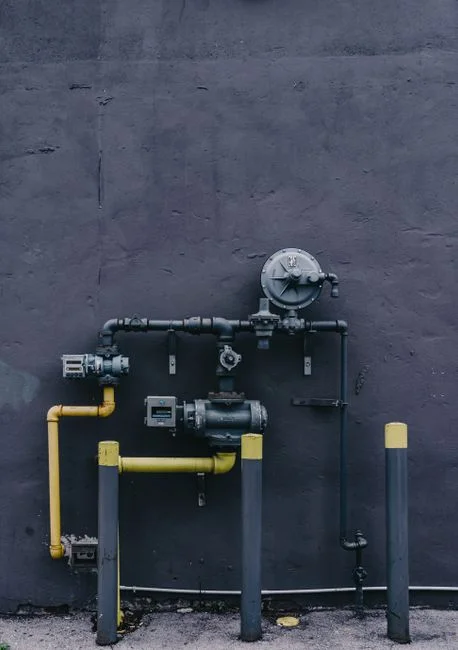
Choose a process from the required outlet, local influent, site conditions, energy supply and operator capability—not from nominal capacity or a manufacturer’s treatment claim. A buried WSZ A/O unit combines anoxic/aerobic biological contact oxidation, sedimentation and disinfection in one automated underground package; its catalog range is 1–80 m³/h. A containerized MBR combines activated sludge with submerged PVDF membrane filtration and is offered from 10–2,000 m³/day. These are different project architectures, not equivalent labels for “package wastewater treatment plant” procurement.
Use WSZ A/O where the endpoint is a drain, the site has flood or landscape constraints, the influent is predominantly domestic and a municipal technician can perform routine membrane-free maintenance. Its below-grade installation leaves the lid area available for landscaping. The verified product catalog describes full automation and a buried WSZ A/O sewage treatment plant rated at 1–80 m³/h.
Use MBR where dependable reuse, a constrained footprint or more stringent effluent quality is central to the project. The cited unrestricted-irrigation case is materially tighter than general discharge. MBR operation also requires a trained team, documented clean-in-place procedures and a membrane-replacement reserve. The relevant equipment is a containerized MBR wastewater treatment system rated at 10–2,000 m³/day.
Retain pit latrines, septic tanks or another containment-based route where scattered households, low sewer density or prohibitive collection logistics make a conventional network unsuitable. In that case, specify the complete emptying and downstream treatment chain rather than treating a toilet as the end of the sanitation service.
| Decision condition | WSZ A/O | Containerized MBR | Onsite containment route |
|---|---|---|---|
| Primary endpoint | General discharge to an approved drain or receiving water | General discharge or reuse where the tighter reuse specification is required | Faecal-sludge collection followed by treatment, disposal or reuse |
| Catalog capacity | 1–80 m³/h | 10–2,000 m³/day | Set by household and emptying-service arrangements |
| Site condition | Below grade with landscaping above the lid | Containerized footprint | Distributed household assets |
| Operator requirement | Routine maintenance by a municipal technician | CIP-trained operator, membrane logs and replacement budget | Trained emptying and transport service plus downstream treatment responsibility |
| Main commercial risk | Sludge, power and site works omitted from the base price | Higher energy, consumables and membrane lifecycle cost | No receiving facility or collection service |
For a community receiving cocoa, palm-oil, fish-processing or other high-FOG wastewater, test the influent before selecting the biological stage. A DAF pretreatment for high-FOG wastewater may be needed upstream to prevent biological overload or membrane fouling. High-FOG sites also need an economic justification for DAF rather than an assumed pretreatment train.
Design Against the Correct Effluent Destination
General discharge and unrestricted irrigation are different compliance envelopes, and the chosen outlet must determine the treatment train. The HydropureWater 2026 Ivory Coast guide cites DPE 2020 general-discharge limits of COD ≤125 mg/L, BOD5 ≤25 mg/L, TSS ≤35 mg/L and E. coli ≤1,000 CFU/100 mL. The same guide cites WHO 2022 unrestricted-irrigation limits of COD ≤50 mg/L and E. coli ≤10 CFU/100 mL. These are selection benchmarks, not permission to operate; the current project-specific permit and receiving-water conditions must be confirmed with the competent authorities.
For unrestricted irrigation, characterize the crop, irrigation method, receiving soil, seasonal demand and any health restrictions before selecting equipment. The cited E. coli ceiling is substantially tighter than the general-discharge value, while the COD benchmark is also lower. An A/O plant may therefore require a validated polishing and disinfection arrangement, and an MBR proposal must demonstrate performance under the actual reuse envelope rather than only quote its filtration capability.
Disinfection should be part of the performance test. A chlorine dioxide generator or UV sterilizer for wastewater treatment may be included where required by the process design, but commissioning must verify the specified residual or dose, flow condition and downstream receiving requirements. Effluent records and telemetry should identify the outlet, sampling point and non-compliance response.
| Parameter | DPE 2020 general discharge | WHO 2022 unrestricted irrigation | Procurement consequence |
|---|---|---|---|
| COD | ≤125 mg/L | ≤50 mg/L | Specify the stricter process and demonstrate compliance under the contracted influent envelope. |
| BOD5 | ≤25 mg/L | Not stated in the cited research | Confirm the current reuse requirement rather than carrying the general-discharge value across without verification. |
| TSS | ≤35 mg/L | Not stated in the cited research | Confirm the current reuse requirement and the solids-removal guarantee. |
| E. coli | ≤1,000 CFU/100 mL | ≤10 CFU/100 mL | Validate disinfection under peak flow and make records part of handover. |
Source: HydropureWater 2026 Ivory Coast guide, citing DPE 2020 and WHO 2022. Confirm current applicability before design approval.
If industrial users discharge to a municipal collector, the cited guide identifies a stricter COD ≤500 mg/L pre-treatment requirement for the Vridi industrial zone. Confirm the applicable sewer agreement and current acceptance limits before incorporating that requirement into another project.
Size the Plant From Flows, Not Population Rules Alone
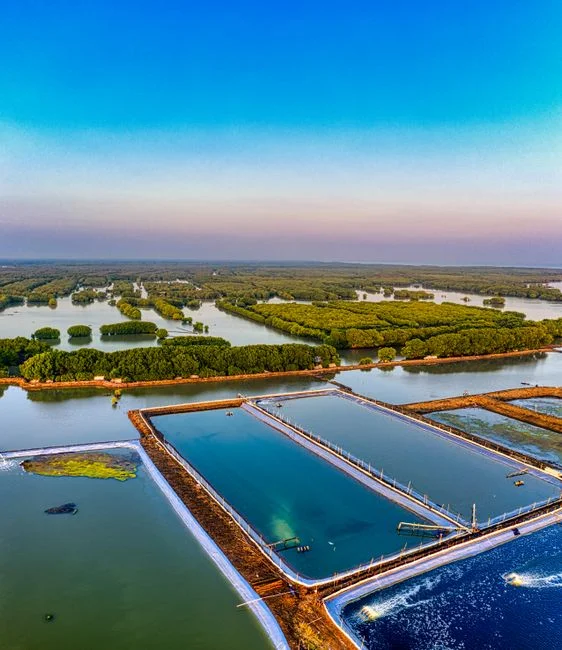
A defensible design starts with measured and seasonal wastewater flows, not a per-capita rule. Request current flow records, seasonal monitoring and credible estimates for unconnected or informal sources. Then characterize COD, BOD5, TSS, oil and grease, suspended solids, pH and temperature, together with industrial or agricultural inputs. Without this information, a nominal flow range cannot establish either hydraulic or organic capacity.
Map the network boundary, inlet invert levels, available gravity, pumping requirements and the distance from collection points to the plant. The cited catalog ranges—10–2,000 m³/day for MBR and 1–80 m³/h for WSZ—are selection envelopes, not a basis for choosing a model. The selected unit must match the measured peak hydraulic load and the expected process loading.
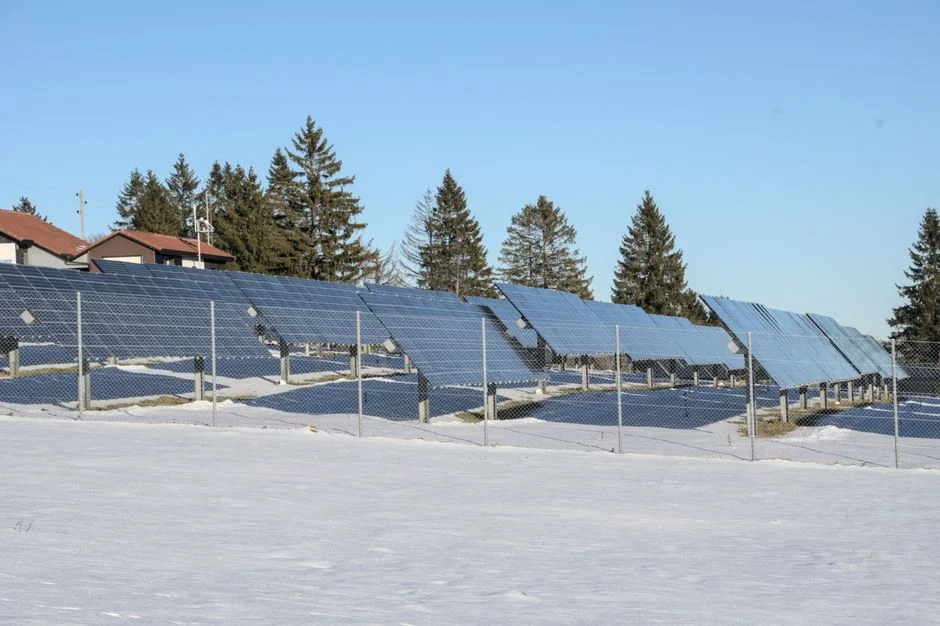
For off-grid projects, energy is a design constraint rather than an accessory. The research estimates that a 250 m³/day MBR operating at 1.0 kWh/m³ needs approximately 10 kW continuously, a 25–30 kWp PV array and 60–80 kWh of storage. It estimates an A/O at 0.4 kWh/m³ needs approximately 3–4 kW continuously and a 10–12 kWp array. These figures should be checked against the actual duty cycle, solar resource, generator availability and treatment objectives.
| Design input | Evidence or required information | Why it controls the decision |
|---|---|---|
| Hydraulic load | Current and seasonal flow measurements; collection-network boundary | Sets hydraulic capacity, pumping and pipe requirements. |
| Organic and solids load | COD, BOD5, TSS, oil and grease, suspended solids, pH and temperature | Determines biological loading, pretreatment and sludge production. |
| Site and conveyance | Inlet invert levels, gravity, pumping, distance and flood exposure | Determines headworks, site works, access and resilience. |
| Off-grid energy | 250 m³/day MBR: approximately 10 kW, 25–30 kWp PV and 60–80 kWh storage; A/O: approximately 3–4 kW and 10–12 kWp PV | Source: HydropureWater 2026 Ivory Coast guide. |
| Maintenance | Redundancy, bypass containment, sludge removal, odor control and maintenance access | Prevents an unsafe or unserviceable installation. |
Where wastewater contains solids or debris, evaluate headworks requirements. A rotary mechanical bar screen may be relevant, but its aperture, capacity and solids-disposal route must follow the influent characterization rather than a standard package assumption.
Plan Permitting, Construction and Operator Handover
The equipment purchase should sit inside a permit-to-performance schedule with named deliverables. The cited 2024–2025 deployment sequence uses weeks 0–4 for site survey, geotechnical work, flood-risk review, influent characterization and pre-permit work. Weeks 4–10 cover factory acceptance testing, containerization, power-system construction and shipping via Abidjan; the research cites typical transit of 35–45 days including customs. Weeks 10–16 cover civil works, headworks installation, chemical dosing, electrical connection and equipment installation. Weeks 16–20 cover commissioning, operator training, a 30-day performance test and handover with telemetry credentials.
The research says pre-permit application through authorization commonly takes 8–14 weeks when the submission includes influent characterization, a compliance calculation, a site plan with flood-line justification and a telemetry specification. These are cited deployment and permitting benchmarks, not guaranteed dates for every authority or site.
| Stage | Cited sequence | Buyer’s acceptance evidence |
|---|---|---|
| Survey and pre-permit | Weeks 0–4 | Survey, geotechnical report, flood-risk review, influent characterization and permit application. |
| Factory acceptance and logistics | Weeks 4–10; 35–45 days transit including customs | Approved FAT procedure, equipment certificates, shipping plan and import documentation. |
| Civil and installation | Weeks 10–16 | Civil acceptance, headworks, dosing, electrical installation and equipment commissioning records. |
| Testing and handover | Weeks 16–20 | Operator training, 30-day performance test, telemetry credentials, manuals, spares and asset register. |
| Permit pathway | Usually 8–14 weeks for a complete cited submission | Current written authorization, outlet conditions and audit obligations. |
Source: HydropureWater 2026 Ivory Coast guide.
The operator contract should cover routine operation, laboratory or field testing, sludge removal, consumables, MBR membrane cleaning, reporting and corrective maintenance. The cited GIZ/SAHER precedent used a three-year build-operate-transfer model followed by handover to ONEP; treat this as an operating-model precedent, not a universal procurement requirement. The handover condition should state tested effluent performance, outstanding defects, documentation, training completion, critical spares and the funded maintenance period.
Build a Funded Operating and Reuse Model
Compare lifecycle affordability, not purchase price alone. The financial model should include energy, chemicals, sludge hauling and disposal, routine maintenance, laboratory testing, operator labor, membrane replacement and site works. A lower equipment price can be outweighed by a weak power supply, unavailable spare parts, untested sludge routes or insufficient operator coverage.
The research estimates that 250 m³/day sold at 200 FCFA/m³ over a 300-day delivery window could offset approximately XOF 15 million per year in plant operating costs. The 300-day period is a seasonal delivery assumption, not guaranteed annual output. Before treating this as revenue, model collection losses, storage, actual demand, payment rates, seasonal variability and equipment availability. A reuse line should also identify the customer and the service obligation, not merely assume that treated water can be sold.
The cited comparison assigns A/O the simpler maintenance profile. MBR adds documented clean-in-place requirements and a membrane-replacement budget on a 5–8 year cycle. For lifecycle costing, obtain the membrane warranty, replacement-price schedule, expected cleaning frequency and chemical consumption from the supplier and include them in the reserve account. Detailed comparisons of buried wastewater treatment system specifications and containerized MBR sizing considerations can inform the technical review, but local quotations and operating data remain necessary.
Where the municipality lacks process engineers or a funded operating team, a build-operate-transfer or performance-based contract may reduce implementation risk. Define the handover test, compliance responsibility, payment deductions, insurance, asset condition and transfer date in advance. For systems serving several villages, document who owns the asset, collects fees, handles taxes, remits revenue to the operator and funds the maintenance reserve. Without those flows, the plant can remain physically complete but financially unsupported.
Frequently Asked Questions
What is the cheapest practical sewage treatment option for a small rural community in Côte d’Ivoire?
There is no supportable universal price or technology answer. A containment-based onsite route may have the lowest initial cost where households are dispersed and no receiving treatment point exists, but its viability depends on funded emptying, transport and downstream treatment. For a compact treatment plant, request a total installed cost that includes civil works, headworks, power, controls, commissioning, permits, operator training and initial sludge-management arrangements, then compare the A/O and MBR operating plans. Do not accept a package-plant quotation without the faecal-sludge and handover obligations defined.
When should a rural project choose MBR instead of a buried WSZ A/O plant?
Choose MBR when the project has a defined reuse application, a constrained footprint and an operator capable of membrane clean-in-place and log control. Choose WSZ A/O when discharge to a drain is the endpoint, the site presents flood or landscaping constraints, the influent is predominantly domestic and routine operator capability is available. Confirm the required effluent envelope and demonstrate that the selected train can meet it under the measured influent.
How much wastewater treatment capacity does a 250-person village need?
The research does not provide a defensible flow for a 250-person village, so the buyer should obtain current and seasonal wastewater flows rather than apply an unsupported per-capita conversion. Record household occupancy, water use, commercial inflows, collection losses and seasonal variation. Size the hydraulic and organic treatment train only after this measurement and the upstream pretreatment requirement have been established.
What does a decentralized rural sewage plant cost to install and operate?
Request a supplier quotation using the same site, flow, effluent and reuse basis. It should separate equipment, shipping, customs, civil works, headworks, electrical and solar systems, controls, installation, commissioning, permits and operator training, then present energy, chemicals, labor, testing, sludge hauling, membrane replacement and maintenance reserves. The cited reuse estimate of approximately XOF 15 million per year is an offset under a specific 250 m³/day, 200 FCFA/m³, 300-day assumption—not an installation quote or guaranteed income.
Which permits and effluent tests are needed before a rural sewage plant can operate in Côte d’Ivoire?
Confirm the current authorization route and outlet conditions with ONAD, ANDE and the relevant local authority before final design. The cited submission includes influent characterization, a DPE 2020 compliance calculation, a site plan with flood-line justification and a telemetry specification. The 30-day performance test and subsequent monitoring should cover the permitted parameters; for reuse, also confirm the applicable WHO 2022 or project-specific requirement and validate disinfection at the final sampling point. The permit is the controlling document, not the catalogue or benchmark alone.
Related Equipment
- buried WSZ A/O sewage treatment plant — specifications, capacity range, and technical data