
Why Small Communities Are Now Central to Ivory Coast's Sewage Plan
A small community wastewater system in Ivory Coast is typically a packaged 50–500 m³/day A/O or MBR plant designed to meet DPE 2020 effluent limits of COD ≤125 mg/L, BOD ≤25 mg/L, TSS ≤35 mg/L, and E. coli ≤1,000 CFU/100mL. Buried A/O units cost roughly €25,000–€60,000 for 100 m³/day while containerized MBRs run €80,000–€180,000 but produce reuse-quality effluent under 30 mg/L COD for cocoa irrigation and aquaculture. The economic and public-health case for closing Ivory Coast's sewage gap runs through these small, distributed plants, not the headline megaprojects. The 2020–2030 Water Security Plan (Ministry of Hydraulics) sets a 1.5 million m³/day existing treatment capacity against 3.8 million m³/day projected demand by 2030, with urban coverage targeted to rise from 22% in 2020 to 100% by 2030. Roughly 78% of Ivorian communes sit below 50,000 inhabitants and are outside the Arab Contractors 6-city, €80M CAPEX footprint that dominates the current project pipeline. The 2022 Gagnoa flood event released an estimated 500,000 m³ of untreated sewage when combined sewers were overwhelmed (UNEP 2023) — a precedent that argues for distributed, flood-resilient small systems rather than further centralization. Receiving-water consequences are documented: Frontiers in Microbiology (2022) reports altered fish gut-associated bacterial communities in the Aghien lagoon linked to wastewater input, including the toxin-producing cyanobacterium Planktothrix found in both water and fish guts. A procurement strategy built around packaged 50–500 m³/day plants is therefore the only architecture that can meet the 100% coverage target on the timeline and budget available.
DPE 2020 and WHO 2022 Effluent Limits Translated for a Small Plant
DPE 2020 (Arrêté n°110/MINEDD/AGRE/2020) sets the discharge envelope; WHO 2022 reuse guidelines set the irrigation ceiling. A small plant must be specified against both, because a municipal engineer in Bouaké sizing a 250 m³/day plant for a cocoa-belt town will be asked whether the effluent can be sold to farmers, not just whether it can be discharged to a drain. The two envelopes diverge sharply: general DPE 2020 discharge allows E. coli up to 1,000 CFU/100mL, while WHO 2022 unrestricted irrigation caps it at ≤10 CFU/100mL — a 100× tightening that only MBR or A/O + UV/chlorine dioxide trains can consistently meet. ANDE (Agence Nationale de l'Environnement) conducts annual audits and can levy fines of XOF 5–50 million per non-compliant outfall, plus permit revocation (Ministry of Environment, 2024). Vridi industrial pre-treatment requires COD ≤500 mg/L to municipal sewer, which is why cocoa-, cashew-, and fish-processing camps discharging to a municipal collector must pre-treat FOG with a DAF stage before the biological reactor.
| Parameter | DPE 2020 General Discharge | WHO 2022 Unrestricted Irrigation | EU UWWTD 91/271/EEC (Sensitive Areas) |
|---|---|---|---|
| COD | ≤125 mg/L | ≤50 mg/L | ≤125 mg/L |
| BOD5 | ≤25 mg/L | ≤10 mg/L (target) | ≤25 mg/L |
| TSS | ≤35 mg/L | ≤10 mg/L (target) | ≤35 mg/L |
| E. coli | ≤1,000 CFU/100 mL | ≤10 CFU/100 mL | — (bathing ≤1,000 CFU/100 mL) |
| Total Nitrogen | Not specified | ≤15 mg/L (target) | 10–15 mg/L |
| Total Phosphorus | Not specified | — | 1–2 mg/L |
A packaged plant built only to the DPE 2020 column leaves reuse revenue on the table; one built to the WHO 2022 column can be tendered with a revenue line in the BOQ. A telemetered SCADA or self-monitoring data logger is no longer optional for ANDE sign-off — annual audits in 2024–2025 have increasingly required continuous effluent data (HydropureWater field data, 2025).
Buried A/O Package vs Containerized MBR: Architecture Trade-off
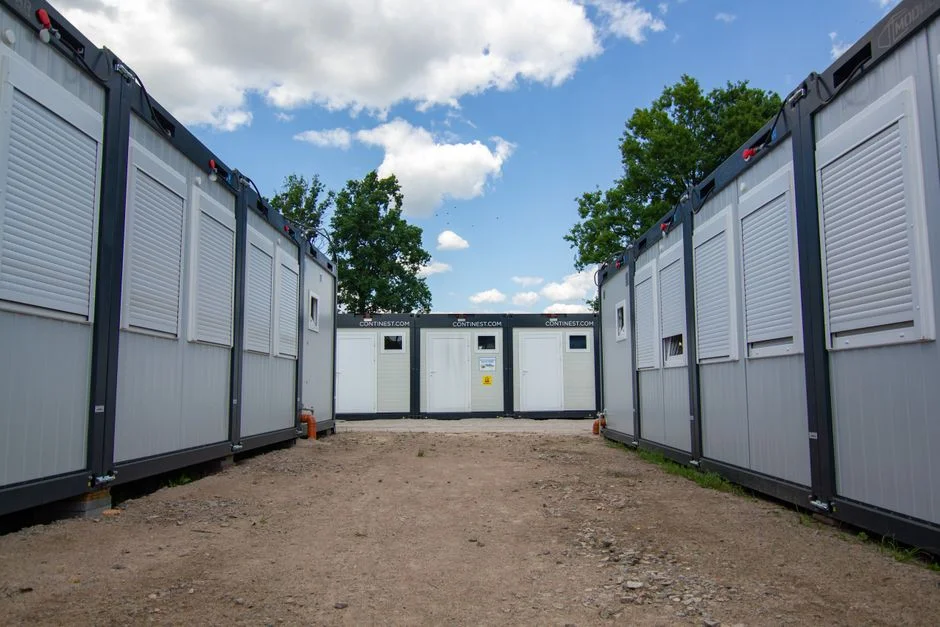
The two architectures that dominate small-town tenders in West Africa are the buried A/O package and the containerized MBR. They are not interchangeable — each fits a different site, operator, and revenue model. A WSZ-series buried A/O package plant combines anoxic and aerobic contact oxidation, sedimentation, and chlorine-dioxide or UV disinfection in a single buried tank, rated 1–80 m³/h (~25–1,900 m³/day), fully automated, and landscaping-compatible above the lid. A containerized MBR system pairs activated sludge with submerged PVDF hollow-fiber membranes (0.1 µm nominal pore) inside a 20- or 40-ft ISO container, rated 10–2,000 m³/day, with a footprint roughly 60% smaller than an equivalent conventional activated-sludge plant. COD removal on the A/O train runs 92–96% with effluent typically <50 mg/L; MBR trains run 95–99% with effluent consistently <30 mg/L (per the Arab Contractors 6-city benchmarks and Veolia La Mé reference). Energy is the decisive off-grid variable: MBR consumes 0.8–1.2 kWh/m³ against A/O's 0.3–0.5 kWh/m³, which doubles the PV array and battery buffer required for solar-only operation. Operator skill is the second variable: A/O tolerates a generalist municipal technician with quarterly membrane-free maintenance, whereas MBR demands documented CIP protocols, periodic chemical clean-in-place, and a membrane-replacement budget on a 5–8 year cycle.
| Parameter | WSZ Buried A/O Package | Containerized MBR |
|---|---|---|
| Flow range | 25–1,900 m³/day | 10–2,000 m³/day |
| COD removal | 92–96% (effluent <50 mg/L) | 95–99% (effluent <30 mg/L) |
| BOD5 removal | ~95% | ~98% |
| E. coli compliance | DPE 2020 with ClO2 or UV | WHO 2022 unrestricted irrigation routinely met |
| Energy | 0.3–0.5 kWh/m³ | 0.8–1.2 kWh/m³ |
| Footprint (250 m³/day) | ~180 m² (buried) | ~75 m² (two 40-ft containers) |
| Operator skill | Generalist; quarterly service | CIP-trained; membrane log required |
| Membrane replacement | None | Every 5–8 years (~12–18% of OPEX) |
| Reuse readiness | DPE 2020 discharge; limited irrigation | Cocoa, hevea, aquaculture direct |
Decision rule: choose A/O when discharge-to-drain is the endpoint, the site is flood-prone (buried tank survives inundation), and operator depth is shallow. Choose MBR when the revenue model depends on reuse, footprint is constrained (e.g., peri-urban San-Pédro plots), and an ONEP- or SAHER-style operator with telemetry can run the membrane CIP cycle.
Sizing and CAPEX/OPEX for 100, 250, and 500 m³/day
Published CAPEX for 10,000 m³/day plants — €5–€8M for A/O and €12–€18M for MBR — does not help a municipal engineer tender a 250 m³/day plant for a 3,000-person town. Scaling the equipment-only and site-cost ratios to the small-plant tier produces the following budget envelope, which aligns with 2024–2025 quotes on packaged plants shipped into Abidjan for similar Ivorian and Ghanaian communes (HydropureWater field data, 2025).
| Capacity | A/O Buried Package (CAPEX) | MBR Containerized (CAPEX) | A/O OPEX (per m³) | MBR OPEX (per m³) |
|---|---|---|---|---|
| 100 m³/day | €25,000–€60,000 | €80,000–€130,000 | XOF 350–550 | XOF 700–1,000 |
| 250 m³/day | €55,000–€110,000 | €130,000–€220,000 | XOF 300–500 | XOF 650–950 |
| 500 m³/day | €95,000–€180,000 | €200,000–€360,000 | XOF 280–450 | XOF 600–900 |
OPEX above includes electricity, chlorine/UV consumables, sludge hauling, and (for MBR) a sinking fund for membrane replacement. Disinfection on either train is most economically delivered by a chlorine dioxide generator at 0.5–1.0 mg/L ClO2 residual, which avoids the THM formation problem of bulk sodium hypochlorite at 28–32 °C ambient temperatures. For off-grid operation, the sizing rule of thumb for a 250 m³/day MBR at 1.0 kWh/m³ is ~10 kW continuous, achievable with a 25–30 kWp PV array and a 60–80 kWh lithium battery buffer sized to ride through the night aeration cycle; an A/O at 0.4 kWh/m³ needs only 3–4 kW continuous and a 10–12 kWp array. The GIZ Green People's Energy / SAHER solar-standpipe precedent — 17 units installed in Sud-Comoé, Agnéby-Tiassa, and La Mé under a 3-year build–operate–transfer to ONEP at 450 FCFA/1,000 L — proves the solar-plus-tariff model works for water service delivery in rural Côte d'Ivoire. The same model ports to sewage if the tariff is set on treated-cubic-meter rather than raw-cubic-meter and the operator is contractually bound to ANDE discharge compliance. For a deeper cost breakdown, see this municipal wastewater plant OPEX breakdown 2026 and the related packaged wastewater plant engineering guide for KwaZulu-Natal for comparable small-scale economics.
Reuse Economics: Cocoa, Aquaculture, and Town Irrigation
Reuse is the line that turns a packaged sewage plant from a compliance cost into a small municipal revenue line. WHO 2022 reuse ceilings — COD ≤50 mg/L and E. coli ≤10 CFU/100mL for unrestricted irrigation — are reachable on a containerized MBR with a working UV or ClO2 polishing step, but they are difficult to guarantee on a buried A/O package alone. Côte d'Ivoire produces ~40% of the world's cocoa, and a 250 m³/day plant adjacent to a 50-hectare cocoa or hevea block can substitute treated effluent for freshwater irrigation during the November–March dry season, when agronomic water demand peaks and lagoon baseflow is lowest. The Ebrié and Aghien lagoons already support significant capture fisheries and aquaculture — ICES Journal of Marine Science documents Ethmalosa fimbriata and a diverse fish community in a multipolluted Ebrié Lagoon — so safely treated discharge that recharges downstream fish ponds rather than the open lagoon is a tangible ecological co-benefit. A conservative reuse-economics estimate: at 250 m³/day and a 200 FCFA/m³ irrigation water price, a town could offset ~XOF 15 million/year of OPEX (250 × 200 × 300 days ≈ XOF 15,000,000). For sites with high FOG from a neighbouring cocoa-, palm-oil-, or fish-processing camp, a DAF pre-treatment unit upstream of the biological stage protects membrane life on the MBR and prevents clarifier scum overload on the A/O — paying back its own power and polyacrylamide consumption in 12–24 months at sites where FOG >150 mg/L in the influent.
Deployment Playbook: From Container Arrival to ANDE Sign-off
Small-town sewage projects fail more often in execution than in engineering. The sequence below is the realistic 20-week path from PO to ANDE handover, based on 2024–2025 packaged-plant deployments in West African communes (HydropureWater field data, 2025). Phase 1 (Weeks 0–4) — site survey, geotech, flood-risk check against the Gagnoa 2022 precedent (siting above the 100-year flood line or behind a 1.0 m berm), influent characterization, and ANDE pre-permit application. Phase 2 (Weeks 4–10) — factory acceptance test in China for both the reactor and the headworks, containerization, genset or solar-array build, and shipping via Abidjan port (typical transit 35–45 days including customs). Phase 3 (Weeks 10–16) — civil works including the buried-tank excavation for the A/O option or the container pad for the MBR option, headworks installation with a rotary mechanical bar screen at 6 mm aperture, and an automatic chemical dosing system for coagulant and ClO2 precursor feed, plus electrical tie-in. Phase 4 (Weeks 16–20) — commissioning, operator training (minimum 5 days on-site for MBR, 2 days for A/O), 30-day performance test against DPE 2020 limits, and ANDE handover with telemetry credentials. The GIZ/SAHER 3-year BOT-then-handover to ONEP is a tested template that should be specified in the tender: the private operator carries the membrane-replacement and SCADA-telemetry risk for the first three years, then transfers a working, telemetered plant to the municipality. This same financing model is recommended for distributed, decentralized wastewater treatment in a comparable East African capital.
Frequently Asked Questions
What are the DPE 2020 effluent limits for a packaged sewage plant in Ivory Coast?
DPE 2020 general discharge limits are COD ≤125 mg/L, BOD5 ≤25 mg/L, TSS ≤35 mg/L, and E. coli ≤1,000 CFU/100 mL. Vridi-zone industrial pre-treatment to municipal sewer is stricter at COD ≤500 mg/L (Ministry of Environment, 2024).
Should I choose a buried A/O package or a containerized MBR for a 250 m³/day plant?
Choose a buried A/O package when discharge-to-drain is the endpoint, the site is flood-prone, and operator depth is limited — CAPEX runs €55,000–€110,000. Choose a containerized MBR when reuse revenue (cocoa, hevea, aquaculture) is part of the business case and the footprint is tight — CAPEX runs €130,000–€220,000 with WHO 2022-grade effluent.
Can a packaged sewage plant run on solar power in rural Ivory Coast?
Yes. A 250 m³/day A/O at 0.4 kWh/m³ needs ~3–4 kW continuous, or a 10–12 kWp PV array with a small battery buffer. A 250 m³/day MBR at 1.0 kWh/m³ needs ~10 kW continuous, achievable with a 25–30 kWp array and 60–80 kWh of storage. The GIZ/SAHER solar-standpipe precedent (17 units, 3-year BOT to ONEP) demonstrates the operating model.
How long does ANDE permitting take for a packaged plant?
Pre-permit application through final authorization typically runs 8–14 weeks when the submission includes the influent characterization, DPE 2020 compliance calculation, site plan with flood-line justification, and SCADA/telemetry specification. ANDE conducts annual audits after commissioning and may levy XOF 5–50 million in fines for non-compliance.
What revenue can a small-town reuse scheme realistically generate?
At 250 m³/day and 200 FCFA/m³ irrigation water pricing over a 300-day dry-season delivery window, a town can offset ~XOF 15 million/year of plant OPEX. Cocoa-belt and peri-urban Abidjan sites have closed at higher prices (250–400 FCFA/m³) where treated effluent substitutes for trucked freshwater.