Why Calgary Residential and Camp Projects Need a Containerized MBR STP
Calgary's climate and the typical camp occupancy profile make a containerized package more practical than a poured-concrete plant for most residential and camp projects, because the bioreactor tanks, membrane modules, blowers and control panel arrive pre-assembled inside a standard shipping container and can be winterized inside the same enclosure (Source: dynatecsystems.com, 2026). A Calgary work camp or a fractional-use recreational camp swings from near-zero occupancy in January to maximum seasonal headcount in July, and a residential subdivision on the city fringe often needs a treatment unit that can be trucked in, commissioned in days, and relocated if the land lease ends.
Dynatec explicitly attributes that mobility to the containerized format and notes that the container "greatly simplifies installation and limits the need for additional civil work at the site" (Source: dynatecsystems.com, 2026). The following sections detail the sizing steps before comparing containerized units against package septic systems and conventional activated sludge (CAS) on the same population.
Step 1 — Establish the Design Population and Daily Average Flow
Average daily flow in m³/d is the primary metric for sizing containerized MBRs. Start with the design population. For a residential development, multiply the unit count provided by the developer by the standard occupancy assumed for each dwelling type; for a camp, multiply the bed count by the maximum shift occupancy stated by the operator. The camp designer must declare the design population as the maximum seasonal headcount, not the annual average, because an MBR sized to the annual mean will be undersized on the first hot week of July when every bed is full. Apply a per-capita wastewater flow to that population. The IDA Water Security Handbook states that "the primary units of measurement used in the IDA Water Security Handbook are the cubic metre and (for smaller quantities) the litre, measured on a per day basis" (Source: IDA Water Security Handbook 2019, GWI/IDA). Staying in m³/d from this point forward keeps vendor quotes directly comparable. The per-capita value itself is project-specific, so it must be confirmed with the engineer of record and the receiving wastewater system before any other calculation runs. For more on how a small residential system is typically specified, the home sewage treatment plant buyer's guide walks through the equivalent inputs at single-dwelling scale.
Step 2 — Apply a Peaking Factor for Calgary Residential and Camp Loads
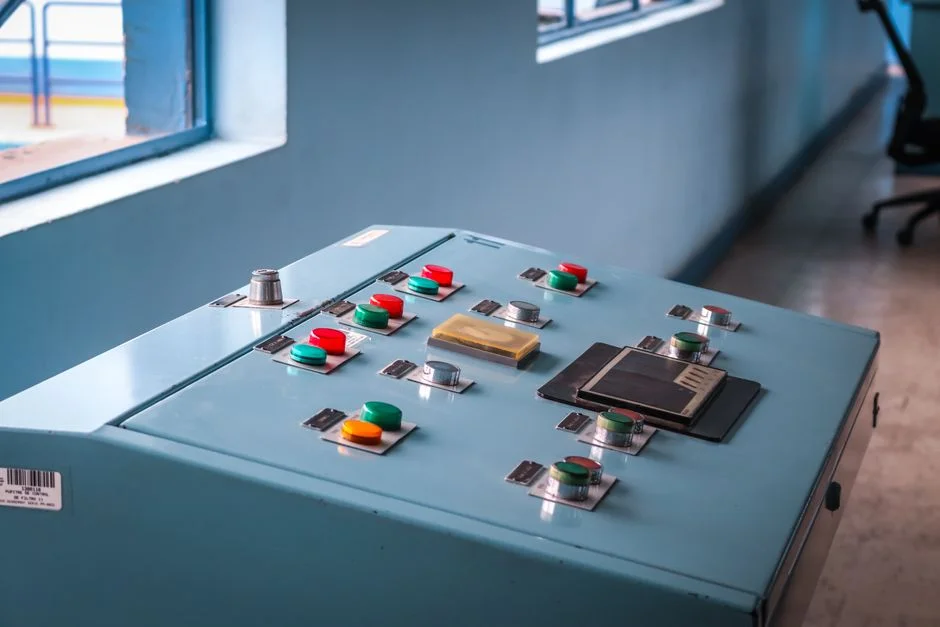
Peak hourly flow dictates the membrane hydraulic capacity and the equalization volume. The peaking factor is the ratio of peak-hour flow to average-day flow, and it is highly project-specific: a Calgary residential subdivision on metered water will peak lower than a remote camp where 200 workers shower inside a 30-minute shift change. The peaking factor must be requested from the engineering of record or derived from hourly water-meter data where available. The outputs of this step are peak flow in m³/d and peak flow in m³/h, both of which the supplier needs to confirm the membrane module's rated flow. For a 1 m³/h peak, the IDA Handbook confirms the unit conversion — 1 m³ = 1,000 litres (Source: IDA Water Security Handbook 2019, GWI/IDA) — which lets the same number be expressed as 16.67 L/min when the supplier asks for it in those units. Skipping this step is the most common reason containerized MBRs arrive under-buffered; the membrane can pass the average, but a meal-time surge trips a high-level alarm.
Step 3 — Check Organic and Ammonia Loading on the Bioreactor
Organic and ammonia loading define the required aeration tank volume and membrane area. The standard influent parameters to declare are BOD, COD, TSS, TKN and ammonia-nitrogen; Dynatec lists BOD, TSS, TKN and Ammonia explicitly as the design parameters the containerized MBR is engineered to treat below discharge limits (Source: dynatecsystems.com, 2026). Organic loading is expressed as kg BOD per m³ of bioreactor per day, and that loading rate is the input the supplier uses to set the aeration tank volume. The loading rate is a value to request from the supplier and confirm against the engineering of record, not an assumed number. Ammonia-nitrogen loading drives the nitrification air demand and the membrane's tolerance for free ammonia, and a camp with a kitchen waste stream can have a disproportionately high ammonia load relative to its BOD. The membrane acts as an absolute barrier to biomass washout, so the designer can run a higher mixed liquor suspended solids (MLSS) than a clarifier-based plant, which increases the treatment capacity inside the same container footprint (Source: dynatecsystems.com, 2026). For an equipment reference once the worksheet is complete, see the HydropureWater integrated MBR membrane bioreactor system product page.
Containerized MBR Design Parameters and Sizing Inputs
The table below pulls Steps 1 to 3 into a single worksheet the reader can screenshot and send to a vendor. Each row names the source of the input so it is clear who must supply the number before the RFQ goes out.
| Parameter | Unit | Source of input |
|---|---|---|
| Design population | persons | Developer (dwelling count) or camp operator (bed × max shift) |
| Per-capita wastewater flow | m³/person·d | Engineer of record, confirmed with the receiving system |
| Average daily flow | m³/d | Calculated: design population × per-capita flow |
| Peaking factor | dimensionless | Engineer of record, derived from hourly water-meter data |
| Peak daily flow | m³/d | Calculated: average flow × peaking factor |
| Peak hourly flow | m³/h | Calculated: peak daily flow ÷ hours of peak window |
| BOD load | kg/d | Site-specific influent study or default wastewater strength |
| Ammonia-nitrogen load | kg/d | Site-specific influent study |
| Bioreactor volume | m³ | Supplier, based on organic loading rate and MLSS target |
| Membrane area | m² | Supplier, based on peak flow and module flux |
| Container count and dimensions | count, m | Supplier, verified against site access and hauling constraints |
Two unit conventions from the IDA Water Security Handbook are useful when a vendor quote arrives in non-metric units: 1 m³ = 264.2 US gallons and 1 MGD = 3,785 m³/d (Source: IDA Water Security Handbook 2019, GWI/IDA). A 50 m³/d design flow equals roughly 13,200 US gallons per day, which is the only way to sanity-check a quote that has been returned in US gallons.
Containerized vs Skid-Mounted MBR: Choosing the Right Footprint for Calgary
The procurement decision between a fully containerized MBR and a skid-mounted MBR with out-of-basin membranes depends on site constraints, lease length, and whether an existing bioreactor is already in place. The table below summarizes the two formats as Dynatec describes them (Source: dynatecsystems.com, 2026).
| Criterion | Containerized MBR | Skid-mounted MBR (out-of-basin membranes) |
|---|---|---|
| Tank arrangement | All tanks and equipment housed inside the shipping container | Membrane skid installed outside an existing bioreactor (circular, rectangular, above or below ground) |
| Civil works at site | Limited additional civil work; container is set on a prepared pad | Reuses existing infrastructure and building space with little or no change |
| Mobility | Can be moved to another location with relative ease | Less mobile; tied to the existing reactor |
| Expandability | Re-quote with a larger container or additional unit | Simple addition of more membranes or membrane skids to the same skid frame |
| Best fit for Calgary | Remote work camps on short-term land leases, tight footprints, fast commissioning | Long-term residential subdivisions where a cast-in-place or package tank already exists |
| Freeze protection | Insulation and heat-trace concentrated on the container envelope | Distributed across the bioreactor, skid piping and any above-grade tanks |
For a remote camp with seasonal occupancy, the containerized format is usually the lower-risk option because the entire process stream stays inside one insulated envelope. For a phased Calgary residential subdivision where the developer already plans a cast-in-place concrete tank, a skid-mounted retrofit to that tank, using a DF series flat sheet MBR membrane module, can be cheaper over the life of the project. The same trade-off is covered from the design-criteria side in the MBR design criteria engineering guide.
Cold-Climate and Site Considerations Specific to Calgary
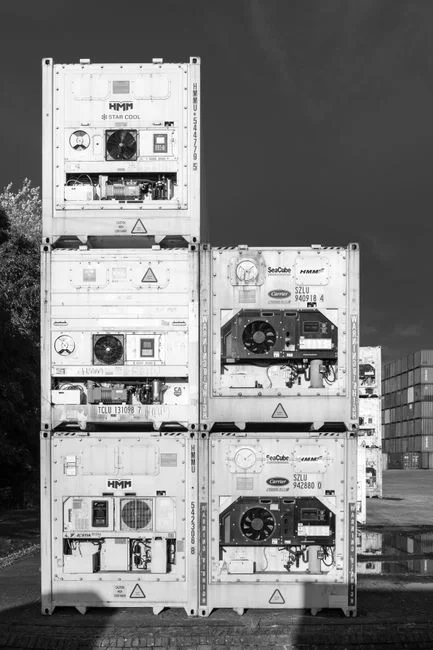
Freezing risk on the membrane, blower and permeate lines is the primary technical challenge for Calgary winter operations. Because the membrane modules, blowers and control panel are all housed inside the container, freeze protection is largely a container-insulation and heat-trace problem rather than a civil-works problem (Source: dynatecsystems.com, 2026). The containerized format is also mobile and can be moved to another location with relative ease, which matters for camps on short-term land leases where the operator may have to vacate the site at the end of a contract (Source: dynatecsystems.com, 2026). For camp projects, the designer must confirm winter access for the membrane cleaning crew and for the periodic sludge-removal truck. Snow load on the container roof, pad drainage around the unit, and a level truck-turning radius are the three site items most often missed at the RFQ stage.
Approvals, Vendor Selection and the RFQ Checklist
The approvals to confirm in writing before ordering a containerized MBR for a Calgary project include written confirmation from Alberta Environment and Protected Areas regarding discharge standards, municipal wastewater system authorization, and any regional health-authority sign-off required for camp effluent. The vendor must be asked to confirm in writing that the unit is supplied as a true containerized MBR with tanks inside the container, not a skid system relabelled as containerized; Dynatec and B&P Water Tech both offer the containerized format as a named product line (Source: dynatecsystems.com, 2026; bpwatertech.com, 2026). The RFQ checklist items below should appear in the enquiry so that every quote arrives on a comparable basis: design flow in m³/d, peak flow in m³/h, BOD/COD/TSS/TKN/ammonia influent and effluent targets, bioreactor volume, membrane area in m², container count and external dimensions, blower kW, control panel scope, and the freeze-protection package. The containerized MBR STP sizing guide for La Paz covers the same worksheet for a very different climate and is useful as a cross-check on which inputs are climate-driven versus project-driven.
Frequently Asked Questions
What flow unit should I use in a Calgary containerized MBR RFQ?
Use m³/d for average and peak daily flow and m³/h for peak hourly flow, because the IDA Water Security Handbook confirms m³/d as the industry-standard unit and provides the conversion 1 MGD = 3,785 m³/d for any quote returned in US gallons (Source: IDA Water Security Handbook 2019, GWI/IDA). Ask the vendor to quote in the same units so the bid tab is comparable across suppliers.
How do I check that a supplier is offering a true containerized MBR and not a relabelled skid?
Ask the supplier in writing whether the bioreactor tanks are housed inside the shipping container, and whether the system can be moved to another location with relative ease, which is the defining attribute Dynatec attributes to the containerized format (Source: dynatecsystems.com, 2026). A skid system relabelled as containerized will not pass that test because its tanks sit outside the skid frame.
What influent parameters must I declare before the supplier can size the membrane area?
Declare BOD, COD, TSS, TKN and ammonia-nitrogen, because Dynatec identifies those exact parameters as the design inputs the MBR is engineered to treat below discharge limits (Source: dynatecsystems.com, 2026). A site-specific influent study is preferred for camp projects