Start with the receiving sewer and the wastewater that actually enters it
Transportation-equipment plants near Goshen meet pretreatment limits through a site-specific process: characterize the wastewater, exclude prohibited or unsuitable flows, treat the pollutants identified by the sewer authority, control discharge rate, and document representative compliance sampling. Goshen’s sewer rules permit the Building Inspector to reject industrial waste, require pretreatment, control discharge quantity and rate, and charge for added treatment costs. Chapter 79 also prohibits certain clean inflows and authorizes inspection, measurement, sampling, and testing. Equipment should be selected only after the controlling requirements and actual plant waste streams have been reviewed.
The legally controlling package is more specific than a generic industrial pretreatment checklist. Start with the Town of Goshen’s Ordinance 5189, the current 54-page Wastewater Pretreatment Standards and Requirements published by goshen.in.gov on 2026-01-26, any industrial-user permit, and written discharge directions. A sewer-connection agreement or other user requirement may add operating conditions. A broader reference is the transportation-equipment plant pretreatment compliance guide, but its design logic does not replace Goshen’s local requirements.
EPA’s Local Limits Development Guidance, issued 2021-06-25, explicitly states that it is guidance rather than a regulation. For an indirect discharger, obligations arise through the industrial-user permit or equivalent control mechanism and other regulatory requirements; where guidance conflicts with a permit, regulation, or local ordinance, the controlling requirement governs. Use the EPA document to organize pollutants of concern, sampling, and treatment-selection questions—not to invent limits.
Map the actual discharge boundary before buying equipment. Trace process rinse water, vehicle or component washing, equipment cleaning, floor drainage, paint-related waste, cooling water, stormwater, groundwater, roof runoff, and subsurface drainage to their final destinations. Chapter 79 prohibits discharging unpolluted stormwater, groundwater, roof runoff, subsurface drainage, or cooling water into a sanitary sewer. A clean-flow diversion may therefore be the first pretreatment measure.
Do not assume the discharge point is a POTW treatment system. The design must protect the receiving collection system and address the industrial user’s responsibility to prevent interference, pass-through, prohibited discharges, treatment-plant upset, and collection-system damage. If a proposed unit discharges elsewhere, document that route and obtain the separate approvals it requires; it is not automatically a Goshen sewer-pretreatment solution.
Build a source-by-source wastewater profile
Transportation-equipment manufacturing has no single universal wastewater profile; the operations actually present at the plant determine what must be characterized. Review vehicle or component washing, paint preparation, coating, machining, metal finishing, and equipment cleaning separately. Chemical cleaners, lubricants, paints, metals, and wash media can behave differently, and combining them before characterization can conceal the source of an upset.
Ask the receiving sewer authority for its list of pollutants of concern, prohibited discharges, concentration limits, flow restrictions, monitoring requirements, and sampling instructions. Review them against the current Goshen ordinance, not a copied permit or generic DAF, MBR, or UF specification. The 2026-01-26 Goshen ordinance is the controlling local source; the permit or written direction supplies site-specific conditions.
- Inventory sources: Record each waste stream, operation, drain, chemical used, batch or continuous status, cleaning frequency, and final discharge point.
- Measure flows: Capture production peaks, peak durations, average flow, and slug-discharge events.
- Sample representatively: Use the sampling locations, methods, analytical methods, and flow data appropriate to the authority’s instructions.
- Screen against controls: Evaluate only the constituents identified by the permit or sewer authority and relevant treatment-system constraints.
- Test the proposed process: Use bench or pilot work with representative wastewater before releasing mixed waste to the sewer.
EPA’s 2021-06-25 guidance identifies NPDES permit conditions, water-quality criteria, sludge standards, resource-protection criteria, treatment-plant interference, collection-system and worker protection, industrial and commercial discharges, hauled waste, remediation waste, and hazardous waste as possible screening inputs. It also identifies the POTW, collection system, and industrial user as sampling locations and addresses sampling methods, analytical methods, and flow data. These are investigation inputs, not automatic site limits.
| Plant source to investigate | Data to establish | Decision enabled |
|---|---|---|
| Vehicle or component washing | Flow by wash cycle, cleaning chemical, solids, oil and grease, and production peaks | Determine whether solids or oil removal is needed and size equalization and treatment |
| Paint preparation, coating, and equipment cleaning | Batch volume, concentration, discharge pattern, and regulated constituents | Decide whether to segregate concentrated rinsate and determine the applicable limit |
| Machining and metal finishing | Process origin, flow, constituent profile, and slug potential | Define whether a dedicated stream requires separate treatment |
| Floor drainage, stormwater, groundwater, and cooling water | Cleanliness, routing, and destination | Exclude prohibited clean inflows before sizing the treatment train |
Do not assume a generic automotive wastewater analysis will be accepted. Use representative wastewater from the actual plant and compare treatment alternatives using the DAF versus clarifier for transportation-equipment wastewater and the DAF versus clarifier for EV and automotive wastewater decision frameworks only as screening aids.
Remove unwanted flows before selecting a treatment unit
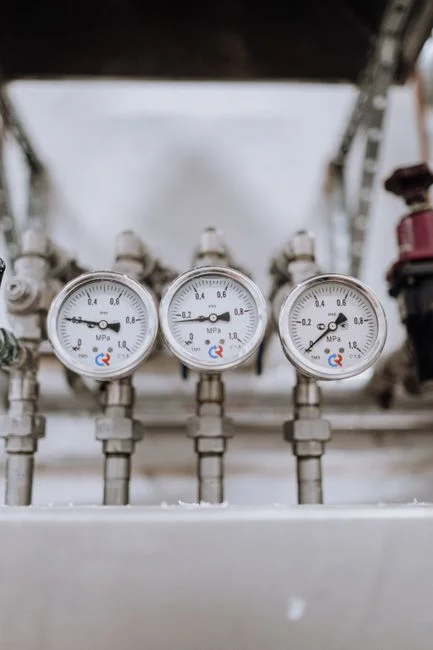
Segregating prohibited clean inflows reduces both treatment load and the opportunity for an avoidable permit violation. Chapter 79 expressly prohibits unpolluted stormwater, groundwater, roof runoff, subsurface drainage, and cooling water from entering a sanitary sewer. Route these streams away from industrial pretreatment with dedicated drains, isolation valves, covered process areas, and physical routing controls; labeling a drain is not a sufficient engineering control.
Separate concentrated cleaning or paint-bearing rinsate from high-volume wash water. Differentation of drains, covered collection, and controlled release allow the more difficult stream to be characterized and treated without forcing all flows through one hydraulic design basis. If those streams must be combined, test the combined mixture because interactions can change treatment performance.
Provide equalization when production, washing, or dumping practices create variable flows and slug loads. The equalization unit must have enough usable retention to absorb the measured peak event, a controlled return path, and a defined high-level response. The operating plan should also reflect Chapter 79’s authority for the Town to control quantities and rates of discharge.
Chapter 79 defines a prohibited discharge condition in relevant part as a discharge that, in the concentration of a constituent or quantity of flow, exceeds for more than 15 minutes more than five times the average 24-hour concentration or flow during normal operation. The Town’s Sewers chapter, as supplied by eCode360, identifies that condition among its prohibited discharges. A permitted plant should ask the Building Inspector how the provision applies to its monitored parameter, averaging period, and operating scenario rather than making that legal interpretation internally.
Segregation, equalization, and flow restriction are not competing equipment choices. They are complementary controls: the first reduce unnecessary load, the second moderate variability, and the third protect downstream capacity and collection-system performance. Complete this work before selecting a DAF, membrane system, or other treatment unit.
Match the treatment process to the regulated pollutants
Treatment selection follows characterization: a unit that removes solids and free oil is not a substitute for a process designed to control dissolved metals or another specifically regulated constituent. Build the train around measured pollutants, applicable Goshen conditions, collection-system protection, and pilot performance.
- Protective screening: Use a rotary mechanical bar screen for industrial wastewater headworks when rags, plastics, fibrous debris, or suspended solids could damage pumps, valves, or downstream biological treatment. EPA’s 2021-06-25 guidance identifies collection-system protection and treatment-plant interference as reasons to control relevant pollutants.
- Oil, solids, and FOG removal: Consider DAF when representative analysis identifies suspended solids, oil and grease, FOG, or colloidal material. The supplied DAF product range covers 4–300 m³/h across 13 standard models and includes automatic skimming. Those are catalog capabilities, not proof of compliance.
- Chemical-dependent treatment: Automatic dosing can support coagulation, flocculation, pH adjustment, or another required chemical step. Establish the chemical, dose, residual, and operating range through jar or pilot testing and the sewer authority’s requirements.
- Biological treatment and fine solids separation: Consider an MBR where biological treatment, solids separation, and very fine effluent filtration are required. The supplied MBR range is 10–2,000 m³/day and specifies filtration below 1 μm.
- Membrane filtration without chemicals: UF can remove bacteria, colloids, and suspended solids and accepts turbidity up to 300 ppm in the supplied product information. Its 0.03 μm PVDF process does not inherently solve dissolved metals, oils, or pollutants absent from the wastewater profile.
- Disinfection: Add it only when the permit, sewer authority, reuse requirement, or receiving-water objective identifies a compliance need.
The treatment vendor’s DAF system for transportation-equipment wastewater pretreatment should be evaluated against measured flow, solids, oil and grease, FOG, and variability—not selected from a process photograph. A pilot should compare the regulated constituents before and after treatment under representative production variation.
| If characterization shows | Potential process step | Procurement condition |
|---|---|---|
| Rags, fibrous debris, plastics, or coarse suspended solids | Mechanical screening or solids removal | Confirm extracted-material handling and downstream disposal |
| Suspended solids, oil and grease, FOG, or colloidal matter | DAF with skimming, possibly preceded by equalization | Use representative loading and flow data; verify skimmings handling |
| Biodegradable organic load requiring biological treatment | Biological process with MBR where fine solids separation is also required | Demonstrate treatment under variable operation and the required effluent quality |
| Fine suspended solids, colloids, or bacteria within the membrane application | Ultrafiltration | Verify feed quality, membrane compatibility, cleaning, and the regulated target |
| Regulated constituent not removable by the candidate process | Additional or alternative treatment | Do not accept a generic package; close the identified performance gap |
The compliance test is straightforward: the proposed train must meet the applicable limit with representative wastewater at expected flow and variability. If the pilot does not demonstrate that result, revise the process or revisit the sewer authority before discharge.
Size the system for peak loading and continuous compliance
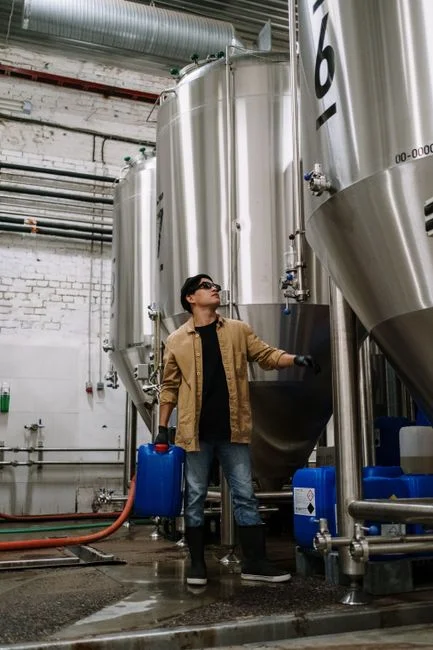
Correct sizing starts with the measured peak flow, its duration, and the associated contaminant load—not average daily wastewater volume. EPA’s 2021-06-25 guidance identifies flow data and the relationship between industrial loadings and maximum allowable headworks loadings as central to pretreatment development. Document the production and cleaning cycle that creates each peak, then test whether the treatment train can handle that event without degrading the regulated discharge.
Size the hydraulic and contaminant-loading bases separately. A unit may have adequate flow capacity while performing poorly under a concentrated oil or solids load, and a high average flow can be less important than a short slug that washes through the system. The design package should show the selected flow, duration, load, and operating assumptions so the sewer authority can review them.
For a DAF selection, compare the candidate model against measured flow range and organic or solids loading. The supplied catalog offers 13 models from 4–300 m³/h, but catalog capacity does not establish that a model will meet a pollutant limit. Pilot results and the treatment guarantee carry the performance claim.
Include the controls needed to maintain performance. Address equalization, duty and standby strategy, redundancy for critical pumps, automatic controls, high-level alarms, equipment status indication, and the response to an upset. The control narrative should identify set points, operators, alarm actions, bypass restrictions, and the point at which discharge to the sewer must stop.
Keep the sewer authority’s discharge-rate or mass-loading condition separate from treatment-unit capacity. A DAF can meet a flow range yet still be unable to satisfy a restriction on quantity, rate, or pollutant loading. Where Chapter 79 permits controls over discharge quantity and rate, incorporate those conditions into the operating envelope rather than treating them as administrative requirements.
Before acceptance, operate the installed system using the same sampling and flow-measurement methods expected in the monitoring plan. Demonstrate normal production, peak discharge, equalization return, alarm response, and the no-discharge condition. Commissioning is not complete until operators can execute that narrative.
Build the sampling and compliance record around the permit
The permit or written sewer direction must define the monitoring point, frequency, sample type, analytical methods, flow measurement, reporting period, and responsible laboratory before commissioning. EPA’s 2021-06-25 guidance identifies sampling location, frequency, sampling methods, analytical methods, information management, and evaluation of results as the elements of an auditable program. For the industrial user, those elements translate into a documented sampling plan supported by current Goshen requirements.
Do not use an unverified or arbitrary sampling point. Identify where the regulated discharge leaves the treatment system, ensure it is safe and representative, and define how the sample relates to flow and production conditions. Confirm whether the authority requires grab, composite, or another sample type; the supplied research does not establish a universal frequency for a particular plant, so that input must come from the permit or written direction.
Link each result to the production batch, operating condition, pretreatment status, flow, and any corrective action. That context makes a passing result reproducible and helps explain a failure. Maintain calibration and maintenance records, chemical-use records, skimmings or sludge handling records, and operator training documentation alongside the analytical report.
Chapter 79 permits the Building Inspector and authorized state or federal personnel to enter properties for inspection, observation, measurement, sampling, and testing. The plant’s records should therefore permit reconstruction of what was discharged, when it was discharged, how it was treated, and who authorized or performed the activity.
Recheck the process after cleaning-chemical changes, product changes, production changes, or maintenance that could alter wastewater characteristics. Treat each change as a possible change in the industrial-user profile. If it affects a regulated constituent, flow pattern, or treatment performance, document whether additional sampling, pilot work, or authority notification is required.
| Record group | Minimum content to retain | Purpose |
|---|---|---|
| Source characterization | Wastewater source, flow, production condition, constituent result, and sampling location | Support the selected process and future load checks |
| Equipment operation | Runtime, chemical use, calibration, maintenance, alarms, bypasses, and corrective action | Connect treatment condition to analytical results |
| Compliance monitoring | Sample type, flow, date, analytical method, laboratory result, and production context | Demonstrate performance against permit conditions |
| Residuals | Skimmings or sludge quantity, handling, dewatering, and disposal path | Close the pretreatment process without leaving an unmanaged residual stream |
Turn pretreatment into a permit-ready implementation plan

A permit-ready submittal connects the legal requirements to measured plant conditions and an auditable treatment design. It should contain the source inventory, analytical data, flow diagram, proposed unit process, pilot results, equipment guarantees, control narrative, sampling plan, and contingency response. A general product brochure cannot replace those items.
State the source of every requirement. Identify provisions taken directly from Ordinance 5189, the industrial-user permit, and written sewer direction; then list engineering assumptions separately. This separation prevents a design target—such as a proposed hydraulic capacity—from being mistaken for a legally applicable limit. It also lets the Building Inspector review unresolved assumptions directly.
Operationalize the plan through procedures, training, inspections, monitoring, corrective action, and record review. These are the implementation elements discussed in EPA’s 2021-06-25 guidance for best management practices and control mechanisms. The control narrative should define responsibility, not merely describe the equipment: who starts a discharge, who responds to an alarm, who authorizes return flow, and who stops discharge when the release criteria are not met.
| Submittal component | What it must establish | Buyer or authority check |
|---|---|---|
| Requirements matrix | Each legal condition and its source | Permit or ordinance language matches the proposed design |
| Wastewater characterization and pilot | Representative flows, constituents, variability, and treatment performance | Results support the selected process and stated loading |
| Process and equipment guarantees | Treated flow, loading range, effluent target, operating conditions, and test method | Guarantee is tied to actual wastewater rather than clean water |
| Drawings, controls, and alarms | Hydraulics, process sequence, set points, redundancy, bypass restrictions, and stop-discharge logic | Interfaces and operating actions are unambiguous |
| Commissioning and training | Installation verification, performance testing, operating documentation, and operator instruction | Acceptance uses the same sampling and flow methods as the permit |
| Residuals management | Skimmings or sludge collection, handling, dewatering, and disposal route | Residuals do not create an unmanaged discharge |
Check each vendor’s scope against that package. The scope should define process guarantees, required wastewater data, drawings, controls, alarms, installation, commissioning, training, analytical support, and operating documentation. A plate-and-frame filter press may support residual dewatering, but its procurement scope should address the characteristics and handling route of the actual skimmings or sludge. A broader review of sludge treatment systems for engineering buyers is useful only after those residuals have been characterized and a disposal path is defined.
Frequently Asked Questions
What capacity should pretreatment equipment have for a transportation-equipment plant near Goshen?
Size the system from measured peak flow, peak duration, pollutant loading, production variability, and the sewer authority’s discharge conditions, then confirm the selected equipment with a representative pilot. Average daily flow is not enough. Ask the vendor to show how the proposed model handles the plant’s measured range, and do not treat catalog capacity as evidence that a discharge limit will be met.
How should a buyer select a pretreatment equipment supplier?
Request wastewater-specific pilot data, process guarantees, drawings, controls, alarms, commissioning, training, monitoring support, and permit documentation. Check whether the guarantee is tied to the actual wastewater constituents and operating range. Also obtain a written scope for installation, performance testing, operating manuals, and support to the authority-review process; these checks address technical fit and procurement risk together.
Can a DAF, MBR, or UF system be assumed compliant before installation?
No. Each system removes different constituents, and the supplied research does not establish that any generic unit will satisfy Goshen’s applicable conditions. Obtain the permit or written direction, characterize representative wastewater, define the regulated constituents, and demonstrate performance through pilot testing. Treatment selection and permit compliance are separate conclusions that must be connected by evidence.
Why must clean inflows be separated before the treatment unit is sized?
Chapter 79 prohibits unpolluted stormwater, groundwater, roof runoff, subsurface drainage, and cooling water from entering a sanitary sewer. Segregating those flows prevents prohibited discharges and removes unnecessary hydraulic and contaminant load from the industrial treatment train. Dedicated routing, isolation, and operating controls therefore belong in the pretreatment design rather than in a separate housekeeping category.
Related Equipment
- DAF system for transportation-equipment wastewater pretreatment — specifications, capacity range, and technical data