Choose WSZ or MBR by Effluent Needs, Not by Tank Size
For a Tehran housing development, an underground WSZ package sewage treatment plant is usually the practical starting point when the requirement is a compact, fully automatic residential installation. Its published process combines anoxic/aerobic biological contact oxidation, sedimentation, and disinfection in one buried package, with a handling range of 1–80 m³/h. An MBR membrane bioreactor package system becomes the stronger candidate when finer solids separation, a smaller treatment footprint, or a more demanding wastewater reuse objective justifies membrane complexity. Its published range is 10–2,000 m³/day, with filtration below 1 μm. Neither published range establishes suitability without a verified design flow, peak-flow profile, effluent specification, and available footprint.
A packaged sewage treatment plant is a factory-assembled or factory-engineered treatment system delivered as a skid, tank, or integrated unit rather than a conventional civil treatment works assembled entirely on site. This distinction affects civil design, installation sequencing, controls, guarantees, and maintenance access; it does not remove the need for site-specific engineering.
| Decision factor | Underground WSZ package | MBR membrane bioreactor package |
|---|---|---|
| Published capacity screen | 1–80 m³/h | 10–2,000 m³/day |
| Process | Anoxic/aerobic biological contact oxidation, sedimentation, and disinfection in a buried unit | Activated sludge with submerged membrane filtration |
| Effluent separation | Requires a project-specific solids specification | Published filtration below 1 μm |
| Initial selection logic | Compact residential installation with automated biological treatment | Tighter solids separation, reuse potential, or constrained treatment footprint |
Choose WSZ when the confirmed design flow, treatment objective, and underground arrangement support an automated biological package. Investigate MBR when the receiving route or reuse objective makes the fine solids barrier central to acceptance. A buyer should not choose MBR merely because it is described as reuse-ready, or WSZ merely because its nominal range contains the average flow.
Why Tehran Site Conditions Change the Treatment Decision
Tehran’s treatment planning must be integrated with the city’s water, ground, and land-use systems because dense development can simultaneously constrain collection capacity and increase the consequences of poorly located or poorly controlled wastewater infrastructure. The 2016 International Journal of Urban Sustainable Development study treated Tehran as a multiscale urban green-infrastructure problem rather than an isolated plant siting exercise. Its 2016 finding is relevant to a housing project: treatment, landscape, water, and land-use plans need coordination at more than the parcel boundary.
The historical context is significant but must not be presented as a 2026 site measurement. The 2014 WIT Press paper Wastewater project of Tehran: development, challenges and chances reported that wastewater discharged through traditional soakaway methods was about 550 million m³ per year. It also reported approximately 500 million m³ entering groundwater reservoirs, with more than one billion m³ of groundwater pollution. These dated citywide figures demonstrate why groundwater sensitivity matters, but they do not establish the contamination level, recharge route, or receiving condition at the development site.
Accordingly, the plant cannot be placed in an unused corner without a site screening package. Soil permeability and bearing conditions, measured groundwater depth, flood exposure, odor setbacks, landscape requirements, utility routes, access for inspection, and vehicle access for sludge removal all affect feasibility. A buried system may preserve landscaping above it, but excavation, buoyancy protection, groundwater ingress, corrosion protection, ventilation, lifting arrangements, and maintenance access still require site-specific design.
The project should also coordinate the proposed treatment train with the development’s drainage strategy. That includes the point of sewer connection, any on-site collection system, landscape irrigation demand, stormwater separation, and the route by which treated effluent will move to its authorized destination. A housing-development comparison of WSZ and MBR package plants provides a useful commercial frame, but Tehran’s current network position, environmental conditions, and acceptance criteria must be verified separately.
Turn the Development Flow into a Sizing Basis
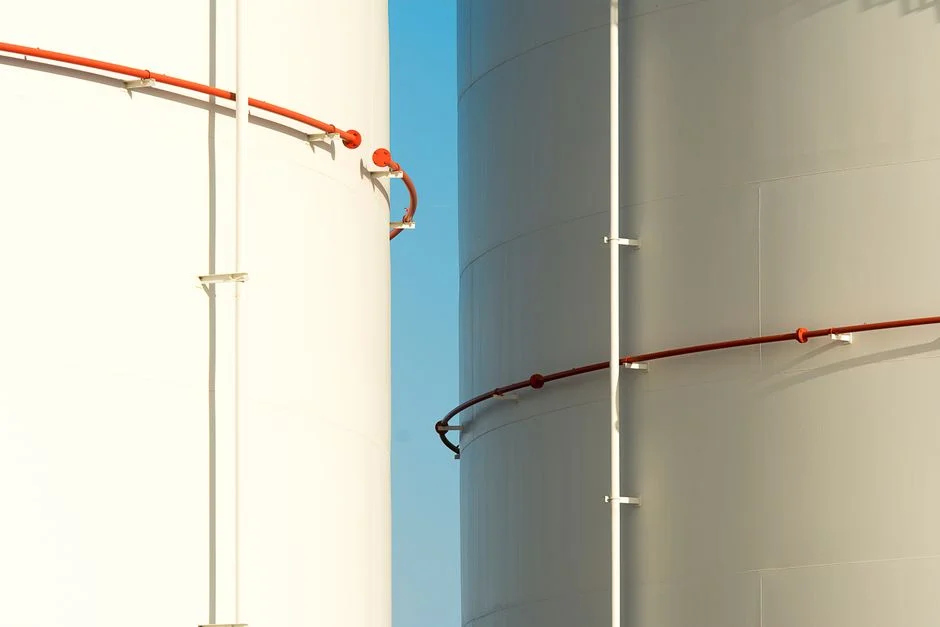
A package plant should be sized from the governing wastewater load, not from the number of homes alone. The first deliverable is a demand schedule that records homes or units, occupancy assumptions, daily water demand, wastewater-generation factors, groundwater infiltration or inflow, and any commercial, communal, or institutional flows. The second is a hydraulic profile that separates average daily flow from peak-hour and peak-day demand. Where seasonal irrigation, groundwater variation, or changing water demand may affect inflow, the buyer should request the complete diurnal and seasonal basis rather than accept a single generic peak factor.
The supplier then needs to state the treatment rate used for each condition and the redundancy strategy. No unverified peak factor or regulatory design factor should be introduced into the tender without an identified source and project-specific justification.
- Develop the average and peak wastewater demand schedule.
- Add documented infiltration and inflow contributions.
- Identify the governing peak condition.
- Define duty, standby, and unavailable-train scenarios.
- Check the selected process against both hydraulic and biological loading limits.
| Sizing input | WSZ screen | MBR screen | Evidence required from bidder |
|---|---|---|---|
| Average daily flow | Convert to an hourly screening value | Compare with the daily screening range | Design flow and selected duty capacity |
| Peak flow | Check peak hourly demand against 1–80 m³/h | Check peak demand against the daily capacity and membrane hydraulic limits | Peak-flow treatment rate and response to a peak |
| Inlet quality | Expected biological and solids loading | Expected biological loading and membrane foulant risk | Stated inlet design basis and process loads |
| Redundancy | Effect of unavailable equipment | Effect of unavailable membrane train or module | Contingency strategy and operating consequence |
| Utilities and maintenance | Power, blower, pump, and access requirements | Power, aeration, membrane cleaning, and replacement provisions | Power demand, service interval, and local support |
For WSZ, convert the agreed flow to hourly units and test the peak requirement against the published 1–80 m³/h range; an average-flow comparison is insufficient. For MBR, check both the selected daily capacity against 10–2,000 m³/day and the supplier’s hydraulic and biological loading limits. Then ask each bidder to state design flow, peak flow, expected loads, redundancy, power requirements, and what happens when one module or train is unavailable.
Compare Process Performance, Footprint, and Operating Risk
WSZ and MBR are not interchangeable products merely because both can be packaged and installed below ground. WSZ uses anoxic and aerobic biological contact oxidation followed by sedimentation and disinfection within one buried unit, allowing landscaping to remain above the installation. MBR combines biological activated sludge with submerged membrane filtration. Its published filtration criterion is below 1 μm, and its product information claims a 60% smaller footprint than conventional systems. That catalog claim is a screening claim, not a substitute for a dimensioned site plan.
| Issue | WSZ package | MBR package |
|---|---|---|
| Treatment train | Anoxic/aerobic contact oxidation, sedimentation, and disinfection | Activated sludge followed by submerged membrane filtration |
| Site arrangement | Buried integrated unit; landscaping may remain above it | Footprint reduction claimed in product information, but actual arrangement must be tendered |
| Operation | Described as fully automated with no operator required | Requires membrane-condition monitoring, cleaning or replacement attention, aeration control, and transmembrane-pressure management |
| Sludge | Sludge production and removal must be included in site planning | Sludge characteristics and membrane-associated waste management must be defined |
| Reuse | Acceptability depends on the project’s confirmed effluent specification | Fine filtration can support reuse assessment, but public-health and authority acceptance remain separate decisions |
Footprint comparison should use the seller’s actual proposal, not process labels. Check tank geometry, access covers, blower or pump arrangements, electrical cabinets, vehicle access, lifting provisions, and the space needed for sludge withdrawal and maintenance. A nominally buried package can still consume a substantial operating envelope once controls, odor control, safety access, and service space are included.
The ClearFox hospital case provides a below-grade Tehran precedent, but not a direct WSZ-versus-MBR specification. The commercial case, Hospital Wastewater Treatment Plant In Tehran, Iran, describes an SBR installed in a concrete tank 15 metres underground, designed to treat 550 m³/day. It demonstrates the feasibility of below-grade urban treatment under constrained space; its cycle and commercial-site conditions should not be generalized to residential WSZ or MBR equipment.
MBR’s fine filtration can strengthen a water-reuse project, but it does not itself establish irrigation, public-health, or regulatory acceptance. Disinfection performance, intended use, exposure controls, and current requirements remain independent conditions.
Match the Final Effluent Route to Current Tehran Requirements
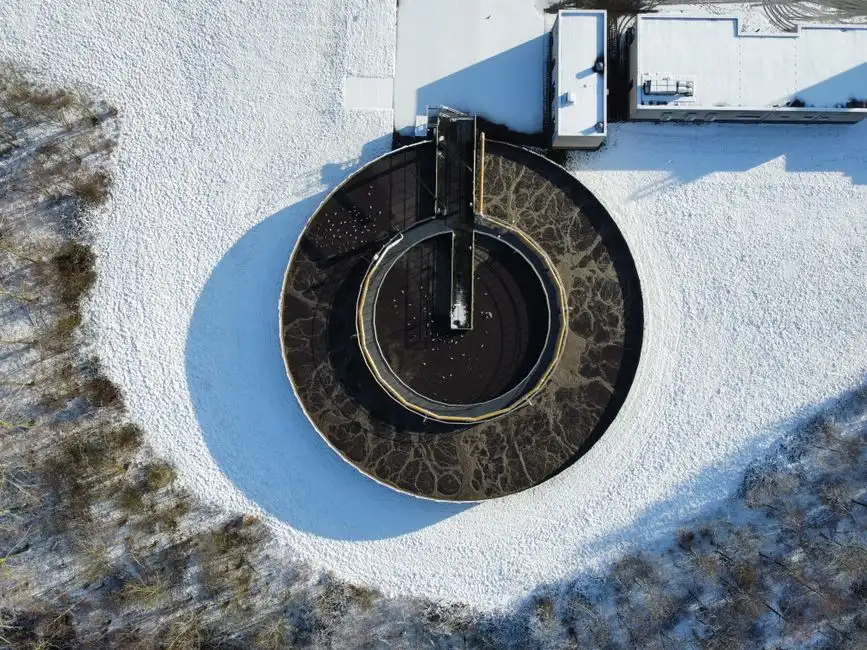
A sewage connection, permitted discharge, irrigation reuse, and unrestricted potable reuse are different project outcomes with different evidence and approval requirements. Before selecting a process, ask the Tehran Sewerage Company or other competent authority to confirm in writing whether the development can connect, where the connection lies, current acceptance criteria, ownership arrangements, and whether pretreatment is required.
The historical citywide project cannot establish parcel-level service availability in 2026. The 2014 WIT Press paper described a project covering a population of 10.50 million, with Tehran South planned for 2.4 million people and planned expansion to 6.5 million. Those figures describe the historical programme, not current connection coverage for the development parcel.
The same source provides a useful monitoring checklist rather than a current permit: BOD, TSS, total nitrogen, heavy metals, toxic materials, fecal coli forms, and intestinal nematode eggs. It also states that if the arithmetic mean effluent nematode-egg count exceeds the WHO guideline of one per liter, suitable tertiary treatment with demonstrated compliance should be provided, with the decision based on at least one year of operating data. The buyer should ask the competent authority which current limits and evidence apply to the proposed route.
| Effluent route | Decision required before procurement | Relevant process question |
|---|---|---|
| Tehran sewer connection | Written confirmation of connection, ownership, acceptance criteria, and pretreatment requirements | Is the package the required treatment, or only pretreatment? |
| Permitted discharge | Current permit conditions, sampling points, analytical methods, frequency, bypass rules, and responsible party | Which process and disinfection guarantees address every parameter? |
| Irrigation reuse | Crops, season, application method, exposure controls, and authority acceptance | Does the confirmed treatment objective justify MBR or require additional disinfection? |
| Potable reuse | A separate public-health and regulatory assessment | Does the proposed scope meet the legally defined reuse objective? |
For irrigation reuse, identify the proposed crops, season, application method, public-health controls, and authority acceptance before choosing MBR over WSZ. The purchase specification should define the discharge or reuse route, sampling points, analytical methods, monitoring frequency, bypass provisions, and who owns compliance. If disinfection is required, evaluate the chlorine dioxide generator and UV sterilizer for water treatment as possible project components only after the required treatment train and dose or performance criteria are defined.
Build a Procurement-Ready Package Plant Specification
A tender should require bidders to demonstrate design basis, process performance, civil compatibility, and operating support on the same terms. Each offer should state design average and peak flow, inlet quality basis, treatment objective, process description, guaranteed outlet parameters, test method, and guarantee conditions. A performance guarantee that excludes the project’s actual peak or inlet conditions is not a useful comparison.
| Bid package | Required information |
|---|---|
| Process and performance | Design flows, inlet basis, outlet guarantees, analytical methods, test conditions, redundancy, power, and consequences of an unavailable train or module |
| Civil interface | Dimensions, arrangement, burial depth, access, loading, flotation protection, groundwater protection, pipe routes, excavation, and installation sequence |
| Mechanical and electrical | Duty and standby equipment, pumps, blowers, controls, alarms, remote monitoring, power demand, spares, and maintenance access |
| Residuals and nuisance | Odor control, noise, sludge volume and characteristics, removal interval, disposal route, and maintenance method |
| Lifecycle and support | Energy use, membrane replacement for MBR, media or module life, wearing parts, service visits, operator training, remote support, and local spare-parts availability |
| Evidence | Comparable residential or institutional references in Iran or a comparable climate, stating wastewater conditions, capacity, and installation date |
Do not add a dewatering step automatically. If review confirms that sludge removal requires it, define the required performance and include the plate-and-frame filter press in the mechanical and residuals scope. Chemical dosing should similarly remain conditional: specify the required chemical, duty, containment, controls, and safety basis before adding an automatic chemical dosing system.
Reference projects should describe actual wastewater conditions, capacity, and date rather than provide only logos. This gives the buyer evidence about long-term operation without treating one installation as a guarantee for Tehran.
Make the Final Selection with a Weighted Decision Matrix
A defensible package-plant award should be based on confirmed project criteria rather than a catalogue price comparison. Apply mandatory screens first: capacity, process suitability, required effluent route, civil feasibility, and authority acceptance. If any fails, a low price cannot compensate. Only proposals that pass should be scored on footprint, installation and geotechnical constraints, capital cost, lifecycle cost, delivery, and service capability.
| Evaluation stage | WSZ evidence to request | MBR evidence to request |
|---|---|---|
| Mandatory capacity check | Governing peak and duty arrangement | Selected daily capacity, peak response, and hydraulic loading |
| Effluent-route check | Confirmed treatment objective and guarantees | Confirmed treatment objective, fine-solids performance, and reuse conditions |
| Site and lifecycle | Burial arrangement, controls access, sludge route, energy and maintenance | Arrangement, membrane access, cleaning, replacement, energy and local support |
| Commercial comparison | Same tender scope, exclusions, guarantees, and services | Same tender scope, exclusions, guarantees, and services |
Compare both processes on the seller’s verified proposal, including footprint, design flow, process guarantee, automation, reuse readiness, maintenance, consumables, and local support. Record the selected process, rejected alternative, and the specific project constraint that drove the decision. This creates a clearer basis for client, consultant, and authority reviews than naming a technology alone.
Finally, treat packaged treatment as one part of the development. It does not replace confirmation of sewer availability, current discharge or reuse requirements, geotechnical and structural design, or the site-specific civil works. An alternative housing-market package plant comparison can support the evaluation method, but the award must remain based on Tehran project evidence.
Frequently Asked Questions
What flow basis should I provide when selecting a package sewage treatment plant for a Tehran housing development?
Provide the wastewater demand schedule, including homes or units, occupancy assumptions, water demand, wastewater-generation factors, infiltration, commercial or institutional flows, and average and peak conditions. For WSZ, check peak hourly flow against the published 1–80 m³/h range; for MBR, check daily capacity against 10–2,000 m³/day and verify hydraulic and biological loading. Do not size either package from average flow alone.
Should I choose WSZ or MBR for a housing development in Tehran?
Choose WSZ when a compact, automated, buried biological installation satisfies the confirmed treatment objective. Investigate MBR when tighter solids separation, reuse potential, or a smaller treatment footprint justifies the added membrane, aeration, cleaning, and replacement burden. The final choice depends on the effluent route, site arrangement, operating capacity, and current authority requirements.
How much will the package plant and installation cost?
Request a site-specific commercial quotation rather than use a generic equipment price. The quotation should identify the design flow, effluent specification, soil and groundwater conditions, civil scope, installation location, power supply, required services, sludge handling, controls, commissioning, warranty, and excluded works. A responsible comparison requires all bidders to price the same scope.
What should I check before choosing a supplier and approving delivery?
Check comparable references that disclose wastewater conditions, capacity, and installation date; confirm local spare-parts availability, response time, remote support, operator training, warranty terms, and the consequences of an unavailable module or train. Before final approval, also obtain written authority confirmation of sewer connection or discharge/reuse acceptance, site-specific geotechnical information, and a delivery schedule tied to civil and electrical readiness. A package plant does not automatically satisfy a 2026 permit or reuse requirement.