Determine Which Discharge Rules Apply Near Biggs
Mining and metals plants near Biggs meet sewer pretreatment limits by identifying the actual discharge route, characterizing each wastewater stream, confirming the applicable federal mining subcategory, and obtaining current limits from the receiving publicly owned treatment works (POTW). EPA states that mining point-source discharges require NPDES coverage, while indirect dischargers are regulated through POTW-enforced pretreatment requirements under 40 CFR Part 403. Federal mining standards, including 40 CFR Part 440 or Part 436 where applicable, do not replace local limits. Final equipment sizing should use permit limits, recent discharge-monitoring data and a 12-month influent characterization.
Start with the receiving point, not the treatment skid. EPA’s industrial wastewater guidance states that all point-source discharges from mining operations, including discharges from associated impoundments, must be authorized under an NPDES permit. The Congressional Research Service explains that direct dischargers are regulated through NPDES permits incorporating applicable effluent limitations, while indirect dischargers discharge through a POTW and are subject to federal pretreatment standards enforced by that POTW and other authorities (Congressional Research Service, 2025-06).
For a Biggs-area sewer discharge, obtain the identity of the receiving POTW, its current sewer-use ordinance and pretreatment limits, and any state permit conditions. Confirm whether the operation falls under the metal-mining framework at 40 CFR Part 440 or the mineral-mining and processing framework at 40 CFR Part 436, and then identify the correct subcategory. EPA’s framework establishes categorical standards, but it does not make another jurisdiction’s numbers applicable to the site.
| Discharge route | Primary compliance mechanism | What to verify for Biggs | Design consequence |
|---|---|---|---|
| Direct discharge to waters of the United States | Federal or state NPDES permit containing applicable effluent limits and conditions | Permit coverage, point source, discharge outfall and permit monitoring requirements | Size to the NPDES permit, applicable subcategory and receiving-water conditions |
| Discharge to a POTW sewer | Locally enforced pretreatment program under 40 CFR Part 403 | Receiving POTW, current local limits, monitoring, surcharge and prohibited-discharge rules | Size to the more restrictive applicable limit and include the required pretreatment controls |
| Reuse or zero liquid discharge | Operational process specification plus applicable regulatory requirements | Reuse-quality target, membrane-feed specification and residual-discharge route | Add polishing and concentrate management only after establishing the endpoint |
Do not insert a numeric Biggs limit until the current permit, local ordinance and receiving-POTW confirmation support it. A reserved federal subpart can contain no current numeric effluent limit, making POTW and state conditions especially important (EPA, 2026-02). The 2026 mining and metals sewer-limit compliance playbook illustrates the same route-first method, while the mining plant sewer pretreatment guide provides a related decision framework.
Build a Separate Influent Profile for Every Wastewater Stream
One blended outfall sample can conceal the stream that controls treatment performance. AMPAC USA explains that acid mine drainage, process water, tailings-pond effluent and dewatering discharge have materially different chemistries, so each should be tested separately before equipment is sized (AMPAC USA, 2025-09).
Mine drainage may be acidic and carry iron, manganese, copper, zinc, arsenic and cadmium. Process water can contain elevated dissolved solids and residues such as cyanide, ammonia or chloramines where those reagents are used. Tailings supernatant can combine fine solids, leached metals and retained process chemicals. Dewatering discharge may change sharply with geology, while contact water from truck washing, laboratories or other support facilities can introduce a different contamination profile.
The characterization package should cover at least one full year, with peak and average flow, pH, total metals, dissolved metals, TSS, flow variability and the parameters named in the permit. Request 2025–2026 Discharge Monitoring Report data where it exists. A representative sample supports preliminary design; it does not replace current permit-specific monitoring or establish the worst-case condition for equipment sizing.
| Wastewater stream | Characteristic contaminants or conditions | Required information | Primary design question |
|---|---|---|---|
| Mine drainage and acid mine drainage | Acidity; dissolved iron, manganese, copper, zinc, arsenic, cadmium and other minerals | Separate pH, flow, acid load, metal and TSS profile across representative operating conditions | Can pH adjustment and metal-hydroxide precipitation remove the dissolved load within the applicable limit? |
| Ore-processing water | Suspended solids, fine particles, process reagents and variable dissolved salts | Peak and average flow, pH, metals, TSS, conductivity and reagent-specific data where relevant | Which streams require independent equalization or chemical control before clarification? |
| Tailings-pond supernatant | Fine solids, retained reagents and leached metals | Seasonal and campaign-based flow, solids carryover, pH, metal and conductivity profile | What solids capture and sludge-handling capacity are required? |
| Dewatering and contact water | Variable geology-dependent loading, wash-water residues and support-stream discharges | Event duration, peak flow, pH, metals, TSS and operational frequency | What flow and contaminant peak must the treatment train handle without normalization? |
Campaign production can change both flow and chemistry, so identify operating modes rather than average them together. The separate-stream influent profiling approach used for industrial pretreatment provides a useful structure for assigning sampling points and design parameters. For each stream, the engineer should be able to trace the governing peak load through pH adjustment, precipitation, clarification, filtration and residual-sludge handling.
Follow the Treatment Sequence in the Correct Order
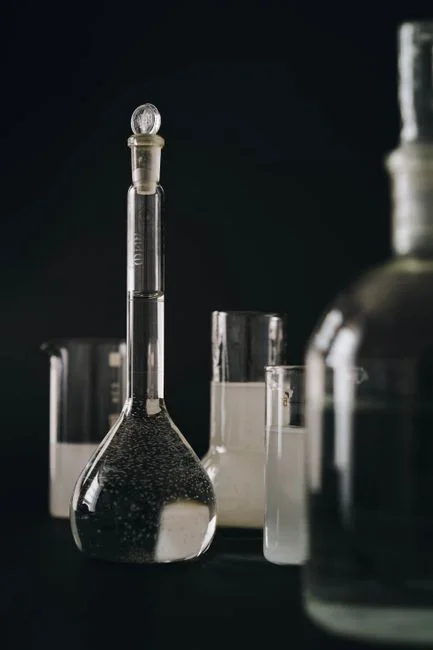
The defensible mining treatment sequence begins with controlled pH adjustment, followed by coagulation, flocculation, solids separation and filtration. Genesis Water Technologies states that pH correction supports effluent quality and helps dissolved metals such as iron, arsenic and manganese precipitate as hydroxides; downstream coagulation and flocculation then aggregate suspended solids and fine metal particles into removable flocs (Genesis Water Technologies, mining water-treatment guide).
- Adjust pH under closed-loop control. Acid or alkali dosing prepares the water for precipitation and removes the acidic condition that would otherwise impair downstream treatment.
- Add coagulant and flocculant. The objective is to create flocs that match the next separation method and do not overload downstream media.
- Separate the solids. DAF is suited to low-density, floatable flocs, oil or floatable fines; lamella clarification is favored where dense metal-hydroxide solids, sludge volume and footprint drive the design (Genesis Water Technologies, 2025-11).
- Protect the treatment train. Corrosion inhibitors, specialty resin or ion exchange, and biocide are added only where equipment protection, residual-metal removal or fouling control requires them.
- Filter the clarified water. Multimedia or another suitable filter removes residual suspended solids and colloids before discharge or membrane treatment.
| Design condition | Preferred separation approach | Reason | Key check before quotation |
|---|---|---|---|
| Low-density metal-hydroxide flocs, floatable fines or oily waste | DAF | Microbubbles lift material that may settle poorly in a conventional basin | Floc characteristics, oil loading, air-to-solids ratio and polymer compatibility |
| Dense metal-hydroxide solids with significant sludge-volume or footprint constraints | Lamella clarification | Lamella units reach surface-loading rates of 20–40 m/h and can reduce coagulant consumption by up to 30% versus conventional basins (Genesis Water Technologies, 2025-11) | Feed solids, settling characteristics, sludge withdrawal, plate spacing and underflow capacity |
| Residual suspended solids after clarification | Multimedia filtration | Removes the remaining particulate load before sewer discharge or membrane protection | Filtration target, backwash waste, media loading and chemical consumption |
Do not put a filter ahead of required pH correction or precipitation without a demonstrated process reason. Genesis Water Technologies reports that changing the sequence raises chemical consumption and media loading and can prevent first-pass compliance (Genesis Water Technologies, mining water-treatment guide). The DAF versus clarifier selection for mining wastewater guide expands the hardware comparison.
Specify chemical addition as a coordinated control system. A PLC-controlled chemical dosing skid should handle pH adjusters, coagulants, flocculants and specialty chemicals through coordinated interlocks rather than isolated pumps. For solids separation, an industrial DAF system for mining solids separation can be evaluated within its stated catalog range of 4–300 m³/h and 13 standard models, but final selection still depends on actual wastewater characteristics and site constraints.
Choose Sewer Compliance or Reuse as the Design Endpoint
The endpoint follows from the confirmed sewer limits and the plant’s water demand; it should not be set by the available membrane equipment. First demonstrate that the gravity treatment train can satisfy every applicable pH, metal, TSS and other local limit. Then assess the POTW capacity charge, freshwater cost and process-water quality requirements. If conventional precipitation, clarification and filtration meet the sewer case, adding UF or RO may create unnecessary capital, energy and concentrate-management costs.
| Design endpoint | Indicated treatment scope | Decision information required | Main risk |
|---|---|---|---|
| Sewer discharge | pH adjustment, precipitation, coagulation and flocculation, clarification and filtration | Current POTW limits, monitoring requirements, permitted flow and sewer acceptance conditions | Designing to a federal floor rather than the local limit |
| Process-water reuse | Conventional train plus UF where membrane protection or specified reuse quality is required | Reuse-quality specification, flow profile, pretreatment targets and demand schedule | Overbuilding membranes before defining the required water quality |
| RO-quality water or broader zero-liquid-discharge train | UF before RO and additional concentrate treatment where applicable | Target SDI after filtration, feed chemistry, recovery curve, brine destination and thermal-system requirements | Unverified recovery and an unresolved concentrate route |
Where UF is needed, the supplied research describes hollow-fiber PVDF membranes with a 0.03-micron nominal pore size, a 2,000–40,000 L/h flow range, inlet turbidity up to 300 ppm, automatic backwash and air scour. These are equipment-selection bounds, not proof that a site meets the conditions.
For RO, AMPAC USA reports recovery of 50–70% for acid-mine-drainage feed and 70–85% when RO precedes thermal zero-liquid-discharge treatment (AMPAC USA, 2025-09). Require a site-specific recovery curve rather than applying either value automatically. Where RO is selected, specify filtered-water SDI as the filtration design criterion, not inlet turbidity alone. The industrial membrane technology outlook provides context for UF and RO integration.
Manage the Metal-Hydroxide Sludge Before Equipment Is Ordered
Metal-hydroxide sludge is part of the treatment design, not a disposal afterthought. Include generation, thickening, storage, dewatering, transportation and the authorized disposal route in the mass balance. The quantity and moisture content of sludge affect storage area, equipment footprint, chemical consumption and operating labor.
A plate-and-frame filter press is the documented dewatering option for metal-rich sludge where a handleable cake is required for off-site disposal or permitted stabilization (LiqTech, 2025-08). Size the press from actual sludge volume, campaign frequency, required operating mode and the selected conditioning chemistry. HydropureWater offers manual, hydraulic and fully automatic PLC-controlled presses with filtration areas from 1 m² to 500 m²; those catalog bounds do not replace site-specific press sizing.
Continuous operation and campaign-based batching lead to different plate-area, plate-count and control strategies. Before the equipment supplier fixes its design, identify the disposal contractor, receiving facility and waste classification, and determine whether the cake will be transported, stabilized or otherwise managed. An unconfirmed residue route leaves the project without a defensible operating plan even if the liquid-treatment equipment is correctly sized.
Use This Five-Item Document Checklist Before Requesting a Quotation
A defensible quotation starts with the documents that define the compliance and design envelope. The supplied mining pretreatment research identifies five core inputs: the current NPDES permit, receiving-POTW discharge limits, the applicable 40 CFR Part 440 subcategory, 2025–2026 DMR data and a 12-month influent characterization. For Biggs, replace the named local authority and subcategory only after the receiving POTW and actual mining operation are verified.
| Required document or record | Question it must answer | Supplier deliverable tied to it |
|---|---|---|
| Current NPDES permit and POTW limits | Which discharge route, local limits, monitoring duties and acceptance conditions apply? | Permit-compliance matrix and sizing envelope |
| Applicable federal mining subcategory | Which Part 440 or Part 436 category and subcategory covers the operation? | Treatment train mapped to applicable pollutants |
| 2025–2026 DMR data | What concentrations, loads and operating patterns have been reported? | Design flows, chemical feed assumptions and control ranges |
| 12-month influent characterization | What are the separate stream flows, peaks and chemistry? | Equipment sizing, equalization and chemical storage calculations |
| Sludge and reuse information | What residual volume and endpoint must the train support? | Sludge balance, dewatering selection and downstream reuse design |
Ask each bidder to map every unit operation to a named contaminant and governing permit parameter. “Suitable for mining water” is not a design statement. Require a documented basis of design, project-specific flow assumptions, control narratives, utility requirements, sludge balance, monitoring plan, commissioning scope and performance-acceptance criteria.
Qualification should cover comparable mining installations, metal-hydroxide precipitation competence, controls integration, on-site commissioning, after-sales support and dependable media and resin availability. Separate the quotation into equipment, chemical storage, controls, sludge handling, installation, commissioning and lifecycle operating assumptions. Chemical consumption, sludge volume, maintenance, media replacement and verification testing can outweigh the initial equipment price. The five-item compliance document and bid-review framework provides a related procurement structure.
Frequently Asked Questions
What information is needed to size a mining pretreatment skid near Biggs?
Request peak and average flow, separate influent profiles for drainage, process water, tailings supernatant and contact water, the confirmed POTW limits, expected sludge volume and any reuse target. The equipment cannot be sized responsibly from a single blended sample or a generic mining-water duty.
How much will a complete mining pretreatment system cost?
The supplied research provides no standard price range for a complete mining pretreatment train. Request a quote against the five-document basis of design and require separate pricing for equipment, chemical storage, controls, sludge handling, installation, commissioning and lifecycle operating assumptions. This makes bids comparable without inventing a generic equipment price.
How should a buyer select between DAF and a lamella clarifier?
Choose DAF when low-density flocs, floatable fines or oily waste dominate. Choose lamella clarification when dense metal-hydroxide solids, sludge volume and footprint are the controlling constraints. Require the supplier to demonstrate the selection against actual floc behavior, feed solids and site constraints rather than nameplate throughput alone.
What should be checked before accepting a supplier’s mining treatment quotation?
Verify comparable mining installations, metal-precipitation competence, controls integration, commissioning support, after-sales service and consumables availability. Also require a unit-operation-to-contaminant map, documented sizing calculations, utility requirements, sludge balance and performance-acceptance criteria. These checks address delivery and technical risk before a purchase order is issued.