What Controls a Sewer Discharge Near Picher
A mining or metals facility near Picher that sends wastewater to a municipal sewer is an indirect discharger governed by EPA’s national pretreatment framework, 40 CFR Part 403, rather than solely by an NPDES permit. EPA states that pretreatment standards are pollutant limits for industrial users, while pretreatment requirements are substantive or procedural requirements applied to them. The receiving publicly owned treatment works (POTW) administers the local sewer requirements and may enforce limits established under 40 CFR 403.5(c). EPA explains that these local limits protect the POTW, its sludge and receiving waters, and that POTWs impose them at the industrial user’s end-of-pipe discharge, or point of connection to the collection system.
Those limits may be numeric, narrative or best management practices. A narrative limit can therefore still be enforceable, so a buyer should not screen a proposal only by comparing numerical discharge concentrations. The governing documents should be assembled before the treatment train is designed.
Separate NPDES obligations may apply to direct surface-water or stormwater outfalls, but they do not replace the pretreatment requirements for wastewater entering the municipal sewer. A nearby regional mining and metals pretreatment compliance guide and a mining plant sewer-limit compliance process provide useful parallels, but neither verifies Picher’s current requirements.
The applicable federal categorical subcategory must be established from the plant’s actual SIC activities and current regulations. The supplied sources conflict on the mining provision, so assigning one without verification would not produce a defensible design basis. The Picher-area buyer should also identify the receiving POTW and obtain its current sewer-use ordinance and industrial-user permit.
| Requirement or pathway | Controlling authority | Design consequence |
|---|---|---|
| Indirect discharge to POTW collection system | 40 CFR Part 403, applicable categorical requirements, POTW ordinance and permit | Use local limits at the point of connection as the sewer-discharge basis. |
| POTW local limits | POTW under the federal pretreatment framework | Numeric and narrative requirements must both be identified. |
| Direct surface-water or stormwater outfall | NPDES requirements | Evaluate separately; do not substitute them for pretreatment limits. |
| Categorical subcategory | Current EPA requirements and actual plant activities | Verify SIC activity and the applicable subcategory before selecting equipment. |
Build the Picher Compliance Basis Before Buying Equipment
The enforceable design basis should be built from the current POTW sewer-use ordinance, industrial-user permit, local limits, applicable categorical requirements and recent monitoring or discharge reports. A single compliance sample is not a sufficient wastewater characterization. Sampling should represent normal production, shutdown, cleanout and upset conditions so that treatment equipment is tested against the chemistry and flow that actually reaches the sewer connection.
For each stream, document pH, total suspended solids (TSS), flow, metals, hardness, alkalinity, sulfate, total dissolved solids (TDS), oil and grease where relevant, and the chemical species present. This record is needed to distinguish dissolved metals available for precipitation from particulate metals that require settling or flotation. The analysis should also establish whether contact water, truck-wash water, laboratory wastewater or other low-flow streams enter the same connection, because the POTW may treat them differently.
HydropureWater reports example local limits of zinc at 0.3–1.0 mg/L as a monthly average and copper at 0.3–0.5 mg/L as a monthly average (HydropureWater, 2026). Those values are useful only as screening references. They do not establish the Picher-area limits and must be checked against the specific POTW ordinance before equipment sizing.
Hydraulic data must separate average flow, peak batch-discharge flow, diurnal variation and storm or drainage inflows. A treatment train sized on average flow can fail during a release because equalization, clarification and filtration have insufficient peak capacity. The supplier should receive the measured flow profile rather than an assumed daily average.
| Required input | Minimum decision supported | Question still open |
|---|---|---|
| POTW ordinance, permit and local limits | Discharge envelope and monitoring basis | Are limits numeric, narrative or both? |
| Multi-condition waste characterization | Process chemistry and contaminant load | Which metals are dissolved, particulate or both? |
| Flow profile | Equalization and peak hydraulic capacity | What is the controlling batch-release rate? |
| Stream inventory | Applicability of separate treatment rules | Do ancillary streams use the same connection? |
| Monitoring history and corrections | Observed compliance performance | Were excursions process-related or analytical? |
The Treatment Train from Equalization to Sewer
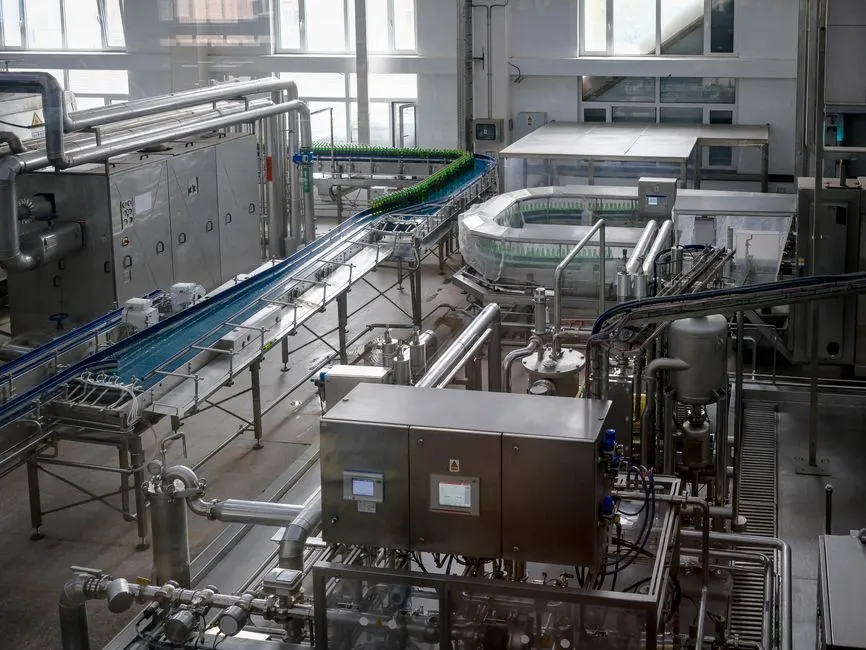
Each treatment step should remove a defined failure mode and produce an effluent condition the next step can reliably handle. Equalization comes first because variable batch releases and mixed chemistry can overload pH control and clarification. Its detention time must be calculated from measured average flow and batch-release behavior; without that profile, a nominal basin volume has little technical meaning.
Next, a PLC-controlled chemical dosing skid can establish the precipitation condition for the target metals. Lime or caustic supports metal hydroxide precipitation, but the choice requires site chemistry, reagent availability, sludge-yield analysis, calcium loading and final discharge chemistry. Jar testing must establish reagent dose and operating pH; a universal optimum pH cannot be assumed from the plant name or metal list.
Coagulation and flocculation then combine suspended solids and precipitated metal particles into flocs suitable for removal. Coagulant and polymer selection, dose and pH require jar or pilot testing. This step is a prerequisite for reliable clarification, not an optional polishing measure.
| Process step | Failure mode addressed | Evidence required before sizing |
|---|---|---|
| Equalization | Batch spikes and variable chemistry | Measured flow and batch profile |
| pH adjustment | Dissolved metals remain in solution | Jar-test dose, pH and residual metal results |
| Coagulation and flocculation | Fine precipitates and suspended solids escape | Jar or pilot floc-characterization results |
| Clarification | Metal-bearing flocs remain in effluent | Peak flow, solids loading and sludge properties |
| Multimedia filtration | Residual solids or colloids pass the clarifier | Filtrate turbidity, particle size and backwash demand |
| Sludge dewatering | Metal-bearing sludge cannot be safely managed | Sludge volume, chemistry and disposal acceptance criteria |
Clarifier selection depends on the dominant solids. An industrial DAF system for metal-bearing wastewater is the screening choice when oil, grease or fine colloidal material must be removed. Lamella clarification is the screening choice when dense metal-hydroxide flocs dominate and footprint is constrained. These are screening rules, not substitutes for bench or pilot testing.
A multimedia filter should polish residual solids and colloids. Additional membrane or reverse-osmosis treatment is justified only when the POTW limit, reuse target or downstream process requires more separation. LiqTech describes membrane filtration as capable of removing suspended solids, organic compounds and inorganic contaminants such as heavy metals, but its heavy-metal-removal guidance does not establish a Picher duty cycle (LiqTech, 2026).
Metal-bearing sludge should be captured in a plate-and-frame sludge filter press. Filtrate may return to the process head only after the plant confirms the hydraulic load, chemistry and operational consequences of that recycle. If microbial limits apply, chlorine dioxide or UV should be evaluated against the POTW’s residual, chemistry and monitoring requirements.
Choose DAF or Lamella for the Actual Waste Stream
DAF is the stronger initial candidate when oil, grease or low-density colloidal particles are important, while lamella is the stronger initial candidate when dense metal-hydroxide sludge dominates and available floor area is limited. This decision must be tested against the measured waste stream; neither equipment type is inherently compliant with an unspecified sewer limit.
HydropureWater reports a DAF product range of 4–300 m³/h across 13 models, hydraulic loading of 5–25 m/h, TSS removal of 90–98% and oil-and-grease removal of 85–95% (HydropureWater, 2026). The same source reports lamella surface loading of 20–40 m/h and a footprint approximately one-third that of a conventional clarifier in its referenced comparison (HydropureWater, 2026). These are supplier-reported specifications, not guaranteed performance for a Picher installation.
| Decision criterion | DAF screening case | Lamella screening case |
|---|---|---|
| Dominant contaminant | Oil, grease, fine colloids or low-density solids | Dense metal-hydroxide flocs |
| Hydraulic constraint | Acceptable footprint and transfer arrangement | Floor area is restrictive |
| Sludge behavior | Floating sludge and scum handling must be defined | Blanket withdrawal and sludge density must be defined |
| Turndown | Verify low-flow recycle and air performance | Verify settling at minimum flow |
| Site utilities | Confirm saturated-air supply and recycle demand | Confirm solids loading and sludge withdrawal |
| Acceptance evidence | Representative-stream test or contractual guarantee | Representative-stream test or contractual guarantee |
Compare offers using actual peak flow, solids loading, floc characteristics, sludge-blanket management, chemical use, maintenance and turndown—not hydraulic loading alone. The broader DAF versus clarifier selection for mining wastewater provides a useful comparison structure.
UF should be evaluated only after precipitation and clarification. HydropureWater reports 0.03 μm PVDF membranes, a flow range of 2,000–40,000 L/h, turbidity acceptance up to 300 ppm, automatic backwash and air scour for its UF system (HydropureWater, 2026). These supplier specifications do not prove suitability for the site’s chemistry, temperature, solids or required recovery.
Turn Compliance into an Operating Control System

Compliance depends on continuous control of the final discharge, not only on a periodic compliance grab sample. Place continuously recorded flow and pH at the final discharge and define operator actions for excursions. A chemical-feed control system should coordinate reagent addition with flow and pH feedback, rather than operate from an unrestricted daily average.
Automatic chemical-feed control, high- and low-pH alarms, pump interlocks, clarifier sludge monitoring and filter differential-pressure monitoring should be configured where those variables determine reliable performance. Each alarm needs a defined response, including whether the plant must hold a batch discharge, divert to equalization or stop a transfer.
The sampling plan must match the POTW’s monitoring frequency, averaging basis, representative sampling point and reporting requirements. Maintain records of influent characterization, chemical use, calibration, alarms, bypasses, analytical results and corrective actions. NPDES monitoring for a direct outfall does not replace an industrial user’s POTW monitoring and reporting obligations.
A Supplier Evaluation Checklist That Reduces Compliance Risk
A final equipment selection should not be issued until the supplier has reviewed the current POTW limits, applicable categorical requirements, wastewater characterization, flow profile and monitoring history. The DAF versus clarifier selection for mining wastewater comparison should be applied to actual stream data, not supplier peak-flow claims alone.
Each bidder should identify the treatment objective for every stream, chemical assumptions, expected sludge generation, backwash or filtrate destination, and the control points needed to maintain compliance. DAF and lamella offers should be compared using measured solids and oil-and-grease profiles, peak flow, footprint, utilities, maintainability and life-cycle implications—not purchase price alone.
| Procurement gate | Bidder response required | Reason to hold the gate |
|---|---|---|
| Regulatory basis | Current limits, permit, categorical applicability and compliance roles identified | Prevents sizing to an unverified limit |
| Process evidence | Waste characterization, flow profile, test method and design assumptions | Connects performance claims to the actual duty |
| Performance basis | Supplier data, pilot result or contractual guarantee clearly distinguished | Prevents ambiguous acceptance claims |
| Residual management | Sludge, backwash and filtrate quantities and destinations stated | Prevents transferring risk to another waste stream |
| Operations | Control points, commissioning, training, spares and support defined | Determines whether performance can be sustained |
Request compatibility information for media, membranes and chemicals, plus spare-parts availability, commissioning support and operator training. Clearly allocate responsibility for permit compliance; equipment suppliers may support operation and performance, but the industrial user remains responsible for meeting applicable discharge requirements.
Frequently Asked Questions
Does an NPDES permit alone prove that a Picher-area plant can discharge to the municipal sewer?
No. A direct surface-water NPDES permit does not establish compliance with POTW pretreatment requirements. For sewer discharge, the operator must obtain the current POTW ordinance, industrial-user permit and applicable limits, then demonstrate compliance with the applicable pretreatment and categorical requirements. Direct stormwater or surface-water outfalls may require separate NPDES authorization.
How should a buyer size a DAF or lamella system?
Start with measured peak flow and solids-loading peaks, then add stream chemistry, floc properties, sludge handling and site constraints. Average flow alone can hide a batch release that overwhelms the clarifier. Use jar or pilot evidence to establish the required removal performance, and define acceptance sampling before comparing supplier guarantees.
Is sulfide precipitation automatically required for mining or metals wastewater?
No. Evaluate sulfide precipitation when jar or pilot testing shows that hydroxide treatment cannot meet the applicable limit or operating objective. Also evaluate reagent handling, residual sulfide, ventilation and off-gas controls before selecting it. A treatment objective should drive the chemistry, not a presumption that one precipitation method is always required.
What should a buyer request before asking a supplier for equipment pricing?
Request the controlling POTW limits and permit, applicable categorical requirements, multi-condition waste characterization, and the measured operating profile. Also request the treatment objective for each stream, chemical assumptions, residual-waste destination and control philosophy. A price based only on average flow and target metal concentration is not comparable or enforceable. The available UF treatment-system specifications are relevant only if a membrane requirement has already been established.
When is UF or RO justified for a sewer-discharge treatment train?
Add UF or RO when the permit requires additional separation, or when the project has a water-reuse or RO-protection objective. Membrane treatment should follow confirmed precipitation and clarification because it addresses the remaining particulate load; it should not substitute for the chemistry and bulk-solids steps needed to meet the sewer limit. The existing UF membrane system should be evaluated against actual water chemistry, temperature, fouling behavior and recovery requirements.