What limits apply to a chemical plant discharging to sewer near Palmetto?
A chemical plant near Palmetto complies by identifying the most stringent applicable requirement, characterizing its wastewater, and treating it before discharge. The governing framework includes general and specific prohibitions under 40 CFR Part 403, applicable categorical pretreatment standards, and site-specific limits imposed by the receiving POTW or Control Authority. EPA identifies pass-through and interference as the central discharge prohibitions, while local limits address the specific needs of the POTW, its sludge process, and receiving waters. The final treatment train must be based on the current Palmetto-area control mechanism, confirmed process classification, and representative wastewater testing; no numeric Palmetto-area limit should be assumed without those documents.
The first layer is 40 CFR 403.5(a) and (b), which prohibit discharges causing pass-through or interference and identify specific prohibited discharges. Pass-through, defined at 40 CFR 403.3(p), occurs when a discharge exits the POTW in quantities or concentrations that cause or aggravate a violation of the POTW’s NPDES permit. Interference, defined at 40 CFR 403.3(k), occurs when an industrial discharge both inhibits POTW operations or sludge processes and causes a permit or sewage-sludge requirement violation. These prohibitions remain enforceable without a numerical limit being exceeded.
The second layer is the applicable categorical pretreatment standard in 40 CFR Parts 405–471. Depending on the actual manufacturing process, chemical plants may fall under Part 414 for organic chemicals, plastics, and synthetic fibers or Part 415 for inorganic chemicals. Other adjacent subparts may also apply, but the plant must confirm its actual classification rather than infer it from a product description. The third layer consists of POTW local limits, which are site-specific numeric or narrative discharge limits. Under 40 CFR 403.5(c), they are imposed at the industrial user’s end-of-pipe discharge, at the point of connection to the POTW collection system.
| Governing layer | What it controls | Evidence a buyer must obtain |
|---|---|---|
| General and specific prohibitions | Pass-through, interference, and specifically prohibited discharges | Current 40 CFR Part 403 text and POTW enforcement guidance |
| Categorical pretreatment standard | Pollutant limits applicable to the plant’s industrial category | Confirmed process classification and current subpart |
| POTW local limits | Site-specific limits at the industrial user’s discharge point | Current local limits, narrative requirements, and approved pretreatment program |
| Control mechanism | Permit conditions, monitoring, reporting, and compliance procedures | Issued industrial user permit or equivalent control document |
Request the receiving POTW’s current control mechanism, local limits, monitoring points, sampling instructions, and approved pretreatment program. Do not treat a national categorical number as the Palmetto discharge limit. This sequence also appears in a chemical plant sewer pretreatment compliance guide.
Build a Palmetto-area compliance path before selecting equipment
A defensible equipment specification starts with the receiving authority, not with a generic treatment train.
- Identify the POTW or Control Authority. Confirm the authority that owns the collection system serving the plant and whether the discharger is classified as an industrial user or significant industrial user.
- Map regulated streams. Associate each process stream with its categorical subpart, local limit, narrative prohibition, monitoring requirement, and permitted sampling point.
- Characterize representative wastewater. Establish flow, batch variability, pH, oil and grease, suspended solids, COD/BOD, and relevant metals or priority pollutants. Request the authority’s required laboratory method and sample point before comparing results.
- Identify the controlling limit. Compare each applicable requirement before sizing equipment, because a local limit can be more stringent than a categorical limit.
- Resolve uncertainty through testing. Where wastewater chemistry or unit-operation performance is uncertain, conduct bench or pilot work, then issue an approved performance specification with written acceptance criteria.
- Commission against the permit point. Calibrate flow, pH, and pollutant monitoring; demonstrate compliance at the required discharge location; and establish records, reporting, and corrective-action controls.
EPA’s pretreatment guidance, cited by HydropureWater in 2026, explains that local limits are developed by considering POTW capabilities, allowable loadings, pollutant concerns, and receiving-water needs. For a Palmetto-area project, obtain the current authority documents rather than transferring limits from another service area. A Palmetto-area pretreatment workflow should preserve that document trail through design, commissioning, and operation.
Size equalization and dosing around batch and slug-load risk
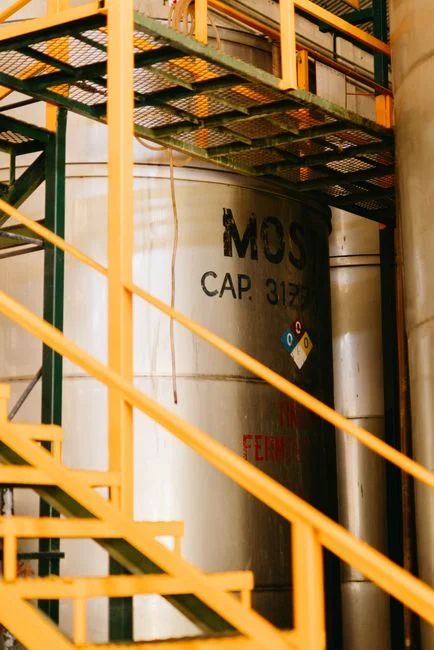
Equalization is the baseline control for hydraulic and concentration variation because it gives operators time to detect and treat a batch before it reaches downstream equipment or the sewer.
HydropureWater’s 2026 pretreatment guidance states that continuous operations can often be designed around 4–8 hours of retention, while batch operations may require hours-to-days of capacity. These figures are preliminary process guidance, not permit requirements. Final sizing depends on measured flow, batch duration, release sequence, tank turndown, available footprint, and the consequence of an excursion. Request measured release data before fixing basin volume.
Use a PLC-controlled chemical dosing system for pH adjustment and, where required, coagulant or flocculant feed. The control logic should stop or divert off-specification flow rather than continue treating a known exceedance until the tank overflows. Define high-level, low-level, and diversion alarms, provide an independently verifiable sample point, and retain records showing that a slug load did not reach the sewer.
For significant industrial users, 40 CFR 403.8(f) requires slug-load controls. HydropureWater’s 2026 guidance describes the combination as adequate equalization, flow and pH monitoring, and written procedures for batch releases. Those operating procedures should identify the release sequence, hold points, responsible operator, sampling requirement, diversion destination, and restart authorization.
HydropureWater’s 2026 research identifies a typical pH range of 6–9, but that is not evidence of a Palmetto-area limit. Select the operating setpoint only after checking the current permit and local rules. A permit that specifies a narrower range or a different compliance point controls the equipment specification.
Match the controlling pollutant to the right treatment unit
Equipment selection should follow the pollutant that constrains discharge, not a generic chemical-plant configuration.
| Controlling condition | Primary treatment approach | Engineering evidence to verify |
|---|---|---|
| Oil, grease, FOG, floatable solids, and colloids | DAF or clarification | Characterization results, flotation performance, solids handling, and permit limit |
| Dissolved metals | Chemical precipitation followed by clarification | Species-specific testing, pH dependence, sludge generation, and residual-metal limit |
| High COD/BOD | Biological polishing or MBR | Biodegradability, toxicity, loading variability, and biological permit limits |
| pH swings | Equalization and controlled dosing | Batch data, mixing performance, instrument range, and diversion logic |
For suspended solids, oil and grease, FOG, and colloidal matter, compare DAF with clarification. DAF is suited to floatable contaminants; lamella clarification is a compact solids-separation option. HydropureWater lists 13 standard industrial DAF systems for chemical plant pretreatment, from 4 to 300 m³/h, for removing suspended solids, FOG, oil and grease, and colloidal matter. These are supplier specifications, not proof of Palmetto permit compliance.
For dissolved metals, use precipitation only after characterization establishes the relevant metals, pH effects, and applicable limits. Clarification then removes the resulting solids. The high-efficiency sedimentation tank is a procurement starting point: HydropureWater states surface loading rates of 20–40 m/h and chemical-consumption reduction of up to 30%. Those supplier claims require project-specific verification and do not establish a discharge limit.
For high COD/BOD, compare biological polishing with MBR treatment. HydropureWater’s 2026 research identifies MBR as the stronger candidate when reuse is an objective, while conventional activated sludge may suit discharge-only service. Its integrated membrane bioreactor system is listed at 10–2,000 m³/day, with submerged PVDF membrane filtration and near-reuse-quality effluent below 1 μm. Treat those figures as product specifications; a reuse decision still requires a defined water-quality endpoint and whole-life treatment analysis.
For pH swings, use equalization and controlled dosing. Downstream solids separation or biological treatment cannot be counted on to correct an uncontrolled pH excursion.
Compare equipment architectures by discharge objective
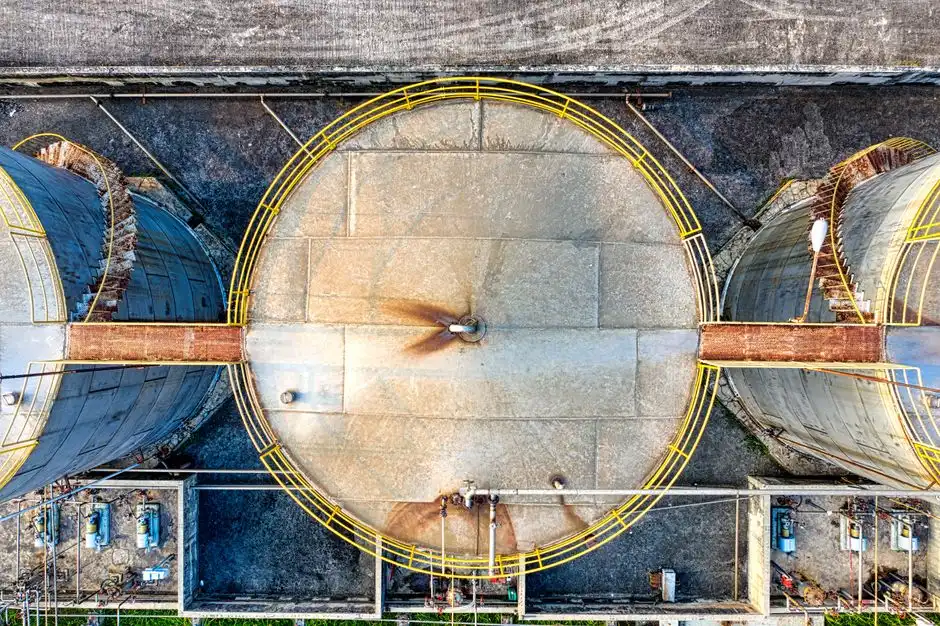
The correct architecture depends on whether the project is designed only for sewer discharge or must also produce a defined reuse stream.
| Decision | Discharge-only route | Reuse-capable route |
|---|---|---|
| Primary objective | Meet the controlling sewer requirement | Meet the sewer requirement and a defined reuse specification |
| Typical sequence | Equalization, pH control, DAF or clarification, biological polishing where required, and final monitoring | Equalization, clarification, MBR, and membrane-based polishing where justified by the endpoint |
| Key selection issue | Reliability, footprint, operator burden, and permit monitoring | Fouling control, process complexity, reuse quality, and recovery performance |
| Final decision test | Most stringent applicable requirement, permit point, reliability, and operating envelope | Same compliance test plus a documented reuse endpoint |
Do not default to reverse osmosis without a defined water-quality endpoint. Concentrate handling, pretreatment, recovery, and disposal requirements can change the operating economics and compliance risk. HydropureWater states that its MBR systems occupy 60% less footprint than conventional systems; that supplier claim does not eliminate the need to evaluate process complexity, operator burden, fouling control, and actual reuse requirements.
The supplied research does not provide Palmetto-area capital or operating costs. A buyer should request site-specific pricing only after wastewater characterization, limit confirmation, and equipment sizing are complete. This DAF versus clarifier selection guide provides a useful comparison framework, but local discharge requirements remain the deciding input.
Prove compliance through monitoring, reporting, and corrective action
Installed treatment equipment becomes defensible only when the plant can document performance at the regulatory compliance point.
Use the POTW-issued control mechanism to define sampling locations, parameters, frequency, monitoring, and reporting. EPA states that POTW local limits apply at the end-of-pipe discharge from the industrial user. Apply the 40 CFR 403.12 framework for POTW monitoring, inspection, and sampling of significant industrial users.
Where a categorical standard applies, retain the baseline monitoring report. HydropureWater’s 2026 research also describes 90-day compliance reports, written control mechanisms, and routine POTW inspection and sampling obligations. The permit and current POTW rules determine the actual schedule and content.
Before commissioning, define the response to an excursion: alarm, shutdown or diversion, notification, investigation, resampling, corrective repair, and authorization to resume discharge. Confirm that each instrument has a defined range, calibration method, sampling location, data output, and maintenance responsibility.
Equipment proposals should separate guaranteed process performance from the legal discharge limit. The supplier can guarantee a stated process outcome under documented influent conditions; compliance depends on the complete train, controls, operations, influent, and permit conditions. An industrial wastewater pretreatment compliance guide can support that separation, but it cannot replace the Palmetto-area permit.
Frequently Asked Questions
Does a chemical plant near Palmetto need DAF, a clarifier, or both?
Choose from the controlling wastewater condition. DAF is the stronger starting point for floatable oil, grease, FOG, and colloidal material; clarification is relevant to settleable solids and can follow chemical precipitation for
Frequently Asked Questions
What pretreatment limits apply to a chemical plant discharging to sewer near Palmetto?
Chemical plants discharging to the Palmetto municipal sewer system must adhere to local limits set by the Manatee County Industrial Pretreatment Program, typically governed by 40 CFR Part 403. While specific permit conditions are site-specific, plants generally face strict mass-loading or concentration limits for heavy metals (e.g., Copper < 2.0 mg/L, Zinc < 3.0 mg/L), Total Suspended Solids (TSS) often capped at 300 mg/L, and Chemical Oxygen Demand (COD) or Biochemical Oxygen Demand (BOD) thresholds that trigger surcharges if exceeding 250-300 mg/L.
Do I need DAF, a clarifier, or both for chemical plant wastewater?
The choice depends on the specific gravity and settleability of your pollutants. A Dissolved Air Flotation (DAF) unit is highly effective for removing fats, oils, grease (FOG), and emulsified hydrocarbons that have a specific gravity near 1.0, achieving removal efficiencies of 80-95%. Conversely, a clarifier is preferred for inorganic precipitates, metal hydroxides, or heavy solids that settle via gravity. In complex chemical processes, a dual-stage approach—using a clarifier for primary solids removal followed by a DAF for polishing—is often required to meet stringent 2026 discharge standards.
How should I size equalization for batch chemical plant wastewater?
Equalization tank sizing must be based on a minimum 24-hour hydraulic retention time (HRT) to account for peak batch discharge volumes plus a 20-30% safety buffer for surge capacity. For batch operations, the tank must be sized to hold the largest single process dump while maintaining a controlled, metered discharge rate (typically 50-100 gallons per minute) to avoid hydraulic shock loading to the municipal wastewater treatment plant (WWTP).
What should I ask a wastewater equipment supplier to prove compliance in 2026?
Request a performance guarantee based on a certified bench-scale treatability study using a representative sample of your specific 2026 process waste stream. Ask the supplier to provide a process flow diagram (PFD) with mass balance calculations that correlate your influent concentrations to the final effluent permit limits, and require proof of similar installations where the equipment has successfully passed Manatee County or equivalent regional regulatory inspections within the last 24 months.
Is MBR necessary when the treated water will only be discharged to sewer?
Membrane Bioreactors (MBR) are generally unnecessary for simple sewer discharge unless the local municipality enforces extremely low limits for organic carbon (COD/BOD) or nitrogen species that cannot be met through conventional physical-chemical treatment. Because sewer discharge typically allows for higher residual solids and nutrient levels than surface water discharge, standard activated sludge or high-rate physical-chemical systems are usually more cost-effective and easier to maintain than MBR technology.