Tampa's Pretreatment Regulatory Stack: Federal Floor, Local Ceiling
Chemical plants operating in the Tampa region navigate a three-tier regulatory hierarchy to ensure compliance with the City of Tampa’s Control Authority requirements. Federal categorical standards under 40 CFR Parts 414, 415, and 419 establish the baseline for organic chemicals, inorganic chemicals, and petroleum refining, while the City of Tampa’s “Wastewater Discharge and Industrial Pretreatment Standards Technical Manual” (2012, as amended) enforces local limits that exceed federal stringency to protect POTW capacity. All industrial users must also adhere to 40 CFR 403.5 prohibitions against pass-through and interference, which apply regardless of whether a specific numeric limit is cited in a permit.
The City of Tampa enforces a strict temperature cap of 60°C (140°F) for all discharges, unless a specific variance is granted within the facility's wastewater discharge permit (per City of Tampa Technical Manual, 2026). The Director of the Department of Wastewater maintains the authority to impose equivalent mass or concentration limits under 40 CFR 403.6(c) and FDEP 62-625.410(4) to ensure the POTW remains in compliance with its own NPDES permit.
| Regulatory Layer | Authority/Reference | Primary Function |
|---|---|---|
| General Prohibitions | 40 CFR 403.5 | Prevents pass-through and interference; bans ignitable/corrosive waste. |
| Categorical Standards | 40 CFR Parts 414, 415, 419 | Sector-specific numeric effluent limits (e.g., metals, organics). |
| Local Limits | City of Tampa Technical Manual | Site-specific limits based on POTW capacity and receiving water needs. |
SIU Status in Tampa: Triggers, Obligations, and the Slug Load Requirement
Significant Industrial User (SIU) status is triggered if a facility is subject to categorical pretreatment standards, discharges an average of 25,000 gallons per day (gpd) of process wastewater, or contributes 5% or more of the City of Tampa POTW’s average dry-weather hydraulic or organic capacity (per 40 CFR 403.3(v)). Once designated an SIU, facilities must submit a Baseline Monitoring Report (BMR) and adhere to a rigorous 90-day compliance reporting schedule as mandated by 40 CFR 403.12.
The City of Tampa defines Significant Noncompliance (SNC) based on specific numeric thresholds: chronic violations occur when 66% or more of measurements over a six-month period exceed a limit, while Technical Review Criteria (TRC) violations occur when 33% or more of measurements exceed the limit multiplied by the TRC factor (1.4 for BOD/TSS/FOG, 1.2 for other pollutants) (per City of Tampa Technical Manual, 2026). For batch-process facilities, a slug load control plan is mandatory under 40 CFR 403.8(f). This plan details equalization volumes, automated flow and pH monitoring, and written batch-release protocols to prevent hydraulic surges. The City treats any discharge causing pass-through or interference as a violation of the facility's permit, necessitating strict adherence to these operational controls.
Controlling Pollutant → Equipment Train: Tampa Decision Logic
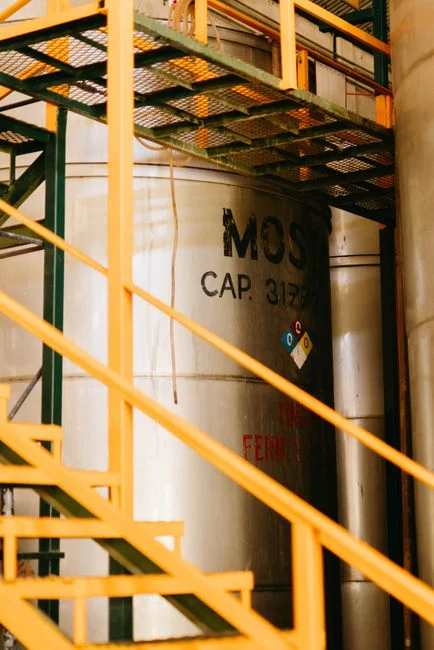
Effective pretreatment design maps specific pollutants to unit operations to satisfy the City of Tampa’s discharge requirements. For chemical facilities, the equipment train is sequenced to address high-load pollutants before polishing steps. Facilities managing oils, FOG, or high TSS should prioritize the installation of a DAF for FOG and TSS removal, which utilizes micro-bubble technology to achieve separation before biological or chemical stages. Dissolved metals (Cd, Cr, Cu, Ni, Pb, Zn, Hg) necessitate chemical precipitation followed by a lamella clarifier for metal precipitation solids, which typically operates at a surface loading rate of 20–40 m/h to maximize floc removal efficiency.
For facilities facing high COD/BOD or those pursuing water reuse, an MBR system for biological polishing and water reuse offers a smaller footprint and superior effluent quality compared to conventional activated sludge. pH fluctuations, common in batch chemical manufacturing, must be managed via PLC-controlled chemical dosing for pH and coagulation, ensuring that influent to the POTW remains within the 6–9 pH range. Finally, for facilities targeting specific emerging contaminants or reuse-grade water, a multi-media filter for polishing and RO pretreatment is recommended to support long-term compliance with local limits.
| Pollutant/Driver | Primary Unit Operation | Design Parameter/Objective |
|---|---|---|
| Oils/FOG/TSS | DAF System | 4–300 m³/h capacity; micro-bubble saturation. |
| Dissolved Metals | Lamella Clarifier | 20–40 m/h surface loading; 30% chemical reduction. |
| pH/Flow Swings | Equalization/Dosing | 4–8 hour retention (continuous) or batch-based sizing. |
| COD/BOD/Reuse | MBR System | 10–2,000 m³/day; effluent < 1 μm. |
Equipment Selection Matrix: CapEx, Footprint, and Tampa-Specific Fit
Selecting equipment for a Tampa-based chemical plant requires balancing capital expenditure against the long-term cost of noncompliance penalties. DAF systems provide a modular footprint suitable for batch-heavy operations, while lamella clarifiers offer a 30% reduction in chemical consumption and significantly lower footprint compared to conventional gravity clarifiers. For high-volume facilities, MBR systems represent a higher initial CapEx but are essential for sites aiming for water reuse in the water-scarce Central Florida region, effectively bypassing city water costs for non-contact cooling applications.
Automated dosing systems are necessary for facilities under the City of Tampa’s oversight, as manual pH adjustment often results in excursions that trigger SNC criteria. When designing for sludge management, a plate and frame filter press (1–500 m² area) remains the standard for dewatering metal-hydroxide flocs. Engineers should prioritize equipment that supports remote PLC monitoring, allowing for real-time adjustments to chemical dosing rates in response to changing influent concentrations, thereby minimizing the risk of exceeding the City’s daily maximum limits.
PFAS and Emerging Contaminants: Forward-Looking Design for Tampa Plants

Federal pretreatment standards for PFAS are currently under development, with the regulatory trajectory pointing toward future numeric limits. Research indicates that 98% of tested US waterways show elevated PFAS levels downstream of POTWs, with most facilities lacking dedicated removal technology (per Waterkeeper Alliance, 2025). Although the EPA’s drinking water limits for six PFAS compounds are subject to ongoing policy transitions, Tampa-based facilities should adopt a Best Management Practice (BMP) approach to future-proof their operations.
Current engineering best practices involve segregating high-PFAS process sidestreams at the source rather than treating the entire plant flow. For facilities already using MBR or RO for water reuse, incorporating Granular Activated Carbon (GAC) or Ion Exchange (IX) resins as a polishing step provides a barrier against PFAS discharge. By isolating these streams, plants treat concentrated volumes with higher efficiency, reducing the overall OpEx of PFAS mitigation. Designing for flexibility—such as including space for future carbon contactors in the current equipment layout—is a low-cost insurance strategy against the implementation of local PFAS numeric limits in the Tampa jurisdiction.
Frequently Asked Questions
What are City of Tampa's specific numeric local limits for metals and conventional pollutants?
Local limits are detailed in the City of Tampa's Technical Manual. While BOD, COD, and TSS have maximum allowable concentrations (350 mg/l for BOD/TSS; 1,000 mg/l for COD), specific metal limits (e.g., Copper, Zinc, Chromium) are set based on the POTW's headworks loading capacity. You must consult your specific wastewater discharge permit for the exact numeric limits applicable to your facility.
How does Tampa define Significant Noncompliance and what are the TRC multipliers?
Significant Noncompliance (SNC) occurs if 66% of measurements over six months exceed a limit, or if 33% of measurements exceed the TRC-adjusted limit. The Technical Review Criteria (TRC) multiplier is 1.4 for BOD, TSS, and Total Oil and Grease, and 1.2 for all other pollutants, excluding pH.
Do I need a slug load control plan if my plant runs continuous operations?
Yes, if your facility is designated as an SIU, you are required to have a slug load control plan under 40 CFR 403.8(f). Even continuous operations can experience surge events during startup, shutdown, or process upsets, which the City of Tampa requires you to mitigate through equalization and documented procedures.
Can I dilute my wastewater to meet Tampa's concentration limits?
No. Under 40 CFR 403.6(d), dilution is prohibited as a substitute for adequate treatment. You must achieve compliance through the installation of appropriate unit operations (e.g., DAF, clarifiers, or MBR) rather than by increasing process water usage.
What pretreatment equipment does Tampa require for PFAS removal today?
Currently, there are no federal or local numeric pretreatment standards specifically for PFAS in the City of Tampa. However, the City maintains the authority to regulate any discharge that causes pass-through or interference. Implementing GAC or IX pretreatment for high-concentration sidestreams is the recommended practice for proactive compliance management.