Determine Whether Part 433 Applies to the Plant
Part 433 applicability depends on what the plant actually does at the discharge point, not on whether it calls itself a fabricator. HydropureWater’s 2026 guidance states that 40 CFR Part 433 includes forming, finishing, forging, foundry, metal-spraying and machining-wash operations co-located with plating or anodizing lines. A plant operating its own zinc, nickel or chromic-acid tank is within the covered scope described by that guidance; a dry-stamping operation that ships parts to a separate finisher is generally outside it. The industrial user permit application should therefore identify on-site plating, anodizing and hard-chrome operations before equipment bids are treated as regulatory commitments.
| Actual plant operation | Part 433 screening conclusion | Documentation to obtain |
|---|---|---|
| On-site zinc, nickel or chromic-acid tank | Within the covered scope described by HydropureWater’s 2026 guidance. | Tank inventory, process descriptions, wastewater sources and discharge connection. |
| Plating, anodizing or hard-chrome line | Review the covered metal-finishing category against the complete production inventory. | Operating hours, bath chemistry, rinsewater flows and batch-dump practices. |
| Dry stamping only; parts sent to a separate finisher | Generally outside Part 433 according to HydropureWater’s 2026 guidance, subject to POTW review. | Purchase records, shipping records and written POTW determination. |
| Stamping, machining or grinding co-located with plating or anodizing | Do not exclude covered operations based on the plant’s primary business description. | Floor plan, process-area map, wastewater routing and permit application. |
This applicability screen is not a substitute for the receiving POTW’s determination. It establishes whether categorical standards are in play and prevents a dry-stamping operation from buying a treatment train designed for plating chemistry it does not generate.
Build the Clearwater Sewer-Discharge Design Basis
EPA’s governing point is the industrial user’s end-of-pipe connection to the POTW collection system, where POTW local limits are imposed. The design basis must therefore come from the receiving POTW’s current local-limit table and permit, not from a generic federal table or an equipment vendor’s standard drawing. For every pollutant, identify the applicable categorical standard, the current local limit, the controlling requirement and the proposed monitoring point.
| Parameter | Applicable requirement to compare | Design-basis entry |
|---|---|---|
| Cadmium, chromium, copper, lead, nickel, silver, zinc and total toxic organics | Existing-source PSES or new-source PSNS, as applicable, versus the current POTW local limit. | Controlling value, averaging basis, monitoring frequency and upstream treatment objective. |
| Oil and grease, total suspended solids and pH | Current POTW local limit and any applicable state or permit condition. | Equipment outlet target, alarm threshold and compliance record. |
| Hexavalent chromium and cyanide | POTW authorization plus any categorical or narrative pretreatment conditions. | Reduction or oxidation endpoint, pH/ORP control and composite-sampling method. |
| PFAS | No current numerical chrome-finisher limit was identified in EPA’s 2026 rulemaking activity. | Reserve space, utilities and containment for possible future anion-exchange or GAC polishing. |
EPA explains that local limits address the specific needs of the POTW, its sludge processes and receiving waters. A supplier therefore should not guarantee discharge performance from a federal table alone. Obtain the industrial sewer-use permit, discharge authorization, current local-limit table and applicable Florida requirements before freezing equipment sizing. A more detailed permit-first sewer-limit guide for metals plants shows the same document-control method.
Use the stricter applicable limit for each parameter. Do not wait for a categorical standard to appear in the POTW table, and do not treat anticipated PFAS rulemaking as a current numerical design limit. The permit review should produce a dated parameter-by-parameter design envelope that the engineer, operator, owner and supplier can sign against.
Characterize Batch Wastewater Before Sizing Equipment
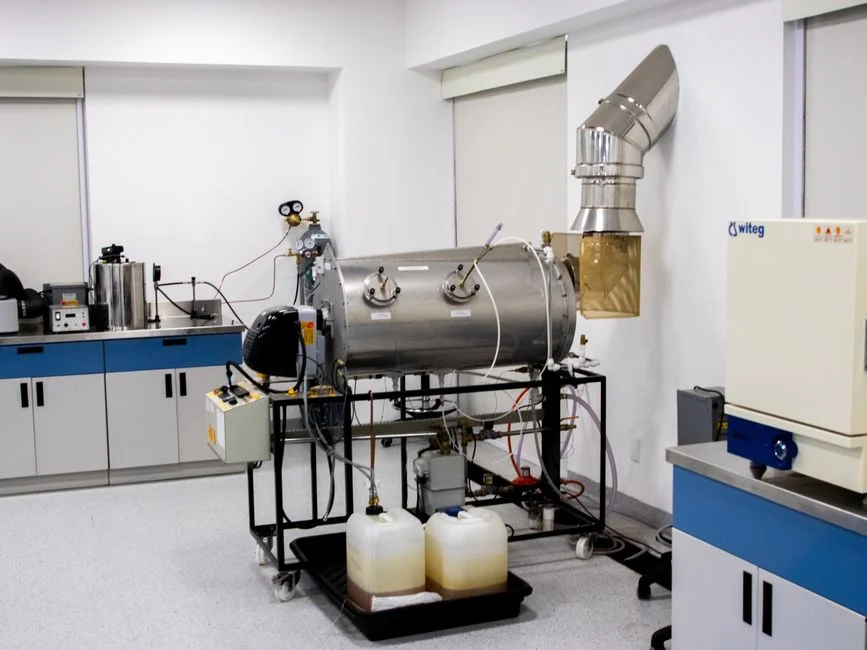
Representative sampling determines whether equalization, chemical consumption and solids separation are properly sized. HydropureWater’s 2026 guidance calls for at least a full week of representative composite sampling because plating shops generate batch dumps; a four-hour composite can miss a Friday-afternoon dump and undersize equalization. Sampling should separate production sources rather than blend them into an unrepresentative floor-drain sample.
| Wastewater source | Primary contaminant concern | Design input required |
|---|---|---|
| Stamping, machining and drawing compounds | Free and emulsified oils. | Oil concentration, emulsion character, flow and discharge timing. |
| Acid pickling | Dissolved metals and acidic pH. | Metal species, pH, flow and dump volume. |
| Chromic-acid anodizing or hard chrome | Hexavalent chromium and acidic wastewater. | Cr(VI), total chromium, pH, flow and batch frequency. |
| Conversion coating, grinding swarf and casting sand | Suspended solids and associated pollutants. | TSS, particle character and solids-generation rate. |
| Floor drainage, line washdown and production rinsewater | Mixed contaminant transport. | Contribution to each batch and cross-contamination risk. |
| Alkaline cyanide plating | Cyanide and plating metals. | Cyanide concentration and whether zinc, copper, cadmium or silver chemistry is present. |
HydropureWater’s 2026 field-data screening ranges report oils at 50–500 mg/L, total dissolved metals at 5–200 mg/L, TSS at 100–1,000 mg/L and pH moving between 2 and 12 across batch dumps. These are screening values, not universal design limits or substitutes for site data. Calculate mass loading from measured flow and concentration, because a low-concentration high-volume stream and a low-volume high-concentration dump can impose different hydraulic, chemical and solids-handling loads.
Where alkaline cyanide plating remains in service, document the plating chemistry. Cyanide must be destroyed before metals precipitation because untreated cyanide can redissolve downstream precipitates. The resulting influent dataset should identify which samples included tank dumps, washdown, floor drainage and rinsewater rather than presenting one blended concentration as representative of every operating condition.
Design the Pretreatment Process Flow
Each unit operation must solve a defined contaminant problem, and equalization must precede chemistry that depends on stable flow and pH. The standard sequence is flow equalization, oil or grease removal, Cr(VI) reduction, cyanide oxidation, hydroxide precipitation of dissolved metals, DAF or lamella clarification, final pH adjustment and sludge handling. Removing these functions from the sequence or combining incompatible reactions into one tank makes failure diagnosis difficult.
| Process step | Control purpose | Key verification |
|---|---|---|
| Flow equalization | Buffer batch dumps and smooth downstream chemical demand. | Basin level trend and batch-discharge profile; HydropureWater’s 2026 guidance associates a flow coefficient of variation below 0.5 with smoother downstream chemistry. |
| Oil or grease removal | Remove oils and grease that interfere with downstream chemistry or solids separation. | Oil concentration, emulsion condition and separated-oil handling. |
| Cr(VI) reduction | Convert soluble hexavalent chromium to trivalent chromium for subsequent precipitation. | Reduce with sodium metabisulfite or ferrous sulfate at pH 2–3 and ORP of roughly 250–300 mV; confirm with Cr(VI) and total chromium results. |
| Cyanide oxidation | Destroy cyanide before metal hydroxide precipitates form. | Oxidation endpoint and residual cyanide results. |
| Hydroxide precipitation | Remove dissolved metals as metal hydroxides. | HydropureWater’s 2026 guidance places the chromium precipitation stage at pH 8.5–9.5; verify other metals against their selected chemistry. |
| DAF or lamella clarification | Separate hydroxide floc, suspended solids and floatable material. | Hydraulic loading, floc condition, float or sludge withdrawal and carryover. |
| Final pH adjustment and sludge handling | Meet the permit pH condition and prevent untreated solids from reaching the sewer. | Final pH, dewatering performance, dry-solids record and disposal manifest. |
Use a DAF system for fabricated-metals wastewater when suspended solids, FOG, oil, grease or colloidal matter must be removed. Consider lamella clarification where compact inclined-plate separation, sludge recirculation and integrated flocculation suit the installation. The DAF versus clarifier selection guide provides a useful comparison framework, but the actual hydraulic and floc properties remain the deciding inputs.
Install mechanical screening before the sludge train. Rags, wipes and tramp metal can prematurely blind a filter press or block downstream equipment. The proposed mechanical bar screen for the pretreatment inlet should be shown on the protected collection route, not treated as an accessory added after flotation.
Size the Solids-Separation and Chemical-Control Systems
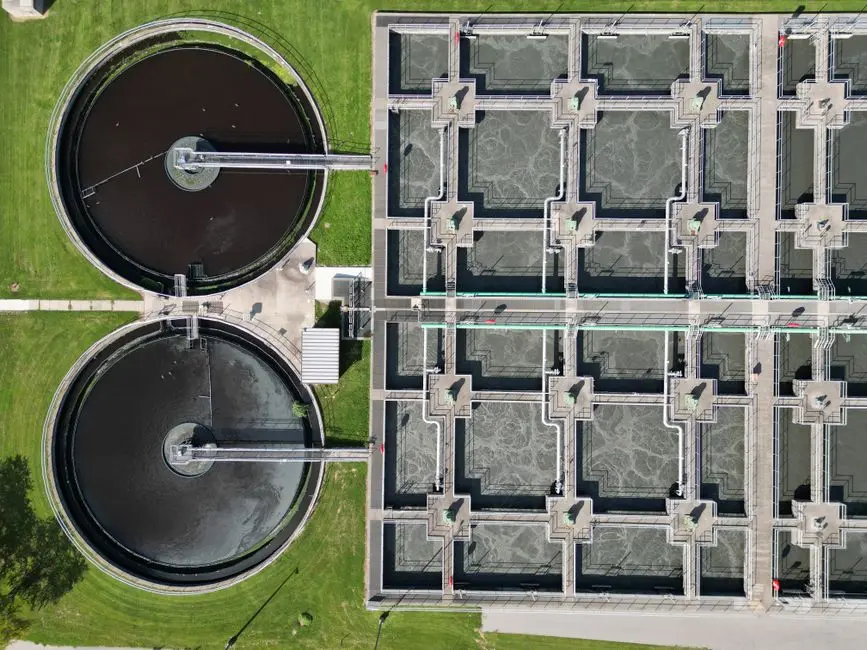
A supplier should demonstrate the solids-separation calculation and chemical-control logic, not merely provide a model and tank dimensions. HydropureWater’s 2026 DAF guidance gives hydraulic surface loading of 4–20 m/h depending on model and floc density, an air-to-solids ratio of 0.005–0.060 with 0.02 as a typical design point, and recycle of 10–30% of forward flow. These values belong in the sizing calculation with the selected flow, solids production and wastewater properties identified.
| Engineering variable | HydropureWater’s 2026 guidance | Buyer check |
|---|---|---|
| Hydraulic surface loading | 4–20 m/h, depending on model and floc density. | Calculation uses the selected wastewater flow and documented floc condition. |
| Air-to-solids ratio | 0.005–0.060; 0.02 is the typical design point. | Air demand, blower power and float integrity are evaluated together. |
| DAF recycle | 10–30% of forward flow. | Recycle effect on TSS removal, chemistry dilution and equalization demand is stated. |
| Chemical control | Flow-paced feed combined with pH or ORP feedback. | Control narrative identifies feeds, setpoints, alarms and automatic diversion. |
| Pump accountability | Calibration column and stroke-count totalizer. | Chemical delivery can be reconciled with operating and compliance records. |
A higher air-to-solids ratio can produce a drier float but consumes more blower power and can break fragile floc. Higher recycle can improve TSS removal but dilutes chemistry and increases equalization demand. These tradeoffs should appear in the proposal rather than disappear into a model-selection sheet.
Require an automatic chemical-dosing skid for pH, Cr(VI) and cyanide control with PLC-based flow pacing and pH or ORP feedback. Each metering pump should have a calibration column and stroke-count totalizer; fixed manual settings do not adequately control batch-discharge streams. Interlocks for pH excursion, out-of-range ORP and high TSS should automatically divert flow back to the equalization header. The sludge-system review should also compare the available high-efficiency sedimentation tank option against the selected solids-separation and sludge-handling objectives.
Verify Performance and Disposal Before the First Discharge
Compliance begins with a defined sampling program and operating record, not the supplier’s shop test. Perform composite sampling against the current industrial user permit, the applicable PSES or PSNS parameters and the stricter POTW local limits. The final permit, including sampling method, averaging period, monitoring frequency and reporting conditions, controls the verification program.
| Record | Required content | Use in compliance review |
|---|---|---|
| Composite and grab laboratory results | Permit parameters, sample location, time, flow and analytical method. | Compare each result with its controlling limit and applicable averaging basis. |
| Chemical and operational records | Chemical use, pump totals, pH and ORP trends, alarm events and equalization levels. | Reconstruct plant conditions and identify the cause of an excursion. |
| Solids records | TSS results, dry-solids measurements, dewatering logs and disposal manifests. | Demonstrate controlled handling of metal hydroxide sludge. |
| Equipment status | Interlock tests, pump calibration, screen condition and maintenance entries. | Confirm that protective controls remain functional. |
HydropureWater’s 2026 benchmarks for metal hydroxide sludge are 2–5% dry solids leaving a DAF and 25–35% after plate-and-frame dewatering; the same source cites a belt-press ceiling of around 22% dry solids. A metal hydroxide sludge filter press should therefore be evaluated against the disposal contract and transport method, not filter area alone.
Confirm hauler acceptance, leachate characteristics and destination requirements before selecting a dewatering target. Reserve polishing for an identified need, such as tighter POTW limits, water reuse or a future requirement. A future PFAS obligation is not a present numerical requirement, but the site can reserve space, utilities, containment and control interfaces for a later anion-exchange or GAC skid.
Common Failure Modes That Cause Sewer-Limit Exceedances
Sewer-limit exceedances usually reflect an upset, inadequate control or a treatment step that cannot perform as designed. The response should begin with the symptom and test the most likely failure mechanism rather than immediately increasing chemical feed.
| Observed symptom | Likely cause | Corrective action |
|---|---|---|
| An oversized batch reaches downstream chemistry | Undersized equalization basin or an incomplete batch profile. | Trend basin levels and expand representative composite sampling. |
| Incomplete chromium reduction | Reductant feed, pH 2–3 control or ORP performance. | Verify the reductant system and review Cr(VI) and total chromium results. |
| Metal precipitates redissolve downstream | Unsuitable pH conditions or uncontrolled downstream chemistry. | Recheck the precipitation and final-pH control sequence. |
| Floc breakthrough or fragile float | Hydraulic loading, floc condition or recycle performance. | Review the solids-separation calculation, polymer feed and recycle operating point. |
| Chemical carryover, blockage or premature filter-press blinding | Sludge-feed control, upstream screening or disposal-handling failure. | Inspect feed control, screen condition and the route used to handle dewatered solids. |
The TSS exceedance troubleshooting guide provides a useful diagnostic framework for separating hydraulic, chemical and solids-handling causes. One operating rule should remain consistent: a protective diversion to equalization protects the sewer, but it does not discharge the excess batch. Equalization capacity, alarm response and operator action still have to be included in the operating plan.
Questions to Ask Before Ordering Pretreatment Equipment
A defensible equipment proposal must trace from the current permit through representative wastewater data, equipment sizing, controls and final disposal. “Meets sewer limits” is not an acceptable performance statement unless the governing limit and the demonstrated operating envelope are identified.
| Information to request | Acceptable supporting document | Commercial decision affected |
|---|---|---|
| Regulatory basis | Current POTW local-limit table, industrial user permit, discharge authorization and documented Part 433 applicability. | Confirms the required treatment scope and compliance risk. |
| Process and sizing basis | Flow diagram, full-week composite dataset, mass-loading calculation, equipment sizing and chemical-consumption range. | Compares bids on engineering basis rather than model name. |
| Controls and commissioning | Control narrative, alarm list, interlock test, pump calibration method and operator-training scope. | Defines operating readiness and maintenance obligations. |
| Solids disposal | Dry-solids basis, dewatering method, hauler acceptance and destination requirements. | Determines lifecycle cost and whether the selected dewatering target is usable. |
| Itemized budget | Separate equipment, foundations, electrical work, chemicals, commissioning, training, maintenance and sludge-disposal costs. | Allows comparison of complete installed scopes. |
The supplied research does not support a defensible capital-price range. Obtain a site-specific, itemized quotation rather than comparing generic published prices. Do not accept an outlet guarantee until the governing permit, categorical applicability, representative influent dataset, control narrative and disposal route are documented. Require the supplier to distinguish calculated design values, guaranteed performance terms and outcomes dependent on chemical consumption, sludge properties or operator practice.
Frequently Asked Questions
Does a dry-stamping-only plant near Clearwater need a 40 CFR Part 433 treatment system?
Generally, no. HydropureWater’s 2026 guidance states that a dry-stamping operation shipping parts to a separate finisher is outside Part 433, while on-site zinc, nickel or chromic-acid plating can place the plant within the covered scope. The receiving POTW should confirm the determination using the actual production inventory and wastewater routing, especially where machining wash operations are co-located with plating or anodizing.
Which requirement controls when PSES, PSNS and POTW local limits differ?
Compare the requirements parameter by parameter and apply the stricter applicable limit. Existing sources are evaluated under PSES and new sources under PSNS, but the current POTW local limit must also be included. EPA states that local limits are imposed at the industrial user’s end-of-pipe connection to the POTW collection system. Obtain the current local-limit table and permit before finalizing the treatment target.
Should a Clearwater fabricated-metals plant select DAF or lamella clarification?
DAF is the usual starting point when FOG, oil, suspended solids and colloidal matter are present, according to HydropureWater’s 2026 guidance. Lamella clarification may be preferable for a compact installation where integrated flocculation, inclined-plate separation and sludge recirculation fit the wastewater and site layout. The deciding evidence should be the hydraulic loading, floc behavior and representative influent data, not available floor area alone.
What should a buyer request before pricing and sizing pretreatment equipment?
Request the current POTW local-limit table, applicable industrial user permit, documented Part 433 applicability and at least a full week of representative composite influent data. These inputs support the mass loading, equalization, chemical-consumption and solids-handling calculations. Then request an itemized quotation covering equipment, foundations, electrical work, chemical supply, commissioning, training, maintenance and sludge disposal. No supported capital-price data was supplied, so a defensible budget must come from a permit-specific quotation rather than generic pricing.
Related Equipment
- DAF system for fabricated-metals wastewater — specifications, capacity range, and technical data