Start with the wastewater—not the plant catalogue
An effluent treatment plant in Amman should be selected from the actual wastewater profile, required discharge or reuse quality, available space, operating resources and applicable permit conditions—not from flow rate alone. Industrial ETPs may combine DAF pretreatment, biological MBR treatment, membrane polishing, disinfection and sludge dewatering. University of Twente research identifies nanofiltration as a polishing option for wastewater-treatment-plant effluent and reclamation, while textile-mill research demonstrates substantial variation in color, COD, TSS, ammonia, BOD and other parameters. Start with representative sampling, define measurable treatment objectives, select the process train and verify performance before handover.
Request sampling across production cycles rather than accepting a single grab sample. The industrial wastewater characterization should show how flow, COD, BOD5, TSS, pH, oil and grease, color, nutrients, metals and process-specific contaminants change by shift, product, batch and cleaning event. Record the receiving point or reuse destination, operating hours, planned production changes and whether continuous, batch or hybrid treatment is required.
The Kaduna textile-industry study by Global NEST Journal is a useful warning against generic specifications. Across five mills, color exceeded the applicable limit by about 350 times on average; COD, TSS, NH3, BOD5 and sulfide exceeded it by average factors of 24, 13, 8, 7 and 3, respectively. TDS occurred in all five samples. Nitrate, oil and grease appeared in Mills 1 and 2, aluminum, manganese and zinc in 80% of samples, and iron in 60% (Global NEST Journal, undated in the supplied research). These are textile-effluent results, not Amman limits, but they show why industrial wastewater characterization must precede equipment selection.
| Design-basis input | Information the buyer should obtain | Why it changes selection |
|---|---|---|
| Production and flow | Representative flow, batch, shift and wash-down data | Determines equalization, peak-load handling and operating mode |
| Organic load | COD, BOD5 and relevant process parameters | Sets biological loading and pretreatment demands |
| Separated contaminants | TSS, oil and grease, color and metals | Determines whether clarification, DAF or specialist treatment is required |
| Destination and schedule | Discharge or reuse objective, operating hours and future changes | Defines final quality, redundancy and expansion needs |
Use the industrial ETP and DAF selection guide to structure that investigation, and consult the MBR versus conventional activated sludge comparison before treating biological process selection as a naming exercise.
Turn Amman permit and reuse objectives into design criteria
A valid wastewater discharge compliance basis requires the current permit and receiving-point conditions supplied by the relevant Jordanian authority or receiving utility. The designer should not transfer a discharge limit from another jurisdiction into the Amman project. Obtain the current permit, sewer or receiving-water conditions, sampling requirements and any approved reuse specification, then convert each applicable requirement into a monitored parameter, averaging period, sampling point and acceptance test.
Separate three project objectives during scoping. Compliant discharge is tied to the authorized receiving point and its applicable conditions. On-site reuse may require water quality suitable for a defined industrial process, washing, cooling or another internal use. Productive reuse outside the facility requires an identified recipient, a water-quality specification and the applicable approval route. These objectives should not be combined into one ambiguous statement such as “produce clean water.”
Advanced polishing is an enabling stage, not a substitute for characterization. University of Twente’s doctoral research describes nanofiltration as a method for polishing wastewater-treatment-plant effluent to standards associated with agricultural or indirect potable uses and investigates its potential for effluent reclamation (University Library/University of Twente, undated in the supplied research). The local project must still establish the required final-water quality, feasible treatment train and regulatory route. The wastewater reuse and water-security reference can support the broader reuse discussion, but it does not establish Jordanian approval requirements.
A second option for evaluating is constructed wetlands. Wageningen University and Research’s 2022 doctoral research examined micropollutant removal from treatment-plant effluent using constructed wetlands (published 23 September 2022). It is relevant where land, climate, hydraulic conditions and receiving context suit that route, but it does not replace local feasibility testing or permit confirmation.
Choose the treatment train stage by stage
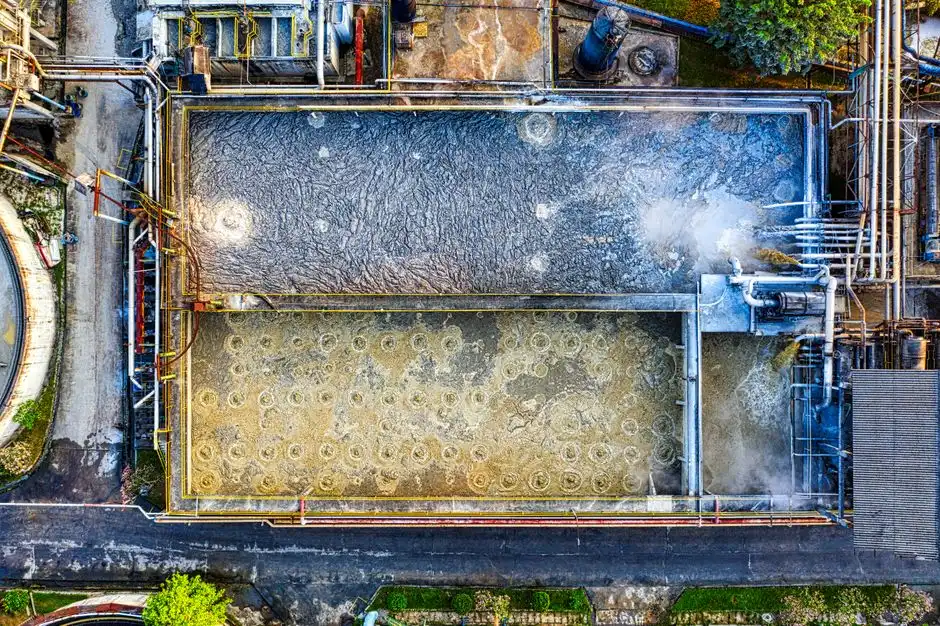
A complete treatment train should be evaluated as six linked decisions: screening and equalization, contaminant-specific pretreatment, biological treatment where required, membrane or tertiary polishing, disinfection, and sludge management. Comparing a complete ETP against a single DAF or MBR unit produces a false selection because the equipment perform different functions.
For oil, grease, floatable contaminants and suspended solids, evaluate DAF as pretreatment. HydropureWater offers 13 standard DAF models covering 4–300 m³/h, with applications for suspended solids, FOG, oil and grease, and colloidal matter. The industrial DAF pretreatment system should therefore be matched against measured peak flow, solids loading and chemical demand—not selected simply because floatable contaminants appear in the wastewater analysis.
Where compact biological treatment with membrane solids separation is appropriate, compare an integrated MBR. HydropureWater’s published range is 10–2,000 m³/day, using submerged PVDF membranes with filtration below 1 μm. The integrated MBR wastewater treatment system is therefore relevant for preliminary screening where the organic load, footprint and operating resources are compatible, but its final selection still requires feed-water limits, duty-cycle checks and guaranteed final-water quality.
For lower-flow sewage or decentralized applications, compare the WSZ package, which combines A/O biological contact oxidation, sedimentation and disinfection and covers 1–80 m³/h. It is not automatically an industrial ETP; wastewater characterization and treatment objectives must confirm the match.
Before sensitive downstream treatment, evaluate lamella clarification or filtration for suspended-solids control. HydropureWater specifies a lamella-clarifier range of 20–40 m/h surface loading and states that chemical consumption can be reduced by up to 30%. For polishing, evaluate ultrafiltration where suspended solids, colloids and bacteria must be removed without chemical cleaning; the cited range is 2,000–40,000 L/h with 0.03 μm PVDF membranes and turbidity input up to 300 ppm.
Final microbial control can involve UV or chlorine dioxide where appropriate. HydropureWater’s chlorine-dioxide generator range is 50–20,000 g/h, while the UF option is positioned for physical membrane separation without chemicals. Include a chemical dosing system in the review where the process depends on coagulants, pH control or other dosing.
Do not leave sludge outside the ETP scope. HydropureWater’s plate-and-frame filter-press range covers filtration areas from 1–500 m² for municipal and industrial sludge dewatering.
| Stage | Principal purpose | Equipment decision to verify |
|---|---|---|
| Screening and equalization | Remove gross material and buffer production variation | Mechanical screening, storage volume, pumping and controls |
| Pretreatment | Remove oil, grease, floatables, colloids or suspended solids ahead of sensitive stages | DAF, lamella clarification or filtration |
| Biological treatment | Reduce biodegradable organic load and, where designed, nitrogen | MBR or another process matched to the wastewater |
| Polishing | Produce the final quality required for discharge or reuse | UF, nanofiltration or another validated treatment route |
| Disinfection | Control viable microorganisms at the required point | UV or chlorine dioxide |
| Sludge management | Concentrate, dewater and route residuals for treatment or disposal | Thickening, filter press, handling and disposal route |
Match the equipment to the operating scenario
The correct comparison is between complete operating scenarios, not isolated technologies. An MBR combines biological treatment with membrane solids separation, while DAF normally serves as pretreatment; neither should be presented as interchangeable with the other. Start with wastewater fit, then assess footprint, transfer and installation constraints, automation, operator availability, energy and chemical demand, recoverability and maintainability.
For a high-capacity industrial stream containing floatable material, DAF’s published 4–300 m³/h range makes it a candidate for evaluation against measured flow and peak loads. Confirm hydraulic capacity, solids loading, flotation performance, sludge withdrawal, chemical recovery and the effect of production changes before selecting it.
For a site requiring compact biological treatment, the MBR option spans 10–2,000 m³/day and specifies filtration below 1 μm. The buyer should confirm whether the measured wastewater remains inside the supplier’s feed-water envelope, how peak loads affect biological loading, how membranes are cleaned, and what final-water quality is actually guaranteed. A pore-size or nominal-capacity statement alone is not a performance case.
For decentralized sewage applications, the WSZ package’s 1–80 m³/h range and buried configuration may suit the site constraints. It should not replace an industrial ETP unless the wastewater characterization and objectives support that substitution. The chemical-wastewater MBR comparison provides a useful technical frame for checking biological assumptions, but it is not a substitute for site data.
Request lifecycle documentation covering operator hours, consumables, membrane or media life, preventive maintenance, remote support, spare-parts lead time and performance monitoring. Define responsibility for blowers, pumps, controls, odor management, chemical dosing, membrane cleaning and sludge dewatering.
| Selection criterion | Evidence to request | Commercial implication |
|---|---|---|
| Wastewater fit | Complete characterization, peak-load method and process assumptions | Excludes unsuitable or under-sized proposals |
| Final-water performance | Guaranteed parameters, test methods and operating conditions | Defines enforceable acceptance |
| Site integration | Footprint, civil works, utilities, access and installation method | Exposes omitted scope |
| Operation and maintenance | Operator hours, consumables, cleaning and preventive-maintenance schedule | Allows lifecycle-cost comparison |
| After-sales support | Local response time, spare-parts list, remote support and warranty escalation | Tests operational resilience |
Build a supplier brief that reduces procurement risk
A procurement-ready brief should require each bidder to state the design flow, average and peak wastewater loads, complete pollutant profile, treatment objectives and assumptions behind the proposed process. Ask for a process flow diagram, equipment list, civil and utility requirements, control philosophy, duty/standby strategy, membrane or media specifications, and an explicit boundary between equipment supply, installation and civil works.
Make every performance commitment measurable. For each guarantee, identify the covered parameter, test method, test condition, sampling point, averaging or acceptance period, remedy for non-performance and responsibility for proving compliance. A generic statement that the ETP will “meet the required standard” is not sufficient.
Request a site-specific capital and operating cost breakdown covering equipment, civil works, installation, commissioning, chemicals, power, operator labor, maintenance, membrane replacement and sludge disposal. The 2026 water treatment infrastructure cost benchmarks can provide context for asking consistent cost categories, but the supplied research contains no defensible universal ETP price for Amman. Any quotation should therefore be checked against the same scope and commercial exclusions.
For larger or variable industrial streams, consider pilot testing. Ask bidders to explain how equipment will be sized for production variability, cleaning cycles and future expansion. The packaged wastewater treatment procurement guide provides a broader supplier-checklist reference, while Jordanian permit and site conditions must remain the controlling inputs.
Qualify suppliers on local engineering support, commissioning experience, operator training, response time, spare-parts availability, documentation quality and references for comparable wastewater. Do not select on the lowest equipment price alone. Include a maintenance and failure-response plan covering membrane cleaning, DAF operation, chemical dosing, controls, pumps, blowers, odor management and sludge dewatering.
Verify performance before handover
Commissioning should test the agreed design basis and guarantees with representative wastewater where possible, rather than relying only on clean-water demonstrations. Require sampling at the agreed locations, documented operating conditions, calibration records, control-system demonstrations, alarm tests and verification that the installed treatment train matches the accepted process.
Before handover, obtain operator training records, maintenance manuals, as-built drawings, equipment registers, spare-parts lists, software access and a clear warranty-support escalation path. A post-commissioning performance review should have defined monitoring parameters, responsible personnel and corrective-action deadlines. For sludge-handling equipment, the filter-press troubleshooting field guide is a useful handover reference for confirming operating and maintenance instructions.
Frequently Asked Questions
What is the typical cost of an effluent treatment plant in Amman?
The supplied research does not support a reliable universal price for an industrial ETP in Amman. Request a quotation based on representative flow, wastewater analysis, treatment targets, civil-work conditions, utilities, automation and sludge handling. Require bidders to separate equipment, civil works, installation, commissioning, operating costs and exclusions so that proposals can be compared on the same scope. The effluent treatment plant buyer’s guide can help structure that quotation request without supplying an invented Amman price.
Should an industrial facility in Amman choose MBR or DAF?
Generally, they perform different roles. DAF targets suspended solids, FOG, oil and grease, and colloidal matter; it normally serves as pretreatment. An MBR combines biological treatment with membrane solids separation and is more relevant where biological treatment and compact solids separation are both required. The decision should follow the regional ETP buyer’s guide and be confirmed through characterization, process criteria and supplier guarantees.
How do I size an ETP for an industrial facility in Amman?
Size it from representative average and peak loads, production variability, treatment objectives, operating schedule, future expansion and the selected process duty range. Hydraulic flow alone is insufficient: a system can meet flow capacity while failing on COD, color, suspended solids, oil and grease or another process-specific contaminant.
What should a wastewater treatment supplier include in a performance guarantee?
The guarantee should state the covered parameters, test methods and conditions, sampling points, operating period, acceptance criteria, remedy for non-performance and responsibility for demonstration. Include the wastewater feed basis and operating envelope so the guarantee remains meaningful when production conditions change.
Can an industrial ETP in Amman reuse the treated water?
Reuse can be feasible, but it depends on the intended use, verified final-water quality, local approval route and any required advanced polishing. University of Twente research supports nanofiltration as an option for polishing treatment-plant effluent and investigating reclamation, but it does not establish an Amman reuse approval or specify the required local water quality. Confirm those project-specific conditions before including reuse in the supplier’s performance guarantee.