
Why Filter Presses Fail in Industrial Dewatering Plants
At 2 a.m. on a Tuesday, a municipal plant manager watches a 30-chamber press discharge cake that slumps off the plates like wet cement instead of dropping in firm slabs. Disposal trucks are waiting, the day's dewatering target is missed, and the morning shift will spend hours diagnosing what looks like a press problem but is almost always a cloth or conditioning problem. This guide is built to compress that diagnostic hour into a five-minute triage.
Filter press problems fall into nine recurring categories: cloth blinding, plate leaks, low hydraulic pressure, hydraulic overheating, uneven cake, wet cake, slow cycle time, plate-opening jams, and feed-system faults. Most are caused by upstream polymer conditioning, fabric selection, and missed preventive maintenance — not by the press itself. Diagnose by symptom first, then check cloth permeability (0.1–100 cfm), feed pressure, and plate alignment before replacing parts.
Two structural formats dominate. A plate-and-frame filter press uses alternating plates and open frames, with cloth covering both sides of each plate; a recessed-chamber filter press uses paired recessed plates that form a hollow chamber when closed. In both designs, the cloth — not the steel plate — does the actual solid-liquid separation. The plate only provides the structure and the sealing surface. That distinction is why fabric choice is a process variable, not a consumable.
Every cycle runs four stages: fill (feed pump pressurizes slurry into chambers against cloth resistance), press (hydraulic ram holds pack closed as filtration continues and cake compacts), wash (optional, displaces residual solubles from cake), and discharge (plates shift, cake falls). Each stage produces a characteristic failure mode: blinding during press, leaks during fill, sticky cake at discharge, jams during plate shift.
Field data on plate-frame dewatering is consistent. A 2022 study by Indonesia's National Research and Innovation Agency (BRIN) tested simulated activated sludge as CaCO3 at 1–4% w/w feed and recorded a 56.00% solids removal efficiency with cotton cloth at 4% w/w, outperforming drill cloth at the same conditions (BRIN, 2022). More broadly, 60–70% of unplanned filter press shutdowns originate from cloth condition, polymer conditioning, and feed consistency rather than the press frame or hydraulic pack (ChemREADY field data, 2025). When the frame is the root cause, it is almost always because something upstream has been ignored long enough to break it.
Symptom-to-Cause Diagnostic Table: 9 Filter Press Problems at a Glance
Use the table below as the first stop. Match the symptom you are seeing in the next cycle, confirm the most likely root cause against the gauge or cloth reading, then take the first action. The permanent fix is what you actually do in the next maintenance window.
| Symptom | Most Likely Root Cause | First Action | Permanent Fix |
|---|---|---|---|
| Cloudy filtrate | Holes or tears in cloth | Inspect cloth surface and seams | Patch small holes; replace cloth if damage is widespread |
| Cycle time doubled at constant feed | Cloth blinding | High-pressure wash, then chemical wash | Pre-coat for fine slurry, reset polymer program, replace cloth at end of life |
| Press won't reach operating pressure | Hydraulic leak, low oil, air in line | Check seals, top up oil, bleed accumulators | Replace pump or cylinder seal kit; verify cooler and return filter |
| Slurry leaking between plates | Misalignment or worn gaskets | Clean seal faces, realign pack | Replace gaskets; re-shim plates if recurring |
| Wet, structureless cake | Polymer underdose | Re-evaluate flocculant program | Tune dose via jar testing; install an automatic polymer dosing system for stable feed |
| Brittle cake that fractures, re-blinds cloth | Polymer overdose | Reduce dose, increase mixing energy | Reset dose-rate setpoint and re-validate with jar tests |
| Hydraulic oil overheating | Cooler failure or low oil | Service cooler, top up oil, clean filters | Replace oil on schedule; replace cooler fan if RPM has dropped |
| Plates won't shift | Cake residue on shifting mechanism | Clean between cycles, lubricate | Resurface or replace worn plates; inspect shift rails |
| Uneven cake across the plate | Blocked feed port or inconsistent feed rate | Clear feed pipe, verify pump curve | Install feed flow control; rebuild feed port if eroded |
If the symptom points to plate mechanics, confirm against the plate and frame filter press specification sheet for your chamber count and filtration area before ordering parts. The symptom usually survives across filter areas, but the maintenance interval scales with the size of the pack.
Cloth Blinding: The Single Most Common Filter Press Problem
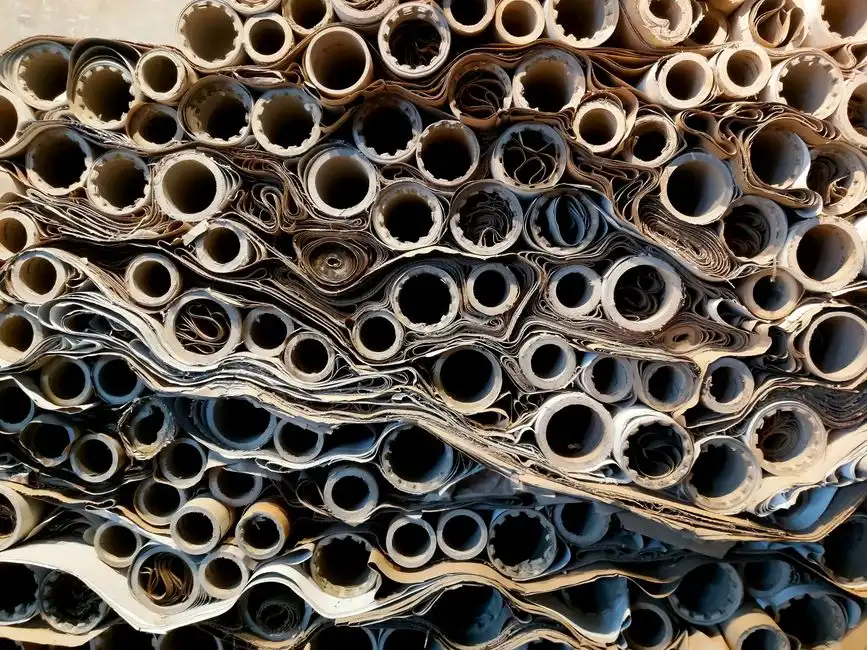
Cloth blinding is what the trade calls it when solids progressively embed in the cloth weave until permeability collapses and filtrate flow drops to near zero. The early warning is not a failed cycle — it is a successful cycle that suddenly takes twice as long. Per ChemREADy's framing of press failures, "cycle times double suddenly" is the operator's first sign that blinding has crossed the threshold where mechanical washing is no longer enough (ChemREADY, 2025). Treat that signal as a same-day work order, not a next-week project.
Recovery is a three-stage sequence. First, run a high-pressure water wash (typically 80–100 bar at the nozzle) from the clean side of the cloth to push embedded solids back out through the feed side. Second, run a chemical wash matched to sludge chemistry: a caustic soak (pH 11–12) dissolves organic and oily films, followed by an acid soak (pH 2–3) to dissolve inorganic scale. Third, pressure-test the cloth against a baseline permeability reading. If permeability does not return to within 10–15% of a new-cloth reference, the cloth is at end of life and must be replaced.
Fabric choice controls how fast blinding recurs. Polypropylene is the default for most filter press applications because of its high tensile strength and excellent resistance to most acids and alkalis (M.W. Watermark, 2025). For highly abrasive slurries — mining tailings, mineral concentrates, ceramic slips — polyamide (nylon) offers a non-blinding, hydrophobic alternative that resists particle embedment. Calendared polypropylene is a third option that gives non-stick release behavior for FOG-rich food processing sludges.
Use these specification windows when ordering replacements: cloth permeability spans 0.1–100 cfm across the commercial fabric range, and weight spans 9–20 oz/sq yd, with larger presses requiring heavier cloth to handle the higher clamp loads and longer service life targets (M.W. Watermark, 2025). If the cloth on the press today is outside those windows for the slurry, blinding is a symptom, not the root cause.
Hydraulic System Failures: Pressure Loss and Overheating
Hydraulic pressure is what holds the plate pack sealed against feed pressure. When hydraulic pressure drops, plates leak — and operators blame the gaskets. Three failure modes cause most hydraulic problems: pump seal wear, cylinder seal failure, and air entrainment in the line. Diagnose by reading the gauge under load: if pressure at the ram drops more than 10% from rated with no corresponding command change, the pump or cylinder seal kit is suspect. If pressure is fine at rest but sags during the hold phase, air in the line is the more likely culprit and a bleed at the accumulator is the fix.
Overheating is a separate failure mode with its own triggers: low oil level, fouled oil cooler, or a clogged return filter. Per ChemREADY's framing, "small hydraulic problems tend to escalate quickly, turning minor repairs into full system shutdowns" (ChemREADY, 2025). Treat an overheat alarm as a same-shift event, not a next-cycle event. The cooler fan failing under summer load is a typical root cause that takes a press from normal to tripped in one shift.
Maintenance triggers that prevent the cascade: pull an oil sample for analysis every 500 operating hours, replace the return filter element at a 3-bar pressure differential, and rebuild the pump or cylinder seal kit when measured output drops more than 10% at rated pressure. The spare-parts kit for any hydraulic press should hold a pump seal kit, a cylinder seal kit, a return filter element, and a cooler fan — these four items should never be on zero stock.
Plate Leaks, Misalignment, and Cake Discharge Problems
Most plate misalignment is not an alignment problem at all. It starts when filter cake deposits are left on the plate seal face during cake release; the next closing compresses those deposits unevenly, and the pack walks out of true over a few cycles (ChemREADY, 2025). The fix is procedural, not mechanical: full manual wipe of every seal face on every cycle, gasket inspection while the pack is open, and re-shimming only if the misalignment recurs after the wipe discipline is in place.
Cake stuck to the cloth is the discharge-side failure mode that gets misdiagnosed as cloth failure. Two causes dominate. Over-dry cake — produced by holding the press at full pressure past the end of filtration — bonds to the cloth fibers and pulls fibers loose during discharge, accelerating wear. Under-conditioned cake from polymer overdose creates a sticky, glassy surface that also resists release. Both reduce discharge efficiency and shorten cloth life; both are upstream process problems, not cloth-quality problems.
On recessed-chamber plates, excess core buildup is a separate discharge problem: each filter plate core must be cleaned before the next cycle or filtration efficiency drops on the following fill (M.W. Watermark, 2025). Skipping that step on a high-throughput day means the next cycle starts with a partial blockage and ends with an uneven cake.
Maintenance procedure scales with the level of automation. A manual press needs the operator's eyes on every seal face; a PLC-automatic press still needs the same eyes on a sample of faces each shift. For a duty range that spans 1–500 m² of filtration area across manual, hydraulic, and PLC-automatic variants, the wipe-and-inspect cadence is the constant; the labor cost is what changes with the automation level (HydropureWater product catalog, 2026).
Filter Cloth Specification: Matching Fabric to the Sludge
Fabric selection is the highest-leverage decision an operator makes on a filter press. The table below maps slurry type to a working specification window. Use it as a starting point for replacement orders and as a baseline for jar-testing alternate fabrics when blinding or wear rates climb.
| Slurry Type | Recommended Polymer | Permeability Target (cfm) | Weight Target (oz/yd²) |
|---|---|---|---|
| Municipal activated sludge | Polypropylene | 5–20 | 12–16 |
| Mining / abrasive tailings | Polyamide (nylon) | 10–40 | 16–20 |
| Chemical / acidic sludge | Polypropylene, high chemical resistance grade | 1–10 | 9–14 |
| Food processing / FOG-rich sludge | Calendared polypropylene | 5–15 | 12–16 |
The abrasive-slurry row pulls from M.W. Watermark's guidance on polyamide as a non-blinding, abrasion-resistant alternative to standard polypropylene (M.W. Watermark, 2025). The chemical-sludge row narrows permeability to 1–10 cfm because finer weaves retain solids better when the cake is the disposal concern; the food-processing row uses calendared polypropylene because the calendering process closes the weave surface just enough to release sticky, high-fat cakes without blinding prematurely.
Cloth life tracks fabric match. A well-matched fabric on a municipal activated-sludge duty typically lasts 6–12 months (NMPatel, 2025-09). A mismatched fabric — a high-permeability cloth on a fine chemical sludge, for example — can blind in weeks and force premature replacement that wipes out any upfront savings.
Preventive Maintenance Schedule: A 12-Month Filter Press Program

A 12-month maintenance program turns the symptom-to-cause table into something that prevents the symptom from happening. The intervals below are starting points for a single-shift, single-press duty; scale frequency up for multi-press operations, multi-shift duty, or abrasive slurries.
| Interval | Task |
|---|---|
| Daily | Visual check of plates, seal faces, cloth for tears; verify feed pressure and filtrate clarity |
| Weekly | High-pressure cloth wash; hydraulic oil level; leak inspection at fittings and hoses |
| Monthly | Chemical wash of cloths; hydraulic oil analysis; plate alignment check; polymer dose audit |
| Quarterly | Hydraulic filter replacement; cooler service; full seal inspection; calibrate feed pressure transmitter |
| 6 months | Cloth replacement for abrasive slurries; hydraulic seal kit replacement; full system pressure test |
| 12 months | Cloth replacement for municipal duty; cooler fan replacement if RPM has dropped; full hydraulic oil change |
Stock the parts that wear on this schedule before they wear out. The minimum bench stock for any running press is a set of replacement cloths, a hydraulic seal kit, a return filter element, a gasket set sized to the plate count, and a spare polymer pump head. Ordering from a consolidated filter press spare parts and replacement cloth stock list keeps lead times inside the maintenance window instead of outside it.
Frequently Asked Questions
How often should filter cloths be replaced?
On municipal activated-sludge duty, expect 6–12 months of useful cloth life (NMPatel, 2025-09). On abrasive slurries such as mining tailings or ceramic slips, plan on 6 months or less. Replace sooner if high-pressure washing followed by chemical washing no longer returns permeability to within 10–15% of a new-cloth reference.
Why is my filter cake too wet?
Wet, structureless cake points to polymer underdose — the floc is too small to release water efficiently. Brittle cake that fractures into fines and re-blinds the cloth points to polymer overdose — the floc is too tight and fractures under press pressure. Either condition is a conditioning problem, not a press problem. The fix is a jar-test re-baseline of the flocculant program and, ideally, a stable feed via an automatic polymer dosing system so dose drift does not recur.
Can clogged filter cloths be restored?
Yes, in most cases. Run the three-stage recovery: high-pressure water wash from the clean side, then a caustic soak followed by an acid soak matched to the sludge chemistry, then a pressure test against a baseline. If permeability does not recover to within 10–15% of the new-cloth value, the cloth is at end of life and replacement is the next step.
What causes uneven cake thickness across the plate?
Two causes cover most cases: a partially blocked feed port, or an inconsistent feed rate from a worn pump or starving suction. Diagnose by inspecting the feed pipe for blockage and by reading the feed flow rate against the pump's rated curve. Persistent uneven cake after both checks point to an eroded feed port that needs rebuilding.
How do I stop my hydraulic system from overheating?
Treat the oil, the cooler, and the filter as a single system. Confirm oil level on the gauge, confirm the cooler fan is at rated RPM, and confirm the return filter is not at its change-out pressure differential. Replace oil on the 500-hour interval, service the cooler on the quarterly interval, and replace the filter at 3-bar differential. If the press is still overheating after all three are clean and in spec, the pump itself is suspect and should be load-tested.
For operators running anaerobic digestion upstream of the press, the anaerobic digester troubleshooting guide covers the chemistry side of cake moisture at its source. For thickening-stage conditioning that feeds a press, see the gravity belt thickener process guide. For high-strength industrial waste streams that route through a UASB reactor before dewatering, the UASB reactor troubleshooting guide covers the upstream variables that change cake behavior downstream.