Why UASB Reactors Fail — and How to Diagnose It Fast
Failures inside an upflow anaerobic sludge blanket (UASB) reactor cluster into seven recurring categories: granular sludge washout, floating scum, low-temperature performance loss, toxicity shocks, gas-pipe and three-phase separator blockage, hydraulic short-circuiting, and rapid solids accumulation that forces discharge roughly every 100 days (Aiyuk et al., IJESD 2010, doi:10.7763/IJESD.2010.V1.76). Each symptom maps to a subsystem the operator can inspect on shift — hydraulic (flow, distributor), biological (sludge blanket, VFA/alkalinity), gas (GSS/GHS seals, condensate), or sludge handling (draw-off frequency, SS loading).
Most of these failures are operational, not design failures. The DUT 2014 brewery study concluded that on-site anaerobic reactors in South Africa "tend to face problems in operating these reactors due to poor understanding of the process," producing high effluent pollutant loads and low energy recovery (DUT 2014, doi:10.51415/10321/1276). The fix starts with a triage rule: change one variable at a time — feed flow, pH, or temperature — when chasing instability, so the cause is not masked by a second correction.
Aiyuk et al. also showed that disturbance events such as sludge extraction repeatedly destabilize the methanogenic community, dropping reactor performance for days after each intervention. The operational takeaway is to avoid aggressive swings: cut loading, do not cut it off; warm the feed by 1-2°C per shift, not by 10°C; and never waste sludge from the top of the blanket when a controlled bottom draw-off is available.
Problem 1: Granular Sludge Washout and Effluent Turbidity Spikes
Granular sludge washout is the most expensive UASB failure because the biomass lost takes 60-90 days to regrow under steady loading. Symptom: rising effluent TSS and VSS, visible sludge flakes in the overflow launder, falling COD removal, and a brown tint to the effluent when the blanket surface drops below the GSS aperture. Cause: upflow velocity above 0.7 m/h, gas production too vigorous for the three-phase separator to deflect, or a broken deflector baffle that lets flocs ride over the gas cap.
Fix sequence: cut feed flow by 30-50% immediately, repair or reseat the GSS/GHS gas-solid separator, and reseed with 5-10% of reactor volume of mature granular sludge (target VSS/TSS ratio above 0.7) sourced from a healthy reactor. Do not restart at full load; ramp up over 5-7 days at 10-15% increments while watching effluent TSS.
Prevention: design or re-rate the sludge blanket zone for upflow velocity of 0.5-0.7 m/h, and install a sludge retention screen or perforated launder at the top of the blanket to catch rising flocs before they reach the settler. A SCADA trigger on effluent turbidity rising more than 30% above the 7-day rolling average gives the operator a 4-6 hour warning before biomass loss becomes irreversible.
Problem 2: Floating Scum and Inert Layer Buildup
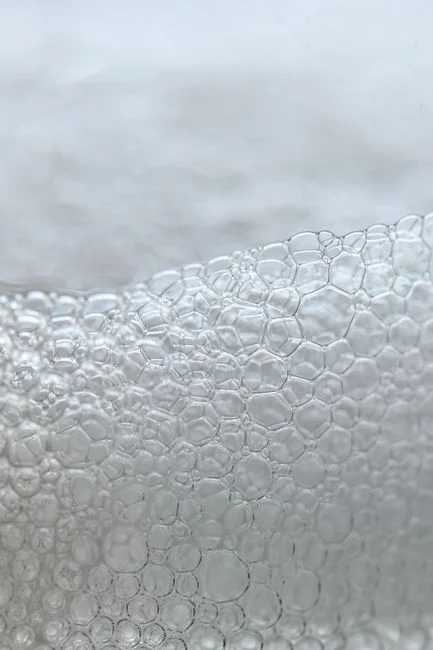
A thick floating mat of fats, oils, grease (FOG), fibers, and plastics chokes gas collection and forces liquid to channelling under the mat, collapsing effective HRT. Symptom: a visible crust on the reactor surface, low or zero biogas yield at the meter, surface jetting in the settler, and a sour odor from the gas hood. Cause: FOG and floatables that bypassed pre-treatment, or seasonal surges in oil-bearing waste from food, brewery, or rendering operations.
Fix: physical scum removal weekly using a slotted scoop or rotary skimmer, anti-foam dosing (silicone or polyglycol emulsion at 5-20 ppm into the feed), and a manual scrub of the underside of the gas hood with a low-pressure water jet. Do not rely on recirculation alone — scum will not dissolve, it must be removed.
Prevention: install a DAF system for FOG and floatables removal upstream of a UASB or a rotary mechanical bar screen for headworks protection sized to capture 6 mm solids. Feed FOG below approximately 50 mg/L and total SS below 200-300 mg/L if the reactor is to run at design loading without scum accumulation.
Problem 3: Low Temperature and Winter Performance Drop
Cold feed is the most misdiagnosed UASB problem because operators blame biology for what is really a kinetic ceiling. Symptom: COD removal drops 10-30% as reactor temperature falls below 18-20°C; methanogenic activity roughly halves per 10°C drop, so a reactor running at 15°C delivers about half the COD removal it achieved at 25°C. Cause: ambient cooling in uncovered reactors, cold feed streams from outdoor equalization, or insufficient HRT to compensate for slower kinetics.
Fix: cover the reactor, insulate external piping, and pre-warm feed using a heat exchanger on the biogas boiler loop. At temperatures consistently below 18°C, retrofit to a hybrid UASB-filter by adding an upflow media zone above the blanket — IWA hybrid UASB-filter research (2004, doi:10.2166/wst.2004.0865) shows this configuration sustains 60-70% COD removal at 12-15°C where a classical UASB drops below 40%.
Prevention: design for the coldest month, not the annual average. A reactor sized for 25°C will underperform every winter if the design basis ignored January feed temperature. Track a 7-day rolling feed temperature and ramp HRT up by 20-30% before the cold season starts.
Problem 4: Toxicity Shocks and Methanogen Inhibition
Toxicity is fast, dramatic, and reversible only if caught within hours, not days. Symptom: sudden drop in biogas, rising VFA/alkalinity ratio above 0.4, falling pH toward 6.5, and a flat or foaming gas meter reading within 2-6 hours of a feed change. The methanogens die long before the acidogens, so the VFA/alkalinity ratio is the earliest reliable indicator.
Common toxicants in industrial UASB service: ammonia above 1,500 mg/L as N, sulfides above 200 mg/L, chlorides above 5,000 mg/L, heavy metals (Cu, Ni, Zn, Cr in the mg/L range), formaldehyde, chlorinated solvents, and residual antibiotics from pharmaceutical or fermentation waste streams. A one-time slug from a CIP cycle or a tank wash can wipe out a healthy blanket in a single shift.
Fix: stop feed, flush with dilution water or recycle treated effluent at reduced upflow velocity (0.2-0.3 m/h), add trace nutrients (Fe, Co, Ni, Se at 1-5 mg/L each), and reseed if the pH does not recover above 6.8 within 24 hours. Do not restart at full load; bring feed back over 7-14 days.
Prevention: equalization tank with online pH and conductivity monitoring, a toxics rejection protocol at the head of the works (pH >9.5 or <5 triggers diversion), and an automatic chemical dosing system for nutrients or antifoam when recovery is needed. Source-control signage for upstream production staff is cheap insurance.
Problem 5: Gas Pipe and Three-Phase Separator Blockage
Gas system failures get misdiagnosed as "the biology has stalled" or "the feed pump is failing" because the symptom shows up at the boiler, not the reactor. Symptom: biogas pressure drops at the meter, water hammer in the gas line, intermittent or yellow flame at the boiler, and condensate pooling at the flare or pressure relief. Cause: H2S corrosion of iron gas lines, foam carry-over from the reactor surface, condensate accumulation in low points, and biological slime in humid sections.
Fix: isolate the affected line at the nearest valve, water-flush at low pressure, install or service the drip trap, inspect the gas hood seal for cracks, and add a condensate knockout drum if none exists. For H2S above approximately 1,000 ppm, install in-line gas washing with iron sponge or biological scrubber media — high H2S in a dry line produces sulfuric acid and pinhole leaks within months.
Prevention: gas-line flushing every 30-90 days depending on H2S loading, drip-trap drain checks on the weekly walk-through, and a biogas composition log (CH4, CO2, H2S, O2) taken monthly so a drift is visible before the boiler starts failing. The DUT 2014 brewery finding reinforces the point: low energy recovery at on-site UASB reactors often traces to gas-system neglect, not biology (DUT 2014).
Problem 6: Hydraulic Short-Circuiting and Dead Zones
Short-circuiting is the hidden cause of COD removal variability that no amount of biological tuning will fix. Symptom: a tracer test (lithium or sodium chloride pulse) shows a wide residence time distribution, outlet VFA spikes during peak shift flows, and COD removal collapses at peak flow but recovers overnight. Cause: clogged or poorly distributed feed laterals, single-point feed at the center, low feed pressure that lets density currents sink before distributing, or wrong influent density that causes channeling.
Fix: clean and level the distributor, add or move feed points so the reactor floor receives uniform loading, and switch from pumped feed to gravity feed from an elevated header if the pump is throttling below 0.5 m head. Re-run a tracer test after any hydraulic change to confirm the residence time distribution has tightened.
Prevention: design with at least one feed point per 2-4 m² of reactor floor, and budget annual distributor maintenance — lateral cleaning, nozzle replacement, and a level survey of the distribution ring. A reactor with a perfect blanket and a broken distributor still fails on COD removal.
Problem 7: Rapid Sludge Build-up and Discharge Cycle Overload
Solids accumulation is the single most underappreciated UASB issue, and the Aiyuk et al. 2010 Lesotho study is the cleanest dataset in the literature. Up to 70% of influent COD ended up as suspended solids inside the reactor treating raw domestic sewage, and the system needed sludge discharge on average every 100 days (Aiyuk et al., IJESD 2010, doi:10.7763/IJESD.2010.V1.76). Each discharge event destabilized the methanogens and dropped reactor performance — a structural problem, not an operator error.
Fix: install effective pre-treatment to cut influent SS below approximately 200-300 mg/L before the UASB, and use a controlled sludge draw-off near the base of the reactor rather than emergency top wasting, which pulls methanogen-rich blanket material with the waste. Plan sludge handling capacity so a draw-off event does not overflow the waste-sludge tank.
Route waste sludge to a plate and frame filter press for UASB waste sludge for water recovery, or to a lamella clarifier for pre-UASB TSS reduction if the goal is thickening rather than dewatering. The capital cost of pre-treatment is recovered in lower discharge frequency, higher biogas yield, and steadier effluent quality.
UASB Healthy Operating Parameters — Benchmark Table
The table below consolidates typical operating ranges for a mesophilic UASB on industrial feed, with alarm levels an operator can load directly into SCADA. The "raw sewage, no pre-treatment" row reflects the Aiyuk et al. 2010 baseline at 522 mg/L CODt and 80% COD removal — useful as a worst-case reference.
| Parameter | Healthy Range | Alarm Level | Notes |
|---|---|---|---|
| Upflow velocity (sludge blanket zone) | 0.5-0.7 m/h | >0.9 m/h | Above 0.7 m/h, washout risk rises sharply. |
| HRT | 6-24 h | <4 h or >36 h | Industrial food/brewery: 12-24 h typical. |
| Organic loading rate (OLR) | 2-15 kg COD/m³·d | >18 kg COD/m³·d | Granular sludge matures above 5 kg COD/m³·d. |
| Temperature (mesophilic) | 30-38°C | <20°C | Moderate 20-25°C possible at lower OLR. |
| Influent SS | <200-300 mg/L | >500 mg/L | Aiyuk 2010: 70% of COD retained as SS without pre-treatment. |
| VFA/alkalinity ratio | <0.3 | >0.4 | Above 0.4, toxicity or overload is the likely cause. |
| pH | 6.8-7.4 | <6.5 or >7.6 | Below 6.5, methanogens are inhibited. |
| Biogas yield | 0.3-0.5 m³/kg COD removed | <0.2 m³/kg COD removed | Food/brewery: 0.4-0.5; domestic: 0.2-0.3. |
| Reference: raw sewage, no pre-treatment | 80% COD removal at CODt 522 mg/L | n/a | Aiyuk et al. 2010 baseline. |
Preventive Maintenance Schedule for a Stable UASB
A recurring 30/90/365-day checklist keeps the reactor inside the healthy ranges above and prevents most of the seven failure modes described earlier. Hand it to the shift team and review compliance monthly.
- Daily: log pH, temperature, feed flow, gas meter reading, and a spot-check VFA/alkalinity ratio. A ratio above 0.3 for two consecutive shifts warrants a feed reduction.
- Weekly: measure scum layer thickness at three fixed points on the reactor surface, inspect feed distributor laterals for plugging, drain gas-line drip traps, and verify launder weirs are level.
- Monthly: biogas composition (CH4, H2S, CO2) via portable analyzer, sludge bed profile through sample taps, settler launder cleaning, and waste-sludge draw-off volume log.
- Annually: tracer test for short-circuiting, full three-phase separator service, and reseeding if granular sludge VSS/TSS ratio falls below 0.5. Replace distributor nozzles and inspect GSS/GHS seals for cracks.
Frequently Asked Questions
What is the most common UASB problem?
Granular sludge washout driven by upflow velocity above 0.7 m/h is the most common and most expensive failure, because the lost biomass takes 60-90 days to regrow. Early signs are rising effluent TSS and visible sludge flakes in the overflow launder.
How often should a UASB be desludged?
On raw domestic sewage without pre-treatment, Aiyuk et al. 2010 documented discharge cycles of roughly every 100 days because up to 70% of influent COD accumulated as suspended solids. With pre-treatment that cuts influent SS below 200-300 mg/L, the interval typically extends to 6-12 months depending on OLR.
Can a UASB work in cold climates?
Yes, but COD removal drops 10-30% as reactor temperature falls below 18-20°C, and methanogenic activity roughly halves per 10°C drop. A hybrid UASB-filter configuration sustains 60-70% COD removal at 12-15°C, and mesophilic set-point operation with covered, insulated reactors is standard in temperate regions.
What pre-treatment does a UASB need?
At minimum, screening (rotary bar screen at 6 mm aperture) to remove plastics and fibers, plus FOG control. For food, brewery, and starch waste, a DAF system ahead of the UASB to drop FOG below 50 mg/L, and a lamella clarifier to cut SS below 200-300 mg/L, will stabilize operation and extend the sludge discharge interval significantly.