Why Citric Acid Wastewater Demands a Tailored UASB Design
Citric acid fermentation effluent is one of the more punishing streams a methanogenic reactor will encounter: COD of 15,000–60,000 mg/L, pH of 3.5–4.8 directly out of the fermenter, BOD/COD ratios of 0.55–0.65, sulfate of 1,000–4,000 mg/L when sulfuric acid is dosed for pH control, and temperatures of 30–55°C depending on whether cooling or heat recovery is applied (HydropureWater field data, 2026). A single-stage UASB dropped onto this stream without pre-neutralization will acid-shock the methanogens within days: the un-dissociated citric acid at pH <5 crosses the cell membrane and dissociates in the cytoplasm, dropping intracellular pH and halting methane formation. Pre-neutralization to pH 6.8–7.2 with NaOH or Ca(OH)₂ is therefore a non-negotiable cost line, not an option — typically adding $0.03–$0.06 per m³ treated and a CaCO₃ scaling risk that must be designed out.
The two-stage UASB study on purified terephthalic acid (PTA) wastewater — 225 days of operation, sequential acidogenic and methanogenic reactors, 76% methane content in the headspace, and DGGE-confirmed dominance of Methanobacteriales and Methanomicrobiales (Springer, Current Microbiology, 2020) — is the closest published analogue to the staged logic citric acid demands. The first stage handles acidification and most of the COD conversion to volatile fatty acids under shorter HRT; the second stage runs the slower, more sensitive methanogenic step at a buffered pH and longer HRT. For citric acid producers, that translates to a primary UASB at 8–12 hours operating as a roughing acidogenic reactor and a secondary UASB at 24–36 hours as the polished methanogenic reactor, with NaOH dosing in between.
Generic anaerobic cost benchmarks assume 20-hour HRT and 80% BOD removal (SAMCO, UASB design basis). On citric acid streams with high residual sugars and unconverted substrate from upstream fermenters, designers routinely push to 30–48 hours to keep the organic loading rate (OLR) inside the 8–15 kg COD/m³·day band where washout of slow-growing methanogens is avoidable. That 1.5–2.4× increase in reactor volume is the single biggest reason citric acid UASBs cost more per m³/day than brewery or starch UASBs of identical hydraulic capacity.
UASB Reactor Cost Breakdown for Citric Acid Wastewater in 2026
The price spread between a $7,000 bare-vessel Alibaba listing and a $2.5 million turnkey installed system is not arbitrage — it is the gap between a stainless-steel tank with no internals and a fully instrumented, biogas-tight, code-stamped anaerobic plant. For a 500 m³/day citric acid UASB, the 2026 turnkey range sits at $250,000–$450,000 USD when built around a 200–400 m³ carbon-steel vessel with FRP lining, SS316 in the gas-handling train, and standard instrumentation. Larger 1,000 m³/day food-grade plants in SS304 run $700,000–$1.4 million; turnkey packaged systems from Western EPCs with full CHP integration reach $2.0–$2.5 million (HydropureWater engineering estimates, 2026, indexed from SAMCO $5.0M ±25% UASB benchmark).
The Alibaba floor of $7,000–$80,000 per piece covers the reactor shell and basic three-phase separator only. To reach an installed cost the buyer must layer on six cost buckets, and it is the second through sixth that take a $50K vessel to a $400K operating system. Use the table below to benchmark any vendor quote line-by-line.
| Cost Bucket | 500 m³/day Range (USD) | What Drives the Number |
|---|---|---|
| Civil works and tankage | $30,000–$90,000 | Excavation, reinforced concrete, foundation, and secondary containment |
| Reactor vessel + internals (GLS separator, feed/distributor, sludge bed support) | $80,000–$220,000 | Carbon steel + FRP lining (low end), SS304 (mid), SS316 (high); diameter and height scale with HRT |
| Gas collection and utilization (boiler retrofit, CHP, or flare stack) | $40,000–$350,000 | Flare only at low end; 50–100 kWe CHP at high end — often 30–45% of installed cost when biogas is monetized |
| Heat exchanger, circulation pumps, and pipework | $25,000–$70,000 | Mesophilic operation at 35°C requires heat input on most streams; 30–55°C fermenter effluent reduces load |
| Instrumentation, pH/temperature/flow meters, and SCADA | $20,000–$60,000 | Online COD and methane analyzers optional but recommended for performance guarantees |
| Installation and commissioning | 25–35% of equipment cost | Typically bundled by EPC; verify whether freight, crane, and electrical are inside the quote |
On the lower-cost end, an integrated packaged treatment skid can collapse the civil and instrumentation buckets for plants under 200 m³/day, but the trade-off is reduced reactor volume and tighter OLR limits. For food-grade plants operating under HACCP and 3-A sanitary standards, the SS304 premium — typically a 35–60% multiplier on the vessel line — is rarely recoverable, and most buyers select SS316 only in the gas-handling train where H₂S chloride stress is highest.
Operating Costs and Biogas Revenue: 2026 OPEX Model
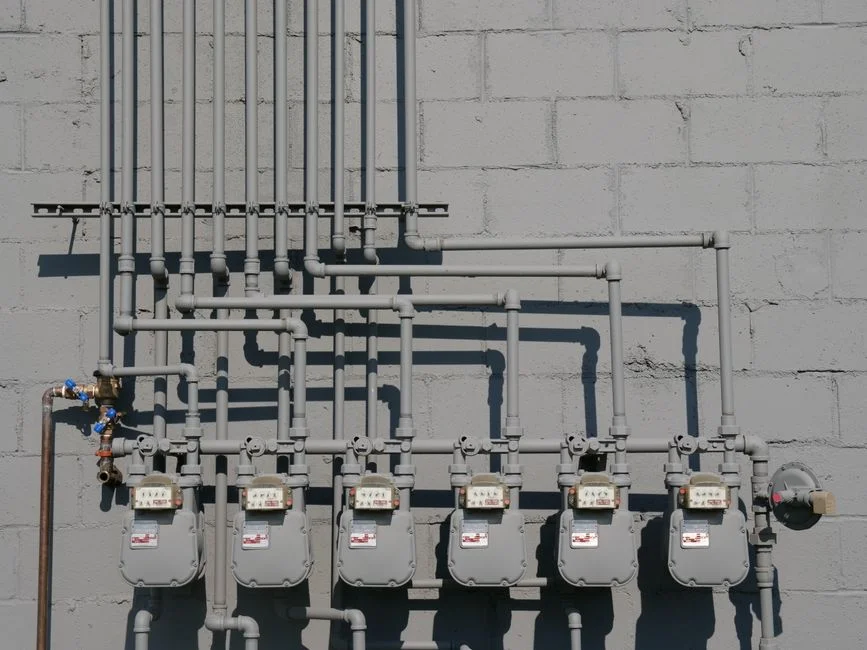
OPEX for a properly sized citric acid UASB runs $0.18–$0.45 per m³ of treated wastewater in 2026, dominated by energy for heating (40–55% of OPEX in cold climates) and sludge handling downstream (15–25%). The figure assumes mesophilic operation at 35°C, NaOH dosing for pH control, and surplus sludge dewatered to 22–25% dry solids. Plants that recover waste heat from the upstream citric acid crystallization step can cut the heating share to under 25% and push total OPEX toward the low end of the band.
The economic engine of the project is biogas yield. Standard stoichiometry gives 0.25–0.35 m³ CH₄ per kg COD removed at 70–76% methane content — the 76% figure is the same number observed in the two-stage PTA study (Springer, 2020) and is a defensible assumption for organic-acid-heavy industrial streams. For the 500 m³/day case study at 20,000 mg/L influent COD and 85% removal, that translates to 8,500 mg/L of COD removed per litre of feed, or 4,250 kg COD/day destroyed, yielding 1,060–1,490 m³ CH₄/day and 1,500–2,100 m³ biogas/day. At a thermal energy content of approximately 6.0 kWh/m³ biogas in a boiler (or 2.0 kWh/m³ as electricity in a CHP), the daily recoverable energy is 9,000–12,500 kWh thermal or 3,000–4,200 kWh electric (HydropureWater field data, 2026).
At a 2026 industrial natural gas equivalent of $0.08–$0.12/kWh thermal, biogas utilization recovers $720–$1,500 per day, offsetting 40–60% of OPEX and converting what would be a compliance cost into a revenue line. The OPEX sensitivity table below shows where the buyer should focus bid negotiations and design choices.
| OPEX Driver | Share of OPEX | 500 m³/day Annual Cost (USD) |
|---|---|---|
| Heating energy (steam or hot water) | 40–55% | $13,000–$36,000 |
| Nutrient dosing (N, P, trace metals) | 10–15% | $3,200–$9,800 |
| Sludge dewatering and disposal | 15–25% | $4,900–$16,400 |
| Labor and process monitoring | 15–20% | $4,900–$13,100 |
| Membrane, media, and periodic parts replacement | 5–10% | $1,600–$6,500 |
The single biggest lever the buyer owns is waste-heat integration; the second is the dewatering technology selection. A plate and frame filter press for surplus sludge typically achieves 22–25% dry solids versus 18–20% for a belt press, cutting sludge disposal tonnage by 15–25% and disposal cost by $2,000–$5,000 per year at this scale. For broader context on EGSB energy reduction techniques and how they apply to comparable anaerobic systems, the operating-cost levers transfer directly to UASB once the biogas is captured.
UASB vs EGSB vs IC for Citric Acid: When Each Reactor Wins
The decision between UASB, EGSB, and IC is not about which reactor is universally better — it is about matching the reactor's hydraulic tolerance to the influent COD and the available footprint. The SAMCO design basis anchors the comparison: UASB at 20-hour HRT and 80% BOD removal ($5.0M ±25% benchmark, field-erected 43′×24′), EGSB at 10-hour HRT and 85% BOD removal ($3.7M ±25% benchmark), and Anaerobic Filter (AF) at 15-hour HRT and 85–90% BOD removal ($4.4M ±25% benchmark). For a 500 m³/day food-industry plant these dollar figures scale down roughly 70–80% from the SAMCO reference, putting a fair 2026 comparison at $250K–$450K for UASB, $300K–$500K for EGSB, and $350K–$550K for AF depending on material of construction and gas handling.
The trade-off is hydraulic tolerance versus capital cost. EGSB's higher upflow velocity (4–8 m/h vs 0.7–1.0 m/h for UASB) makes it more tolerant of soluble, high-COD organic-acid streams — exactly what a post-fermenter citric acid effluent is. The 10-hour HRT also means a smaller reactor vessel, but the cost savings are typically consumed by the larger recycle pump and the taller gas-solids separator the EGSB requires. For very high COD above 40,000 mg/L with strong pre-treatment, IC reactors run at OLR up to 25–35 kg COD/m³·day but require a stable influent that citric acid fermentation rarely delivers without equalization.
| Reactor Type | HRT (hours) | BOD Removal | OLR (kg COD/m³·day) | 500 m³/day Installed Cost (2026) | Best-Fit Citric Acid Scenario |
|---|---|---|---|---|---|
| UASB | 20–48 | 80–85% | 8–15 | $250K–$450K | COD <30,000 mg/L, available footprint, budget-driven payback |
| EGSB | 10–18 | 85–90% | 12–20 | $300K–$500K | COD 20,000–50,000 mg/L, soluble stream, limited footprint |
| IC (Internal Circulation) | 4–8 | 85–90% | 20–35 | $500K–$900K | COD >40,000 mg/L, stable flow after equalization, high biogas yield |
For a 500 m³/day citric acid plant with influent COD of 20,000–25,000 mg/L, EGSB frequently wins on payback because the higher methane yield per m³ of reactor volume offsets the 15–25% CAPEX premium. UASB wins when the plant has a greenfield site, footprint is unconstrained, and the CFO is sensitive to first-cost over lifecycle. IC wins only when the upstream operation can deliver a steady, low-sulfate, low-temperature-shock stream — which is uncommon in batch citric acid fermentation without significant equalization investment.
Decision Framework: Sizing and Sourcing Your Citric Acid UASB
Five steps move a buyer from a flow number to a defensible procurement package in 2026:
- Fix the design basis. Lock in average and peak flow, influent COD, BOD, pH, temperature, and sulfate; define discharge limits (typically COD ≤500 mg/L and BOD ≤100 mg/L for food-industry discharge to municipal sewer in China, with tighter local limits in some provinces).
- Select HRT and OLR. Iterate reactor volume inside the 20–48 hour HRT and 8–15 kg COD/m³·day band. For 500 m³/day at 20,000 mg/L COD, a 30-hour HRT and 12 kg COD/m³·day OLR points to roughly 350 m³ of effective reactor volume split across two stages.
- Decide biogas fate. Flare, boiler retrofit, or CHP. This single decision drives 30–45% of installed cost and dictates whether payback is 3 years or 7 years.
- Pick material of construction. Carbon steel with FRP lining for budget installations; SS304 for moderate chloride exposure (under 200 mg/L); SS316 for high-sulfate (>3,000 mg/L) or chloride (>500 mg/L) streams, or for plants under food-grade sanitary design codes.
- Run a two- to three-vendor bid with identical performance guarantees. COD removal, methane yield, and HRT must be specified to the same values across bidders; compare on 10-year lifecycle cost, not on capital alone.
For the downstream sludge train, a useful reference is the starch wastewater sludge handling guide, which applies directly to the granular surplus sludge a UASB produces — the dewatering and disposal sequence is nearly identical for both feedstocks.
Frequently Asked Questions
What is the 2026 turnkey cost of a UASB reactor for citric acid wastewater? A 500 m³/day food-grade UASB with pre-neutralization and biogas utilization runs $250,000–$450,000 USD turnkey in 2026; plants in the 1,000 m³/day range with full CHP integration reach $700,000–$1.4 million, and Western EPC turnkey packages run $2.0–$2.5 million (HydropureWater engineering estimates, 2026).
What COD removal efficiency can a UASB achieve on citric acid wastewater? Properly designed two-stage systems with pre-neutralization to pH 6.8–7.2 and 30–48 hour HRT deliver 80–90% COD removal, with 70–76% methane content in the biogas stream.
How much biogas does a citric acid UASB produce per kg of COD removed? Standard yield is 0.25–0.35 m³ CH₄ per kg COD removed; a 500 m³/day plant at 20,000 mg/L influent COD and 85% removal generates 1,500–2,100 m³ biogas per day, equivalent to 9,000–12,500 kWh of thermal energy.
What pre-treatment is required before a UASB on citric acid wastewater? pH correction to 6.8–7.2 with NaOH or Ca(OH)₂ is mandatory, plus temperature stabilization to 35°C and suspended solids reduction. A dissolved air flotation (DAF) pre-treatment step is commonly used to remove residual oils, mycelia, and biomass carryover from the fermentation step before the stream enters the reactor.
Is a UASB or EGSB better for high-strength citric acid wastewater? EGSB typically delivers a 1–2 year shorter payback on soluble COD above 25,000 mg/L because of higher upflow velocity and methane yield; UASB wins on first-cost at moderate COD and unconstrained footprint. For polishing of UASB or EGSB effluent to meet COD ≤500 mg/L discharge limits, Fenton oxidation is the most common downstream step in the citric acid industry.