What an Effluent Treatment Plant in Manama Must Achieve
An effluent treatment plant in Manama should be selected from the industrial process wastewater’s contaminant profile, average and peak flow, operating variation and required discharge or reuse grade—not from a standard package. The treatment train may combine equalisation, oil and solids separation, biological treatment, chemical dosing, clarification, membrane or tertiary polishing, disinfection and sludge dewatering. A credible 2026 bid should state these inputs, identify every treatment stage, define monitored parameters and specify operating and maintenance assumptions. No defensible 2026 plant price can be given before the effluent characterisation and target effluent grade are known.
An industrial ETP removes contaminants associated with manufacturing before discharge or reuse. A sewage treatment plant instead handles domestic wastewater from toilets, kitchens, showers and laundry; an ETP cannot be designed around that generic profile. Industrial wastewater treatment in Manama may contain process chemicals, suspended solids, oils, heavy metals and organic load, with the relevant combination determined by the producing process. The 2026 ETP design guide explains the same contaminant-led distinction.
Fix the outlet objective before selecting equipment. The supplied 2026 Dubai ETP guide identifies three progressively tighter design objectives: discharge, restricted reuse and unrestricted reuse. Basic discharge compliance does not establish suitability for reuse, and unrestricted reuse requires a different treatment and validation basis. The selected grade determines whether tertiary polishing and disinfection are needed, how much reuse infrastructure must be included, and which parameters the plant must guarantee.
This is why an industrial ETP and DAF selection guide should be used as a technical reference, not as a substitute for the buyer’s own effluent characterisation.
Build the Project Brief from Real Effluent Data
An ETP bid is unreliable when it starts with a catalogue package instead of a documented effluent characterisation. The producing process and the origin of every discharge stream must be identified because the industrial process determines which contaminants enter the plant. A credible information request should also establish the flow envelope, seasonal and hourly variation, operating schedule, disposal route, future expansion and the outlet quality required for discharge or reuse.
Request average and peak flow in both m³/day and m³/h, together with hourly and seasonal variation. Provide BOD, COD and TSS concentrations, pH, and oil and grease data; add heavy metals, sulphates and fluorides where the process makes them relevant. The 2026 Dubai guide, citing Gulf Water Treatment’s 2025-08 engineering input, lists these parameters as the basis for industrial wastewater assessment.
Define the outlet specification, reuse destination, operating hours and planned production changes before bids are opened. A supplier should size equipment for the stated design flow and load, identify how the treatment train responds to variation, and state any operating assumptions. A bid that omits these items is not technically comparable, even if its headline price is lower.
| Buyer input | What the supplier must establish | Why it affects the bid |
|---|---|---|
| Producing process and stream origin | Contaminant sources, batch or continuous discharge, material losses and possible future changes | Determines the treatment objectives and pretreatment duty |
| Average and peak flow in m³/day and m³/h | Equalisation, transfer, treatment and peak-handling capacity | Prevents undersized hydraulic equipment |
| Hourly and seasonal variation | Storage volume, control response and duty assumptions | Defines the operating envelope |
| BOD, COD, TSS, pH and oil and grease | Biological, physical and chemical treatment loads | Links process selection to removal duties |
| Heavy metals, sulphates and fluorides where relevant | Specific removal, precipitation, adsorption or membrane requirements | Prevents omission of process-specific contaminants |
| Discharge or reuse grade and disposal route | Guaranteed outlet parameters, polishing, disinfection and sampling | Defines the final compliance boundary |
| Operating hours, footprint, utilities and sludge route | Equipment arrangement, staffing, energy, chemicals and residuals management | Establishes the complete commercial scope |
Production changes matter after commissioning. The 2026 Dubai guide warns that changed dosing requirements, fouled media and altered effluent composition can cause a plant that passed at commissioning to drift out of compliance within two years without maintenance. Effluent characterisation must therefore be refreshed when the process, raw materials, operating hours or discharge streams change.
Select a Contaminant-Led Treatment Train
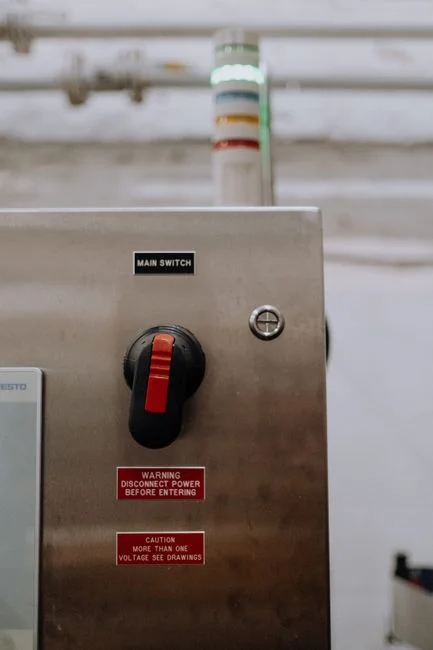
A coherent industrial wastewater treatment train follows the contaminants and the final outlet objective rather than a preferred equipment brand. A typical sequence is equalisation and screening where required, physical or DAF pretreatment, biological treatment where the organic load justifies it, chemical dosing and clarification, tertiary polishing where required, disinfection, and sludge handling. Every stage should have a defined removal duty and an outlet guarantee; no stage should be included merely because it appears in a standard package.
For high organic load, the 2026 Dubai guide identifies aerobic biological treatment where sludge volume and footprint are manageable. It identifies anaerobic treatment for high-strength effluent where biogas recovery can offset sludge-handling costs. That distinction is a screening rule, not final equipment selection: the buyer still needs the process load, operating pattern, available footprint and residual-handling route.
Textile wastewater illustrates why isolated equipment selection is inadequate. The 2026 Dubai guide cites Anais da Academia Brasileira de Ciências from 2021: biological treatment addresses organic load, chemical treatment addresses colour, and membrane treatment provides polishing because colour bodies and dye auxiliaries are not removed by biology alone.
Nanofiltration is a polishing technology, not a substitute for upstream characterisation or biological and chemical treatment. A University of Twente thesis by Schrader, published in 2015, investigated nanofiltration for polishing wastewater-treatment-plant effluent to EU Water Framework Directive standards and examining potential for agricultural or potable reuse. The study supports a polishing role; it does not justify direct nanofiltration for untreated industrial effluent.
Constructed wetlands require project-specific evaluation when micropollutants are relevant. Wageningen University’s doctoral research by Lei, published on 23 September 2022, examined their removal from wastewater-treatment-plant effluent. This is evidence for further evaluation, not a standard Manama ETP configuration.
Zero liquid discharge is a separate paired option for sites seeking water recovery and elimination of liquid effluent, according to the 2026 Dubai guide. It should not be presented as a generic feature of every ETP; its feasibility depends on the liquid stream, residual solids and disposal arrangements.
| Contaminant or objective | Potential treatment function | Decision condition |
|---|---|---|
| Suspended solids, oil, grease, FOG and colloids | Physical separation and DAF | Select when these fractions must be removed upstream of biological treatment or polishing |
| High organic load | Aerobic or anaerobic biological treatment | Compare load, footprint, sludge generation and potential biogas recovery |
| Colour, pH or finely dispersed material | Chemical dosing, coagulation and clarification | Define the required dose, mixing, settling and residual sludge route |
| Restricted or unrestricted reuse | Chemical polishing, membrane filtration or advanced oxidation | Size against the intended reuse grade rather than basic discharge compliance |
| Micropollutants | Project-specific treatment evaluation | Obtain contaminant-specific evidence and acceptance criteria |
| Water recovery and no liquid discharge | Paired recovery and residual-treatment option | Evaluate separately from a conventional discharge ETP |
Match the Equipment to the Treatment Objective
Equipment selection must follow the treatment train and the final effluent grade. The catalogue ranges below are selection boundaries, not a Manama sizing calculation. A model still needs confirmation against feed quality, hydraulic duty, operating hours, utilities, footprint, controls and future expansion.
Use DAF when suspended solids, FOG, oil and grease or colloidal material require high-efficiency separation. The industrial DAF system for Manama effluent pretreatment is listed in the supplied catalogue with 4–300 m³/h capacity across 13 standard models. Those figures describe the catalogue range only; the selected unit still requires a feed and solids-loading basis.
Use MBR where biological treatment and membrane separation are to be integrated. The supplied catalogue describes an integrated MBR wastewater treatment system covering 10–2,000 m³/day with filtration below 1 μm. For technical evaluation, see the MBR versus conventional activated sludge comparison.
Use UF to remove suspended solids, colloids or bacteria before another membrane or reuse stage. The supplied catalogue states that its hollow-fiber systems cover 2,000–40,000 L/h, use 0.03 μm PVDF membranes and accept feed turbidity up to 300 ppm. These limits should be tested against the actual pretreatment and reuse specification.
Use automatic dosing for coagulant, flocculant, pH adjustment or specialty chemicals. The catalogue describes a PLC-controlled chemical dosing system as skid-mounted, pre-wired and factory-tested; site performance still depends on chemical selection, control logic, storage and operator access.
Use a filter press where sludge dewatering is required. The supplied catalogue lists plate and frame presses with filtration areas from 1 m² to 500 m² and manual, hydraulic or fully automatic PLC-controlled operation. A sludge balance and disposal route must be completed before choosing the arrangement.
| Equipment | Supplied catalogue basis | Buyer check before selection |
|---|---|---|
| DAF | 4–300 m³/h across 13 standard models | Feed oil, FOG and solids; hydraulic peak; required separation; sludge withdrawal |
| MBR | 10–2,000 m³/day; filtration below 1 μm | Biological load, membrane flux basis, cleaning access and required outlet |
| UF | 2,000–40,000 L/h; 0.03 μm PVDF; turbidity up to 300 ppm | Pre-treatment quality, recovery method, backwash and next-stage acceptance |
| Automatic chemical dosing | Skid-mounted, pre-wired and factory-tested | Chemical compatibility, control sequence, storage, bunding and calibration access |
| Plate and frame filter press | 1–500 m² filtration area; manual, hydraulic or automatic PLC operation | Sludge volume and properties, cake route, operating cycle and cleaning arrangement |
Do not assign a model from headline capacity alone. The commercial schedule should also state feed assumptions, guaranteed outlet parameters, utilities, controls, footprint, maintenance access, spares and future expansion.
Compare Bids on Engineering Basis, Not Equipment Price
The supplied research contains no 2026 CAPEX figure for an ETP in Manama or Dubai. A number quoted before influent characterisation and a target effluent grade is not a comparable bid, as the 2026 Dubai ETP guide states. A buyer should not create a false benchmark by treating an equipment quotation as the price of a complete, performing plant.
Ask each supplier to submit a process flow and datasheets, design-flow assumptions, influent parameters, guaranteed outlet parameters, stage-by-stage sizing calculations, utilities consumption and chemical consumption. Require a complete utilities and materials balance so that water, energy, chemicals, sludge and disposal obligations are visible. A supplier should also identify the treatment basis, control philosophy, alarms, redundancy, maintenance access, recommended spares, commissioning tests and operator training.
Clarify whether the price includes sludge dewatering, sludge disposal, odour control, containment, instrumentation, electrical works, installation and reuse distribution. These omissions can leave a bidder’s scope narrower than the buyer’s operational requirement. A sludge-disposal optimisation engineering review can help identify the variables that should appear in that scope.
Ask how the supplier will manage production changes, media fouling and chemical-demand variation. The 2026 Dubai guide’s warning about compliance drift within two years is a design and maintenance issue, not merely an operations concern. The bid should explain monitoring, adjustment, cleaning, calibration and contingency arrangements that preserve the required effluent grade.
For operating review, a 2026 industrial wastewater maintenance guide provides a useful structure for checking maintenance assumptions across the proposed train.
Plan Operations, Monitoring and Reuse Risk
The operating plan must protect the outlet specification, containment and downstream reuse quality. Sampling points and instrumentation should cover the parameters relevant to the permit, discharge route or reuse specification; there is no defensible universal parameter list without the target grade. Establish where each required sample is taken, how it is analysed and what action follows an exceedance.
Use automatic dosing controls where pH and chemical addition are critical, while retaining operator access, calibration duties and spare-part availability. For an MBR, define membrane cleaning, backwash, replacement and performance monitoring. For DAF, include inspection, air-system maintenance, sludge withdrawal and cleaning. For the filter press, include cake discharge, wash cycles, plate maintenance and residual handling.
Scale the tertiary stage to the intended reuse grade. The supplied 2026 Dubai guide identifies chemical polishing, membrane filtration and advanced oxidation as options whose selection depends on the target outlet grade. An automated disinfection system should be assessed within the complete treatment and reuse train, not as an isolated item.
Do not convert an industrial reuse claim into a potable-use claim. Higher-grade use requires project-specific standards, validation and regulatory acceptance beyond basic discharge compliance. The 2015 University of Twente study examined nanofiltration for wastewater-effluent reclamation, including agricultural and potable-use potential, but that academic scope does not establish acceptance for a particular Manama installation.
Alarm and response procedures should connect each monitored deviation to a defined action. The supplied 2025 alarm-management engineering playbook provides a basis for developing operating and response logic. The main risk is not a single failed component; it is an unverified change in production, chemical demand, media condition or reuse requirement that moves the operating effluent away from its specified grade.
Frequently Asked Questions
How much does an effluent treatment plant in Manama cost in 2026?
The supplied research contains no 2026 Manama CAPEX figure. A comparable quotation requires the average and peak flow, contaminant loading, target discharge or reuse grade, footprint, utilities, controls and sludge-disposal route. Request a lump-sum bid with the design basis, complete process scope, utilities, chemical consumption and exclusions. Compare those submissions on the same engineering basis rather than accepting a stand-alone equipment price.
How do I size an industrial ETP in Manama?
Sizing must begin with average and peak flow in m³/day and m³/h, then add BOD, COD, TSS, pH, oil and grease, relevant heavy metals, operating variation and the required outlet grade. Ask each supplier to show stage-by-stage calculations against those inputs. The industrial ETP and DAF selection guide provides a useful process framework, but the final duty must come from the site’s effluent data.
Which treatment method should a Manama factory choose?
High oil, grease and suspended solids can justify DAF; an integrated biological and membrane process can suit water-reuse applications. Membrane and advanced polishing should be selected only after upstream treatment and the final grade are defined. The 2026 ETP design guide explains why biological, chemical and membrane duties must be combined rather than selected as isolated products.
How do I compare ETP suppliers in Bahrain?
Require a process flow, design basis, guaranteed outlet parameters, utilities, chemical consumption, sludge balance, controls, maintenance scope, commissioning tests and relevant references from each bidder. Check that operating changes, fouling and chemical-demand variation have explicit monitoring responses. A bid that only lists equipment models and a total price does not provide enough information to establish technical equivalence.
What is the main compliance risk when designing an ETP?
The main risk is performance drift after production conditions, chemical demand or media condition changes. The 2026 Dubai guide warns that an ETP can move out of compliance within two years without maintenance. Reduce that risk with verified sampling, trend-based controls, defined cleaning and calibration duties, an updated operating plan and a clear response to any reuse requirement that differs from the original discharge specification.