
Start with the factory wastewater, not the equipment
A Hong Kong factory usually needs a DAF system when its wastewater contains suspended solids, oil, grease, FOG, or colloidal material that must be removed before biological treatment or reuse. DAF uses pressurized air to form micro-bubbles that carry these pollutants to the surface for skimming. If the wastewater also requires biological treatment, disinfection, or polishing, the DAF should be specified as one stage within an ETP rather than as the complete plant. The correct choice depends on representative wastewater testing, average and peak flow, discharge or reuse targets, available space, and operating constraints.
The first engineering task is to define the treatment objective from wastewater data, not from an equipment catalogue. Collect representative samples across normal production, peak production, cleaning, and batch-discharge periods rather than relying on one spot sample. A single composite can hide the oil, solids, or chemical demand associated with a short batch, while a short sample can miss the factory’s real operating pattern.
The brief should record flow volume, flow variation, pH, suspended solids, oil and grease, FOG, COD, BOD, nutrients, temperature, and any process-specific contaminants. If the discharge route or reuse objective is not yet defined, ask the buyer to obtain the applicable consent and sewer acceptance conditions before equipment performance is specified. The supplied research does not provide a universal Hong Kong discharge limit.
Also confirm available footprint, power supply, access route, operating-hour expectations, sludge-disposal route, chemical-storage constraints, and reuse-water demand. Parason identifies rotary screens as effective for separating solids from liquids, especially under high-flow conditions, so preliminary screening deserves assessment rather than being treated as an automatic inclusion. An rotary mechanical bar screen and a PLC-controlled chemical dosing system can be evaluated as parts of the complete treatment train.
| Input to establish | Why it changes the decision |
|---|---|
| Representative wastewater and batch samples | Defines the pollutants, chemical demand and variability that the treatment train must handle. |
| Average, peak and batch-discharge flow | Determines hydraulic capacity, equalization and whether storage or pretreatment is required. |
| Discharge route, consent or reuse objective | Sets the required treatment stage and final performance criteria. |
| Site and operating constraints | Tests whether the proposed equipment can be installed, operated and maintained on site. |
Choose between a DAF unit, a standalone ETP and a DAF-led ETP
A DAF unit is a physical separation stage, not a substitute for every biological, disinfection, or polishing requirement. Select a DAF-led ETP when the wastewater needs suspended solids, oil, grease, or FOG removal before biological, tertiary, or reuse treatment. Select DAF as the main physical stage when the objective is to remove suspended solids, oil and grease, FOG, or colloidal matter and the remaining water can meet the applicable discharge or reuse requirement after verification. Do not select DAF alone for a duty that depends on biological treatment, nutrient removal, disinfection, or substantial dissolved-solids polishing.
The industrial DAF system range supplied by HydropureWater covers 13 standard models from 4 to 300 m³/h, using micro-bubble technology and automatic skimming for suspended solids, FOG, oil and grease, and colloidal matter. These figures describe the available model range, not a recommendation for a particular Hong Kong factory. The model must be selected against measured flow, wastewater characteristics, and the required performance basis.
Industry matching should be based on the dominant contaminant. Food processing can produce FOG and solids that require oil and float removal before further treatment. Pulp and paper can require solids screening and flotation within a broader paper-mill ETP. Textile wastewater may combine suspended solids with process-specific colour or chemical additions. Metalworking can contain oils and particulates, while petrochemical wastewater may involve emulsions and refined hydrocarbons. Municipal pretreatment is a different application again: the incoming stream and required outlet objective determine the design. These application associations are not substitutes for wastewater testing.
Where biological or advanced polishing is required after solids and oil removal, evaluate an integrated MBR system as a downstream or combined option. Where final chemical-free disinfection is required, consider a UV sterilizer after the necessary physical and biological treatment stages. The decision should identify which stages are mandatory, optional, or only justified by a specific reuse or discharge requirement.
| Plant architecture | Best fit | Key limitation to check |
|---|---|---|
| DAF unit | Physical removal of suspended solids, oil, grease, FOG or colloidal material. | Does not automatically resolve dissolved contaminants, nutrients, pathogens or biological treatment duty. |
| Standalone ETP | A defined duty requiring a broader combination of physical, chemical, biological or tertiary stages. | Requires a clear process basis; the supplier must identify every stage and its performance role. |
| DAF-led ETP | Wastewater that needs floatable-solids or oil removal before biological, tertiary or reuse treatment. | More equipment, controls, sludge handling and operating interfaces than a DAF-only arrangement. |
Understand how DAF performs inside the ETP
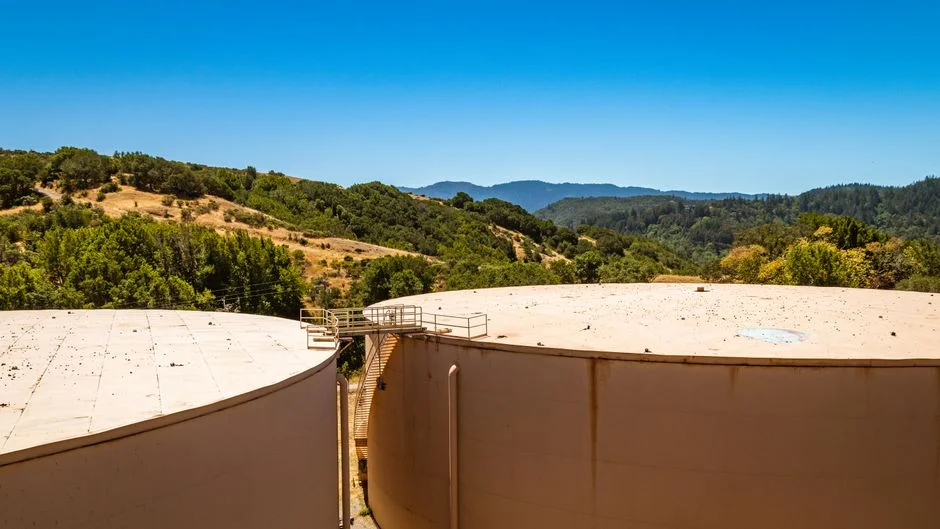
DAF separates material that can be attached to air bubbles and floated to the surface. A micro-bubble flotation unit receives wastewater and treatment chemicals in the flotation zone. A portion of the flow is pressurized, saturated with air, and returned to the tank. As the pressure falls, micro-bubbles form, attach to suitable solids and oil droplets, and carry them into a froth layer, which is removed by a skimmer. Clarified water leaves beneath the surface.
The Quora explainer states that the micro-bubbles usually measure between 10 and 100 microns in diameter, increasing the rise rate of attached solids and oil droplets. That mechanism explains why DAF is useful for fine suspended material and oil droplets that do not settle readily. The same explainer places DAF after an API separator and before biological reactors in a refinery ETP. In that arrangement, the API separator removes large free oil and heavy sediment, while coagulants can destabilize emulsions so remaining oil and fine solids can be removed before the biological stage.
Parason reports that an appropriately configured flotation cell with suitable chemicals can achieve TSS removal of 95% or higher. Treat this as a reported product capability, not a universal guarantee for every wastewater or every operating condition. The result depends on feed characteristics, chemical selection, hydraulic loading, bubble generation, skimming, and operating control.
DAF should not be credited automatically with removing COD, BOD, nutrients, pathogens, dissolved metals, or trace organic compounds. Those duties require different treatment mechanisms or a combined process. This is why the performance schedule must name each parameter and the stage responsible for meeting it.
Size the system around peak flow and treatment performance
Capacity must be checked against the measured average flow, expected peak, and batch-discharge profile, not selected from nominal factory output. The HydropureWater DAF range covers 4–300 m³/h across 13 standard models. Ask each supplier to state which model covers the required average, peak, and batch duty, and whether any proposed storage or equalization removes batch peaks before the DAF inlet. A treatment train that is adequate on average can still fail when a concentrated batch is discharged.
The enquiry must define the required effluent parameters and acceptance basis. Because the supplied research does not provide a Hong Kong effluent-limit table, obtain the applicable consent or sewer-authority requirements and attach them to the enquiry. Then request guaranteed removal performance with the client’s wastewater, or a clearly defined test protocol and feed conditions.
Parason’s reported TSS removal of 95% or higher is a useful example of the kind of claim that requires qualification. The buyer should ask what feed concentration, flow, chemical dose, and test method underpin the figure, and whether the result applies to the factory’s actual wastewater. For DAF-led ETPs, also ask whether the quoted flow means influent flow, clarified-water recycle flow, or plant design capacity. Those are different design quantities and should not be treated as interchangeable.
| Enquiry item | Information the buyer should require |
|---|---|
| Hydraulic basis | Average flow, peak flow, batch-discharge profile and any upstream storage or equalization. |
| Process basis | Influent characteristics, treatment objective and the treatment stages included in the quotation. |
| Performance basis | Required effluent parameters, test method, feed conditions, sampling points and test duration. |
| Model and capacity | Selected model, stated capacity and confirmation that the model covers the required duty. |
| Commercial definition | What is included in the price: equipment, civil works, installation, commissioning, training, controls and sludge handling. |
Plan the auxiliary systems and operating burden
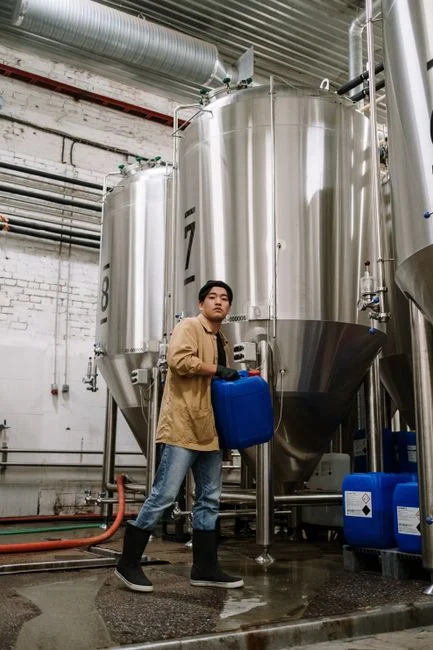
A flotation tank is not a complete ETP. The scope comparison should include equalization, screening, pH adjustment, coagulant and flocculant dosing, sludge handling, instrumentation, controls, utilities, and bypass provisions. A PLC-controlled chemical dosing system can support controlled dosing of coagulants, flocculants, pH adjusters, and specialty chemicals, but the chemical strategy must follow wastewater testing rather than a standard recipe.
Plan the complete float route from the DAF skimmer to thickening, dewatering, storage, and disposal. Parason reports a screw-press route from 2–3% sludge to 25–28% consistency, while another compact treatment configuration combines conditioning, thickening, and dewatering with outlet consistency up to 25%. These are reported equipment capabilities, not guarantees for every sludge. Actual performance depends on sludge characteristics, conditioning, and operating practice.
For a Hong Kong factory, identify where sludge will be stored, how often it will be removed, who will operate the dewatering equipment, and what chemical or waste-disposal route is available. A plate-frame filter press may be appropriate for a particular sludge duty, but the supplier should demonstrate compatibility with the expected solids and flow rather than infer suitability from the DAF scope.
Clarify whether the equipment supplier provides only flotation equipment or a complete ETP including pretreatment, biological treatment, polishing, sludge handling, installation, commissioning, and operator training. Ask for a process flow diagram and a written exclusions list. Without that boundary, quotations may appear comparable while covering different duties.
Match the supplier offer to Hong Kong project requirements
A defensible Hong Kong supplier comparison requires a process flow diagram, equipment list, duty basis, electrical requirements, footprint, utility consumption, controls scope, construction materials, delivery schedule, installation schedule, and warranty. The request should also identify site constraints, including access for equipment delivery, available floor area, power supply, chemical storage, and sludge removal.
Require wastewater-specific performance criteria. Define sampling points, analytical methods, test duration, and remedy terms for failure to meet the agreed duty. The 2026 DAF selection and cost framework provides a detailed reference for equipment selection, while the industrial ETP and DAF selection framework describes the broader wastewater-characterization and process-selection method. Neither replaces the Hong Kong consent, site check, or project-specific quotation.
Check local service capability, spare-parts availability, operator training, and remote support. Confirm that the proposed chemical and sludge-disposal arrangements suit the Hong Kong site, and establish who is responsible for permits, civil works, utilities, commissioning, and compliance evidence. Commercial exclusions should be priced or explicitly stated rather than left to interpretation.
| Supplier submission | Minimum check before shortlisting |
|---|---|
| Technical offer | Process flow diagram, equipment list, duty basis, performance criteria, footprint and utilities. |
| Hong Kong execution plan | Consent assumptions, site constraints, installation sequence, commissioning responsibility and training. |
| Commercial offer | Supply boundary, exclusions, delivery schedule, installation scope, warranty and remedy terms. |
| Service and risk controls | Local support, spare parts, sludge route, chemical requirements and performance test method. |
Frequently Asked Questions
How much does an industrial ETP or DAF system cost in Hong Kong?
There is no defensible single price from the
Frequently Asked Questions
How much does an industrial ETP or DAF system cost for a Hong Kong factory?
Costs for industrial ETP or DAF systems in Hong Kong typically range from HKD 500,000 to over HKD 5,000,000, depending on the complexity of the influent and the required discharge standards. Factors influencing price include the level of automation, material construction (such as 304 or 316 stainless steel), and the inclusion of advanced tertiary treatment stages like membrane bioreactors (MBR) or reverse osmosis.
Operational costs must also be factored in, including chemical consumption (coagulants/flocculants), electricity for pumps and compressors, and the disposal fees for sludge, which are strictly regulated under the Waste Disposal Ordinance in Hong Kong.
How do I choose a reliable DAF supplier for a factory in Hong Kong?
A reliable supplier must demonstrate compliance with the Environmental Protection Department (EPD) discharge standards, specifically those outlined in the Technical Memorandum for Effluents Discharged into Drainage and Sewerage Systems. Verify that the supplier has experience with local site constraints, such as limited floor space and height restrictions common in industrial buildings in areas like Kwun Tong or Tai Po.
Request references for similar industrial sectors in Hong Kong and ensure the supplier provides a comprehensive after-sales service package, including local spare parts availability and regular maintenance schedules to prevent system downtime and potential EPD fines.
What flow rate does my factory need from a DAF system?
The required flow rate is determined by your facility's daily wastewater generation volume, typically measured in cubic meters per day (m³/day). You must account for peak hourly flow rates, which can be significantly higher than the average, to ensure the DAF unit does not overflow or experience hydraulic overloading.
Standard industrial DAF units are sized based on the hydraulic loading rate, usually expressed in m³/m²/h. For most factory applications, a safety margin of 20-30% should be added to the maximum peak flow to accommodate future production increases or seasonal fluctuations in wastewater volume.
Is a DAF system enough for industrial wastewater reuse?
A DAF system alone is rarely sufficient for wastewater reuse, as it primarily removes suspended solids, fats, oils, and grease (FOG). While a DAF can reduce Chemical Oxygen Demand (COD) by 30% to 60%, it does not remove dissolved organic pollutants, heavy metals, or dissolved salts.
For high-quality reuse, such as cooling tower makeup or process water, the DAF must be integrated with downstream treatment processes. These typically include biological treatment (such as activated sludge or MBR) for organic removal, followed by activated carbon filtration, ultrafiltration (UF), or reverse osmosis (RO) to meet the required water quality standards.
What wastewater tests should I provide before requesting an ETP proposal?
To receive an accurate proposal, you should provide a laboratory analysis report covering key parameters including pH, Total Suspended Solids (TSS), Oil and Grease (O&G), and Chemical Oxygen Demand (COD). Including Biological Oxygen Demand (BOD5), Total Nitrogen (TN), and heavy metal concentrations is also essential if your factory processes metal finishing or chemical manufacturing.
It is critical to provide both average and peak concentration values, as DAF systems rely on precise chemical dosing calculations based on these loads. Providing a copy of your current EPD discharge license or the specific limits set for your industrial zone ensures the proposed system is correctly engineered for compliance.