What streams does a Marrakesh data center need to treat?
A Marrakesh data center needs two wastewater systems: a high-volume cooling-tower blowdown train and a smaller sanitary train. Blowdown contains concentrated salts, silica, hardness, suspended solids and treatment chemicals, so the baseline is side-stream filtration followed by controlled RO pretreatment and reuse of permeate as cooling make-up. Conventional brackish RO commonly reaches about 75–80% recovery before scaling becomes unmanageable, according to IDE Tech. Sanitary sewage should be treated separately, generally with MBR or A/O equipment. Site-specific flows, feed-water analysis, cooling configuration and current Moroccan discharge/reuse requirements must be confirmed before final sizing; ZLD should remain a permit-driven escalation option rather than the default.
The engineering boundary should follow stream chemistry and destination, not simply pipe size. Cooling-tower blowdown is the principal recovery opportunity because evaporation concentrates dissolved solids and the purge carries salts, silica, hardness, suspended matter and residual biocide, corrosion inhibitor, scale inhibitor and dispersant. It is therefore scale-prone and unsuitable for direct reuse without source control, filtration and controlled membrane treatment.
Sanitary wastewater is a lower-volume, biodegradable stream generated by staff, kitchens, cafeterias and restrooms. It requires biological treatment rather than the same RO train because its contaminants are principally biodegradable organics and suspended solids. Humidification bleed-off, chiller flush water and periodic fire-test water should each be characterized before assignment; they may enter the sanitary train, but only after confirming hydraulic, chemical and operational compatibility. A comparable data-center wastewater treatment planning guide illustrates the need to separate these decisions early.
| Stream | Main design issue | Indicative treatment decision | Unresolved input |
|---|---|---|---|
| Cooling-tower blowdown | Concentrated salts and scaling constituents | Filtration, pretreatment, partial-recovery RO; optional high-recovery polish | Current feed analysis, CoC, flow and reuse quality |
| Domestic sanitary wastewater | Biodegradable organics and suspended solids | Package biological treatment such as MBR or A/O | Staff flow, kitchen loads, peak factor and end use |
| Humidification bleed-off | Variable chemistry and flow | Characterize before routing or treatment | Composition and operating frequency |
| Chiller flush water | Potential treatment chemicals and metals | Segregate pending analysis | Flush volume and chemical inventory |
| Fire-test water | Intermittent hydraulic load | Equalization and segregated evaluation | Test frequency, volume and discharge route |
No discharge point or reuse destination should be fixed until the Moroccan permit, receiving system and intended end use are confirmed. Technical reuse may be feasible even where a permit route remains unresolved, but those are separate approvals. Further context on data center cooling tower water treatment specifications should be adapted to the Marrakesh site, not treated as local evidence.
How much water must the project recover?
The project’s recoverable flow must come from the selected cooling configuration, not from an assumed wastewater rate. IDE Tech’s 2026 industry reference states that a 100-megawatt data center can use up to 2 million liters of water per day. That figure is a scale reference only; it does not establish the Marrakesh flow because the actual demand depends on cooling technology, design load, wet-bulb conditions, evaporation and operating schedule.
Start with a measured water balance. Meter make-up water, blowdown, evaporation and wastewater flows, then calculate cycles of concentration as:
Cycles of concentration = circulating-water dissolved solids ÷ make-up-water dissolved solids.
For the simplified steady-state relationship supplied by Genesis Water Technologies, blowdown divided by make-up water equals 1/(CoC−1). At 4 CoC, blowdown is 25% of make-up water; at 6 CoC, it is 20%. Moving from 4 to 6 CoC therefore reduces blowdown by five percentage points of make-up water, or 20% relative to the 4-CoC blowdown. It does not produce a 50% reduction.
A separate comparison in the adjacent Fes guide cites a U.S. DOE FEMP result: moving from 3 to 6 CoC lowers make-up water by 20% and blowdown by 50%. That DOE comparison must not be conflated with the 4-to-6-CoC calculation above; they use different starting points and should remain separate in the design model.
Genesis Water Technologies also reports that actual blowdown can exceed theoretical calculations by 15–30% because of unmeasured losses and emergency dumps. Metering is therefore a sizing requirement, not merely a reporting exercise. A supplier should also review the site-specific blowdown treatment method against actual meter data rather than accept a theoretical balance.
| Design input | Evidence-based use | Procurement consequence |
|---|---|---|
| Make-up, blowdown, evaporation and wastewater meters | Establish actual water balance and unmeasured losses | Sets pretreatment and RO hydraulic loading |
| Circulating and make-up dissolved solids | Defines cycles of concentration | Sets permitted CoC and chemical-control limits |
| Cooling configuration, IT load and wet-bulb data | Calculates evaporation and blowdown demand | Separates Day-1 capacity from future expansion |
| Current blowdown analysis | Defines scaling and pretreatment requirements | Controls membrane area, recovery and antiscalant selection |
Request the site flow model, current utility invoices, meter data and seasonal operating assumptions in the same bid package. The 2026 wastewater treatment cost benchmarks can frame alternatives, but they cannot replace a Marrakesh water balance.
Which treatment train should handle cooling-tower blowdown?
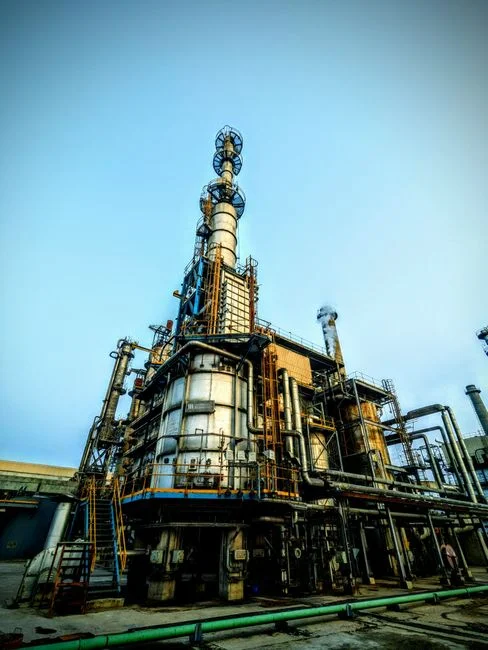
Cooling-tower blowdown treatment should begin with loss control and filtration, not with a crystallizer. Repair leaks, optimize make-up and blowdown controls, remove suspended solids and validate a sustainable cycles-of-concentration operating point. Genesis Water Technologies states that biological and scaling risks increase sharply above 5–6 CoC without advanced treatment, so increasing CoC without controlling chemistry is not a free water-saving measure.
The baseline train is equalization, self-cleaning or side-stream filtration, controlled pretreatment, brackish-water RO and permeate reuse as cooling make-up. Membrane pretreatment must address suspended solids, SDI, hardness, alkalinity, silica, chloride, iron, manganese and residual treatment chemicals. The decisive input is a current feed-water analysis; without it, recovery and membrane area cannot be fixed responsibly.
IDE Tech reports in 2026 that conventional brackish-water RO typically plateaus at 75–80% recovery because scaling becomes difficult to control. The adjacent Fes guide describes 50–85% first-pass recovery, 95–99% salt rejection and permeate TDS of 10–50 mg/L. Those values are comparative engineering benchmarks, not guaranteed Marrakesh performance. A supplier should state whether its recovery guarantee is first-pass, train-wide or measured at a defined feed condition.
The industrial RO system for cooling-tower blowdown reuse should therefore be evaluated as a site-specific train. Filtration may be supplied through a multi-media pretreatment filter, while membrane elements, pressure vessels, controls and chemical dosing remain part of the complete performance guarantee.
For higher recovery, evaluate controlled precipitation followed by brine-desalter operation rather than simply adding conventional RO stages. IDE Tech reports an approximately 95%-recovery MAXH₂O Brine Desalter application in which permeate silica was reduced to about 1 mg/L. This architecture is relevant to Marrakesh only if the feed chemistry, solids-handling route and operating capability support it.
Mechanical vapour compression and zero liquid discharge should remain staged options. The Fes guide reports MVC distillate below 10 mg/L TDS at 15–25 kWh per 1,000 US gallons and full ZLD at 95–99% overall water recovery. These figures describe an adjacent Fes comparison, not a Marrakesh design guarantee.
| Architecture | Best-fit condition | Principal limitation | Decision |
|---|---|---|---|
| Controls, leak repair and filtration | Unmeasured losses or suspended-solids control are significant | Does not remove dissolved salt | Do first |
| Partial-recovery BWRO | Feed chemistry supports conventional RO and reuse is permitted | Scaling caps conventional recovery | Day-1 baseline if verified |
| Controlled precipitation plus high-recovery RO | Freshwater or discharge constraints justify added complexity | Requires solids handling and tighter controls | Evaluate after feed analysis |
| MVC plus crystallizer | Permit or freshwater constraint requires near-complete liquid recovery | Highest energy, capital and operating burden | Reserve escalation, not default |
Specify permeate quality against the actual cooling-water chemistry, not a generic ultrapure-water target. Confirm whether the permeate is blended, used directly, or must satisfy corrosion and scaling limits imposed by the cooling system and make-up source.
How should sanitary wastewater be treated?
Sanitary wastewater should be sized independently from cooling-tower blowdown, using staff numbers, daily wastewater generation, kitchen flows, peak factors and the selected discharge or reuse destination. It enters a biological treatment train because the principal load is biodegradable material from restrooms, kitchens, cafeterias and staff operations.
A packaged A/O system can combine anoxic and aerobic biological contact oxidation, sedimentation and disinfection. HydropureWater’s WSZ package handles 1–80 m³/h in a buried configuration. This route is appropriate where the design can be operated as a contained package and the clarified, disinfected effluent has a confirmed destination.
A submerged MBR combines activated sludge with PVDF membrane filtration and provides sub-1-micrometre filtration. HydropureWater’s MBR equipment is available from 10 to 2,000 m³/day. MBR is the stronger candidate where biological solids separation, footprint and polishing are important, or where the intended non-potable reuse requires a more controlled effluent.
| Selection factor | Packaged A/O | Submerged MBR |
|---|---|---|
| Treatment mechanism | Anoxic/aerobic contact oxidation, sedimentation and disinfection | Activated sludge with submerged PVDF membrane separation |
| Supplied capacity scope | 1–80 m³/h | 10–2,000 m³/day |
| Physical footprint | Buried package; site excavation and access required | Modular equipment arrangement; confirm civil layout |
| Relative selection priority | Conventional biological treatment in a contained package | Solids separation, footprint and reuse-quality polishing |
| Required site input | Flow, load, peak factor and destination | Flow, load, peak factor and reuse specification |
HydropureWater provides both an MBR system for data-center sanitary wastewater and an underground integrated sewage-treatment package. Ask each bidder to state how the selected configuration handles kitchen grease and solids, peak hydraulic loading, disinfection, odor control, sludge removal and standby arrangements.
Do not specify toilet flushing, irrigation or another reuse destination until current Moroccan reuse and discharge requirements are confirmed. Effluent quality, public-health controls, receiving-system conditions and the authority’s route for non-potable reuse must be resolved separately from equipment capacity.
Which option offers the best lifecycle value?
The best lifecycle value comes from the least complex treatment that resolves the site’s confirmed water and permit constraints. Operating optimization, filtration and partial-recovery RO often provide the first defensible investment; controlled precipitation, MVC and full ZLD should be justified by the site’s actual discharge exposure, freshwater conditions and operating capability.
The adjacent Fes guide provides useful comparison benchmarks. It cites side-stream filtration at US$50,000–200,000, a 50,000-gallon-per-day single-pass RO skid at approximately US$250,000–500,000, and RO operating cost around US$1.50–3.00 per 1,000 gallons treated. For 10,000–30,000-gallon-per-day capacity, it reports MVC capital of US$1–3 million and full-ZLD capital of US$3–8 million, with full-ZLD operating cost of US$5–15 per 1,000 gallons.
These are Fes comparison figures, not Marrakesh quotations. Their scopes also differ: filtration, a single-pass RO skid, MVC and full ZLD should not be compared as though they provide the same recovered-water quality or disposal outcome. The buyer should request a site-specific price covering the complete duty and boundary conditions.
| Option | Freshwater reduction | Discharge exposure | Complexity and site fit | Lifecycle case |
|---|---|---|---|---|
| Optimization and filtration | Reduces avoidable losses and improves control | Does not remove all dissolved salts | Lowest complexity; first-phase intervention | Usually the earliest capital case |
| Partial-recovery RO with permeate reuse | Converts blowdown into cooling make-up | Retains a concentrate stream | Moderate operator and maintenance demand | Strong baseline when feed analysis supports recovery |
| High-recovery RO with controlled precipitation | Higher recovery with concentrated solids handling | Reduces liquid discharge volume | More process control and solids management | Justify against freshwater and permit constraints |
| MVC plus crystallizer | High liquid recovery; solid residues remain | Very low liquid discharge | High energy, maintenance and controls burden | Permit-driven escalation |
| Direct discharge | No recovery benefit | Depends on receiving-system acceptance and permit route | Simplest treatment, highest water and disposal exposure | Acceptable only where discharge is confirmed |
Build the financial case from avoided freshwater, avoided discharge, disposal cost, chemicals, energy, membrane replacement, staffing, downtime and permit risk. Request local power and water prices, the waste-disposal route, import and logistics assumptions, chemical consumption, membrane life and maintenance support in each bid.
Genesis Water Technologies’ principle in the Fes research is that full ZLD is generally a permit-driven choice when discharge is prohibited or freshwater is genuinely unavailable. It is not the default treatment train. The ZLD market and adoption analysis can support scenario planning, but a Marrakesh decision requires confirmation from the competent authority and receiving system.
What must a Marrakesh supplier prove before quotation?
A supplier should review the current site-water and blowdown analyses before committing to recovery, membrane area, antiscalant selection or guaranteed permeate quality. A fixed recovery or permeate guarantee based only on a generic feed table is not a defensible bid for a scale-prone cooling stream.
Issue one data request to all bidders. For cooling, require the technology, design IT load, operating range, wet-bulb design conditions, number and type of towers, current CoC, make-up source, chemical program and seasonal variation. For wastewater, request domestic flow, staff population, kitchen discharge, fire-test frequency, discharge points, sampling results, intended reuse destinations and the proposed permit route.
Then require the bidder to show how its controls meet the operating case. Review PLC functions, remote telemetry, automatic backwash, membrane and dosing spares, FRP or stainless pressure vessels, energy recovery for larger systems and local service capability. A named reference for cooling-tower blowdown should be checked, and the commercial recovery basis must be stated unambiguously.
| Bid item | Evidence required | Reason for review |
|---|---|---|
| Feed-water analysis | Current sampling with dates and methods | Controls recovery, pretreatment and chemical selection |
| Performance basis | Flow, recovery, permeate quality and measurement boundaries | Prevents non-comparable guarantees |
| Operating references | Comparable cooling-tower blowdown duty | Tests actual operating experience |
| Controls and service | PLC functions, telemetry, backwash and local support | Determines operability and response time |
| Consumables | Membranes, vessels, dosing chemicals and recommended stock | Reduces commissioning and continuity risk |
| Concentrate and solids limits | Cleaning frequency, chemical consumption and disposal route | Defines operating exposure and permit interface |
| Delivery | Lead times, shipping assumptions and commissioning support | Protects the project schedule |
Require written lead times for membranes, housings, energy-recovery devices and dosing consumables. The Fes research recommends bundling a spares package for import-dependent projects. A bidder should also identify the limits of its guarantee for membrane cleaning, chemical consumption, concentrate handling and solids disposal, using the automatic chemical dosing system and treatment parts and filter-media scope to show how those interfaces will be supplied.
What is the recommended 2026 implementation sequence?
The recommended sequence protects the operating baseline before committing to high-recovery equipment. It also keeps cooling and sanitary procurement independent, while preserving space and utility capacity for a later escalation.
- Phase 1 — Establish the baseline. Install metering for make-up, blowdown, evaporation and wastewater flows, together with the required water-quality monitoring. Reconcile calculated losses with metered consumption.
- Phase 2 — Optimize existing operations. Repair leaks, correct control sequences, improve filtration and validate sustainable cycles of concentration under seasonal conditions. Reject an assumed CoC increase if scaling or biological risks remain unresolved.
- Phase 3 — Procure partial recovery. Issue the feed-analysis-backed package for equalization, filtration, pretreatment and partial-recovery RO, with permeate returned as cooling make-up and monitored handling of concentrate.
- Phase 4 — Procure the sanitary skid separately. Select A/O or MBR from the confirmed sanitary flow, load, reuse destination and operator capability.
- Phase 5 — Reserve escalation. Preserve footprint, power, controls and budget for controlled precipitation, MVC or ZLD only if confirmed discharge, reuse or freshwater constraints justify them.
Carry critical consumables and spares in the initial delivery package. The implementation logic can be compared with the phased wastewater and cooling-blowdown treatment roadmap, while the separate Ottawa guide remains a planning reference rather than evidence of Marrakesh conditions.
Frequently Asked Questions
What will the wastewater and cooling-blowdown treatment system cost in Marrakesh?
No supported Marrakesh quotation is available. The adjacent Fes guide gives comparison figures of US$50,000–200,000 for side-stream filtration, roughly US$250,000–500,000 for a 50,000-gallon-per-day single-pass RO skid, and about US$1.50–3.00 per 1,000 gallons for RO operation. It also reports US$3–8 million capital and US$5–15 per 1,000 gallons operating cost for full ZLD at 10,000–30,000 gallons per day. These are Fes benchmarks, not Marrakesh prices. Request a site-specific quotation after receiving the flow model, feed analysis, local utility prices, disposal route, equipment scope and import assumptions.
How should the cooling and sanitary treatment skids be sized?
Size them from separate design bases. Cooling equipment requires metered blowdown, make-up, evaporation, current CoC, feed chemistry, cooling configuration, wet-bulb data and recovery target. Sanitary equipment requires staff population, wastewater generation, kitchen flow, peak factors and the selected discharge or reuse destination. Do not use cooling-blowdown volume to size the sanitary train or staff flow to size the membrane system.
Which treatment supplier should be shortlisted for a Marrakesh data center?
Require each bidder to review the current feed analysis, identify the operating reference behind its recovery claim, state the exact recovery and permeate measurement basis, and confirm controls, automation, membrane and dosing spares, local service support and delivery lead times. Also require limits for membrane cleaning, chemical consumption, concentrate handling and solids disposal. A fixed price or performance guarantee issued before feed-water review should be treated as a bid risk.
What compliance checks are still required for a Marrakesh campus?
Confirm the applicable Moroccan decree, the competent authority, receiving-system conditions and the intended reuse route before specifying discharge limits or a non-potable reuse application. The supplied Morocco material identifies Decree 3-2-99, ONEE and RADEEMA as relevant references, but it does not establish a complete permit determination for this campus. The project should obtain written confirmation for the selected discharge point and each reuse destination, including monitoring, disinfection and reporting obligations.