
Start with the development's wastewater and site constraints
The best packaged sewage treatment plant for a Kolkata housing development cannot be selected from population or a catalogue capacity alone. A modular biological system sized for verified peak flow is the starting point, while land, groundwater, flood exposure, discharge route, reuse requirements and maintenance capability determine the architecture. A buried WSZ package suits constrained sites and residential communities, handling 1–80 m³/h with automated A/O contact oxidation, sedimentation and disinfection. An MBR system is indicated when the project needs below-1 μm filtration, a smaller footprint or water reuse, with a catalog range of 10–2,000 m³/day. Above-ground containerized SBR, MBBR or MBR modules can suit phased development, but final selection requires site, discharge, power, civil-work and maintenance inputs.
Begin by confirming whether the development can connect to public sewerage or requires on-site treatment or pretreatment. Biocell Water identifies these as the two starting conditions for residential developments; it also notes that discharge requirements differ by locality. Therefore, document the receiving route, approval authority and applicable effluent obligations before comparing equipment. The underground WSZ sewage treatment plant and the MBR membrane bioreactor system are candidates only after those constraints are understood.
Map the usable plot, underground utilities, groundwater level, flood exposure, delivery route, maintenance access and construction window. Confirm whether landscaping can occupy the surface above a buried installation, and record whether odour, noise or visual impact will affect occupied areas. Separate domestic housing sewage from clubhouse, guesthouse, commercial, laundry and landscape-irrigation inflows, because these can change both hydraulic and contaminant loads.
Finally, define the intended endpoint: compliant disposal, toilet flushing, landscaping or a future non-potable demand. Reuse objectives can change the required treatment and disinfection train, so do not let an equipment brochure’s generic “reuse” description replace a project-specific water-quality and approval basis.
Build a defensible flow and load basis
Residential sewage treatment must be sized for the verified peak flow, not the daily average. Biocell Water covers residential projects ranging from up to 50 people to up to 5,000 people, showing that the required package can vary substantially; that range is evidence of project diversity, not a sizing rule. The same source states that residential wastewater flow varies substantially during a typical weekday, with peak rates typically occurring in the morning, late afternoon and evening.
Ask the design team to document current and projected occupancy, development phases, average flow, peak factor, peak treatment rate, hydraulic retention assumptions and redundancy. Obtain wastewater samples and request analysis of COD, ammonia, suspended solids, fats, oils and grease, pH and any cleaning-product or non-domestic inputs. Biocell Water notes that residential ammonia and COD can be high, and identifies disinfectants, cleaning products and absent grease traps as contributing factors.
Require each supplier to state the selected model, design flow, process train, sludge production, future-module arrangement and treatment guarantees. Do not infer adequacy from catalogue maxima. The WSZ catalogue range is 1–80 m³/h, whereas the MBR catalogue range is 10–2,000 m³/day; neither range replaces a project-specific calculation. Where screening is required, evaluate a rotary mechanical bar screen as part of the inlet and pretreatment scope rather than assuming it is included.
Add a commissioning-stage sampling plan for flow, COD, ammonia, suspended solids and every locally specified discharge parameter. Household occupancy, cleaning practices and water consumption change over time, so the commissioning record should establish actual performance under operating conditions.
| Design input | What the supplier must state | Why it matters |
|---|---|---|
| Average and peak wastewater flow | Current and future design rates, including peak factor | Prevents selection from daily-average population data |
| Wastewater characteristics | COD, ammonia, suspended solids, FOG, pH and other relevant inputs | Links biological loading and pretreatment to the process |
| Development phasing | Initial duty, future duty and module-addition method | Prevents premature overbuilding or undersized future stages |
| Redundancy and operation | HRT assumptions, standby arrangements, power needs and control philosophy | Defines resilience and site operating requirements |
| Commissioning evidence | Sampling locations, methods, test duration and acceptance criteria | Creates an objective performance record |
Compare the three practical system architectures
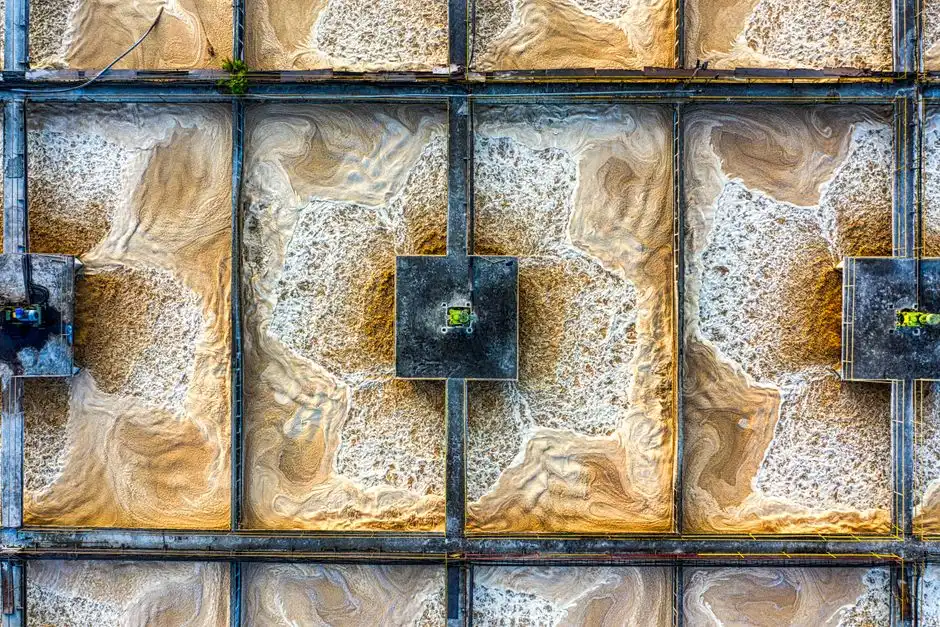
WSZ, above-ground modular biological treatment and MBR are different project answers, not interchangeable catalogue labels. The WSZ is a below-grade integrated package covering 1–80 m³/h. Its process combines A/O biological contact oxidation, sedimentation and disinfection, with fully automated operation and no routine operator requirement. It can also be trailer-mounted for mobile deployment. It is therefore relevant where land is limited, landscaping can cover the installation and excavation, access and groundwater conditions are manageable.
The MBR configuration covers 10–2,000 m³/day and combines activated sludge with submerged PVDF membrane filtration. Its specified filtration performance is below 1 μm, the arrangement is fully integrated, and the catalogue states a 60% smaller footprint than conventional systems. These are catalogue claims, not guaranteed project outcomes. They make MBR worth evaluating where low solids carryover, reuse potential or footprint is a priority, but membrane cleaning, aeration, pretreatment and eventual replacement must be included in the lifecycle comparison.
Biocell Water provides a useful third comparison. Its below-ground residential solutions typically use MBBR or SBR equipment inside a concrete tank, while above-ground containerized “plug and play” systems may use a fixed-bed biological reactor, MBBR or MBR. It selects technology according to site restrictions, effluent standard and budget. Its modular systems can also be installed in phases as development grows.
Use WSZ where the project prioritizes an integrated buried package and automated operation. Use MBR where the specified filtration, reuse value or footprint advantage is needed. Use above-ground modules where deep excavation, groundwater, construction phasing or temporary deployment dominates the risk. For above-ground systems, price foundations, odour control, noise, visual impact, weather protection and service access explicitly.
| Architecture | Stated basis | Principal advantages | Items requiring project confirmation |
|---|---|---|---|
| Buried WSZ | 1–80 m³/h; A/O contact oxidation, sedimentation and disinfection | Below-grade siting, integrated treatment and automated operation | Civil works, groundwater, buried depth, access covers, lifting, sludge withdrawal and landscaping |
| Above-ground modular | Technology selected by site, budget and effluent requirement | Avoids some buried civil works and supports phased deployment | Foundations, odour, noise, appearance, weather protection, power and service access |
| MBR | 10–2,000 m³/day; submerged PVDF filtration below 1 μm | Low solids carryover, reuse potential and compact arrangement | Pretreatment, aeration, membrane cleaning, monitoring, storage and replacement |
Cleantech Water reports that primary treatment removes about 60% of suspended solids and secondary treatment more than 90%. Use those figures only to explain the treatment sequence; they are not guaranteed performance figures for any packaged plant.
Turn site conditions into a decision tree
The site condition that imposes the strongest constraint should lead the shortlist. Start with land: prioritise a below-grade WSZ package when the available footprint is tight and soil, groundwater and excavation conditions permit it. Consider above-ground modules when deep excavation is prohibited, groundwater makes buried work difficult or access for lifting and maintenance is constrained. The comparable logic used in packaged sewage treatment selection for Delhi housing is useful, but Kolkata discharge, flood and site conditions must be established independently.
Start with reuse quality when the application demands it: evaluate MBR where the below-1 μm filtration stated for the HydropureWater MBR system is technically justified by the intended reuse or space constraint. Otherwise, test whether the WSZ’s integrated biological, sedimentation and disinfection train meets the confirmed disposal or reuse requirement.
Start with phasing where occupancy will grow materially. Ask the supplier how additional modules will be connected, how hydraulic capacity changes, whether treatment stages can be added independently and what future civil or electrical provisions are required. Biocell Water identifies installation on a phased basis as a modular-system advantage.
Start with operating capability by comparing automatic package operation against a proposal dependent on trained biological-plant technicians, electrical support and regular access to consumables. Obtain the proposed operating schedule, routine task frequency, sludge route, alarm response and local service arrangement.
If there is no public sewer and the discharge destination cannot secure the required permission, stop the equipment shortlist. Resolve the route, receiving authority and approval pathway first; otherwise, the process and price comparison has no enforceable project basis.
| If the controlling issue is… | First architecture to evaluate | Decision check before proceeding |
|---|---|---|
| Very limited surface area | Buried WSZ or compact MBR | Can the selected footprint, access, utilities and expansion area fit? |
| Deep excavation or groundwater risk | Above-ground modular | Are foundations, lifting, odour, noise and weather protection acceptable? |
| Stringent reuse quality | MBR | Does the intended reuse need the specified below-1 μm filtration? |
| Occupancy develops in phases | Modular biological package | How will flow, controls and treatment stages expand? |
| Limited technical staffing | Automated WSZ, subject to service support | Who performs inspections, sludge removal and breakdown response? |
| No permitted discharge route | No selection yet | Has the route and approval pathway been resolved? |
Compare installation, maintenance and commercial scope
Equipment price alone is not a comparable project cost. JRMS Engineering lists a price range of 650000.00–2000000.00 INR per piece, with a minimum order quantity of one piece. Treat this as a market reference only: the listing does not disclose project capacity, civil works, commissioning, consumables or annual operating cost. A lower plant price may still produce a higher project total after excavation, foundations, piping, pretreatment, power and sludge handling are added.
Request a written scope that separates packaged equipment, inlet and outlet piping, screens or pretreatment, electrical supply and control panel, civil foundations, excavation, backfill, landscaping, sludge removal, commissioning and operator training. JRMS lists mild steel with epoxy coating and mild steel with FRP lining, plus MBBR, SBR and activated-sludge options. Ask for material and process evidence tied to the actual wastewater and site rather than accepting a generic listing.
Cleantech Water says prefabrication reduces on-site construction time and that installation and commissioning can take a few days to a few weeks, depending on site conditions and infrastructure. Use that as a planning statement, not a guaranteed programme. Obtain delivery, erection, testing and approval dates separately, including any tank construction, deep excavation and monsoon-sensitive work.
For MBR, price aeration, membrane cleaning, monitoring, storage and eventual replacement exposure. For WSZ, clarify sludge withdrawal, inspection access and site-level service. Biocell Water reports that its SBR cycles include rest and settlement periods without electricity and that its concrete SBR system has no moving parts submerged in wastewater. Those claims are technology-specific; require equivalent operating details for every proposal.
Include alarm, remote-monitoring and maintenance-response terms. Biocell Water identifies alarms, GSM alert dialout and SCADA monitoring as available options. Where disinfection or chemical dosing is required, identify the automatic chemical dosing system and UV sterilizer as possible scopes, but require the selected process supplier to justify them.
| Price or responsibility element | Information required in every quotation | Comparison rule |
|---|---|---|
| Equipment | Capacity, process train, materials, controls and guarantees | Compare the same design flow and treatment duty |
| Civil and installation | Excavation, foundations, tanks, backfill, landscaping, lifting and access | Identify exclusions explicitly |
| Pretreatment and utilities | Screening, pumping, piping, power, controls and chemical or UV dosing | Include where required by the proposed process |
| Commissioning | Scope, duration, training, sampling and acceptance testing | Do not treat “installation” as handover |
| Operation | Routine tasks, sludge route, spares, alarm response and annual service | Price consumables and replacement exposure separately |
Issue a supplier-ready technical brief
A comparable tender starts with one common design basis. Include measured or estimated average and peak flows, development phasing, current and future occupancy, wastewater sampling results and the required reuse or disposal route. Add the available plot dimensions, underground utilities, soil and groundwater information, flood exposure, access routes, power availability and local approval status. Without those inputs, capacity catalogues and market listings remain generic references rather than selectable offers.
Ask every supplier to identify the process train, selected capacity, treatment stages, materials, automation, pretreatment, sludge handling, disinfection, civil-work assumptions, delivery scope, commissioning plan, guarantees, spares and maintenance requirements. Use the modular sewage treatment system specifications and the integrated wastewater treatment plant process flow as technical checklists, not substitutes for project data.
Where a bid exceeds the selected option’s needs, ask for a compliant alternative and identify the capacity or treatment stage that differs. Every quotation should mark included and excluded items. Require commissioning acceptance testing using mutually agreed samples, methods and duration. The supplied research does not establish Kolkata’s applicable effluent limits, so confirm the local requirement and intended reuse standard before approving a performance guarantee.
Frequently Asked Questions
What is the cheapest packaged sewage treatment option for a small Kolkata housing development?
The only sourced price benchmark is JRMS Engineering’s listed range of 650000.00–2000000.00 INR per piece, with a minimum order quantity of one piece. It is not a like-for-like project quotation because capacity, civil works, commissioning, consumables and operating costs are undisclosed. Compare supplier offers on the same flow, pretreatment, process duty, civil-work, commissioning and maintenance scope.
Should a Kolkata housing development choose WSZ or MBR?
WSZ is the integrated below-grade option at 1–80 m³/h, using A/O contact oxidation, sedimentation and disinfection. MBR is the filtration option at 10–2,000 m³/day, with specified filtration below 1 μm. Choose based on land, confirmed reuse quality, excavation risk, budget and operating capability—not on a general technology ranking.
How much space does a packaged sewage treatment plant need?
The supplied sources do not provide a universal plot size. Request the selected module footprint, all clearances, access routes, utility connections, sludge-handling area and future-expansion allowance. Check those dimensions against the actual site rather than relying on a catalogue “compact” descriptor.
How long does a packaged sewage treatment plant take to install in Kolkata?
Cleantech Water describes installation and commissioning in a few days to a few weeks, depending on site conditions and infrastructure. Buyers should allow separately for approvals, procurement, civil works, testing and handover, and require each supplier to provide a project-specific programme rather than relying on that general installation range.
What should be checked before approving the supplier's effluent proposal?
Confirm the applicable local discharge requirement, intended reuse standard, sampling method, acceptance test and guarantees. The supplied research does not establish a universal Kolkata effluent limit, so the project team must obtain the controlling approval requirement and state it in the tender and acceptance protocol.