A modular sewage treatment system (STP) is a prefabricated, scalable unit sized for rapid deployment. Standard capacities span 1 m³/day to 5000 m³/day (3.8–1.9 million GPD). Typical modular sewage treatment system specifications cover footprint (52”W x 120”L for a 1000 GPD unit), electrical load (8.5A at 220V), and effluent quality (<30 mg/L BOD and <30 mg/L TSS under EPA secondary standards). Plants choose these packages when space, schedule, or capital limits rule out a conventional civil works plant.
Modular Sewage Treatment System Specifications Overview
Modular STP packages cover 1–5000 m³/day, with footprints often 0.5–1.2 m²/m³/day and lead times of 3–6 months versus 12–18 months for site-built plants. Small 1000 GPD modules draw about 8.5A at 220V; a 100 m³/day train may load near 50 kW. Secondary effluent targets remain <30 mg/L BOD and <30 mg/L TSS under 40 CFR Part 133.
Most plants we size below 500 m³/day start with one skid or buried package, then add parallel modules when peak-day flow climbs. That path avoids overbuilding civil tanks in year one while keeping power and sludge handling inside known envelopes.
What Is a Modular Sewage Treatment System?
Modular sewage treatment systems are prefabricated, transportable units that integrate standardized processes to meet discharge or reuse limits. Unlike conventional site-built plants, modular STPs leave the factory as complete trains or bolt-up sections. That cut in field labor shortens construction and reduces weather risk on the pad.
Typical process blocks include activated sludge variants such as A/O (anoxic/oxic) and SBR (sequencing batch reactor), plus membrane bioreactors (MBR) when the permit is tight. Vendor data cited for modular builds show site work falling 60–80% (Newterra) and lead times compressing from 12–18 months to 3–6 months.
Common duties include decentralized municipal service for growing communities, industrial effluent from food processing and pharmaceuticals, emergency response, and remote camps where sewers are absent. Core hardware usually covers primary screening (bar or fine screens), biological zones (aeration and anoxic tanks), secondary clarification or membrane separation, disinfection (UV or chlorine), and optional sludge dewatering. For compact reuse-quality duty, HydropureWater supplies MBR modules for reuse-quality effluent in compact footprints.
Engineering Data for Modular Packages (2026 Guide)
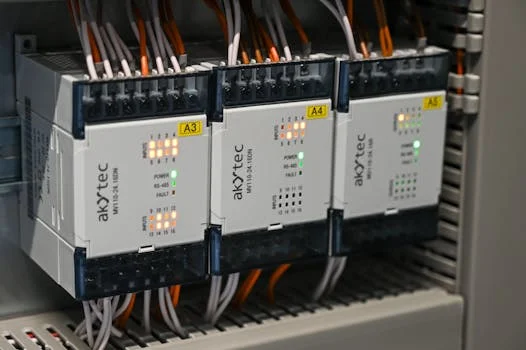
Engineering data sheets for modular packages list capacity, footprint, power, and effluent caps side by side. Standard modules cover 1–5000 m³/day (3.8–1.9 million GPD), with custom trains for larger flows; Clearfox.com cites a 5–5000 m³/day commercial range. One compact Biosorb BIO-1 example measures 52”W x 120”L x 46”H and weighs 726 lbs. Footprint efficiency for compact units typically sits at 0.5–1.2 m²/m³/day, depending on whether the process is SBR or MBR.
Electrical envelopes are equally bookable. A 1000 GPD module draws about 8.5A at 220V, single phase. A 100 m³/day configuration often lands near a 50 kW total connected load, though blowers and membranes move that number. Effluent from well-tuned trains meets EPA secondary limits of <30 mg/L BOD and <30 mg/L TSS (40 CFR Part 133). Many designs also hold NH₄-N <5 mg/L and can track WHO reuse guidance when polishing is added.
Shell materials are usually stainless steel 304/316, HDPE, or FRP, chosen for corrosion and salinity. HydropureWater’s WSZ series underground modular STPs for decentralized applications use those same material classes for buried, low-profile installs.
| Parameter | Typical Range/Value | Notes/Reference |
|---|---|---|
| Capacity (Standard Modules) | 1 - 5000 m³/day (3.8K - 1.9M GPD) | Custom units available for larger flows; Clearfox.com range 5-5000 m³/day |
| Footprint Efficiency | 0.5 - 1.2 m²/m³/day | For compact units; varies by process technology (e.g., MBR vs. SBR) |
| Example Module Dimensions (1000 GPD) | 52”W x 120”L x 46”H | Based on Biosorb BIO-1 model |
| Example Module Weight (1000 GPD) | 726 lbs | Based on Biosorb BIO-1 model |
| Electrical Load (Small Module, e.g., 1000 GPD) | 8.5A at 220V, 1 Phase | Based on Biosorb BIO-1 model |
| Total System Load (Typical 100 m³/day) | ~50 kW | Varies based on components and treatment process |
| Effluent BOD | <30 mg/L (Secondary), <10 mg/L (Reuse) | EPA 40 CFR Part 133; WHO Guidelines for Reuse |
| Effluent TSS | <30 mg/L (Secondary), <10 mg/L (Reuse) | EPA 40 CFR Part 133; WHO Guidelines for Reuse |
| Effluent NH₄-N | <5 mg/L | Achievable with advanced biological processes |
| Materials of Construction | SS304/316, HDPE, FRP | Selected for corrosion resistance and durability |
When we compare bids, we lock capacity, footprint, connected kW, and guaranteed BOD/TSS first. Soft claims without those four numbers rarely survive a plant engineer’s review.
Modular vs. Conventional Sewage Treatment Plants: Key Trade-Offs
Modular sewage treatment systems trade civil mass for factory repeatability. For capacities below 500 m³/day, modular capital can run 20–40% lower (Newterra) because pad work and field welding shrink. O&M cost per cubic meter can sit slightly higher on small pumps and blowers, though automation narrows that gap.
Land use favors packages. Modular trains often need 30–50% less footprint—about 0.5 m²/m³/day for compact modular units versus about 1.2 m²/m³/day for conventional layouts. Lead time is the sharpest contrast: 3–6 months for modular packages, with EveraTREAT citing 12-week delivery on standard units, against 12–18 months for civil plants.
Scalability follows the same logic. Operators add +10 m³/day modules without draining the existing basins, while conventional expansions usually need a new civil package. Energy per cubic meter can run 10–15% higher on modular sets because small blowers are less optimized—Biosorb’s 8.5A draw on a 1000 GPD unit is a useful check against larger plant amperage per volume. Both routes can meet EPA and WHO limits; decentralized modular sites may need denser sampling, as noted in EPA’s Decentralized Wastewater Treatment Systems: A Program Strategy.
| Feature | Modular STP | Conventional STP | Key Trade-Off |
|---|---|---|---|
| Capital Cost | 20-40% lower for <500 m³/day | Higher upfront for smaller capacities | Lower initial investment vs. long-term scale economies |
| Footprint | 30-50% smaller (0.5 m²/m³/day) | Larger (1.2 m²/m³/day) | Space efficiency vs. land availability |
| Lead Time | 3-6 months (e.g., 12 weeks for standard units) | 12-18 months | Rapid deployment vs. extended planning |
| Scalability | Incremental additions (+10 m³/day modules) | Requires large upfront expansion | Flexible growth vs. fixed capacity |
| Energy Efficiency (per m³) | 10-15% higher | Potentially lower due to larger equipment | Compactness vs. operational cost |
| O&M Cost (per m³) | Potentially higher for smaller scale | Potentially lower for larger scale | Simplicity of operation vs. economies of scale |
| Site Work | 60-80% reduction | Extensive on-site construction | Minimal disruption vs. significant construction |
On remote or phased sites, most plants we size stay modular until average flow exceeds roughly 500 m³/day. Above that band, conventional basins often win on energy and spare-parts scale.
Cost drivers that move the bid most are connected kW, membrane or clarifier spares, sludge haul distance, and burial depth or pad thickness. A 20–40% capital saving below 500 m³/day disappears quickly if power is oversized or if weekly sampling labor was never priced. Hold those four line items in the same spreadsheet as the process guarantee.
How to Select the Right Modular Sewage Treatment System for Your Project
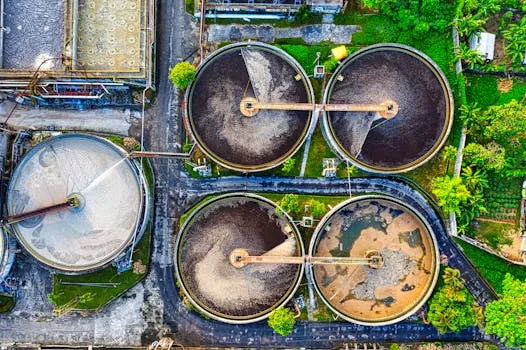
Selecting a modular STP starts with influent chemistry and the discharge or reuse target. Measure BOD, TSS, NH₄-N, pH, and temperature, then lock the effluent standard—EPA secondary or a tighter local limit. That pair decides whether A/O, SBR, or MBR is the minimum process class.
Next, set average and peak flow. A plant at 100 m³/day average and 150 m³/day peak should not be sized on average alone. Clearfox.com recommends sizing to 120% of peak flow so diurnal spikes do not wash out sludge. Site checks follow: footprint, soil bearing, frost line, and access for crane or trailer. Those constraints steer the choice among above-ground, underground (such as HydropureWater’s WSZ series underground modular STPs for decentralized applications), or containerized shells.
Process choice comes fourth. MBR is the usual pick when reuse-quality solids and bacteria limits apply. SBR fits highly variable daily flows. A/O covers routine municipal BOD and nitrogen when land is available for clarifiers. After shortlisting, compare electrical load, chemical use, and maintenance hours, and request a pilot when salinity or metals sit outside the vendor’s reference list. Finish with permits—EPA NPDES, state discharge, or local health approvals—before placing the order. For process context, see how packages sit inside the 5-stage wastewater treatment process with equipment matching data.
| Step | Description | Key Considerations |
|---|---|---|
| 1. Influent & Effluent Analysis | Characterize raw wastewater (BOD, TSS, NH₄-N, pH, Temp) and define discharge/reuse standards. | Local regulations, EPA secondary (40 CFR Part 133), WHO reuse guidelines |
| 2. Flow Rate Calculation | Determine average and peak flow rates (e.g., 100 m³/day avg, 150 m³/day peak). | Size for 120% of peak flow (Clearfox.com); EPA Onsite Wastewater Treatment Systems Manual |
| 3. Site Constraints Assessment | Evaluate available footprint, soil conditions, climate, and access. | Above-ground, underground (WSZ series), or containerized options |
| 4. Treatment Process Selection | Choose appropriate technology (A/O, MBR, SBR) based on influent & effluent. | MBR for high effluent quality/reuse; SBR for fluctuating flows |
| 5. Vendor Specification Comparison | Review electrical load, chemical use, maintenance, and request pilot data. | Total cost of ownership, operational simplicity, reliability |
| 6. Compliance & Permitting | Ensure system meets all regulatory requirements and secure necessary permits. | EPA NPDES, state/local discharge permits, health department approvals |
Selection checklist before you issue an RFQ:
- Peak-day flow and peaking factor documented (size near 120% of peak).
- Influent BOD, TSS, NH₄-N, and temperature ranges with sample dates.
- Discharge or reuse limits stated as numeric caps, not only “secondary.”
- Available footprint in m² and preferred install type (buried, skid, container).
- Power availability (voltage, phase, spare amperage) against the vendor load sheet.
- Sludge haul or dewatering plan for the expected waste solids mass.
- Permit path named (NPDES, state, or local health) with expected sampling frequency.
Compliance Standards for Modular Sewage Treatment Systems
Modular sewage treatment systems follow the same numeric discharge rules as civil plants. In the United States, secondary treatment under 40 CFR Part 133 sets effluent BOD and TSS below 30 mg/L. Biosolids from the process must also track 40 CFR Part 503 for handling and disposal.
Operators should map sampling frequency before startup. Decentralized packages that report weekly BOD, TSS, and NH₄-N catch drift earlier than monthly grab programs, especially when peak flow sits near 120% of the design average.
Reuse projects tighten those caps. WHO guidance for the Safe Use of Wastewater, Excreta and Greywater commonly targets <10 mg/L BOD, <10 mg/L TSS, and <1 CFU/100 mL fecal coliforms for unrestricted irrigation. Regional codes add further layers: EU Urban Waste Water Directive 91/271/EEC, China’s GB 18918-2002, and India’s CPCB guidelines each set their own tables. Modular vendors must retune aeration, clarification, and disinfection to those tables—not to a generic brochure curve.
Permitting still gates startup. Many discharges need an NPDES permit, a state permit, or local health approval, with review times set by the jurisdiction. Decentralized packages often face denser monitoring (weekly versus monthly) to prove steady performance, as emphasized in EPA’s Decentralized Wastewater Treatment Systems: A Program Strategy. For healthcare effluent, HydropureWater offers compact modular systems for hospital effluent compliance.
Who This Is For / Next Step
This guide is for plant engineers, EPC contractors, and procurement teams sizing decentralized or phased STPs from about 1 to 5000 m³/day. Look elsewhere if you need a multi-MLD civil works plant with large secondary clarifiers already funded, or if your waste stream is dominated by solvents that need dedicated pretreatment first.
Main cost drivers to price early: connected kW and blower duty, membrane or clarifier spares, sludge haul distance, and civil pad or burial depth. If your peak flow, influent sheet, and discharge limit are ready, request a modular STP specification review and quote with those three inputs attached.
Frequently Asked Questions
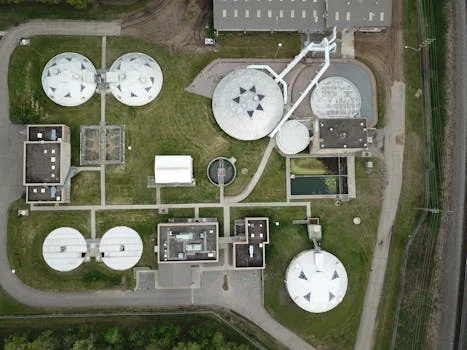
What effluent standards must a modular STP meet?
Modular STPs must meet EPA secondary treatment standards of BOD <30 mg/L and TSS <30 mg/L under 40 CFR Part 133, plus any tighter local caps such as NH₄-N <5 mg/L. For reuse, WHO-aligned targets often require <10 mg/L BOD, <10 mg/L TSS, and <1 CFU/100 mL fecal coliforms. Always confirm the exact numeric limits on the permit before locking process class and polishing steps.
What is KLD and MLD in STP sizing?
KLD (kiloliters per day) and MLD (million liters per day) are flow units used on many bid sheets. 1 KLD equals 1 m³/day, and 1 MLD equals 1000 m³/day. Modular systems in this guide typically range from 1 KLD to 5000 KLD (5 MLD). Convert early so vendor capacity tables, pump curves, and permit flows stay on one unit basis.
What is a modular STP system?
A modular STP system is a prefabricated, transportable wastewater treatment train that scales by adding parallel modules. It usually integrates primary screening, biological treatment, secondary clarification or membranes, and disinfection in a compact package. Factories ship complete units or bolt-up sections so field work drops 60–80% versus a full civil plant, with typical lead times of 3–6 months.
How do I size a modular package plant for my site?
Calculate peak flow first—for example 150 m³/day—then select a module with about 20–30% spare capacity, such as a 200 m³/day unit, or follow the 120% of peak rule used by Clearfox.com. For residential population estimates, EPA’s Onsite Wastewater Treatment Systems Manual commonly uses 150–200 L/person/day. Match that hydraulic size to BOD/TSS load so aeration and sludge systems are not undersized.
When should I choose MBR over SBR in a modular STP?
Choose MBR when the permit or reuse goal needs very low TSS and bacteria in a small footprint, often aiming for <10 mg/L BOD/TSS after polishing. Choose SBR when daily flow swings widely and you want one tank to handle fill, react, settle, and decant cycles. Most plants we size for reuse lean MBR; camps with spiky occupancy often stay on SBR for operating simplicity.