What Are the Five Wastewater Treatment Stages?
Municipal and industrial plants treat wastewater in five stages: preliminary, primary, secondary, tertiary, and sludge handling. Preliminary screening removes 60-80% of large solids. Primary clarification typically removes 50-70% TSS at 24-48 m³/m²/day. Secondary biology targets 85-95% BOD removal before tertiary polishing when reuse or strict permits apply.
Wastewater treatment stages are matched to influent solids, FOG, BOD, and the permit. Preliminary work removes 60-80% of large solids through screening and grit chambers. Primary sedimentation or flotation follows. Secondary biology then targets 85-95% BOD removal. Tertiary filtration and disinfection polish for reuse or tight pathogen limits, and sludge handling manages solids produced along the train.
According to 40 CFR 133.102, U.S.Many plants still design to EU Urban Waste Water Directive 91/271/EEC; Directive (EU) 2024/3019 will repeal and replace it as of 1 August 2027 (EUR-Lex summary, updated 2025). Skipping a stage overloads the next unit and raises permit risk.
A 2023 World Bank report described a Bangladesh textile plant fined $250,000 after BOD exceedances traced to weak primary solids removal. High TSS also clogs high-pressure pumps. Incomplete disinfection can freeze municipal discharge permits. Optimized trains in plant practice have shown about 40% lower chemical use, 30% lower energy use, and far fewer compliance events when stage sequencing matches the load.
Stage 1: Preliminary Treatment – Protecting Downstream Equipment from Debris and Grit
Preliminary treatment removes 60-80% of large solids and inorganic grit so pumps and aeration tanks are not damaged by debris. Municipal bar spacing typically ranges from 6 mm to 50 mm. Textile and pulp mills often need finer apertures to catch fibers that shred pump seals. Effective grit removal needs hydraulic loading rates (HLR) held between 0.3 and 1.2 m³/m²/min so particles with settling velocities of 0.02-0.03 m/s drop out while organics stay suspended.
For fine screening, the GX Series fine screening system for preliminary treatment offers bar spacing as small as 0.5 mm and capacities up to 5000 m³/h. A 20 mm screen on a high-rag waste stream will foul MBR membranes downstream. Grit chambers are sized for 60-90 seconds detention and surface loading that captures about 95% of 0.2 mm (65 mesh) sand.
| Parameter | Unit | Coarse Screening | Fine Screening (GX Series) | Grit Removal (Vortex) |
|---|---|---|---|---|
| Removal Efficiency (Solids) | % | 20-30% | 60-80% | 95% (>0.2mm) |
| Bar Spacing / Aperture | mm | 15-50 | 0.5-5 | N/A |
| Hydraulic Loading Rate | m³/m²/min | 0.6-1.2 | 0.3-0.8 | 0.8-1.2 |
| Head Loss | mm | 150-300 | 300-600 | <100 |
Stage 2: Primary Treatment – Sedimentation and Flotation for TSS and FOG Removal
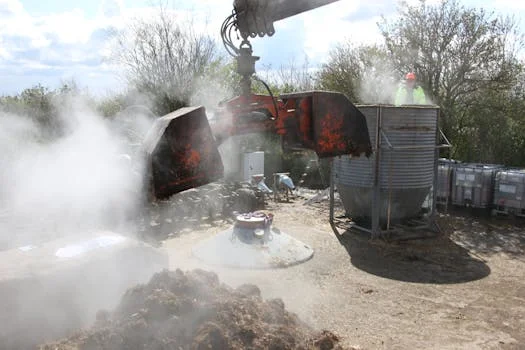
Primary treatment removes settleable organics and fats, oils, and grease (FOG), often reaching 92-97% TSS removal when influent TSS sits between 50 and 500 mg/L and the right unit is selected. Engineers choose sedimentation or flotation from contaminant specific gravity and available footprint. Sedimentation tanks use surface loading rates of 24-48 m³/m²/day and detention times of 1.5 to 3 hours. Dairy and food plants with FOG above 200 mg/L usually need dissolved air flotation (DAF) instead of gravity settling alone.
The DAF system for high-FOG primary treatment uses micro-bubbles to reach 95%+ FOG removal at hydraulic loadings of 5-10 m³/m²/h, cutting footprint versus settlers. For high TSS without high oil, engineering specifications for inclined plate settlers in primary treatment allow surface loading rates of 20-40 m/h because plate area multiplies settling surface. Primary sludge production is typically 0.3-0.5 kg dry solids per kg BOD removed, at about 2-6% solids.
| Design Criterion | Unit | Conventional Sedimentation | DAF System | Inclined Plate Settler |
|---|---|---|---|---|
| Surface Loading Rate | m³/m²/day | 24-48 | 120-240 | 100-150 |
| TSS Removal Efficiency | % | 50-70% | 85-95% | 80-90% |
| FOG Removal Efficiency | % | 10-20% | 95-99% | 20-30% |
| Detention Time | hours | 1.5-3.0 | 0.3-0.5 | 0.5-1.0 |
Stage 3: Secondary Treatment – Biological Processes for BOD and Nutrient Removal
Secondary treatment uses aerobic or anaerobic microbes to degrade dissolved organics, aiming for 85-95% BOD removal. Conventional activated sludge (CAS) is sized around an F/M ratio of 0.2-0.6 kg BOD/kg MLSS·d and an SRT of 5-15 days. Where footprint is tight or effluent limits are strict, the MBR system for secondary biological treatment runs at MLSS of 8,000-12,000 mg/L versus 2,000-4,000 mg/L for CAS, so the bioreactor volume shrinks.
Nitrogen removal often uses an A/O (anoxic/aerobic) layout targeting TN <10 mg/L. A²/O adds an anaerobic zone for biological phosphorus removal toward TP <1 mg/L. Per the MBR membrane selection guide for secondary treatment, designers balance membrane flux (15-30 LMH) against energy. MBR trains typically use 0.8-1.2 kWh/m³ versus 0.3-0.6 kWh/m³ for CAS. Compact municipal packages such as the Underground Package Sewage Treatment Plant (WSZ Series) combine secondary biology with clarification in one footprint when flows are modest.
| Process Parameter | Unit | Activated Sludge (CAS) | MBR System | SBR (Batch) |
|---|---|---|---|---|
| MLSS Concentration | mg/L | 2,000-4,000 | 8,000-12,000 | 3,000-5,000 |
| BOD Removal | % | 85-95% | 98-99% | 90-95% |
| Effluent TSS | mg/L | 15-30 | <1 | 10-20 |
| Typical SRT | days | 5-15 | 15-30 | 10-20 |
Stage 4: Tertiary Treatment – Polishing for Reuse or Stringent Discharge Standards
Tertiary treatment is the polishing stage used when effluent must meet high-purity discharge or reuse targets. Multi-media filters at 5-10 m/h can cut turbidity to <2 NTU. Ultrafiltration is required when pathogen-free water is needed for cooling-tower makeup or irrigation. Chlorine gas remains common, yet the ClO₂ generator for tertiary disinfection holds a stable residual with fewer disinfection byproducts than free chlorine in many plants.
Chemical phosphorus removal doses alum or ferric chloride ahead of tertiary filters to push TP below 0.1 mg/L. Advanced reclamation adds RO after UF to strip dissolved salts and metals. Indirect potable reuse may also need advanced oxidation to address micropollutants beyond conventional BOD and TSS limits.
How does lime dosing fit treatment stages?
Lime dosing belongs in tertiary chemical treatment or sludge stabilization, not in preliminary screening. Plants dose lime to raise pH for precipitation of phosphorus and metals, or to stabilize biosolids toward Class A or B land-application criteria. Typical targets are set by the permit and cake pathway. Overdosing raises sludge mass and chemical cost without improving BOD removal in the secondary reactor.
Stage 5: Sludge Handling – Dewatering and Disposal Strategies
Sludge handling can consume up to 50% of a plant operating budget, so dewatering selection is a cost decision as much as a process one. Primary sludge at 2-6% solids dewaters more readily than secondary sludge at 0.5-2% solids, which usually needs polymer to release bound water. The plate and frame filter press for sludge dewatering is the benchmark for cake dryness, typically 30-45% solids versus 15-25% for belt presses and 20-35% for centrifuges.
According to the sludge dewatering equipment selection guide for industrial applications, filter-press sizing starts from daily dry solids and a 2-4 hour cycle time. Incineration pathways usually need cake above about 25% solids for autogenous combustion. Land application requires Class A or B biosolids quality, often after lime addition or anaerobic digestion.
| Technology | Cake Solids (%) | Polymer Consumption | Energy Use | Best Use Case |
|---|---|---|---|---|
| Plate & Frame Press | 30-45% | Low-Medium | Medium | High disposal cost areas |
| Screw Press | 15-25% | High | Low | Small-scale municipal |
| Centrifuge | 20-35% | Medium-High | High | Large-scale continuous |
| Belt Filter Press | 15-25% | High | Medium | Primary municipal sludge |
Matching Treatment Stages to Your Wastewater: A Decision Framework for Engineers
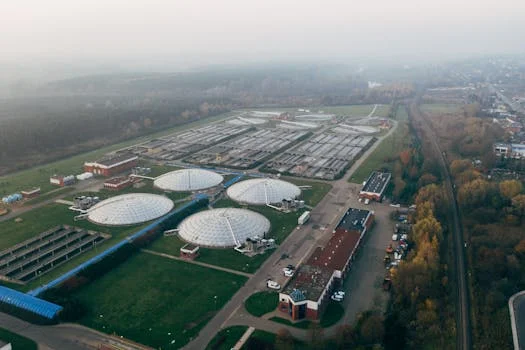
Selecting a treatment sequence starts with influent characterization: peak flow, BOD, TSS, FOG, and nutrients. Map those loads to the permit—NPDES limits under 40 CFR Part 133 in the U.S., or EU rules under 91/271/EEC until Directive (EU) 2024/3019 takes over from 1 August 2027. FOG above 100 mg/L generally needs DAF in primary to protect downstream membranes. Compact sites can evaluate an Underground Package Sewage Treatment Plant (WSZ Series) when secondary biology and clarification must share one civil package.
CAPEX versus OPEX trade-offs come next. MBR raises energy demand but can eliminate a separate tertiary filter when effluent TSS must stay near 1 mg/L. A common food-plant train is fine screening (GX), DAF, MBR for BOD, and ClO₂ disinfection. Each upstream stage protects the next asset.
| Influent Characteristic | Primary Requirement | Secondary Requirement | Tertiary Requirement |
|---|---|---|---|
| High FOG (Dairy/Food) | DAF | MBR or CAS | Disinfection (ClO₂) |
| High TSS (Mining/Inorganic) | Sedimentation Tank | N/A (Physical-Chem) | Multimedia Filtration |
| High BOD (Municipal) | Primary Clarifier | A²/O Process | UV or ClO₂ |
| Water Reuse Goal | Fine Screening | MBR (Integrated) | RO + Disinfection |
Why design below discharge standards?
Designing below the numeric discharge limit is common when reuse, seasonal variability, or future permit tightening is expected. Meeting a BOD limit of 30 mg/L on paper can still fail during peak FOG or storm dilution if the train has no headroom. Reclaimed-water projects often target turbidity <2 NTU and lower nutrients than the river permit requires, which raises CAPEX and OPEX but protects the reuse train. Build tighter only when the end use or regulator requires it.
Selection checklist: (1) confirm peak hydraulic and organic loads, (2) list FOG and grit risks, (3) map BOD/TSS/TN/TP to the permit, (4) decide reuse versus discharge, (5) size sludge cake pathway and disposal cost, (6) compare CAS versus MBR footprint and kWh/m³, (7) reserve space for tertiary polish if TP <0.1 mg/L or turbidity <2 NTU is required.
Plant engineers and EPC teams can send influent and permit data for a stage-by-stage equipment match before freezing the P&ID.
Frequently Asked Questions
What are the 7 steps in wastewater treatment?
The five core stages—preliminary, primary, secondary, tertiary, and sludge handling—are often expanded to seven steps by splitting secondary into aeration and secondary clarification and listing disinfection separately. That seven-step view is common in NPDES narratives because it isolates pathogen control and solids separation from bulk BOD removal. Either framing is valid if unit processes and sampling points stay clear on the process flow diagram.
What is the difference between primary and secondary wastewater treatment?
Primary treatment is physical: sedimentation or flotation removes settleable TSS and FOG, often 50-70% TSS in conventional clarifiers and higher with DAF. Secondary treatment is biological: microbes remove 85-95% of dissolved BOD. Primary effluent still holds roughly 50-100 mg/L dissolved organics in many municipal plants, so secondary biology is required for most discharge permits under 40 CFR Part 133.
How much does each wastewater treatment stage cost per m³?
Typical operating ranges are preliminary $0.02-$0.05/m³, primary $0.05-$0.15/m³, secondary $0.15-$0.40/m³, tertiary $0.10-$0.30/m³, and sludge handling $0.05-$0.20/m³ at municipal scale. High-FOG or metals-bearing industrial wastewater can cost two to three times more because chemical and energy intensity rises with contaminant load. Always normalize costs to flow and contaminant mass, not plant nameplate alone.
What happens if you skip a wastewater treatment stage?
Skipping a stage cascades failures: no preliminary grit protection destroys pump impellers; no primary solids removal overloads secondary oxygen demand; no secondary biology violates BOD limits; no tertiary polish risks pathogens or nutrient-driven algae blooms in receiving waters. Each stage is a load-shedding step for the next unit. Restoring a missing stage is usually cheaper than repeated emergency bypasses and fines.
How do I know if my wastewater needs tertiary treatment?
Tertiary treatment is needed when BOD/TSS limits fall below about 10 mg/L, when TN <10 mg/L or TP <1 mg/L applies, when reuse needs turbidity <2 NTU, or when hospital or high-risk sources demand extra pathogen control. If the river permit is already met after secondary clarification and no reuse is planned, tertiary may be optional. Confirm with the written permit and end-use specification, not with a generic plant layout.