
What an Effluent Treatment Plant in Riffa Must Achieve
An effluent treatment plant in Riffa is a treatment system that reduces or removes contaminants from industrial or commercial wastewater before discharge, sewer entry or water reuse. Correct configuration depends on wastewater characteristics, flow variability, site conditions, receiving requirements and the intended reuse application. DAF suits suspended solids, oil, grease, FOG and colloidal material; biological systems address biodegradable organics; MBR combines activated sludge with membrane filtration; and UF provides finer solids and bacteria removal. Primary treatment removes about 60% of suspended solids and secondary treatment more than 90%, according to Wastewater Digest citing USGS, while final requirements must be confirmed through project-specific engineering.
The required outcome must be stated before equipment is selected. A direct-discharge design is governed by the applicable Bahraini permit and receiving environment; sewer pretreatment requires acceptance conditions from the sewer authority. Process-water recovery, cooling, irrigation or higher-grade water reclamation add end-use quality requirements that a general discharge specification may not cover.
Treatment objectives should be separated into a measurable scope:
- Solids and oil removal: prevent settleable material, oil, grease, FOG and colloids from obstructing pumps or biological and membrane stages.
- Organic and nutrient treatment: reduce biodegradable organics and address nitrogen or phosphorus where the permit or process specification requires it.
- Disinfection: control viable pathogens according to the receiving environment and intended use; visual clarity alone does not demonstrate microbiological safety.
- Water reclamation: meet the quality, monitoring and regulatory requirements of the specific reuse route.
- Residual management: determine the handling, storage and disposal route for sludge and chemical wastes.
No project-specific numeric discharge limit is supplied in the research, so none should be assumed. Use the Bahrain effluent treatment plant buyer’s guide to organize the permit, sewer and reuse questions, then convert the approved final-use requirements into procurement and acceptance criteria.
Build the Riffa Design Basis Before Choosing Equipment
A Riffa wastewater plant cannot be sized reliably from a daily average flow alone; the design basis must connect flow, contaminant loads, operating conditions and the receiving or reuse requirement.
Request representative wastewater characterization covering flow, operating shifts, batch discharges, pH, suspended solids, oil and grease, COD, BOD, nutrients, conductivity, temperature and industry-specific contaminants. Sampling should reflect normal production, peak discharge and representative batch operations. Then map peak, average and minimum flow, including storage and equalization needs for batch processes.
| Design-basis item | Information a buyer should obtain | Why it affects selection |
|---|---|---|
| Hydraulic and operating profile | Average, peak and minimum flow; operating shifts; batch-discharge sequence | Sets equalization, pump, biological and membrane capacity |
| Wastewater characterization | pH, suspended solids, oil and grease, COD, BOD, nutrients, conductivity, temperature and process-specific contaminants | Determines pretreatment, biological duty, polishing and chemical requirements |
| Final destination | Direct discharge, sewer entry, cooling, process reuse, irrigation or higher-grade reclamation | Defines the required final quality and documentation |
| Site and utilities | Footprint, access, power, drainage, corrosion exposure, installation depth and expansion provisions | Determines civil scope, arrangement, materials and redundancy |
| Residuals and secondary streams | Sludge, chemicals, washdown, odour control and waste routes | Prevents the main treatment unit becoming an incomplete plant |
Record whether installation will be buried or above grade and maintain access for screens, pumps, blowers, skimmers, membranes and dosing equipment. Require each bidder to show a mass balance for liquid, sludge, chemicals, energy, odour control, washdown and waste streams, rather than comparing quotations by flow rate alone.
ETP design is multidisciplinary: CAD Outsourcing describes architecture, MEP and steel detailing as components of treatment-plant structural design. The relevant disciplines must therefore be coordinated from the start, not added after equipment selection. The industrial COD discharge-limit guidance can support the permit check, but it does not replace the applicable Riffa approval or a project-specific analysis.
Match the Treatment Train to the Contaminants
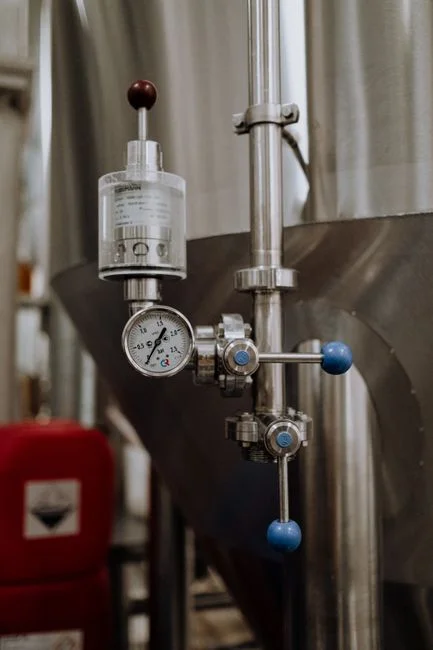
The treatment train should remove contaminants in the order needed to protect downstream equipment: screen, equalize, remove oils and solids, treat biodegradable organics, polish where necessary, disinfect, and manage residuals.
Screening and equalization come first because pumps, valves, biological reactors and membranes are vulnerable to oversized debris, suspended material and flow shocks. The GX rotary mechanical bar screen is designed for continuous municipal and industrial headworks duty.
Use dissolved air flotation where the wastewater contains suspended solids, FOG, oil and grease or colloidal material. The industrial DAF wastewater pretreatment system covers 4–300 m³/h across 13 standard models and uses micro-bubbles with automatic skimming, according to the supplied product specification.
Use an anoxic and aerobic package where integrated biological treatment, sedimentation and disinfection are required. The WSZ underground integrated sewage treatment system combines these stages in one buried unit, handles 1–80 m³/h and can be installed below grade or mounted on a trailer, based on the supplied catalog data.
Use MBR when compact biological treatment and membrane solids separation are priorities. The integrated MBR wastewater treatment system combines activated sludge with submerged PVDF membrane filtration, provides near-reuse-quality effluent with filtration below 1 μm, handles 10–2,000 m³/day and occupies 60% less footprint than conventional systems, according to the supplied catalog specification.
Use UF where finer solids and bacteria removal are required ahead of sensitive reuse or reverse osmosis duty. The UF water treatment system covers 2,000–40,000 L/h, uses 0.03 μm PVDF membranes, accepts turbidity up to 300 ppm and includes automatic backwash and air scour, according to the supplied product data.
| Problem | Potential treatment step | Selection condition |
|---|---|---|
| Debris and hydraulic shock | Screening and equalization | Install where downstream equipment requires controlled feed and batch storage |
| Oil, grease, FOG, colloids and suspended solids | DAF with automatic skimming | Use as pretreatment when these fractions are confirmed in the wastewater analysis |
| Biodegradable organics with integrated treatment | Anoxic/aerobic package, sedimentation and disinfection | Select where a compact or buried installation fits the site and duty |
| Biodegradable organics and membrane solids separation | MBR | Select where footprint and below-1 μm filtration are important project constraints |
| Finer solids and bacteria removal | UF | Use as polishing or RO pretreatment only after feed suitability is established |
| Pathogen control | Disinfection | Set the method and acceptance condition from the receiving environment or reuse use |
Nanofiltration is an advanced polishing option, not an automatic first-stage ETP. A University of Twente thesis assessed direct nanofiltration as a technique for polishing wastewater treatment plant effluent to EU WFD standards and producing effluent suitable for agricultural or indirect potable use; it assessed research potential, not a universal Riffa configuration. The MBR versus conventional activated sludge comparison is useful when biological process selection is still open.
Compare Packaged, Skid-Mounted and Bespoke ETP Configurations
Delivery format should follow the treatment duty and site constraints; packaged equipment can reduce interfaces, while a bespoke plant may be necessary for unusual wastewater, reuse quality or civil requirements.
| Configuration | Supplied scope and capacity | Most defensible application | Key procurement check |
|---|---|---|---|
| WSZ package | Integrated biological treatment, sedimentation and disinfection; 1–80 m³/h; below grade or trailer-mounted | Integrated biological duty where a compact or buried installation suits the site | Confirm installation depth, access, final disposal and package-boundary utilities |
| MBR system | Activated sludge with submerged PVDF membranes; below-1 μm filtration; 10–2,000 m³/day; 60% less footprint than conventional systems | Compact biological treatment combined with membrane solids separation | Define membrane cleaning, replacement, feed quality and performance test conditions |
| DAF system | 4–300 m³/h across 13 standard models; micro-bubbles and automatic skimming | Oil, grease, FOG, suspended-solids and colloidal pretreatment | Request the verified feed basis, skimmer duty, sludge route and transfer-pump arrangement |
| UF system | 2,000–40,000 L/h; 0.03 μm PVDF membranes; turbidity up to 300 ppm; automatic backwash and air scour | Polishing or RO pretreatment where feed and reuse requirements are confirmed | Verify feed specification, backwash utilities, membrane life basis and acceptance method |
| Bespoke ETP | Project-specific process, civil works and disciplines | Complex wastewater, non-standard reuse quality or constrained site | Define every interface, approval, test, training and handover deliverable |
For a bespoke system, the scope should explicitly cover civil works, structural design, MEP, automation, installation, commissioning, training, spares and sludge disposal. CAD Outsourcing identifies planning, design, modelling, documentation, architecture, MEP and steel detailing as relevant treatment-plant disciplines. That multidisciplinary interface is where scope gaps commonly develop.
Do not compare prices until the flow, wastewater load, selected duty, civil scope, utilities, sludge route and acceptance testing are defined. A lower equipment quotation that omits equalization, reagent systems, controls, civil work or performance guarantees is not comparable with a complete installed ETP.
Plan Controls, Sludge Handling and Final Water Reuse

A treatment plant is not complete until residual streams, controls and the final-use pathway have an operating and verification plan.
Specify PLC-controlled operation, interlocks, level and flow instrumentation, alarms, remote monitoring and a clear manual operating strategy. The automatic chemical dosing system provides a relevant skid-mounted, pre-wired and factory-tested reference configuration. Match chemical dosing to confirmed contaminants and the final effluent target, and request reagent consumption, storage, calibration and safety information as part of the commercial scope.
Plan sludge dewatering and disposal during design rather than after commissioning. The plate and frame filter press covers filtration areas from 1 m² to 500 m², with manual, hydraulic or fully automatic PLC-controlled operation according to the supplied product specification. The selected dewatering method must follow the solids characteristics, expected sludge production, operating hours and final disposal route.
For advanced reuse, assess nanofiltration only after upstream treatment has been shown suitable. University of Twente research supports the potential of nanofiltration for polishing wastewater treatment plant effluent to EU WFD standards and agricultural or indirect potable use, but it does not establish a universal Riffa ETP. Wageningen University and Research also published a 2022 thesis on removing micropollutants from wastewater treatment plant effluent through constructed wetlands; this is a research-supported option for site-specific evaluation, not default plant equipment.
For every water-reclamation claim, define the end use, required quality, monitoring regime, operating conditions, public-health considerations and regulatory approval route. The wastewater reuse and water-security forum article provides context for the broader reuse discussion, but it does not replace a project-specific quality and compliance assessment.
Use This Supplier and Commissioning Checklist
Comparable bids and a defensible handover require the same process basis, performance conditions and documentation from every bidder.
- Require a proposed process flow, equipment list, design-flow and load basis, duty cycles, utilities, chemicals, sludge generation and backup strategy.
- Require every performance claim to state the test method, acceptance condition, feed-water basis and applicable standard. Generic statements about efficiency, reliability or cost do not establish acceptance criteria.
- Request FAT and SAT plans, training scope, operating manuals, spare-parts lists, control narratives and remote-access or PLC-control deliverables.
- Confirm local service capability, critical-spares availability, installation responsibilities and the maintenance plan for screens, membranes, pumps, blowers, skimmers and dosing equipment.
- Include startup samples, stabilization, operator training, performance testing, documentation handover and post-commissioning support in the contract structure.
| Acceptance stage | Evidence to require | Decision enabled |
|---|---|---|
| Proposal | Process flow, load basis, equipment list, utilities, chemicals, residuals and exclusions | Determine whether the supplier has solved the actual wastewater duty |
| Factory acceptance | Inspection and test procedures, instrument checks, controls demonstration and agreed records | Identify defects before shipment |
| Site acceptance | Installed-equipment verification, utilities, alarms, interlocks, training and startup record | Confirm the system works at site conditions |
| Performance test | Defined feed basis, sampling method, test method, acceptance condition and deviation handling | Determine compliance with the agreed duty and final-use quality |
| Handover | Manuals, drawings, certificates, PLC records, spares, training evidence and support terms | Transfer operational responsibility to the site team |
The supplied research contains no Riffa-specific prices or project-derived performance data. Obtain those through a documented site survey, wastewater analysis and supplier quotation. Require the bidder to identify whether the offer is equipment supply or a complete project, and whether civil, structural, MEP, controls, installation, commissioning, training and performance testing are included.
Frequently Asked Questions
What determines the cost of an effluent treatment plant in Riffa?
Price depends on confirmed flow, wastewater load, treatment objective, civil scope, utilities, sludge handling and the selected equipment configuration. Request a line-by-line quotation that separates equipment, tanks or civil works, installation, controls, commissioning, training, chemicals, sludge handling and performance testing. The supplied research provides no Riffa-specific price, so do not use a generic budget figure until these inputs are documented.
How should an engineer select an ETP supplier for an industrial wastewater treatment project?
Select against demonstrated process fit and acceptance testing, not equipment claims alone. Ask whether the offer includes civil and structural works, MEP, controls, installation, commissioning, training and performance testing. Then review the proposed feed-water basis, test methods, acceptance conditions, local service capability, critical spares and warranty responsibilities. A complete project scope is more useful for comparison than a bare equipment rate.
What flow and load information is needed to size the treatment train?
Size the train from peak, average and minimum flow plus representative contaminant loads; building area or population alone is not a wastewater design basis. Catalog-supported comparison points are WSZ at 1–80 m³/h, DAF at 4–300 m³/h, MBR at 10–2,000 m³/day and UF at 2,000–40,000 L/h. These capacities do not replace a wastewater analysis or confirmation of the selected process duty.
Does advanced nanofiltration turn a conventional ETP into a water-reclamation plant?
No. University of Twente research investigated nanofiltration for polishing wastewater treatment plant effluent to EU WFD standards and producing water suitable for agricultural or indirect potable use, but it did not establish a universally applicable Riffa configuration. Define the end use, required quality, monitoring, public-health considerations and regulatory approval route, and demonstrate that upstream treatment provides a suitable feed.