
Start with the wastewater, not the equipment catalogue
No single effluent treatment plant or dissolved air flotation system can be selected from a Bengaluru factory’s location alone. The defensible starting point is a representative wastewater characterisation, followed by matching the treatment train to emulsified oil, fats, oils and grease, suspended solids, BOD, COD and the applicable consent conditions. Peak flow and float handling must also be defined before equipment is specified.
Request samples covering normal production, peak production, cleaning cycles, batch discharges and known changes in the factory process. Analyse oil and grease, TSS, COD, BOD, pH and temperature. Record average and peak hourly flow, usable treatment footprint, power and compressed-air availability, reuse requirements, and the current discharge or reuse consent conditions.
Keep free oil separate from emulsified oil. Gravity separation may handle readily separated free oil, but DAF is more relevant where emulsified oil, FOG or fine solids resist settling. Spans, in its DAF design guidelines, identifies coagulation and flocculation as essential for colloidal and emulsified contaminants; without them, DAF performance is poor.
The supplied research does not establish one universal DAF size or treatment train for every Bengaluru factory. Final selection requires site-specific wastewater, flow and compliance data. Use the automatic chemical-dosing skid only after the chemicals, dose range, storage arrangements and control requirements are established by testing.
Match the treatment duty to the wastewater profile
The treatment train should follow the pollutant load: physical separation for materials that settle or float naturally, DAF for emulsified and finely suspended contaminants, and biological treatment when biodegradable organics remain the governing load.
| Wastewater condition | Preferred treatment role | Procurement check |
|---|---|---|
| Emulsified oil, high FOG or fine TSS that resists gravity separation | DAF as primary treatment, normally before biological treatment | Confirm jar-test performance, peak-hour capacity and downstream oil protection |
| Predominantly settleable solids | Gravity clarification | Check whether the required solids removal justifies DAF chemical, recycle and operating costs |
| Clarification requiring sludge recirculation, flocculation and inclined plates | Lamella clarification | Verify plate loading, sludge withdrawal and actual wastewater settling performance |
| BOD and COD remain high after physical and chemical pretreatment | Biological treatment | Require reactor design based on load, treatment objective and downstream treatment |
| Final effluent or reuse specification requires membrane separation | MBR or another polishing train | Confirm feed quality, pretreatment, footprint and the receiving process specification |
DAF can also act as tertiary polishing after biological treatment when remaining solids or floatable material must be removed before discharge or reuse. The treatment duty must be stated in the quotation; “DAF system” alone is not a sufficient performance specification.
Gravity clarification remains reasonable where the contaminant load is mainly settleable solids and DAF operating demands are not justified. The high-efficiency sedimentation tank provides a conventional alternative to evaluate on that basis.
For a lamella clarifier, check the vendor’s actual surface-loading basis, flocculation and sludge-recirculation arrangement. The cited HydropureWater lamella clarifier catalogue specifies 20–40 m/h surface-loading rates and up to 30% reduced chemical consumption; these are catalogue claims, not a guarantee for the buyer’s wastewater.
DAF protects biological systems from grease and solids, but it does not remove the organic load that an engineered biological reactor is required to treat. Add MBR only when effluent quality, reuse requirements or footprint justify it. The cited HydropureWater MBR catalogue lists capacities from 10 to 2,000 m³/day and filtration below 1 μm; the MBR wastewater treatment system should therefore be assessed against the required final-water specification, not selected by catalogue capacity alone.
Size the DAF for peak flow and real wastewater loading
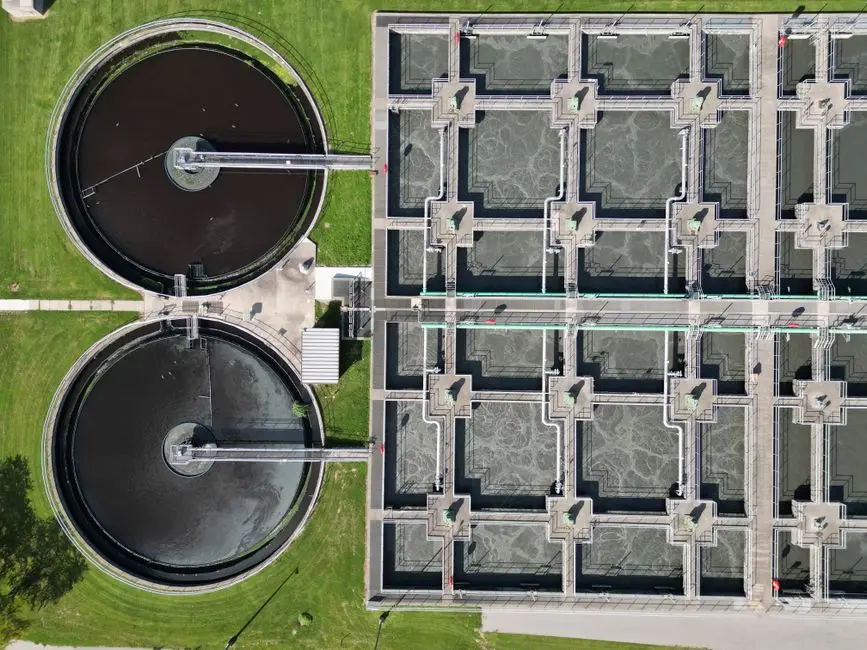
DAF flotation area should be calculated from the governing peak inlet flow, while recycle and saturation pressure should be checked against the wastewater’s solids and air demand. A DAF rated for average production flow can still fail during a cleaning discharge or batch release.
| Design parameter | Sourced value or scope | Engineering interpretation |
|---|---|---|
| Standard hydraulic surface loading rate | 3–6 m³/m²·hr, Spans, DAF design guidelines | Conservative preliminary basis for industrial DAF |
| Food-industry design guidance | 4–7 m/hour, Spans, DAF design, operation and troubleshooting guide | Use peak hourly inlet flow and test wastewater characteristics |
| High-rate DAF | Up to 10–15 m³/m²·hr, Spans, DAF design guidelines | Applicable with lamella plates or tube settlers only after coagulation and effluent checks |
| Saturation pressure | Typically 4–6 bar gauge, Spans, DAF design guidelines | Verify compressor, pressure vessel, controls and available power |
| Industrial recycle ratio | Typically 15–50%, Spans, DAF design guidelines | Confirm against wastewater temperature, dissolved oxygen, TSS and required air-to-solids ratio |
| Contact-zone retention | Typically 1–3 minutes, Spans, DAF design guidelines | Use gentle mixing to avoid breaking flocs before capture |
At 100 m³/hr, Spans’ standard 3–6 m³/m²·hr range gives a preliminary flotation plan area of 17–33 m². This is an area screening calculation, not a final selection. The supplier must state the design flow definition, surface area basis, hydraulic arrangement and peak-flow operating envelope.
The food-industry range of 4–7 m/hour in Spans’ DAF guide differs from its broader industrial range. The high-rate option of up to 10–15 m³/m²·hr is not a free upgrade: wastewater characteristics, coagulation performance and the required effluent TSS determine whether the selected rate is valid.
Spans gives a typical industrial saturation pressure of 4–6 bar gauge and a recycle ratio of 15–50%, with 25–35% common for dairy and food applications. Kelvin Water Treatment gives a different range: approximately 6–15% recycle, usually 8–10%, depending on influent temperature and dissolved oxygen. Treat this as a source difference requiring vendor design verification, not a value to average.
Ask the supplier to reconcile recycle, pressure, bubble generation and the air-to-solids ratio for the proposed wastewater. Confirm compressor capacity, pressure-vessel design, release-nozzle arrangement, power demand and safe operating controls. The industrial DAF system should be compared using the best DAF unit decision framework, not tank dimensions alone.
Design chemical dosing around jar-test results
Jar testing should determine the coagulant, flocculant, pH correction and mixing conditions for the factory’s actual wastewater. Without chemical coagulation and flocculation, DAF capture of colloidal and emulsified contaminants remains poor, according to Spans’ DAF design guidelines.
| Test variable | Trial range or condition | Source and application |
|---|---|---|
| Alum | 50–200 mg/L | Spans, DAF design guidelines |
| Ferric chloride | 30–100 mg/L | Spans, DAF design guidelines |
| PAC | 10–50 mg/L | Spans, DAF design guidelines |
| Polyacrylamide | 0.5–3 mg/L | Spans, DAF design guidelines |
| Rapid mixing | G value 200–400 s⁻¹ for 30–60 seconds | Spans, DAF design, operation and troubleshooting guide |
| Gentle flocculation | G value 20–60 s⁻¹ for 3–10 minutes | Spans, DAF design, operation and troubleshooting guide |
| Emulsified-oil pH correction | Test at pH 4.5–5.5 before coagulant addition | Spans, DAF design guidelines; food and dairy application |
These are trial ranges, not purchase quantities. Test the relevant chemical products and doses against representative samples, then evaluate oil and grease, TSS, COD, pH, settled and floated solids, and clarified-water quality. Spans recommends quarterly jar testing and retesting after significant wastewater-composition changes in its DAF design, operation and troubleshooting guide.
For emulsified oil wastewater in food and dairy operations, Spans identifies pH adjustment to 4.5–5.5 before coagulant addition as an approach for improving separation. Verify applicability through jar testing because the optimum pH depends on the oil and wastewater matrix.
Specify an automatic chemical-dosing skid only after chemical compatibility, storage, dosing range, duty cycle, level control and automatic control requirements have been defined. A quotation should state the tested chemical, dose per unit flow, expected consumption and what happens when a dosing pump or level switch fails.
Operational controls should also be included. The DAF maintenance protocol can inform nozzle inspection, pressure checks, skimmer adjustment and chemical-control checks during supplier selection and handover.
Plan sludge, float and downstream treatment as one system
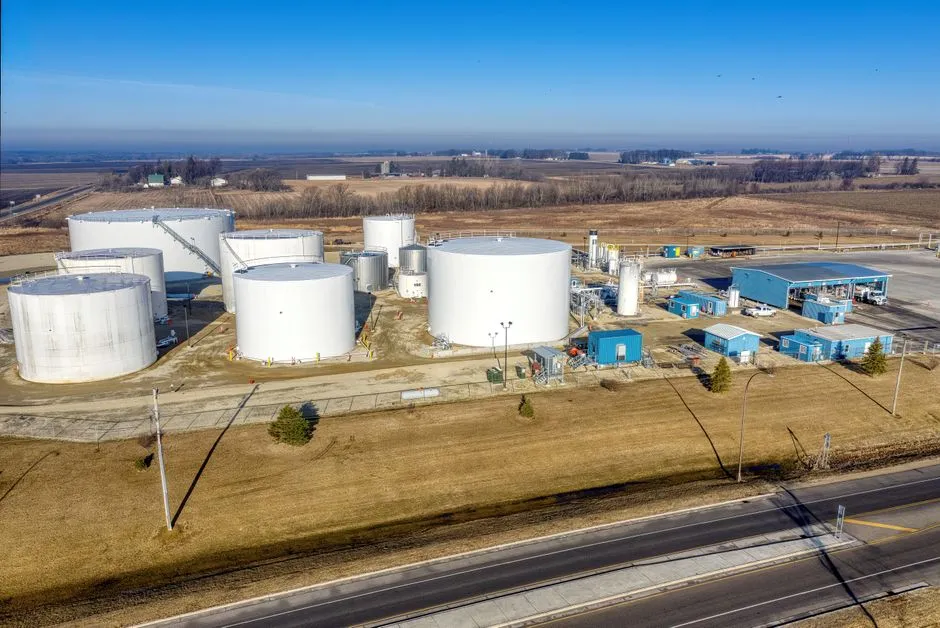
DAF produces concentrated float as well as clarified water, and the float route must be designed before procurement. Spans reports 2–6% total solids for DAF float in its design guidelines, while its DAF design, operation and troubleshooting guide gives 2–10% solids by weight. The difference reflects the need to verify the specific sludge rather than adopt one figure.
Provide collection, storage, dewatering and disposal for the float. For food and dairy ETPs, Spans states that float may be blended with biological sludge and dewatered using a filter press or belt press. A plate-frame filter press should be assessed against the expected float and blended-sludge characteristics, including solids concentration, dosing requirement, cake handling and operating cycle.
Evaluate whether the float contains regulated heavy metals or chemicals. Spans directs disposal under the applicable CPCB Hazardous Waste Management Rules where those constituents are present; classification must be based on actual waste analysis and applicable rules, not assumed from appearance.
For reuse, define the receiving process and its residual-TDS, microbiological and water-quality requirements before selecting filtration, RO, UV or disinfection. DAF clarifies wastewater but does not establish reuse suitability. Add biological treatment, polishing or disinfection wherever the wastewater analysis and consent conditions require it.
The downstream biological process must also be checked for compatibility with the DAF effluent. The pretreatment guide for wastewater entering a DAF illustrates why stream composition and pretreatment compatibility should be resolved before selecting the DAF.
Evaluate Bengaluru suppliers with engineering evidence
Compare suppliers on documented engineering, execution scope and lifecycle support rather than on a quoted treatment capacity. A procurement-ready quotation should include the guaranteed process flow, P&ID, equipment list, DAF sizing calculation, electrical and compressed-air loads, chemical-consumption estimate, and O&M manual.
Ask each supplier to identify the basis of any TSS, FOG or COD removal guarantee: the feed conditions, test method, flow basis and acceptance procedure. Commercial removal claims are not a substitute for a site-specific performance guarantee. Tie acceptance testing to representative operating conditions and agreed sampling points.
Confirm that local service, spare-parts availability and field commissioning support are available for the Bengaluru installation. Also establish who owns operator training, preventive maintenance, nozzle inspection, pressure-system checks and chemical-control troubleshooting during the warranty period.
Check current CPCB requirements and the applicable Karnataka State Pollution Control Board consent conditions before finalising the technology and drawings. The proposed ETP process flow should be consistent with the wastewater characterisation and consent application.
Use the supplied research as design guidance, not as a current regulatory determination. Verify discharge standards and site-specific requirements with the State Pollution Control Board and a qualified environmental engineer. The best DAF unit decision framework is useful for structuring technical questions, but the final selection remains site-specific.
Frequently Asked Questions
How much does an industrial DAF system cost in India?
The supplied research does not provide project prices. Request a quote based on wastewater analysis, peak flow, calculated flotation area, recycle and pressurisation system, chemical dosing, controls, civil works and float handling. Compare the scope line by line so an omitted tank, compressor, dosing skid or dewatering interface does not distort the budget.
How do I choose a DAF supplier in Bengaluru?
Require the sizing calculation, process flow, P&ID, power and compressed-air loads, commissioning plan and O&M documentation. Then verify local service and spare-parts support. A quoted capacity without the design basis, test conditions and acceptance method is insufficient.
Do I need a full ETP if I install a DAF?
Not necessarily. DAF can provide primary treatment or tertiary polishing, but biological treatment or other unit processes may be required when BOD, COD, nutrients, dissolved salts or reuse-quality requirements remain unresolved. Use the wastewater analysis and consent conditions to define the downstream train.
Can one DAF handle all factory wastewater streams?
Do not assume it can. Characterise each stream and check compatibility with the selected chemistry, peak load and discharge route. Incompatible or highly variable flows may need segregation, equalisation or pretreatment before entering the DAF.
What is the main cause of poor DAF performance?
Spans’ DAF design, operation and troubleshooting guide identifies overloading, short-circuiting, incorrect chemical dose, blocked release nozzles, unsuitable recycle conditions and poor float skimming as important failure modes. Check each against site data and operating records rather than treating poor removal as an unavoidable treatment limitation.