Why Oil and Grease in Wastewater Demand Specialized Treatment
Oils and greases (FOG) are among the most common and problematic contaminants in industrial wastewater, particularly from food processing, rendering, and petroleum sectors. Their low density and tendency to emulsify under agitation create persistent operational challenges. FOG coats and clogs pipes, pumps, and downstream biological treatment units, leading to increased hydraulic pressure, reduced heat transfer efficiency, and significant biofouling that can cause anoxic conditions and process failure. From a regulatory standpoint, discharge limits for FOG are strictly enforced to protect municipal sewer systems and receiving waters; non-compliance risks substantial fines. Effective FOG removal is not an option but a necessity for operational continuity and regulatory adherence.
The composition of FOG is a critical factor in its treatment complexity. It encompasses a wide range of materials, from simple free-floating fats to highly stable, chemically modified emulsions. Free oil, which rises readily to the surface, is the simplest to remove. However, emulsified oils, stabilized by surfactants from detergents or natural food components, form tiny droplets that remain suspended in the water column. These emulsions require chemical pretreatment to break the stabilizing bonds before physical separation can occur. In colder climates or during winter months, fats can congeal and solidify within pipe networks, creating severe blockages that are costly and difficult to remove.
Beyond infrastructure damage, FOG imposes a heavy burden on publicly owned treatment works (POTWs). High FOG loads can disrupt the delicate microbial balance essential for secondary biological treatment, leading to process upsets and permit violations for the municipal plant. Consequently, many POTWs impose strict pre-treatment standards, often mandating FOG levels below 100 mg/L, and sometimes as low as 50 mg/L, before discharge into the sewer system is permitted.
How Dissolved Air Flotation (DAF) Removes Oil from Water
Dissolved Air Flotation (DAF) separates emulsified oils and suspended solids by leveraging micro-bubble flotation. The process begins in a flash mixing tank where coagulants, such as polyaluminum chloride (PACl), are added to neutralize the surface charges on oil droplets, destabilizing the emulsion. The wastewater then flows into a flocculation chamber where a polymer flocculant is introduced, binding the destabilized droplets into larger, separable flocs.
In the core flotation chamber, a saturated stream of water is injected under pressure through a specially designed nozzle. This sudden pressure release generates a cloud of micro-bubbles, precisely 20–80 microns in diameter. These bubbles attach to the flocs, drastically reducing their density and causing them to float rapidly to the surface. A continuously operating skimmer then removes the resulting sludge blanket, while clarified effluent is discharged from the bottom of the unit. The entire hydraulic retention time within the flotation chamber is highly efficient, typically requiring only 10–20 minutes to achieve separation.
The effectiveness of the chemical pretreatment cannot be overstated. Jar testing is a critical preliminary step to determine the optimal type and dosage of coagulants and flocculants for a specific wastewater stream. Common coagulants include ferric chloride and aluminum sulfate, while flocculants are typically cationic, anionic, or non-ionic polymers. The goal is to create strong, buoyant flocs that can easily capture micro-bubbles. The air saturation system is another vital component; it typically operates at pressures between 5-6 bar (70-85 psi) to dissolve sufficient air into the recycle stream, which is usually 10-30% of the total treated flow.
DAF System Performance: Key Technical Parameters
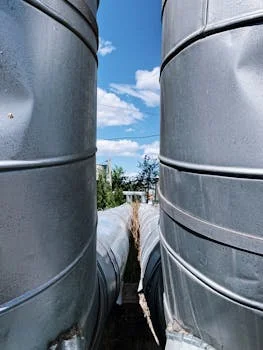
Evaluating a high-efficiency DAF system for FOG and suspended solids removal requires a firm grasp of its core performance parameters. System capacity must match peak hydraulic and contaminant loading. For instance, HydropureWater's DAF line covers a flow range of 4 to 300 m³/h across 13 standard models, achieving consistent FOG and TSS removal efficiency of 90–98% with proper chemical conditioning.
Key design and performance metrics include the hydraulic loading rate (5–15 m³/m²/h), which dictates the required surface area of the unit, and the air-to-solids ratio (0.01–0.03 by weight), a critical parameter for determining micro-bubble dosage. Power consumption is a primary operational expense, typically ranging from 1.5 to 3.0 kW per 100 m³/h of treated flow, influenced by saturator pump pressure and chemical dosing requirements.
Another crucial parameter is the sludge concentration, which typically ranges from 3% to 5% dry solids. This impacts downstream handling and disposal costs. The material of construction is also a key selection criterion; while carbon steel with protective coatings is common for larger installations, stainless steel (304 or 316L) is preferred for highly corrosive environments, such as those with high chloride or low pH levels, to ensure long-term durability and reduce maintenance.
| Parameter | Typical Range | Notes |
|---|---|---|
| Flow Capacity | 4 - 300 m³/h | Standard model range |
| FOG Removal Efficiency | 90 - 98% | Dependent on influent quality and chemical use |
| Hydraulic Loading Rate | 5 - 15 m/h | Lower rates for higher influent concentrations |
| Retention Time | 15 - 20 minutes | In flotation chamber |
| Power Consumption | 1.5 - 3.0 kW / 100 m³/h | Varies with pressure and pump efficiency |
| Sludge Concentration | 3 - 5% | Dry solids content |
DAF vs. Other Oil Water Separation Technologies
Selecting the right oil water separation technology requires a clear understanding of trade-offs in efficiency, footprint, and operational complexity. While DAF is highly effective, it is one of several options available. A comparison of technologies reveals varying strengths and weaknesses.
API separators, which rely solely on gravity, are a legacy technology. They require a very large footprint and are only effective on free-floating oil, achieving 60–75% removal; they are completely ineffective on emulsified oils. Coalescing plate separators improve upon API designs by providing surface area for oil droplets to merge and rise. They are low-energy but still struggle with fine emulsions and require frequent cleaning to maintain performance.
Membrane systems, including ultrafiltration (UF) and reverse osmosis (RO), provide the highest effluent purity. However, they represent a high capital and operational expenditure, are prone to rapid fouling from FOG and solids, and are often considered over-engineering for primary oil removal, being better suited for final polishing.
Centrifugal separators are another alternative, using high rotational forces to separate oil, water, and solids based on density differences. They are highly effective but come with significant energy costs and mechanical maintenance requirements for the rotating assembly. They are often used as a polishing step after a primary separator like a DAF or as a standalone solution for specific, high-value oil recovery applications.
| Technology | FOG Removal Efficiency | Footprint | Handles Emulsions? | Primary Limitation |
|---|---|---|---|---|
| DAF System | 90 - 98% | Medium | Yes, with chemicals | Chemical consumption |
| API Separator | 60 - 75% | Very Large | No | Ineffective on emulsified oil |
| Coalescing Plates | 70 - 85% | Large | Limited | Fouling, maintenance intensive |
| Membrane (UF/RO) | > 99% | Compact | Yes | High CAPEX/OPEX, fouling |
| Centrifugal Separator | 95 - 99% | Compact | Yes | High energy use, mechanical maintenance |
Choosing the Right DAF Oil Water Separator Manufacturer
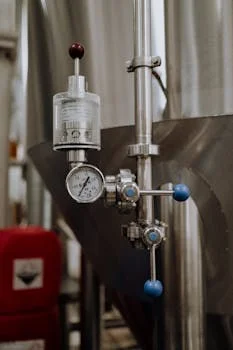
Selecting a DAF manufacturer is a strategic decision that extends beyond initial equipment specs. First, verify third-party certifications like ISO 9001 for quality management and CE marking for equipment sold in certain regions, which provide assurance of a standardized manufacturing process. The manufacturer must demonstrate a clear understanding of the compliance landscape, ensuring system design adheres to relevant discharge standards, whether local norms, EPA guidelines, or the EU Industrial Emissions Directive (IED).
Demand evidence of performance in your specific industry. A manufacturer with proven experience in food processing, for example, will understand the unique challenges of fluctuating organic loads and high-fat content. Finally, scrutinize the after-sales support structure. Reliable access to spare parts, availability of remote diagnostics for troubleshooting, and the offer of professional on-site commissioning are non-negotiable for minimizing downtime and ensuring long-term system performance.
Reviewing case studies of modular DAF integration in containerized systems can also reveal a manufacturer's capability for complex, tailored solutions. When evaluating proposals, pay close attention to the offered warranties, not just on the tank structure but on critical components like pumps, motors, and control panels. A comprehensive warranty period is a strong indicator of the manufacturer's confidence in their equipment's durability.
Inquire about the availability of training programs for your operational staff. Proper training on system operation, chemical handling, and routine maintenance is invaluable for achieving optimal performance and preventing costly operational errors.
Frequently Asked Questions
What flow rates do HydropureWater DAF systems support?
Standard models are designed for flow rates from 4 to 300 m³/h, with custom solutions available for higher capacities.
Can DAF handle emulsified oil?
Yes. This is a key advantage. Through proper coagulation and flocculation pretreatment, DAF effectively breaks and removes stable oil-in-water emulsions.
Is DAF suitable for food processing wastewater?
Absolutely. DAF is the industry-standard technology for food and beverage applications, proven effective in meat, poultry, dairy, and vegetable oil processing for simultaneous FOG and BOD reduction.
How much space does a DAF system require?
DAF units have a compact footprint, typically requiring 20–30% of the space of a conventional gravity clarifier designed for the same flow and loading.
What maintenance does a DAF system need?
Routine maintenance includes monthly inspection and cleaning of the saturator tank and release nozzles, checking the skimmer mechanism and scraper for wear, and calibrating chemical dosing pumps. Quarterly tasks often involve inspecting and potentially replacing wear parts on the scraper chain and flight, and annually, the internal tank coating should be inspected for integrity.
What is the typical sludge production from a DAF?
Sludge volume is highly variable and depends on the incoming pollutant load. It typically ranges from 0.5% to 3% of the total incoming flow rate. This sludge often requires further thickening or dewatering before final disposal.
Further Reading
Explore these in-depth articles on related wastewater treatment topics: