What Treatment Does a Zamboanga Data Center Actually Need?
A Zamboanga data center needs segregated treatment for cooling-tower blowdown, RO reject, oily or variable wastewater, sanitary sewage and stormwater; combining these streams can compromise equipment performance and compliance. Cooling blowdown is normally the main volume and must be controlled for suspended solids, silica, hardness, biocide and corrosion-inhibitor residuals. A practical starting architecture is side-stream filtration plus ultrafiltration before brackish-water reverse osmosis, with recovery selected after pilot testing. HydropureWater’s 2025-12 Manila benchmark reports 50–85% recovery for UF + RO and 95–98% for its ZLD-oriented UF + RO + MVC path, but neither is a Zamboanga design value without local source-water, discharge and permit data.
The design basis must be built around Zamboanga, not transferred from Metro Manila. HydropureWater’s 2025-12 Manila analysis reports cooling blowdown at 25–30% of makeup water at 4 cycles of concentration, with TDS of 1,200–6,000 mg/L and suspended solids of 10–50 mg/L in its cited analysis. These figures establish a preliminary screening range, not local design values. A cooling-blowdown treatment planning guide can support conceptual planning, but the RFQ should be based on measurements from the actual intake, cooling loops and discharge route.
For cooling-tower reuse, the preliminary sequence is source segregation, equalization, side-stream or multimedia filtration, UF where the pilot identifies particulate or biofilm risk, brackish-water RO for controlled make-up-water production, and a final disposal or zero-liquid-discharge stage selected from pilot results and permit conditions. The industrial RO water treatment system represents the desalination stage; filtration and UF do not replace it because dissolved salts remain.
Zamboanga-specific inputs still missing include intake chemistry, cooling-loop chemistry, design and peak flows, rainfall and runoff, discharge point, receiving-water classification, sewer rules and current permit conditions. The supplied research does not identify the receiving-water class or permit instrument applicable to a particular Zamboanga site, so no site-specific effluent limit can be stated as established.
Separate the Wastewater Streams Before Choosing Equipment
Each wastewater stream must have its own flow, chemistry, treatment objective and disposal route because streams that are compatible with one cooling-water membrane train may be incompatible with another. Cooling-tower blowdown is a continuous, chemically concentrated stream; RO reject is concentrated by the membrane process; oily wash water can foul membranes; sanitary sewage and stormwater have different hydraulic and contaminant characteristics.
IDE’s 2026 process explanation defines cooling-tower blowdown as the periodic purge used to control the dissolved salts concentrated by evaporation. The same source identifies silica, calcium carbonate and calcium sulfate as key scale constituents. Accordingly, source-water analysis should cover conductivity or TDS, hardness, alkalinity, silica, chloride, sulfate, suspended solids, temperature, residual biocide and corrosion inhibitor. Cooling-tower cycles of concentration must be established from the operating philosophy and water balance rather than assumed.
RO reject should be mapped to the proposed RO skid because its flow and composition determine whether it can enter the equalization tank, receive separate treatment or move directly to final brine management. Generator cooling water, floor wash and other oily or intermittent streams need oil and solids removal before they can join a membrane train or sanitary sewer. Sanitary sewage requires peak-flow and process assessment; stormwater requires wet-weather sampling and runoff controls. Neither should be used to establish the constant industrial pretreatment-flow basis.
Where oily streams require removal before further treatment, the RFQ may evaluate dissolved-air flotation equipment. For solids control ahead of membranes, the bidder should identify the filtration basis and expected dirty-filter loading rather than assume that a multimedia filtration system will protect every membrane train.
| Stream | Required characterization | Treatment objective before integration | Provisional route |
|---|---|---|---|
| Cooling-tower blowdown | Average and peak flow, cycles of concentration, TDS, hardness, alkalinity, silica, chloride, sulfate, suspended solids, temperature, biocide and corrosion-inhibitor residual | Produce cooling make-up water or reduce discharge | Equalization → filtration → UF if required → RO → reuse or brine treatment |
| RO reject | Flow, TDS, hardness, silica, scaling risk and proposed reuse destination | Recover water or control concentrate load | Separate balance within the RO and final brine-management system |
| Generator cooling water, floor wash and similar streams | Flow variability, oil and grease, suspended solids, temperature and cleaning chemicals | Remove oil and solids before membrane or sewer entry | Oil/solids separation → approved treatment or discharge |
| Sanitary sewage | Average and peak flow, wastewater characteristics and receiving route | Meet the selected sewer or treatment requirement | Separate sanitary treatment train |
| Stormwater | Rainfall response, runoff area, oil, solids, pathogens and discharge point | Control wet-weather discharges | Segregated collection, treatment and inspection |
Set Chemistry and Reuse Targets Before Purchasing Membranes
Cooling make-up-water targets must be enforceable acceptance criteria rather than general treatment goals. HydropureWater’s 2025-12 Manila analysis gives provisional targets of TDS 500–1,500 mg/L, suspended solids 10–25 mg/L, pH 6.5–8.5 and silica below 150 mg/L. These are Manila benchmarks, not Zamboanga limits or guarantees; final values must be confirmed against local source water, equipment metallurgy, cooling-system biology and vendor performance guarantees.
Silica, calcium carbonate and calcium sulfate create different scale risks as the cooling loop concentrates. Residual antiscalant and biocide control must therefore be coordinated with membrane protection rather than copied from an open-loop chemical program. Biocide and corrosion-inhibitor residuals accumulate as cooling-tower cycles of concentration increase, and their membrane impact depends on the actual product chemistry and dose.
IDE’s 2026 explanation reports conventional brackish-water RO recovery of 75–80% before scaling becomes unmanageable. The membrane bidder should state its antiscalant strategy, whether recovery is defined at design flow or conservative year-round conditions, and the assumptions governing membrane cleaning. The RFQ should also require feed-water temperature, turbidity, SDI, scaling indices, relevant boron considerations, concentrate disposal path and permeate blend ratio in the pilot report.
Preliminary or final recovery should be verified through conductivity and a complete mass balance, not accepted from a nominal percentage alone. Pretreatment, desalination and brine minimization are separate procurement scopes. The UF pretreatment for cooling-tower blowdown protects the membrane stage, the industrial RO water treatment system performs desalination, and any brine-concentration equipment must be included in the solids and residual-stream plan.
| Design parameter | Provisional Manila benchmark | Zamboanga procurement requirement |
|---|---|---|
| Cooling make-up TDS | 500–1,500 mg/L, HydropureWater, 2025-12 | Confirm from local source water, cooling chemistry and blend ratio |
| Cooling make-up suspended solids | 10–25 mg/L, HydropureWater, 2025-12 | Set as a permeate or blended-water acceptance value |
| Cooling make-up pH | 6.5–8.5, HydropureWater, 2025-12 | Confirm against metallurgy, biology and the cooling chemical program |
| Cooling make-up silica | Below 150 mg/L, HydropureWater, 2025-12 | Validate through scaling calculations and pilot testing |
| Conventional BWRO recovery | 75–80%, IDE, 2026 | Require a supplier-specific projection and test condition |
| Recovery verification | No local value established | Conductivity and water-mass balance across the full train |
Where the supplier uses chemical dosing to control scaling or biological growth, require the automatic chemical dosing system scope to include feed measurement, containment, interlocks, residual monitoring and a documented compatibility review with the cooling-water program.
Compare Filtration, RO, High-Recovery and ZLD Treatment Paths
Treatment selection should follow from the reuse objective, confirmed discharge route and concentrate-management constraint. HydropureWater’s 2025-12 Manila analysis provides the following commercial benchmarks; their Manila scope must remain visible because none establishes a Zamboanga price, recovery or permit outcome.
Option 1, side-stream filtration, addresses blowdown control rather than desalination. HydropureWater’s 2025-12 Manila guide reports 10–25 micron filtration on 1–5% of circulation flow, suspended solids below 15 mg/L and capital cost of $50,000–200,000. It can support higher cooling-tower cycles of concentration, but it does not remove dissolved salts.
Option 2, UF + brackish-water RO, supports reuse and freshwater reduction. The same 2025-12 Manila guide reports 50–85% recovery, permeate TDS of 10–50 mg/L and operating cost of $1.50–3.00 per 1,000 gallons. These figures are preliminary references rather than quotations for a Zamboanga facility.
Option 3, UF + RO + nanofiltration, is relevant when pilot data show hardness or a specific ion, rather than total TDS, is the binding reuse constraint. HydropureWater’s 2025-12 Manila analysis reports NF recovery of 70–85% and describes blending NF permeate with RO permeate, but provides no separate capital-cost figure for this path. The option therefore requires a site-specific mass balance and price.
Option 4, UF + RO + mechanical vapor recompression, is the cited ZLD route. HydropureWater’s 2025-12 Manila guide reports 95–98% recovery, distillate below 10 mg/L TDS, 15–25 kWh per 1,000 gallons, a $3–8 million ZLD overlay and $5–15 per 1,000 gallons operating cost, at a typical 50,000 GPD scale. Those figures must not be transferred to Zamboanga without matched flow, feed chemistry, power cost, climate and solids-disposal data.
Option 5 is chemistry-aware high-recovery brine treatment. IDE’s 2026 explanation describes controlled salt precipitation that removes sparingly soluble salts as dense solids, with an industrial example operating at around 95% recovery and producing permeate silica of about 1 mg/L. Because that example blended cooling-tower blowdown, existing RO brine and manufacturing wastewater, the actual Zamboanga salt matrix and mixed-stream compatibility must be validated.
| Treatment path | Recovery or performance | Principal advantage | Principal issue to resolve |
|---|---|---|---|
| Side-stream filtration | 10–25 micron; below 15 mg/L suspended solids; $50,000–200,000, Manila benchmark, HydropureWater, 2025-12 | Controls solids and supports higher cooling-tower cycles of concentration | Does not remove dissolved salts |
| UF + RO | 50–85% recovery; 10–50 mg/L permeate TDS; $1.50–3.00 per 1,000 gallons, Manila benchmark, HydropureWater, 2025-12 | Produces reusable low-TDS water | Concentrate route, fouling, scaling and local power cost |
| UF + RO + NF | NF recovery 70–85% in the cited Manila analysis, HydropureWater, 2025-12 | Provides hardness or specific-ion control | No separate capital-cost benchmark was supplied |
| UF + RO + MVC | 95–98% recovery; below 10 mg/L distillate TDS; 15–25 kWh per 1,000 gallons; $3–8 million overlay, Manila benchmark, HydropureWater, 2025-12 | High liquid recovery for restricted discharge | Power demand, solids handling, footprint and confirmed permit need |
| Chemistry-aware high-recovery treatment | Around 95% recovery and about 1 mg/L permeate silica in IDE’s 2026 industrial example | Separates scaling salts from the residual brine | Validation of the Zamboanga salt matrix and precipitate handling |
The decision rule is straightforward: select filtration where the objective is blowdown control; UF + RO where reuse and lower freshwater use dominate; high-recovery treatment where freshwater or discharge constraints are severe; and ZLD where the confirmed permit or project commitment requires it. Supplier questions should cover RO and UF membrane selection and valves, filter media and other treatment parts without treating equipment selection as a substitute for the site water balance.
Protect the Plant with Pretreatment, Controls and Residuals Management
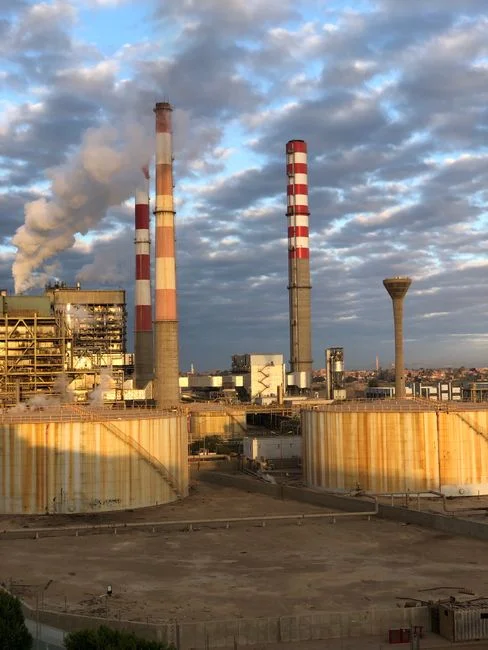
Warm, biologically active water can turn membrane fouling into an availability problem, so pretreatment scope must be tied to measurable feed conditions. HydropureWater’s 2025-12 Manila guide reports membrane fouling as the dominant failure mode on Philippine sites and recommends 10–25 micron self-cleaning side-stream filtration before UF, keeping blowdown suspended solids below 15 mg/L in its cited analysis.
As cooling-tower cycles of concentration rise, biocide and corrosion-inhibitor residuals accumulate. The reused-water chemistry must therefore be coordinated with the membrane antiscalant, disinfection and pH-control programs. A supplier cannot transfer a chemical schedule from an open cooling loop without checking the product, concentration, membrane compatibility and residual breakthrough.
Automatic controls should monitor feed flow, differential pressure, conductivity, pH, temperature, permeate quality, concentrate quality and actual recovery. These measurements support both process control and the mass balance. The control narrative should define interlocks, high-differential-pressure response, low-permeate-quality response, chemical-dosing alarms and the operating response to an off-normal stream.
For biological control, HydropureWater’s 2025-12 Manila catalog guidance represents UV and chlorine dioxide as options. A UV sterilization system or chlorine dioxide generation system should be selected only after assessing residuals, by-products, dose demand and compatibility with the cooling-water chemistry.
The RFQ should also require membrane-cleaning frequency, spare-element strategy, chemical storage, waste-solids handling, electrical demand, access for maintenance and local service support. HydropureWater’s 2025-12 Manila guide states that omitting recommended pretreatment can shorten membrane replacement intervals from 3–5 years to 12–18 months; that is a diligence warning, not a Zamboanga service-life guarantee. A data-center wastewater treatment framework can help structure the comparison, but the final basis remains site evidence.
Build a Zamboanga-Site RFQ and Pilot-Test Package
A defensible RFQ should begin with measured site evidence rather than equipment preferences. Require 12 months of source-water and discharge-route data where available; if historical records are inadequate, require representative sampling across operating and wet-weather conditions. Each stream must have a separate line for average flow, peak flow, chemistry, temperature, reuse destination and permitted discharge route.
The design basis should state the recovery calculation, permeate and concentrate quality, availability, footprint, utilities, chemical consumption, cleaning frequency, controls, alarms, redundancy and local service capability. Membrane suppliers must state whether recovery is tested at the specified feed-water composition, conservative year-round conditions or a favorable design point, and must submit a fouling-and-scaling calculation.
Make pilot testing a prerequisite for final selection when silica, hardness, sulfate, biocide residual or temperature materially affects scaling and fouling. The pilot report should include feed and permeate analyses, conductivity-based recovery, concentrate analyses, normalized energy consumption, cleaning observations, membrane flux behavior and acceptance results. The trial must also verify that the proposed permeate can meet the selected cooling-water make-up target after blending.
Every residual stream needs a defined destination, including membrane wash water, spent chemical solutions, sludge, filter backwash and high-recovery treatment solids. Bidders should state whether each residual is reused, collected, transported or discharged, together with its characteristics and handling method.
The supplied research does not establish Zamboanga permit limits. The final specification must identify the current DENR instrument, receiving-water classification, local conditions, sewer acceptance rules and PEOS/EIS or environmental-review status. Where segregated sanitary treatment is part of the site scope, a underground integrated sewage treatment system may be evaluated, but acceptance must be based on the confirmed sanitary design flow and local approval route.
| RFQ package | Minimum information required from bidder | Buyer acceptance check |
|---|---|---|
| Site basis | Measured flows and chemistry by stream; source, discharge and reuse routes | Matches the operating and wet-weather record |
| Process guarantee | Permeate, concentrate, recovery, availability and cleaning assumptions | Defined test method and acceptance period |
| Pilot evidence | Feed chemistry, membrane projection, mass balance, energy and cleaning results | Conservative conditions and source-water variability addressed |
| Residuals | Quantity, chemistry and handling of sludge, wash water and chemicals | A named route for every residual |
| Controls and service | Instrument list, alarms, interlocks, spares, utilities and local support | Traceable to operating risks and site constraints |
| Compliance | Applicable permit basis, PEOS/EIS status and discharge plan | Verified for the actual Zamboanga receiving route |
Frequently Asked Questions
How much should a Zamboanga data center budget for cooling-blowdown treatment?
Use the HydropureWater 2025-12 Manila benchmarks only as preliminary allowances: $250,000–500,000 for a 50,000 GPD RO train, $1.50–3.00 per 1,000 gallons operating cost, plus a $3–8 million ZLD overlay and $5–15 per 1,000 gallons ZLD operating cost. Ask each bidder for a line-item price based on measured Zamboanga flows, source chemistry, recovery target, selected treatment path, power demand, chemicals, controls, installation and residual handling. These Manila figures are not quotations and do not establish a Zamboanga budget.
How should cooling-blowdown equipment be sized for a Zamboanga data center?
Size from measured blowdown flow, make-up-water TDS, cooling-tower cycles of concentration and the required recovery, not from the 25–30% blowdown benchmark alone. That percentage comes from HydropureWater’s 2025-12 Manila analysis at 4 cycles of concentration and cannot replace a Zamboanga water balance. Require peak-flow, turndown, membrane-flux, concentrate-disposal and fouling assumptions, then verify them through pilot testing.
Which supplier should be selected for a data-center wastewater package?
Require a site-specific mass balance, membrane projection, pilot basis, concentrate plan, controls narrative, residual-stream register and local service commitment from every bidder. Check whether proposed recovery was tested at conservative year-round conditions and whether the supplier guarantees permeate quality against the actual feed chemistry. A lower nominal recovery or higher price may be acceptable if it produces a more defensible fouling and scaling case.
What permits and discharge requirements apply to a data center in Zamboanga?
The applicable permit and receiving-water class must be verified for the actual discharge point; the supplied research does not establish a Zamboanga-specific limit. Request from the project team the current DENR instrument, local sewer acceptance rules, receiving-water classification, environmental-review or PEOS/EIS status, and any wastewater-reuse or discharge permit conditions. Do not use a Metro Manila limit as a confirmed Zamboanga criterion, and compare the selected treatment path with a regional data-center wastewater guide only for framework coverage, not regulatory transfer.