Which Discharge Rules Apply to a Quitman Mining or Metals Plant?
Mining and metals plants near Quitman meet pretreatment obligations by controlling wastewater at the source, characterizing each stream, treating it to the applicable discharge limit, and documenting compliance. Direct surface-water discharges are governed through an NPDES permit incorporating applicable requirements of 40 CFR Part 436. Sewer discharges are controlled by the receiving POTW’s permit, POTW local limits, and an industrial user permit or equivalent mechanism. Treatment may combine equalization, pH adjustment, chemical precipitation, solids separation, filtration, and membrane polishing. The final design must be based on representative wastewater data, peak flow, applicable mineral-category rules, and written discharge limits.
The first project decision is the discharge route, because the governing documents differ. A direct discharge to surface waters requires the facility’s NPDES authorization, applicable state conditions, and incorporated mineral-mining effluent requirements. EPA states that it promulgated 40 CFR Part 436 in 1975 and amended it in 1976, 1977, 1978, and 1979; the requirements cover mine drainage, mineral processing, and stormwater runoff and are incorporated into NPDES permits (EPA, “Mineral Mining and Processing Effluent Guidelines,” accessed 2026).
An indirect sewer discharge does not bypass regulation simply because the water enters a POTW. EPA’s 2021 Local Limits Development Guidance states that an indirect discharger’s obligations are determined by permits or equivalent control mechanisms issued to POTW industrial users, or by regulatory requirements. The project therefore needs the receiving POTW’s current permit, local pretreatment limits, industrial user permit, approved monitoring plan, and applicable state conditions. A broader regional mining and metals pretreatment guide provides a useful comparison framework.
EPA’s five-step local-limit sequence is the framework for understanding why a limit exists: identify pollutants of concern, collect and analyze data, calculate maximum allowable headworks loadings (MAHLs), designate and implement limits, and address collection-system concerns (EPA, 2021). A MAHL is a POTW capacity allocation, not a plant equipment parameter. Before sizing equalization, clarification, or membranes, the team should obtain the written local limits rather than infer them from a generic mining treatment train.
A reserved mineral subpart is not proof that no limits apply. EPA lists Dimension Stone Subpart A, Lightweight Aggregates Subpart H, Lithium Subpart U, Feldspar Subpart AI, and Garnet Subpart AK among reserved subparts (EPA, “Mineral Mining and Processing Effluent Guidelines,” accessed 2026). The project still must determine whether its actual mineral and discharge fall within an active subpart and whether POTW or state requirements apply.
| Discharge path | Controlling documents | Engineering implication |
|---|---|---|
| Direct to surface water | NPDES permit, applicable state conditions, and incorporated 40 CFR Part 436 requirements | Design to the permit’s receiving-water and effluent requirements. |
| Indirect to POTW | Industrial user permit or equivalent mechanism, POTW local limits, POTW permit, and applicable state conditions | Design to the more restrictive applicable written requirement, without assuming a published local limit. |
Characterize the Wastewater Before Choosing a Treatment Train
Mining wastewater must be characterized by generation point because mine drainage, processing water, tailings-related water, stormwater, and contact water can have different contaminants and discharge routes. A representative sampling program should establish both chemical and hydraulic variability before equipment is selected, with the highest anticipated flow used for equalization and pumping checks.
Mine drainage wastewater should be examined for evidence of acid mine drainage. Acid mine drainage is associated with sulfide minerals exposed to oxygen and water and can produce acidic water containing dissolved metals; the supplied mining reference identifies iron, manganese, copper, zinc, arsenic, and cadmium as possible AMD-associated metals (AMPAC USA, 2025-09, as reported by HydropureWater, 2026-02). That condition must be demonstrated by sampling rather than assumed from geology alone.
Mineral-processing water requires separate evaluation for process reagents, dissolved metals, suspended solids, and any cyanide, ammonia, or chloramines associated with the actual circuit. Tailings-related water may carry fine solids, processing chemicals, and leached metals. Stormwater and contact water need their own flow and chemistry because they can create the hydraulic peak that controls the treatment system.
The sampling program should measure pH, flow, TSS, turbidity, conductivity, metals, alkalinity, and every pollutant named in the industrial user permit or identified by the POTW. Samples should represent production, storm, and shutdown conditions. Each round should record the associated flow, because concentration data without flow cannot establish mass loading. Where chemical precipitation is being evaluated, also characterize sludge volume, settleability, and dewatering characteristics. A comparison of mining wastewater treatment alternatives can help frame biological and physical treatment boundaries, but it does not replace site sampling.
| Design stream | Minimum characterization focus | Why it changes design |
|---|---|---|
| Mine drainage | pH, flow, alkalinity, metals, TSS, turbidity, conductivity | Defines neutralization demand and dissolved-metal removal. |
| Mineral-processing water | Process-specific reagents, metals, TSS, pH, flow | May require treatment beyond pH correction and precipitation. |
| Tailings-related water | Solids, leached metals, process chemicals, flow | Controls clarification, filtration, and sludge handling. |
| Stormwater and contact water | Flow variability, suspended solids, metals, pH | Can set equalization and pumping capacity. |
| Precipitation sludge | Volume, settleability, dewatering behavior | Determines thickening, storage, and filter-press requirements. |
Build a Pretreatment Train Around the Actual Limit
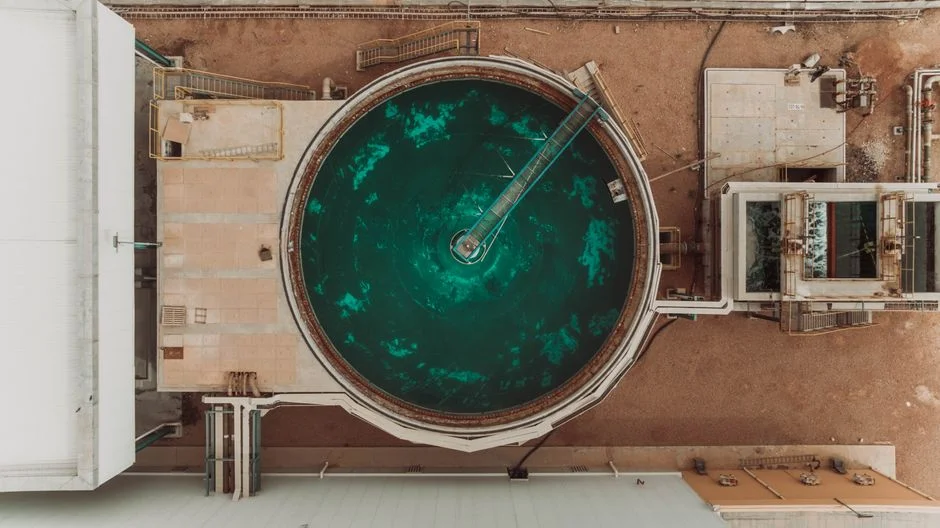
A defensible pretreatment train begins with equalization and automatic pH control because the treatment objective must be held stable before solids separation. The sequence then follows the pollutant: chemical precipitation for dissolved metals, coagulation and flocculation for particle capture, DAF or lamella clarification for the resulting solids, filtration for residual suspended material, and membranes only when the written limit and influent analysis justify them.
- Equalization: blend variable flows and chemical loads so subsequent dosing, pumping, and solids separation operate against a controlled design basis.
- pH adjustment: use automatic dosing to establish the chemistry required for metal hydroxide precipitation. A PLC-controlled chemical dosing skid should coordinate lime, coagulant, flocculant, and pH-adjuster feed.
- Heavy metal precipitation: use lime or another permit-compatible precipitant to convert dissolved metals into insoluble hydroxides, then route the metal-bearing solids to controlled handling rather than the sewer.
- Solids separation: select DAF or lamella clarification from the properties of the floc and the solids-handling constraint, not from a generic mining treatment train.
- Filtration: use multi-media filtration to remove suspended solids, turbidity, and colloids, with the filtered-water SDI requirement specified for downstream RO protection rather than inferred from inlet turbidity alone.
- Membrane polishing: add UF or RO only where dissolved solids or dissolved metals remain above the applicable limit or reuse requires additional separation.
DAF is the better fit when buoyant floc, oil, FOG, or floatable fines dominate. The available industrial DAF solids-separation system spans 4–300 m³/h, but that catalog range is a selection reference rather than a Quitman sizing recommendation (HydropureWater product catalog, 2026-02). Lamella clarification is more appropriate when dense metal-hydroxide sludge, footprint, and underflow handling dominate. The supplied catalog information rates the lamella clarifier at 20–40 m/h surface loading and states that chemical consumption can be reduced by as much as 30%; these are catalog claims, not a guarantee for the site (HydropureWater product catalog, 2026-02).
Multi-media filtration is a practical barrier against residual TSS, turbidity, and colloids. UF is appropriate when finer particles must be removed before RO or another polishing step. The supplied 0.03 micron PVDF ultrafiltration system is rated from 2,000–40,000 L/h, accepts turbidity up to 300 ppm, and includes automatic backwash and air scour (HydropureWater product catalog, 2026-02). Those ratings still require compatibility and duty-cycle checks against the characterized feed.
RO addresses dissolved metals and salts that precipitation and filtration do not remove. The supplied mining reference reports 50–70% RO recovery for AMD feed, 70–85% for the RO stage of a zero-liquid-discharge train, and more than 99% rejection of dissolved metals and salts (AMPAC USA, 2025-09, as reported by HydropureWater, 2026-02). The same source reports 40–60% freshwater-consumption reduction where membrane treatment supports reuse; that is an applicable source claim, not a site savings forecast. The project should evaluate it against local water and energy costs.
| If the controlling problem is… | Evaluate… | Required design evidence |
|---|---|---|
| Variable hydraulic or chemical loading | Equalization and automatic dosing | Peak flow, production/storm/shutdown data, chemical demand |
| Dissolved metals above the written limit | pH adjustment and heavy metal precipitation | Metal profile, alkalinity, pH target, sludge generation |
| Buoyant floc, oil, or floatable fines | DAF | Floc behavior, floatables, hydraulic loading, sludge withdrawal |
| Dense sludge and footprint constraint | Lamella clarification | Settled-solids characteristics, underflow and washwater design |
| Residual solids, turbidity, or colloids | Multi-media filtration | Filtrate turbidity and required SDI for the next barrier |
| Residual dissolved metals or salts | UF followed by RO where warranted | Permeate target, recovery objective, scaling and pretreatment review |
Prove Compliance with Monitoring, Controls and Sludge Management
Compliance must be demonstrated through the parameters, sampling points, frequencies, records, and reports stated in the industrial user permit or other written control mechanism. Equipment alarms alone do not establish permit compliance; the operating and sampling records must demonstrate that the permitted discharge conditions were met.
The control narrative should define PLC interlocks for chemical dosing, clarifier and filter operation, membrane functions, and discharge. Continuous flow, pH, and conductivity measurements support process control where required, while permit-named pollutants need the specified monitoring and sampling controls. Alarms should identify the failed condition, stop or divert flow where appropriate, preserve the treatment setpoint, and state the required operator response.
Automatic backwash, air scour, and membrane-cleaning functions should be specified wherever applicable, with the associated alarm, fail-safe, maintenance, and cleaning-cycle requirements. A PLC-controlled chemical dosing skid should be tied into the plant controls rather than operated as an isolated package. Final control narratives should also establish what happens during power loss, chemical depletion, high turbidity, membrane fouling, and off-spec discharge.
Metal-bearing precipitation sludge remains a separate waste-management problem. The design needs covered or otherwise suitable storage, collection from the thickener or clarifier, dewatering, and a documented disposal route. The supplied equipment reference lists plate and frame filter presses with filtration areas from 1 m² to 500 m² and manual, hydraulic, or automatic PLC-controlled configurations (HydropureWater product catalog, 2026-02). Selection should be based on measured cake volume, required dryness, cycle time, and the disposal route—not simply the largest filter area.
Turn the Compliance Plan into a Supplier-ready Basis of Design
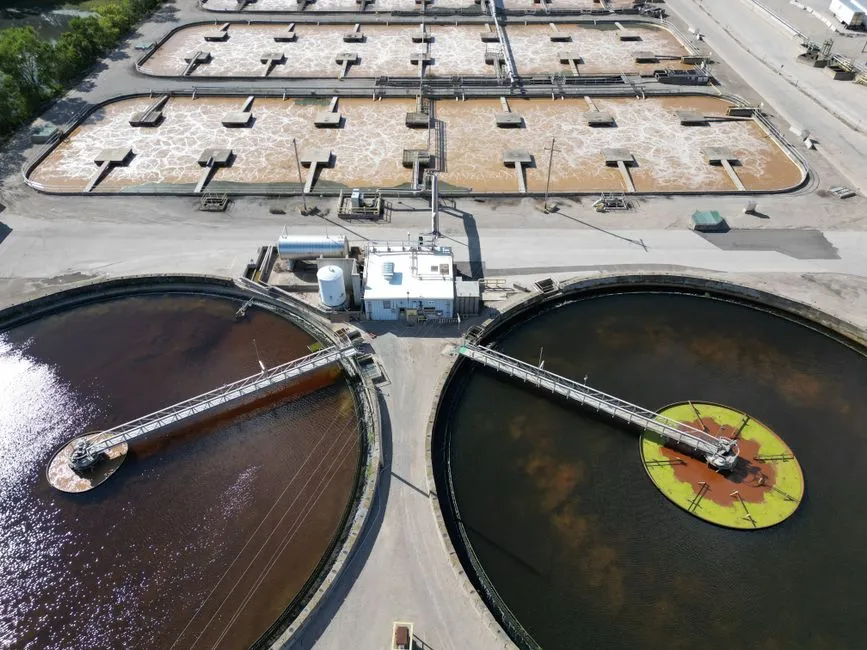
A supplier-ready basis of design ties every proposed unit operation to a pollutant, flow condition, control setpoint, and measurable acceptance criterion. The request for quotation should begin with representative data and the receiving authority’s written limits; without those inputs, suppliers are designing to assumptions that can create a compliance gap.
Provide the following project inputs:
- Average and peak flow by wastewater stream, including production, storm, and shutdown conditions.
- Representative pH, metals, TSS, turbidity, conductivity, and alkalinity results.
- The POTW’s current local limits, industrial user permit, approved monitoring plan, POTW permit, and applicable state conditions.
- The pretreatment objective, reuse requirement, recovery target, footprint constraint, available power, operator-skill level, and sludge-disposal route.
- Measured precipitation-sludge volume, settleability, and dewatering characteristics.
Require each supplier to show which problem each unit operation solves. Chemical dosing should be linked to pH and precipitation chemistry; DAF or lamella to solids properties; filtration to the protected downstream barrier; UF or RO to residual dissolved contaminants; and sludge equipment to measured cake production. The mining plant wastewater due-diligence checklist can help structure that review.
Also require confirmation of materials compatibility, automatic controls, alarm response, membrane or media maintenance, spare-parts strategy, commissioning responsibilities, and lifecycle support. No site-specific price range for a complete Quitman installation appears in the supplied research, so a defensible budget must come from a quotation against this basis of design rather than a generic treatment price.
| Vendor submission item | Required response |
|---|---|
| Process flow and sizing | State design flow for each stream and unit, with the governing peak condition identified. |
| Performance basis | Map each unit to a named pollutant and measurable acceptance criterion. |
| Controls | List inputs, outputs, interlocks, alarms, fail states, and operator actions. |
| Operations | State maintenance cycles, consumables, membrane or media replacement, and required skills. |
| Residuals | Estimate sludge generation from the supplied chemistry and identify the disposal route. |
| Commercial schedule | Identify exclusions, commissioning boundaries, delivery assumptions, and warranty support. |
Frequently Asked Questions
What should a Quitman mining plant request from the sewer authority before ordering treatment equipment?
Request the POTW’s current local limits, industrial user permit or equivalent mechanism, approved monitoring plan, and applicable state conditions. Confirm the specific mineral category and whether the discharge enters the POTW collection system through a regulated or permitted connection.
How should a pretreatment system be sized when mine drainage and process water have different peak flows?
Size equalization and pumping from the combined peak discharge that can reach the treatment system, not from each stream’s average in isolation. Provide suppliers with stream-specific peak flows and representative chemistry; the supplied research does not establish a Quitman flow range, so a generic local capacity would not be defensible.
When is DAF more appropriate than a lamella clarifier, and when are UF or RO necessary?
Use DAF when floc is buoyant or floatable oils and fines dominate; use lamella when dense metal-hydroxide sludge, footprint, and underflow handling govern. Add UF when fine solids must be removed before a downstream membrane, and add RO when dissolved metals or salts remain above the written limit or require further reduction.
How much does a mining wastewater pretreatment system cost near Quitman in 2026?
The supplied research contains no site-specific cost range for a complete Quitman installation. Request a quotation using peak flow, representative chemistry, written discharge limits, recovery objectives, controls, and sludge-disposal requirements, and require vendors to identify exclusions and lifecycle assumptions.
What supplier qualifications reduce the risk of an installation that cannot meet sewer limits?
Require demonstrated experience with the proposed unit operations at comparable flow and chemistry, a pollutant-by-process performance map, integrated control and alarm details, materials-compatibility confirmation, and a defined maintenance and commissioning plan. Also verify the proposed performance against the written industrial user permit and POTW local limits rather than relying on a generic mining reference.