
Which treatment route fits chemical wastewater in Olean?
For chemical wastewater in Olean, MBR is usually the stronger option when compact equipment, high-quality solids separation, reliable reuse, or sensitive-discharge requirements justify added membrane maintenance and capital cost. Conventional activated sludge may be more economical when the wastewater is readily biodegradable, land and labor are available, and reuse quality is less demanding. Neither technology alone guarantees removal of toxic, soluble, or persistent chemicals, so equalization, pH control, toxicity testing, and compound-specific pretreatment may be required. A final selection should follow wastewater characterization, the Olean discharge permit, reuse targets, and lifecycle cost—not a generic MBR-versus-CAS rule.
The supplied research does not identify a definitive winner for an Olean chemical plant because it does not include a project-specific wastewater characterization, flow profile, pollutant inventory, receiving destination, or applicable permit conditions. Those inputs are the first screening criteria, not administrative details to add after choosing equipment.
The central distinction is that an MBR primarily changes how biological solids are separated. It can retain biomass and suspended solids in a 2026 MBR cost per cubic metre guide discussion of membrane performance and cost, but biological degradation and chemical removal still depend on the organisms, influent characteristics, and upstream treatment. MBR should therefore be selected for a defined separation or reuse problem—not used as a universal solution for industrial chemical contamination.
How MBR and conventional activated sludge handle chemical wastewater differently
Conventional activated sludge removes biodegradable organics through a microbial process and then separates biomass from treated liquid by gravity settling. A submerged membrane bioreactor also uses biological treatment, but the membrane retains biomass and suspended solids instead of relying solely on a secondary clarifier. This is why MBR offers more consistent solids separation and can retain a higher concentration of treatment biomass, while CAS remains the simpler biological and settling configuration.
That distinction does not remove the contaminant-specific limitations of biology. The academic review “The Advancement in Membrane Bioreactor Technology toward Sustainable Industrial Wastewater Management,” published by the National Library of Medicine’s PMC in 2023, presents MBR as a sustainable industrial-wastewater technology and discusses improved effluent quality, reuse, and footprint advantages. It does not establish that an MBR will remove every toxic, nonbiodegradable, soluble, or strongly adsorbing chemical from an unspecified Olean discharge. A second academic study, “Study of activated sludge viability and reactivity in membrane bioreactor,” published in 2025, likewise identifies stricter discharge requirements, sensitive sites, and reuse as reasons to consider membrane bioreactors, while emphasizing biological viability and reactivity.
| Decision factor | Conventional activated sludge | MBR |
|---|---|---|
| Primary removal mechanism | Microbial conversion of biodegradable organics followed by gravity settling | Microbial conversion coupled with membrane retention of biomass and suspended solids |
| Solid-liquid separation | Clarifier performance and sludge handling | Membrane separation, with fouling and cleaning controls |
| Chemical wastewater limitation | Biodegradable organics may be treatable; other compounds require source control or dedicated treatment | Improved separation does not automatically remove toxic, soluble, or persistent chemicals |
| Primary selection driver | Favorable biological treatability, available footprint, and sufficient effluent quality | Reliable solids separation, compact installation, reuse, or sensitive-discharge performance |
For an Olean comparison, ask the supplier to identify which contaminant each unit operation removes and what residual remains in the liquid. That separates MBR’s solids-retention benefit from the separate question of chemical removal.
Use the wastewater profile to choose the process
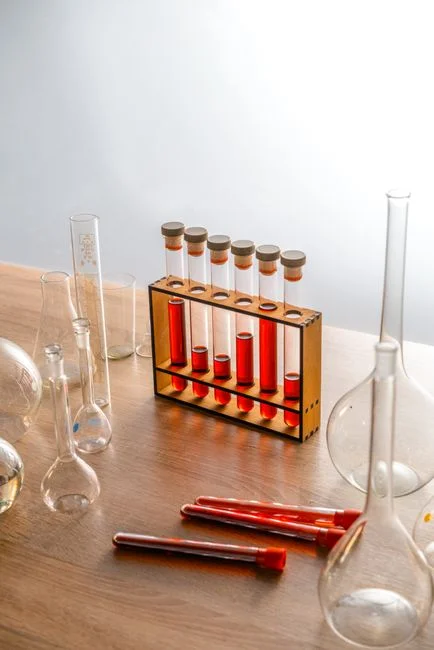
A sound technology decision begins with a process-by-process wastewater characterization, not a composite compliance sample. The package should cover flow, pH, temperature, COD, BOD, toxicity, suspended solids, target chemical groups, and seasonal or production-cycle variation. Where reuse is proposed, analyze the intended reuse endpoint and its application-specific quality requirements separately from the permitted discharge.
Map each major chemical stream before comparing biological equipment. Determine whether a prohibited or difficult compound can be excluded by source control or segregation, or whether precipitation, oxidation, adsorption, or another dedicated step is required. No supplied research establishes a universal pretreatment sequence for Olean chemical wastewater.
Upstream equalization and pH control should be evaluated as protection for the biological process and membrane system. An unstable influent can impair biological activity and increase membrane fouling; the membrane is not a substitute for stable wastewater chemistry. Specify the operating envelope for pH, temperature, oxidants, solvents, cleaners, and other compounds that could contact the membrane. An industrial mechanical pretreatment screen may address physical screening, but it does not remove dissolved contaminants or substitute for chemical pretreatment.
Define the destination before selecting equipment: sewer discharge, surface-water discharge, zero-liquid-discharge preparation, cooling or process-water reuse, or another endpoint. Each destination changes the required solids separation, polishing, monitoring, and operating reserve. The buyer should also require a membrane-compatibility statement and written chemical-cleaning constraints, particularly where cleaning agents, oxidants, solvents, or elevated temperatures occur in the stream.
Compare footprint, effluent separation, reuse, and operating burden
MBR trades a clarifier-centered footprint for membrane equipment, aeration, pumping, controls, and a maintenance program; CAS trades smaller mechanical complexity for a larger treatment layout and settling-dependent separation. The footprint comparison depends on site constraints, so it should be made against an agreed plot area and process layout rather than equipment dimensions alone.
The HydropureWater verified product catalog states that its integrated submerged-PVDF MBR system provides filtration below 1 μm, occupies 60% less footprint than conventional systems, and covers capacities from 10–2,000 m³/day. These are catalog values for that system, not industry-wide guarantees or an Olean selection result. The footprint claim should also be checked against the complete treatment train, including equalization, pretreatment, aeration, controls, and sludge handling.
Near-reuse-quality is not the same as fit for every reuse application. Residual dissolved salts, trace organics, temperature, and the receiving process specification still need verification. Academic evidence from PMC in 2023 supports MBR’s wider reuse rationale, but it cannot substitute for a project-specific water balance and quality test.
| Issue | Conventional activated sludge | MBR |
|---|---|---|
| Separation | Relies on gravity settling and biomass properties | Uses membrane retention for suspended solids and biomass |
| Layout | May require larger basins and clarifier areas | Can reduce treatment-system footprint; the catalog system states 60% less than conventional systems |
| Reuse potential | Additional polishing may be needed | Stronger basis for water reclamation, subject to application-specific quality verification |
| Operating burden | Basin, aeration, clarifier, pump, and sludge-system maintenance | All biological-system duties plus fouling control, cleaning, and membrane replacement planning |
| Key risk | Settling variability and carryover | Membrane fouling, cleaning exposure, and downtime |
Compare staffing, membrane replacement, cleaning chemicals, energy, downtime, spare parts, and sludge handling over the operating period. Equipment price alone will not identify the lower-cost route.
Build a pretreatment and treatment train that protects the biology
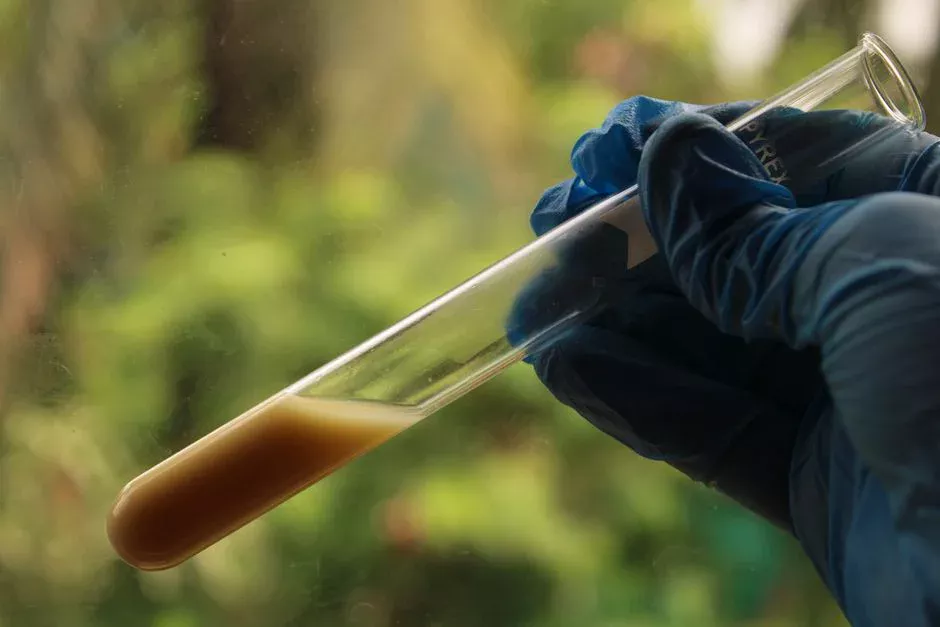
A chemical wastewater train should begin with segregation and source control, because preventing a chemical from entering treatment is generally more effective than attempting its removal downstream. Segregate incompatible streams, identify accidental releases, and define which compounds must be excluded or destroyed before biological treatment.
Equalization, pH adjustment, and compound-specific removal should then follow the wastewater analysis and compatibility data. The DAF pretreatment for oily or colloidal chemical wastewater is applicable where oil, grease, floatable material, or colloids are confirmed. It is not a universal requirement, and the supplied research provides no numeric Olean sizing basis for it.
Chemical dosing can support pH control, coagulation, or flocculation when those functions are demonstrated by the wastewater characterization. An automatic chemical dosing system does not make a nonbiodegradable compound biodegradable and should not be used to conceal missing treatability data. Equipment selection should identify the target, chemical, control response, compatibility, and residual impacts on biology and membranes.
The treatment train should end with disinfection or polishing only when the receiving environment or reuse specification requires it. For Olean, the procurement scope should distinguish mandatory discharge duties from optional reuse quality. A hybrid arrangement may be justified when dedicated upstream or downstream operations address constraints that neither MBR nor CAS resolves by itself.
Size and select MBR equipment using verified project data
MBR sizing requires both hydraulic and contaminant-loading checks. Use average flow for mass-loading calculations and peak flow for hydraulic and membrane-area checks, supported by a complete 24-hour or production-cycle flow profile. The HydropureWater catalog capacity of 10–2,000 m³/day is a product range, not a selection result; required configuration depends on wastewater characteristics, operating hours, redundancy, and reuse objectives.
For projects needing modular submerged flat-sheet membrane capacity, the HydropureWater DF-series alternative is specified as 0.1 μm PVDF, with 80–225 m² configurations and stated output of 32–135 m³/day. The catalog attributes 10–20× lower energy use than external cross-flow systems to the DF-series. Buyers should require the supplier to substantiate that claim for the selected duty, including the operating basis and system boundary used in the comparison.
| Bid item | Information required | Buyer’s acceptance check |
|---|---|---|
| Design basis | Average and peak flow, pollutant loading, operating hours, reuse target | Mass-loading and hydraulic calculations are shown, not only nameplate capacity |
| Membrane | Flux, cleaning intervals, chemical compatibility, replacement strategy | Values apply to the actual wastewater and proposed cleaning regime |
| Reliability | Standby configuration, controls, fail-safe response, downtime assumptions | Redundancy and operating scenarios are defined in the guarantees |
| Delivery | Installation utilities, controls scope, commissioning tests, performance guarantees | Bid exclusions and acceptance criteria are written explicitly |
Include membrane flux, cleaning intervals, chemical compatibility, redundancy, controls, installation utilities, guarantees, replacement strategy, and commissioning acceptance criteria in the bid. The DF-series submerged membrane bioreactor module should be evaluated against those requirements rather than selected from the stated output range alone.
Compare total cost without hiding the membrane premium
A defensible lifecycle comparison includes equalization, reactors, clarification, membranes or modules, aeration, pumping, controls, pretreatment, polishing, sludge handling, electrical service, and installation. For MBR, add membrane cleaning, replacement cycles, operator labor, downtime, spare parts, compatibility management, and performance guarantees. For conventional activated sludge, include land, clarifiers, sludge handling, operator labor, basin and equipment maintenance, and added polishing if the reuse target demands it.
Do not publish an unsupported MBR price per cubic metre for Olean. Use the 2026 MBR cost per cubic metre guide to structure the quotation request, then obtain a site-specific price after characterization and scope definition.
The Town of Cornwall Request for Proposal, dated 2025-08-25, provides a general procurement example for wastewater projects. Use it to test whether bids separately identify technical compliance, project scope, performance requirements, and vendor evaluation—not to infer Olean prices or local regulatory requirements.
| Cost category | MBR inquiry | Conventional activated sludge inquiry |
|---|---|---|
| Capital scope | Membranes, modules, aeration, pumping, controls, pretreatment, polishing, installation | Reactors, aeration, clarifiers, controls, pretreatment, polishing, site works |
| Operating resources | Cleaning, replacement reserve, labor, energy, spare parts, downtime | Operator labor, basin and equipment maintenance, sludge handling, energy |
| Reuse and disposal | Quality verification, application-specific polishing, residual management | Any additional polishing required to meet reuse targets |
| Commercial terms | Performance guarantee, membrane warranty, exclusions, site-specific quotation | Performance guarantee, labor assumptions, site works, site-specific quotation |
Assign reuse value only after identifying a valuable water demand. Nominal reuse capacity does not create a return if it does not displace purchased water, support a process, or reduce a defined disposal cost.
Recommended decision path for an Olean chemical plant
- Characterize the waste and destination. Obtain process-by-process analytical data, flow records, chemical inventories, toxicity information, and the applicable sewer, pretreatment, discharge, or reuse requirements.
- Remove constraints at the source. Segregate incompatible streams and identify compounds requiring precipitation, oxidation, adsorption, or another dedicated operation before biology.
- Choose the biological configuration. Proceed with MBR when reliable solids separation, compact installation, high-quality reuse, or sensitive-discharge performance justifies membrane-specific capital, maintenance, and risk. Proceed with conventional activated sludge when the waste is amenable to biological treatment, footprint and staffing are available, and the required effluent does not justify a membrane system.
- Use a hybrid only for a defined constraint. Add upstream or downstream unit operations when they remove a contaminant or quality limitation that neither biological configuration resolves.
- Issue a performance-based technical bid. Include flow data, analytical results, process drawings, utility requirements, control philosophy, performance guarantees, maintenance assumptions, and sludge-disposal responsibilities.
The framework is consistent with the MBR-versus-CAS comparisons for plastics wastewater and pulp and paper wastewater: industry-specific characterizations determine whether added membrane separation solves the actual design constraint. Apply the same discipline to the Olean chemical stream rather than importing conclusions from another industry.
Frequently Asked Questions
Is MBR or conventional activated sludge better for chemical wastewater?
MBR is generally preferred when compactness, membrane solids separation, water reuse, or sensitive-discharge performance justifies added membrane maintenance. Conventional activated sludge can be preferable for readily biodegradable wastewater when space and staffing are available. Neither route guarantees removal of every chemical, and compound-specific pretreatment may still be necessary.
How should I budget an MBR installation for chemical wastewater?
Request a site-specific lifecycle quotation covering pretreatment, biological treatment, solids separation, membranes, controls, utilities, sludge handling, maintenance, and performance guarantees. Do not rely on an unsupported generic cost per cubic metre; the wastewater profile, flow profile, reuse target, and installation scope are required to price the project.
How should I select an MBR supplier?
Screen suppliers using verified treatability, membrane compatibility, pilot or reference performance, controls, service capability, guarantees, and total operating requirements. Ask the supplier to substantiate system-level energy and footprint claims under the proposed wastewater duty rather than accepting a product comparison without operating conditions.
How is an MBR system sized for an industrial plant?
Size it from average and peak flow, pollutant loading, operating hours, required flux, redundancy, and reuse targets. The HydropureWater catalog range of 10–2,000 m³/day is an available product range, not an engineering selection. The DF-series stated output of 32–135 m³/day likewise requires verification against the project basis.