
What Changes When MBR Replaces the Secondary Clarifier
Conventional activated sludge treats wastewater biologically in a suspended-growth reactor, then separates the biomass by gravity settling in a secondary clarifier. A membrane bioreactor combines the biological reactor with microfiltration or ultrafiltration; the membrane performs solid–liquid separation and retains the biomass inside the reactor. Because solids are removed by filtration rather than settling, an MBR provides more independent control over sludge retention time (SRT) and hydraulic retention time (HRT), and it can maintain a higher biomass concentration than conventional activated sludge. PCI Membranes describes pressure-driven membrane systems as suitable for smaller installations or difficult industrial wastewater, while submerged systems are used for medium and large installations. The membranes do not replace biological treatment: a viable reactor and appropriate pretreatment remain necessary. A useful technical background is provided in the 2026 MBR cost-per-m3 guide.
Plastics and Rubber Wastewater: Characterize Before Choosing
The process decision should begin with a representative characterization of the actual production wastewater, not with the product category. Request analytical results covering normal production, startup, shutdown, cleanup, and batch-discharge periods. The sample record should identify production chemistry, cleaning frequency, batch dumps, expected water-reuse objectives, discharge route, and future expansion. For a plastics or rubber plant, that means testing suspended plastic fragments, rubber particles, fillers, oil and grease, surfactants, residual monomers, solvents, color, pH, temperature, salinity, toxicity, and organic loading variability. The analytical program must state the sampling frequency and analytical methods so that suppliers can compare proposals against the same basis.
Separate soluble biodegradable organics from material that remains as solids, emulsified contaminants, or inhibitory compounds. Soluble organics may be suitable for biological oxidation after suitable upstream control. Suspended fragments and filler require solids removal; emulsified oils and rubber residues can foul membranes or interfere with transfer; and inhibitory chemicals can prevent a biological reactor from establishing stable treatment. High or variable organic loading and difficult-to-degrade substances strengthen the case for pilot testing and biological acclimation.
| Information to request | Why it affects process selection |
|---|---|
| Flow and discharge-cycle record | Defines equalization, peak treatment capacity, and whether batch dumps need isolation. |
| Plastic fragments, rubber particles, and fillers | Determines screening, solids removal, and membrane-protection requirements. |
| Oil and grease, including emulsion characteristics | Determines whether oil and grease pretreatment is required before biological treatment. |
| Surfactants, residual monomers, and solvents | Identifies foam, toxicity, and biological acclimation risks. |
| pH, temperature, salinity, and toxicity | Defines biological operating limits and process-control requirements. |
| COD, BOD, nitrogen, and TSS results | Provides the loading information needed for reactor and solids-handling design. |
| Reuse objective and discharge destination | Defines the required separation and final-polishing boundary. |
For a plastics stream, do not treat “plastic” as a single contaminant category. A thermoplastic production line and a rubber-processing line can generate different particle sizes, additives, cleaning chemicals, and production rhythms. The rubber processing wastewater nitrogen-removal process provides a useful example of why the process chemistry and treatment objective need to be evaluated before selecting equipment.
MBR Versus Conventional Activated Sludge: Technical Comparison
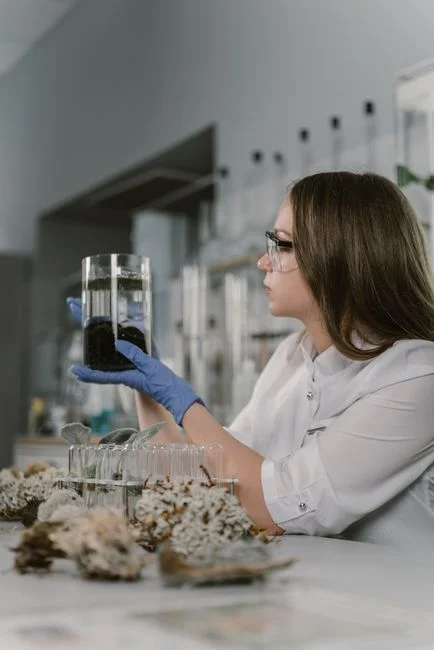
The main distinction is the solids-separation step and the operating system that follows from it. Conventional activated sludge retains biomass through gravity settling and depends on clarifier performance, sludge wasting, and adequate settling conditions. MBR retention is controlled by membrane separation, which separates solids more consistently but introduces membrane cleaning, replacement, and fouling-management requirements. The comparison below is a technical screening tool, not a guarantee of performance for a plastics or rubber plant.
| Decision factor | Conventional activated sludge | MBR |
|---|---|---|
| Solids separation | Secondary clarifier and gravity settling. | MF or UF membrane replaces the secondary clarifier. |
| Biomass retention | Retained through settling and return-sludge control. | Physical membrane retention can support higher biomass concentrations. |
| SRT and HRT control | More closely coupled to settling and wasting behavior. | More independent control because filtration replaces gravity settling. |
| Footprint | Requires reactor and clarifier area. | PCI Membranes reports up to 50% smaller footprint; Lakehead University reports approximately half the land area. |
| Sludge production | Established wasting and handling requirements. | Lakehead University reports approximately half the sludge production. |
| Effluent separation | Depends on clarifier performance and upstream solids control. | PCI Membranes reports effluent free of suspended solids and with reduced bacterial and viral content; the Lakehead thesis reports 95% COD, 98% BOD, and 99% or greater SS removal for municipal MBR treatment. |
| Reuse preparation | May require additional solids removal or polishing. | Potentially simplifies preparation for reuse or feed to reverse osmosis, subject to the reuse objective. |
| Operating burden | Simpler and established solids-separation path; clarifier and sludge handling require attention. | Requires membrane replacement planning, cleaning, air-scour or cross-flow operation, and specialist maintenance. |
| Expansion flexibility | Can be expanded through additional basins and clarifiers. | Can be modular, but expansion still depends on hydraulics, pretreatment, and membrane capacity. |
These figures have different scopes and should not be combined as if they were results from one plastics or rubber installation. PCI Membranes’ footprint statement is a supplier claim, while the Lakehead University thesis reports municipal-study results and comparative land-area and sludge-production findings. The supplier explanation of MBR versus conventional activated sludge for plastics wastewater should therefore be used as a comparison reference, not as site-specific proof. Neither process should be assumed to remove a contaminant that is absent from the project’s analytical basis or to satisfy a Montgomery limit that has not been confirmed with the applicable authority.
Pretreatment Can Decide the MBR Versus CAS Outcome
Upstream solids and oil removal can change the reliability, footprint, and maintenance burden of either biological process. A defensible industrial treatment train normally proceeds through screening and equalization, then solids or oil and grease removal where characterization requires it, biological treatment, clarification or membrane separation, and final polishing defined by the discharge or reuse objective. A rotary mechanical bar screen is intended to remove suspended solids, rags, plastics, and fibrous debris while protecting downstream pumps, valves, and biological treatment.
For streams containing suspended solids, oil and grease, and colloidal matter, a DAF system for industrial wastewater pretreatment may be appropriate. The supplied DAF catalog lists capacities from 4–300 m³/hour across 13 standard models. That range describes catalog configurations, not the required capacity for a Montgomery plastics or rubber plant. Selection must follow characterization, peak hydraulic conditions, and the measured nature of the oil, grease, solids, and colloids.
Do not install DAF merely because the facility is classified as plastics or rubber manufacturing. If the wastewater is biodegradable, relatively free of removable oils and solids, and land is available, conventional activated sludge may remain the simpler choice. Conversely, free solids, fats, oils, and colloidal material can load membranes, increase cleaning frequency, and undermine the compact, low-solids separation advantage of MBR. Poor pretreatment can therefore make an MBR unreliable or uneconomic; adequate pretreatment can make membrane separation practical. The decisive evidence is a waste and wastewater audit followed by site-specific testing.
Choose a Treatment Train by Operating Scenario
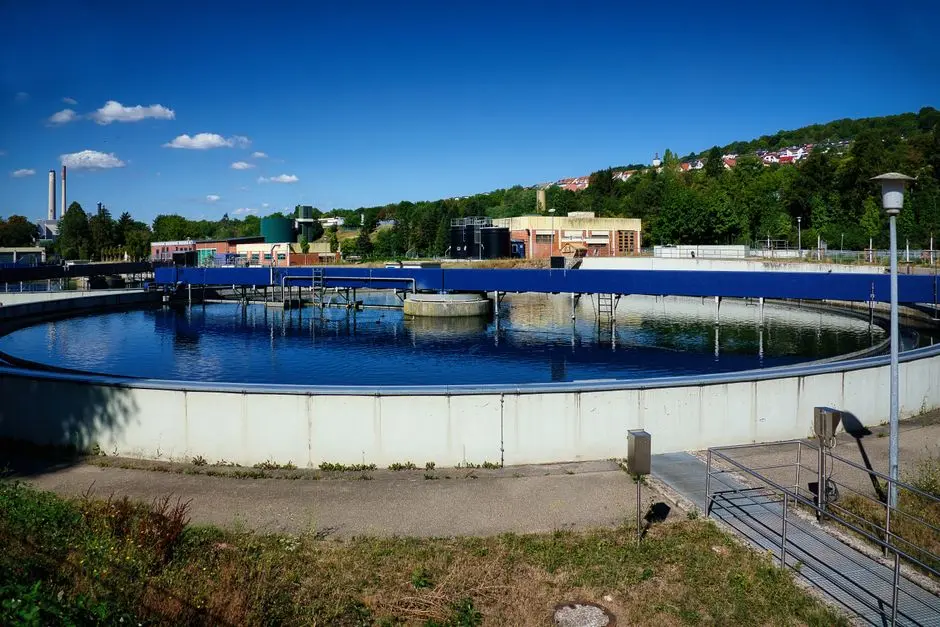
The preferred treatment train changes with the wastewater profile, available space, and reuse objective. Use the scenarios below to structure a go/no-go review rather than treating MBR as a universal default.
| Operating scenario | CAS option | MBR option | Hybrid or gated decision |
|---|---|---|---|
| Variable industrial wastewater requiring solids control | Use if solids are sufficiently biodegradable, the clarifier can meet the required separation, and adequate land and sludge handling are available. | Use if membrane separation is justified and screening, equalization, and solids or oil removal control membrane loading. | Pilot screening plus solids removal and both biological configurations. Do not select the MBR until the measured fouling load and cleaning response are known. |
| Constrained Montgomery site prioritizing footprint | May be unattractive when reactor and clarifier area cannot be accommodated. | Potentially favorable because membrane separation replaces the clarifier; the smaller footprint must be confirmed with the proposed pretreatment and maintenance layout. | Compare equal-scope layouts, including sludge handling, access, chemical storage, and future expansion—not only the biological basins. |
| Defined reuse or high-quality-effluent objective | May require additional solids removal and polishing after clarification. | Potentially favorable where very low suspended solids are required before reuse or downstream treatment, provided the reuse target is defined. | Define the final water-quality objective and polishing boundary before accepting membrane benefits in the comparison. |
An MBR recommendation is defensible when tight solids separation, biomass retention, compact equipment, or reuse preparation justifies membrane operation and pretreatment can control fouling. Conventional activated sludge remains defensible when the wastewater is biodegradable, land is available, simpler operation is valued, and the required discharge solids are compatible with the clarifier. Pilot testing is especially important for new formulations, product-mix changes, temperature variation, and high emulsion or filler carryover.
The integrated MBR wastewater treatment system catalog covers 10–2,000 m³/day, while the supplier’s DF flat-sheet modules cover 80–225 m² configurations producing 32–135 m³/day. These are supplier catalog ranges, not a recommendation or a design for a specific plant. Final sizing requires hydraulic flow, peak conditions, wastewater character, reuse targets, pretreatment, and the required redundancy.
Fouling, Reliability, and the Real Operating Burden
Membrane fouling is a major obstacle identified in the Lakehead University thesis, which identifies bound extracellular polymeric substances as key foulants. The technical design therefore needs a fouling-control philosophy rather than only a membrane area calculation. The Lakehead thesis reports a long-term study of oily pet-food wastewater at a flux of 0.8 L m⁻² h⁻¹; that is a study-specific operating value, not a universal design flux for plastics or rubber wastewater. It also reports that cleaning became increasingly difficult in that study, with a gradual, irrecoverable flux decline.
Before approving MBR equipment, ask the supplier to define membrane material compatibility, air-scour requirements, transmembrane-pressure monitoring, cleaning chemistry, spare capacity, cleaning access, replacement provisions, and the procedure for isolating a failed module. The design should identify the response to membrane isolation, a cleaning outage, membrane replacement, biomass upset, and seasonal changes in production or wastewater composition. Include a bypass or contingency strategy where continued treatment is operationally necessary.
Separate supplier claims from contractual guarantees. The DF-module catalog claims 10–20 times lower energy consumption than external cross-flow systems; this is a supplier claim that must be validated for the proposed duty, temperature, flux, and cleaning regime. Energy consumption should therefore be priced against the same wastewater and performance basis as any competing system. The wastewater-plant corrosion prevention guide is useful for checking material compatibility and equipment-condition risks that can affect long-term reliability.
Build a Site-Specific Cost and Procurement Checklist

MBR and conventional activated sludge should be quoted as complete treatment trains, not as interchangeable membrane or clarifier packages. Request equal-scope quotations covering pretreatment, biological reactor, clarification or membranes, aeration, pumping, controls, sludge handling, installation, commissioning, training, and consumables. A lower membrane price can be offset by omitted pretreatment, larger buildings, additional polishing, or higher maintenance costs. The 2026 MBR cost-per-m3 guide is useful for structuring the commercial questions, but no site price should be inferred without a quotation and the inputs listed below.
| Proposal item | MBR information to request | CAS information to request |
|---|---|---|
| Design basis | Flow range, peak factor, COD, BOD, TSS, oil and grease, temperature, pH, toxicity, nitrogen, reuse target, footprint, and discharge destination. | The same wastewater data, required solids loading, hydraulic retention, clarifier performance, sludge handling, land availability, and final-polishing needs. |
| Equipment scope | Pretreatment, reactor, membrane modules, aeration, pumping, controls, redundancy, sludge handling, and polishing. | Pretreatment, reactor, secondary clarifier, return and waste sludge systems, aeration, pumping, controls, and polishing. |
| Lifecycle costs | Membrane replacement, cleaning chemicals, energy, controls integration, spare capacity, scale-up, and specialist support. | Clarifier and pump maintenance, sludge handling, blower or aeration energy, controls, chemical use, and expansion works. |
| Performance basis | Measured duty, pilot or project evidence where appropriate, membrane compatibility, fouling strategy, redundancy, and enforceable performance criteria. | Clarifier solids-loading basis, sludge-handling capacity, operational controls, and enforceable performance criteria. |
| Risk review | Fouling recovery, cleaning outage, module replacement, biomass upset, and seasonal wastewater changes. | Clarifier upset, sludge settling failure, sludge-handling constraints, biomass upset, and seasonal wastewater changes. |
Build the final risk and life-cycle score around capital cost, operating cost, footprint, process reliability, fouling recovery, operator skill, redundancy, and reuse readiness. Each supplier should state which costs are included, which are excluded, and which performance assumptions support the price. Require a site-specific pilot where wastewater variability could change membrane loading, biological inhibition, sludge separation, or cleaning frequency. This creates a defensible comparison without inventing a price or treating a catalog range as a plant guarantee.
Frequently Asked Questions
How much does an MBR system cost for plastics and rubber manufacturing wastewater?
There is no defensible site price without a wastewater characterization and an equal-scope proposal. Ask each supplier to price pretreatment, the biological reactor, membrane or clarifier equipment, aeration, sludge handling, controls, installation, commissioning, training, membrane replacement, cleaning chemicals, energy, redundancy, and final polishing. Compare the resulting operating and replacement assumptions over the intended service life; a membrane-only quotation is not comparable to a complete treatment train.
How do I choose an MBR supplier for a plastics or rubber plant?
Require the supplier to use the plant’s analytical data, identify membrane and material compatibility, explain the fouling strategy, state cleaning and replacement provisions, and define redundancy and maintenance support. Where wastewater variability is material, ask for pilot evidence under representative conditions and enforceable performance criteria. Do not accept a general “low energy” or “high removal” claim without a defined test basis and operating envelope.
What size MBR system does a plastics or rubber plant need?
The integrated MBR catalog covers 10–2,000 m³/day, and the DF-module catalog covers 80–225 m² configurations producing 32–135 m³/day. Those are catalog ranges, not a plant design. Final sizing requires average and peak flow, organic and solids loading, wastewater character, pretreatment, reuse targets, redundancy, and membrane-fouling behavior.
Does MBR automatically meet Montgomery discharge and reuse requirements?
No. An equipment-selection guide is not a permit determination. The final discharge or reuse requirements must be obtained from the applicable Montgomery discharge or pretreatment authority and matched to the plant’s analytical results and reuse specification. MBR separation performance should be treated as one part of the compliance and reuse assessment, not as a discharge guarantee.
What should a pilot test measure before selecting MBR or conventional activated sludge?
Run the pilot across representative production, cleanup, and batch-discharge conditions. Monitor flow, COD, BOD, TSS, oil and grease, temperature, pH, toxicity, nitrogen, membrane transmembrane pressure, flux, cleaning frequency, biological activity, sludge settling, sludge production, and effluent solids. For MBR, also record membrane recovery after cleaning and operation during a simulated cleaning outage; for conventional activated sludge, record clarifier solids capture and sludge-handling behavior.
Related Equipment
- DAF system for industrial wastewater pretreatment — specifications, capacity range, and technical data