Start with the wastewater objective, not the membrane
An RO membrane system for pharmaceutical wastewater should normally follow characterization, biological treatment, membrane pretreatment, RO, and targeted polishing. A 1 m³ MBR pilot removed BOD, COD and TSS but not toxicity, while downstream RO removed the reported toxicity; reconstituting minerals was then required for the acute-toxicity test. In separate pilot testing, polyamide RO rejected 73.52–99.36% of amoxicillin and 75.1–98.8% of ampicillin at 9–13 bar. The correct configuration depends on the required outlet quality, feed chemistry, recovery, compound profile and regulatory destination.
First separate wastewater treatment from pharmaceutical purified-water or WFI production. An RO skid may appear in either application, but wastewater treatment begins with a variable, contaminant-bearing effluent; purified-water production begins with a controlled water supply and a defined pharmaceutical grade. The relevant pharmaceutical RO water-treatment configuration guide addresses the latter, not wastewater reuse.
Then classify the destination:
- Direct or controlled discharge: define the receiving requirements, analytical suite and toxicity implications before selecting membranes.
- Reuse within the plant: identify the receiving equipment, expected water-quality changes and operational exposure.
- Reuse in manufacturing: determine whether the water contacts product, process equipment or only utilities.
- Reuse after additional treatment: establish which polishing, disinfection and storage steps are required after RO.
Do not design around one easy-to-measure contaminant. The Acavent study reported effluent BOD of 3,000–9,000 mg/L, COD of 5,000–20,000 mg/L and toxicity as low as 1%; its 1 m³ aerobic MBR removed BOD, COD and TSS but did not remove toxicity (Acavent, Proceedings of The 3rd International Conference on Modern Research in Science, Engineering and Technology, 2019). Request flow and seasonality, API and antibiotic inventories, COD/BOD, toxicity, pH, salinity, suspended solids, turbidity, SDI, temperature and intended recovery before selecting equipment. A site-specific pharmaceutical wastewater treatment engineering guide can support this objective-setting step.
How RO performs on pharmaceutical wastewater
Pilot rejection figures establish what a membrane can do under a defined test condition, not what a plant guarantee should be. In the academic pilot by Performance Evaluation of Reverse Osmosis Technology for Antibiotics Removal from Wastewater, rejection and permeate flux varied with operating pressure, pH, concentration and temperature; in that test, pressure had a greater effect on rejection than pH. The same study identified size exclusion as the prevailing rejection mechanism for the tested antibiotics and positioned RO as an additional barrier in the treatment sequence (PMC, Performance Evaluation of Reverse Osmosis Technology for Antibiotics Removal from Wastewater, undated academic study).
The results below apply only to synthetic wastewater containing selected antibiotics and a pilot-scale polyamide thin-film composite spiral-wound membrane. They should not be transferred directly into a full-scale performance guarantee.
| Test compound | Reported rejection | Reported permeate flux | Study condition |
|---|---|---|---|
| Amoxicillin | 73.52–99.36% | 12.7–18.5 L/m²·h | Pilot RO; synthetic wastewater; selected antibiotics |
| Ampicillin | 75.1–98.8% | 12–18.73 L/m²·h | Pilot RO; synthetic wastewater; selected antibiotics |
All values above are reported by PMC, Performance Evaluation of Reverse Osmosis Technology for Antibiotics Removal from Wastewater. The tested pressure range was 9–13 bar; rejection increased as pressure rose, while pH changes from 3 to 10 produced a smaller effect within that experiment. The study examined antibiotic concentration, temperature and pH as well, which reinforces why a full-scale design cannot rely on a headline rejection percentage.
Actual pharmaceutical wastewater may contain high organic matter, toxicity, color and salt, all of which can change fouling, concentration polarization and rejection. Confirm the real compound mix and its toxicity response through representative testing before choosing an RO or UF membrane element. Salt rejection alone does not establish that permeate is acceptable for reuse or discharge.
Build a pretreatment train that protects membrane performance
Complex pharmaceutical effluent must be treated as a variable wastewater stream, not clarified feedwater. The 2026 Bioengineering review concludes that no single technique is sufficient in all cases and that combining biological treatment, a membrane system and advanced oxidation can be effective when matched to wastewater quantity, target pollutants and site conditions (Bioengineering, 2026-05-07).
The Acavent pilot shows why biological treatment and RO have different jobs. A 1 m³ aerobic MBR removed BOD, COD and TSS but did not remove toxicity. Nanofiltration was less effective for the reported APIs, while RO removed the reported toxicity; however, mineral reconstitution was needed before the permeate met the conditions of the Daphnia magna acute-toxicity test (Acavent, 2019). The design implication is not that every site needs the same train. It is that biological removal of bulk organics and solids does not establish removal of persistent APIs or toxicity.
A defensible sequence is:
- Characterize the wastewater and establish the compound and toxicity targets.
- Remove bulk biodegradable organics and solids through the selected biological process.
- Apply filtration appropriate to the residual solids and confirmed membrane-feed limits.
- Control hardness, scale, pH, chlorine and other identified RO incompatibilities.
- Install a 5 μm cartridge guard after suitable upstream solids removal, with final stage and differential-pressure limits set during design.
| Potential module | Decision basis | Relevant evidence or boundary |
|---|---|---|
| MBR | Use where biological treatment and integrated solids separation are required. | Acavent’s 1 m³ pilot removed BOD, COD and TSS but not toxicity (2019). |
| UF | Use as a fine-solids barrier ahead of RO when the feed requires it. | HydropureWater’s catalog specifies 0.03 μm PVDF membranes, feed turbidity up to 300 ppm, automatic backwash and air scour. |
| 5 μm cartridge | Use as the final guard stage after upstream solids removal. | Final configuration and differential-pressure limits require project-specific confirmation. |
| Softener | Use where hardness or scaling risk is identified. | HydropureWater’s KJ-WT twin-tank softener covers 1–45 T/h in the verified product catalog. |
| Activated carbon, pH adjustment and dosing | Include only for a confirmed chlorine, scale, pH or coagulation need. | These are conditional modules, not universal pretreatment requirements. |
For pharmaceutical RO feed, the 2026 HydropureWater pharmaceutical-water guide specifies SDI below 3 at 30 minutes on a 0.45 μm pad at 30 psi under ASTM D4189, while still requiring site-specific confirmation. The cataloged UF pretreatment for RO can address fine-solids separation, while an industrial RO pretreatment softener may address hardness. If chemical conditioning is required, define the automatic chemical dosing system around the identified chemistry, not as a default package.
Compare the main membrane configurations
The correct configuration is the shortest validated train that meets the stated reuse or discharge objective. MBR, UF, single-pass RO, two-pass RO and RO plus EDI solve different problems and should not be treated as interchangeable.
| Configuration | Primary role | Selection condition | Key limitation |
|---|---|---|---|
| MBR | Biological treatment with integrated membrane solids separation | Use where low suspended solids and biological treatment are priorities. | MBR performance must be confirmed for the actual API and toxicity profile; the Acavent pilot did not remove toxicity (2019). |
| UF | Suspended-solids and fine-particle separation | Use as pretreatment when the feed needs finer separation than clarification provides. | Does not replace RO for dissolved-salt removal. |
| Single-pass RO | Primary dissolved-solids and compound-rejection barrier | Use when one validated pass meets the objective. | Pilot rejection cannot be treated as a full-scale guarantee for a mixed wastewater feed. |
| Two-pass RO | Additional permeate polishing | Consider when one pass does not meet the required permeate quality. | Two passes in series are described by the 2026 HydropureWater guide as a conservative parenteral-water configuration, but wastewater reuse must establish its own requirement through validation. |
| RO plus EDI | Ultrapure permeate polishing | Use when the target specifically requires ultrapure permeate. | EDI is not a substitute for biological treatment or an unresolved toxicity assessment. |
HydropureWater’s catalog describes an integrated MBR membrane bioreactor combining activated sludge with submerged PVDF membrane filtration and providing near-reuse-quality effluent with filtration below 1 μm. For ultrapure applications, the cataloged EDI polishing system treats RO permeate without acid or caustic regeneration. Neither capability removes the need to determine whether the project is treating wastewater, producing process water or meeting a pharmaceutical-water grade.
Toxicity can remain an independent acceptance issue even after membrane treatment. In the Acavent case, RO removed the reported toxicity, but RO permeate was not considered suitable for the Daphnia magna acute-toxicity test until mineral salts were reconstituted (Acavent, 2019). For process-water reuse, define the receiving water’s mineral, microbiological and chemical requirements before deciding whether RO alone is sufficient.
Size the system from measured feed data
Element count follows from measured feed composition, required permeate flow, recovery and validated flux—not from a catalog headline. The supplied research and product information do not establish a universal element count for pharmaceutical wastewater, so any bid without a named design basis is incomplete.
Give bidders a structured sizing package:
- Average and peak wastewater flow, including seasonal production changes.
- Full feed analysis: COD/BOD, TOC, suspended solids, turbidity, SDI, pH, salinity, hardness, temperature and residual oxidants.
- API and antibiotic inventory, with toxicity data and expected concentrations.
- Required permeate flow and quality, recovery, concentrate destination and operating hours.
For initial engineering, the 2026 HydropureWater pharmaceutical-water guide reports 10–30 bar for brackish-feed pharmaceutical RO units and 70–80 bar for high-recovery seawater-grade units. These are configuration references, not a universal operating-pressure range for pharmaceutical wastewater (HydropureWater, 2026). Require the final mass balance to state feed and permeate conductivity, permeate flux, recovery, differential pressure and concentrate quality. Also require the operating envelope for temperature, pH, chemistry and membrane material.
HydropureWater’s industrial RO systems are cataloged with recovery rates up to 95% and fully automated PLC control. Neither figure is a project guarantee: maximum recovery can increase concentrate concentration, scaling risk and salt passage. The vendor must explain the recovery basis, off-design behavior and cleaning strategy.
Request membrane-element data, pressure-vessel configuration, high-pressure-pump duty, control philosophy, materials of construction, electrical requirements, applicable test standards and O&M scope. The water-treatment parts, valves and filter media scope should identify membrane and cartridge replacements, critical spares, instruments and compatible consumables without obscuring which are supplied and which remain the buyer’s responsibility.
Validate performance, recovery and compliance
Acceptance should test the complete treatment train at representative loads, not certify an element in isolation. The 2026 HydropureWater pharmaceutical-water guide uses the sequence URS, DQ, IQ, OQ and PQ, with three consecutive successful conformance runs before routine production release. It identifies ASTM D4194-95 for membrane-system performance testing and ICH Q9 for process-risk management (HydropureWater, 2026).
Define acceptance and operating controls around the project’s actual reuse or discharge route:
- Trend permeate flux, differential pressure and salt passage. The 2026 guide identifies a 10–15% step change in these parameters as a CAPA trigger rather than routine operation.
- Monitor conductivity and TOC continuously at locations established in the design.
- Confirm the result with site-specific chemical, microbiological, endotoxin and toxicity testing as applicable.
- Define sampling frequency, sample preservation, laboratory methods, acceptance criteria and response to excursions.
Do not transplant a pharmaceutical-water specification into a wastewater-reuse permit without a controlled basis. Outlet criteria depend on the destination, receiving process and applicable requirements. The research does not support one universal wastewater outlet limit, and S3 demonstrates that salt rejection is not equivalent to ecological or acute-toxicity acceptance. Where residual toxicity matters, include it as an independent release and CAPA parameter.
The 2026 guide reports a typical membrane service life of 2–3 years with periodic thermal or chemical sanitization. Use this as a planning reference, not a guaranteed replacement interval. The same guide warns that under-specified pretreatment commonly produces flux decline, microbial breakthrough and validation failure. Preventive maintenance, sanitization chemistry, membrane compatibility and replacement qualification must therefore be included in the validation plan.
A procurement checklist for a pharmaceutical RO skid
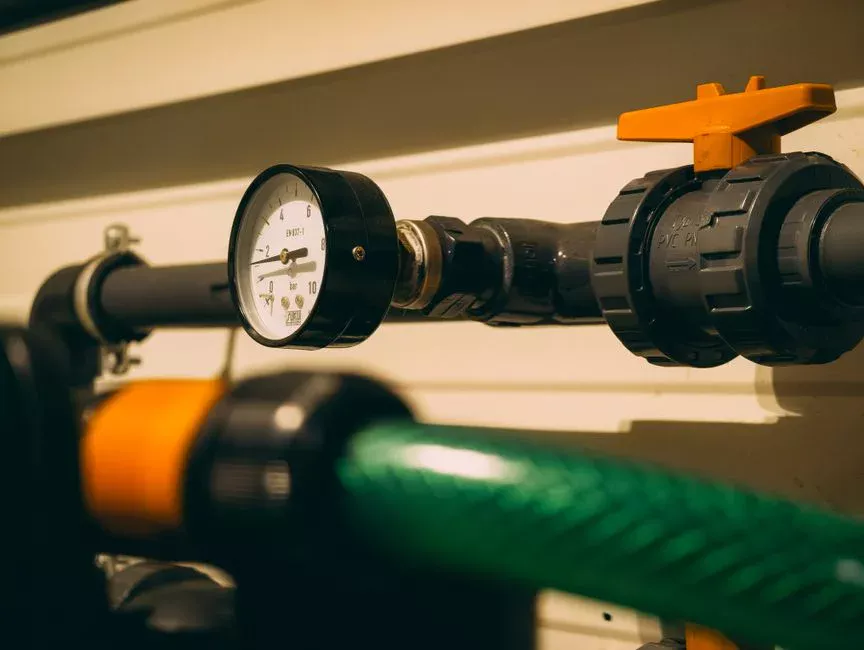
A comparable bid starts with the same design basis and assigns every treatment and validation obligation. The 2026 HydropureWater guide identifies under-specified pretreatment as a common cause of membrane-performance decline and validation failure, so the pretreatment boundary must be explicit in the contract.
| Procurement item | Evidence the buyer should require |
|---|---|
| Design basis | Feed characterization, flow basis, required permeate, recovery, compound profile, destination and operating envelope. |
| Treatment train | Biological, filtration, softening, chemical dosing, cartridge, RO and polishing responsibilities. |
| Performance evidence | Actual-duty data, pilot or bench results linked to the compound list and expected feed ranges. |
| Guarantee | Permeate quality, flow, recovery, test conditions, exclusions and remedy for non-compliance. |
| Equipment | Membrane elements, vessels, pump duty, controls, instrumentation, materials, electrical requirements and drawings. |
| Validation | URS, DQ, IQ/OQ/PQ responsibilities, test procedures, calibration, acceptance criteria and release documentation. |
| Operations | Cleaning, sanitization, membrane replacement, spare parts, training, alarm response and technical support. |
| Off-design and concentrate | Feed excursions, recovery limits, cleaning recovery, concentrate characterization and disposal route. |
Ask suppliers to explain how performance is affected by off-design feed, how cleaning recovery is demonstrated, who owns concentrate disposal and what triggers a corrective action. Do not rank bids by headline recovery or rejection alone. A parts, valves and filter-media schedule should reconcile the membrane and pretreatment consumables with the proposed guarantees, maintenance plan and operator access.
Frequently Asked Questions
How much does an RO membrane system for pharmaceutical wastewater cost?
The supplied research supports a component-based bid comparison but provides no defensible universal price. Request a quote based on required permeate flow, feed analysis, target permeate quality, recovery, pretreatment scope, equipment materials, controls, validation, installation and O&M. Compare bidders on the same design basis; otherwise differences in pretreatment or validation scope can make the quotations non-comparable.
What recovery rate should a pharmaceutical wastewater RO system use?
The industrial RO product catalog supports recovery rates up to 95%, but that is a catalog capability rather than the correct project setting. Actual recovery must follow feed chemistry, concentration risk, membrane behavior and the permeate objective. The 10–30 bar range reported for brackish-feed pharmaceutical RO units by the 2026 HydropureWater guide is a configuration reference, not a universal design rule. Ask the vendor to state the recovery design point, maximum recovery and limiting conditions.
Can one RO pass replace biological treatment for high-strength pharmaceutical effluent?
Not for the Acavent pilot case. The 1 m³ MBR removed BOD, COD and TSS, while RO removed the reported toxicity; mineral reconstitution was still required for the Daphnia magna acute-toxicity test (Acavent, 2019). The site data must determine whether biological pretreatment is needed, but the pilot shows why biological treatment and membrane separation should not be collapsed into one performance claim.
How should a buyer qualify an RO supplier?
Request the named design basis, membrane and pretreatment data, actual-duty evidence, test procedures, controls scope, validation deliverables, consumables, O&M support and the conditions attached to every performance guarantee. Also ask who owns off-design feed response, concentrate disposal and cleaning recovery. A supplier that cannot connect its guarantee to a defined feed range and acceptance test has not supplied a technically defensible bid.
What outlet tests are needed for pharmaceutical wastewater reuse?
Separate membrane-performance tests from reuse acceptance. Chemical and membrane tests may include conductivity, TOC and relevant API indicators, while the route may also require microbiological, endotoxin or toxicity testing. The 2026 Bioengineering review supports hybrid treatment matched to the target pollutants and site conditions, and the Acavent study shows why residual toxicity can remain an independent acceptance issue. The required suite must therefore follow the destination and receiving-water or discharge requirements.
Related Equipment
- industrial RO water treatment system — specifications, capacity range, and technical data