Why Reverse Osmosis Is Now Central to Pharmaceutical Water Treatment
Municipal wastewater treatment combined with ozonation, photolysis, and ultrasound removes only 20-60% of pharmaceutical residuals (WHO, reported in S2), so drug manufacturers cannot rely on incoming municipal water quality and must polish on-site. Reverse osmosis water treatment for pharmaceutical manufacturing is the only barrier that simultaneously removes ions, organics above ~100 daltons, bacteria, viruses, and endotoxins in a single step — and the only production method besides distillation that all three major pharmacopeias (USP, Ph. Eur., ChP) accept for water used in parenteral and biologic processing. The 2017 Ph. Eur. revision (monograph 0169) and the Chinese Pharmacopoeia explicitly list reverse osmosis as a permitted standalone WFI production method, while USP still requires distillation for WFI but recognizes RO for Purified Water and historically for WFI per FDA Inspection Technical Guide No. 36. The energy delta is what swings the economic argument: multi-effect distillation draws 5-10 kWh per m³ of distillate versus 0.5-1.5 kWh per m³ for RO at comparable permeate quality, a 5-10× OPEX advantage that compounds over a 20-year asset life (per FDA ITG No. 36 and S6). For a plant running 50 m³/h around the clock, that gap is roughly 2-4 GWh per year — material to any CFO reviewing capital recovery. Engineers specifying a new train should anchor the design on a properly sized industrial reverse osmosis water treatment system as the primary barrier, with downstream polish sized to the compendial grade the drug product demands.
How Pharmaceutical-Grade Reverse Osmosis Works
RO separates water from dissolved solutes by applying hydraulic pressure greater than the osmotic pressure of the feed across a semipermeable membrane. The active skin of a pharmaceutical RO membrane is roughly 0.25 μm thick on a ~100 μm support, with a nominal pore size of 0.0001 μm (per FDA ITG No. 36, 1980-10-21, still cited as the FDA baseline reference for pharmaceutical RO). That pore size is small enough to sieve species above ~100 daltons — covering most API residues, pyrogens, and microorganisms — by a combination of size exclusion and solution-diffusion through the polymer matrix. Water molecules enter the membrane by forming transient hydrogen bonds with the polyamide or cellulose acetate functional groups and are then pushed through under operating pressure of 10-30 bar for brackish-feed units, up to 70-80 bar for high-recovery seawater-grade units. Salts are rejected by a dielectric mechanism: ions with higher valence are repelled further from the membrane surface, so monovalent ions (Cl⁻, Na⁺) are rejected less efficiently than divalent ions (SO₄²⁻, Ca²⁺). The nominal rejection ratio for common ionic salts is 85-98% per FDA ITG No. 36, and endotoxin rejection is typically ≥99.9% (≥6-log) for intact thin-film composite polyamide membranes operated within their design envelope. Two commercial module formats dominate: spiral-wound, which sandwiches flat membrane sheets with mesh spacers and winds them around a permeate tube, and hollow-fiber, which uses fine capillary bundles. Spiral-wound is less prone to fouling and is the default choice for pharmaceutical duty. A typical train runs prefilter → pH adjustment → high-pressure pump → RO module → storage → polish, with periodic hot-water sanitization at 80-85°C (for heat-tolerant polyamide) to control biofilm without leaving chemical residues.
Membrane Materials, Pore Size, and Operating Envelope

Commercially available pharmaceutical RO membranes are made from cellulose acetate, polysulfone, and polyamide, with thin-film composite (TFC) polyamide now dominant in new installations because of higher rejection, wider pH tolerance, and better temperature range. Cellulose acetate operates 55-86°F (13-30°C) and requires continuous pH control (typically 4-6) to avoid hydrolysis, while TFC polyamide tolerates 35-113°F (2-45°C) and pH 2-11 during cleaning cycles. Typical membrane service life is 2-3 years with periodic thermal or chemical sanitization (per FDA ITG No. 36); a flux decline greater than 10-15% per month is the standard trigger for clean-in-place. The table below summarizes the rejection envelope the QA/validation lead should expect from a properly operated pharmaceutical RO element, drawing on FDA ITG No. 36 and current thin-film composite manufacturer datasheets.
| Contaminant class | Typical RO rejection | Compendial / engineering relevance |
|---|---|---|
| Monovalent ions (Na⁺, Cl⁻) | 85-90% | Drives the need for two-pass RO for WFI; single-pass permeate will exceed 1.3 μS/cm ceiling |
| Divalent ions (Ca²⁺, SO₄²⁻) | 95-98% | Critical for hardness control in pretreatment and downstream polish |
| Organics >100 Da (APIs, endotoxins) | 99%+ | Defines the pyrogen barrier; supports WFI production in Ph. Eur./ChP |
| Bacteria and viruses | >99.9% (≥6-log) | Primary microbiological barrier; per FDA ITG No. 36 and CDC hemodialysis studies |
| Endotoxins (LPS, 10-50 kDa) | >99.9% (≥6-log) | Meets WFI ≤0.25 IU/mL endotoxin limit when combined with controlled loop |
| Total dissolved solids (overall) | 90-98% | 300 ppm feed typically yields 6-30 ppm permeate, per FDA ITG No. 36 |
When rejection drifts outside these bands — most often after 18-24 months in service or following a feedwater excursion — the corrective action is not a parameter release but a membrane replacement using qualified replacement RO membrane elements that have been IQ/OQ-released against the original qualification batch.
Mapping RO Output to Pharmacopeia Water Grades
Every pharmaceutical water system specification starts with the same question: which compendial grade does the drug product require, and which RO configuration produces it on a continuous basis. The four grades that matter in 2026 are Purified Water (USP/Ph. Eur./ChP), Highly Purified Water (Ph. Eur. only), Water for Injection in bulk by distillation (USP and Ph. Eur.), and Water for Injection in bulk by reverse osmosis (Ph. Eur. monograph 0169 from 2017, reproduced in the Chinese Pharmacopoeia). The ladder is summarized below.
| Compendial grade | Conductivity (25°C) | TOC | Endotoxin | Microbial action limit | RO configuration required |
|---|---|---|---|---|---|
| Purified Water (USP/Ph. Eur./ChP) | ≤1.3 μS/cm | ≤500 ppb | Not specified | ≤100 CFU/mL | Single-pass RO + mixed-bed ion exchange or EDI polish |
| Highly Purified Water (Ph. Eur. 0169) | ≤1.3 μS/cm | ≤500 ppb | <0.25 IU/mL (in practice) | ≤10 CFU/100 mL | RO alone or RO + EDI; produced by methods equivalent to WFI |
| WFI by distillation (USP, Ph. Eur., ChP) | ≤1.3 μS/cm | ≤500 ppb | ≤0.25 IU/mL | ≤10 CFU/100 mL | Multi-effect or vapor-compression still; RO + still hybrid common |
| WFI by reverse osmosis (Ph. Eur. 0169, ChP) | ≤1.3 μS/cm | ≤500 ppb | ≤0.25 IU/mL | ≤10 CFU/100 mL | Two-pass RO in series (FDA ITG No. 36); single-pass RO permitted in some Ph. Eur. installations when combined with EDI and validated endotoxin control |
The dual-pass / two-RO-in-series configuration the FDA ITG specifically calls out for parenterals is not optional guidance — it is the conservative baseline for any WFI system that must survive an FDA pre-approval inspection. The Chinese Pharmacopoeia mirrors the Ph. Eur. position, so a Chinese-domestic generic plant running injectables can now justify a membrane-only WFI train. USP still requires distillation for WFI as of 2026, and that regulatory split is what determines whether a single RO suffices or whether a downstream still is mandatory.
RO-Only, RO+EDI, and RO+Still: Choosing the Right Train
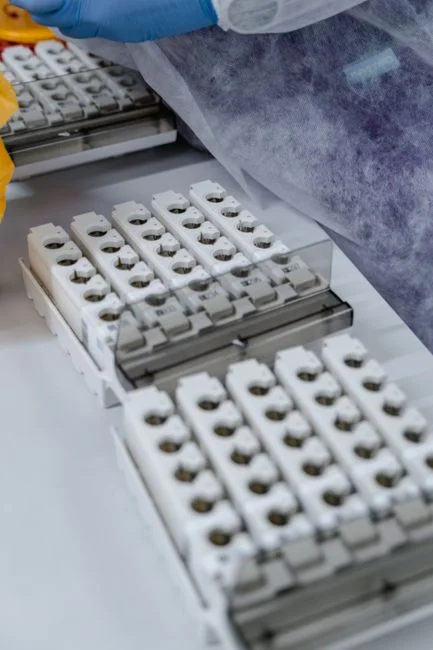
Procurement and process engineering should select the polishing strategy from the drug product, the target pharmacopeia, and the local energy cost — not from vendor preference. Three configurations cover essentially every pharmaceutical water specification in 2026. RO-only (single pass or double pass) is the lowest-energy option at 0.5-1.5 kWh/m³ and is compendially acceptable for Purified Water and, in Ph. Eur./ChP, WFI; it is the right choice for non-parenteral products and for plants targeting Ph. Eur. compliance. RO+EDI polishes RO permeate to 15-18 megohm-cm (resistivity, the reciprocal of conductivity at 0.055-0.067 μS/cm) without acid or caustic regeneration, eliminating the neutralization tank required by mixed-bed ion exchange and simplifying CIP. RO+multi-effect distillation is still required for USP WFI in the United States and remains the conservative choice for legacy injectables; energy is 5-10× higher than RO alone but the still is a redundant microbial and endotoxin barrier. The table below ranks the three trains across the dimensions a project team is most often asked to defend.
| Train | CAPEX index | OPEX index (energy + chemicals) | Endotoxin barrier | Pharmacopeia coverage | Typical 2026 footprint |
|---|---|---|---|---|---|
| RO only (single or double pass) | 1.0× | 1.0× | ≥6-log (membrane) | PW (all); WFI in Ph. Eur./ChP only | Smallest; skid-mounted |
| RO + EDI polishing | 1.3-1.5× | 1.1-1.3× | ≥6-log (membrane) + EDI polish | PW, HPW (Ph. Eur.); WFI in Ph. Eur./ChP with two-pass RO | Compact; adds EDI module |
| RO + multi-effect still | 2.5-3.5× | 5-10× | Distillation (no carry-over) | PW, HPW, WFI in USP/Ph. Eur./ChP | Largest; still + clean steam |
For most generics and API plants exporting to multiple regulatory zones, the practical answer is a two-pass RO with an EDI polishing stack downstream of the second pass — built on a properly sized industrial reverse osmosis water treatment system as the primary barrier, with the still retained only for the USP-WFI product line. Plants already operating distillation who need a quick capacity uplift can read the parallel RO for cooling tower blowdown reuse design to see how a second-pass RO skid integrates with existing pretreatment.
Pretreatment and System Design for Pharmaceutical Feed Water
The most common design error in pharmaceutical RO installations is under-specifying pretreatment, which then produces flux decline, microbial breakthrough, and validation failures 12-18 months after start-up. The pretreatment chain must keep total dissolved solids, turbidity, and microbial load of the prefiltered feed inside the membrane manufacturer's design envelope; the standard pharmaceutical target is Silt Density Index (SDI) <3 measured at 30 minutes on a 0.45 μm pad at 30 psi, per ASTM D4189. A typical chain runs raw water → multi-media pretreatment filter (sand + anthracite) → activated carbon (chlorine removal) → industrial water softener if hardness exceeds 1 ppm as CaCO₃ → 5 μm cartridge → RO → storage → loop return. Loop return velocity should be held at ≥1 m/s to prevent biofilm attachment, and an industrial UV sterilizer on the loop return is a common addition for legacy plants fighting periodic endotoxin excursions. The FDA ITG No. 36 baseline is two RO modules in series for parenteral duty — not optional — and in-line conductivity probes should be installed at the permeate of each pass and on the loop return so the control system can alarm at the compendial limit rather than at the failure point. Periodic thermal sanitization at 80-85°C (for heat-tolerant polyamide) or hot-water flush at 70°C is the standard pharmaceutical biofilm control, replacing chemical sanitants that leave residues and complicate extractables-and-leachables qualification. Plants designing a new feed train should also review the pharmaceutical plant wastewater treatment guide so the upstream effluent quality supports RO operation rather than fighting it.
Validation, Monitoring, and 2026 Compliance Considerations
Validation is where pharmaceutical RO systems live or die at audit, and the inspector will walk the same path every time: URS → DQ → IQ → OQ → PQ, with three consecutive successful conformance runs before routine production release. The membrane system itself should be qualified against ASTM D4194-95 and the process per ICH Q9 (R4). Continuous in-line monitoring of conductivity and TOC is required at the RO permeate and on the return loop; alarm setpoints are typically set 25-50% inside the compendial ceiling, not at the ceiling, so a drift triggers action before the product is at risk. Trend permeate flux, differential pressure, and salt passage per stage — a 10-15% step change in any of these parameters triggers a CAPA investigation rather than a routine CIP, because a sudden drift usually indicates a failed O-ring, a channeled cartridge, or the first 30 days of biofilm colonization, all of which need root-cause work. The 2026 regulatory trend is that EMA and Ph. Eur. inspectors are increasingly accepting real-time release (PAT/parameter release) for RO-produced WFI where the continuous monitoring is fully validated, while FDA inspectors still expect compendial grab-sample testing on a defined schedule. Plants planning a 2026 capex should also read the 2026 pharmaceutical wastewater compliance guide to align the new water train with the same site's wastewater compliance posture — an inspector who sees a high-purity water system backed by a marginal wastewater train will ask hard questions about the site's overall quality culture.
Frequently Asked Questions
Can reverse osmosis produce Water for Injection (WFI)?
Yes — but the answer depends on which pharmacopeia governs your market. Per FDA ITG No. 36, RO can meet the chemical, microbiological, and pyrogen tests of USP WFI when configured as two RO modules in series; the Ph. Eur. monograph 0169 (effective 2017) and the Chinese Pharmacopoeia explicitly list RO as a permitted standalone WFI production method, while USP still requires distillation for WFI as of 2026.
How much endotoxin does an RO membrane actually remove?
An intact thin-film composite polyamide RO membrane delivers ≥99.9% (≥6-log) endotoxin rejection, which is more than enough to meet the WFI ≤0.25 IU/mL endotoxin limit when the downstream loop is operated at ≥1 m/s and thermally sanitized periodically at 80-85°C (per FDA ITG No. 36 and HydropureWater field data, 2026).
Is reverse osmosis cheaper to operate than distillation for pharmaceutical water?
Yes, by a wide margin. Multi-effect distillation draws 5-10 kWh per m³ of distillate, while RO at the same permeate quality uses 0.5-1.5 kWh per m³ — a 5-10× energy delta that is the dominant OPEX driver in any 20-year lifecycle cost comparison.
What pretreatment does a pharmaceutical RO system need?
A pharmaceutical RO feed train must deliver an Silt Density Index (SDI) below 3 at 30 minutes, achieved through multimedia filtration, activated carbon, softening (when hardness >1 ppm as CaCO₃), and a 5 μm cartridge guard; under-specified pretreatment is the most common cause of premature membrane replacement and validation failures.
How is a pharmaceutical RO system validated for FDA/EMA inspection?
Validate the RO train under ASTM D4194 for the membrane system and ICH Q9 for the process, document IQ/OQ/PQ with three consecutive successful conformance runs before release, and stand up continuous in-line conductivity and TOC monitoring with alarm setpoints set 25-50% inside the compendial ceiling so drift triggers action before product is at risk.