Which Rules Control a Canoe Sewer Discharge?
Mining and metals plants near Canoe meet sewer pretreatment requirements by identifying the applicable regulatory layers, characterizing each wastewater stream, and designing treatment around the receiving sewer authority’s limits. The EPA’s 40 CFR Part 436 covers mine drainage, mineral-processing wastewater, and stormwater runoff, with its requirements incorporated into NPDES permits. An indirect sewer discharge also requires POTW discharge authorization and compliance with local pretreatment limits and any applicable categorical standards. Treatment may then progress through equalization, pH correction, precipitation, clarification, filtration, membrane polishing, sludge dewatering, and monitoring.
A direct discharge to receiving waters is different from an indirect discharge through a publicly owned treatment works (POTW). A direct discharger operates under an NPDES permit. An industrial discharger sending wastewater to a POTW must work through the local pretreatment program and obtain POTW discharge authorization, including applicable local limits and categorical pretreatment standards.
The federal mining rule is not a substitute for the sewer authority’s discharge specification. The EPA promulgated 40 CFR Part 436 in 1975 and amended it in 1976, 1977, 1978, and 1979; it covers mine drainage, mineral-processing operations, and stormwater runoff, with the requirements incorporated into NPDES permits (U.S. EPA, Mineral Mining and Processing Effluent Guidelines).
Mineral category matters. The EPA material identifies Dimension Stone, Lightweight Aggregates, Lithium, Ball Clay, Feldspar, Talc/Steatite/Soapstone/Pyrophyllite, and Garnet among the reserved subparts. Confirm whether the operation falls under an active subpart with numeric effluent limits or a reserved subpart, and then obtain the current requirements that apply to the specific mineral and discharge route.
| Regulatory layer | What it governs | Evidence a buyer must obtain |
|---|---|---|
| 40 CFR Part 436 and NPDES | Direct discharges to receiving waters; applicable mining requirements incorporated into NPDES permits | Current permit, applicable mineral subpart, monitoring conditions, and discharge points |
| POTW pretreatment program | Indirect industrial discharges entering a sewer | Discharge authorization, local limits, sewer authority contact, monitoring and reporting requirements |
| Categorical pretreatment standards | Pollutant limits applicable to the industrial category | Current category, subcategory, production information, and applicable numerical limits |
The supplied research does not identify a definitive Canoe POTW, permit, or numeric discharge limit. Do not size equipment until the current authority and permit conditions are in hand. The treatment and reuse implications of biological systems are discussed separately in biological treatment options for mining wastewater, but biological treatment is not a substitute for identifying the controlling discharge requirements.
Characterize the Wastewater Before Choosing Equipment
Mining wastewater treatment cannot be designed from average flow alone because the operation’s individual streams carry different contaminants and respond differently to treatment. The required design basis is a representative sampling round by stream, supported by average and peak flow and the specific parameters named by the sewer authority.
Separate acid mine drainage (AMD), mineral-processing water, tailings-pond effluent, and mine dewatering discharge. AMD may contain acidity and dissolved metals; process water can contain process reagents, dissolved solids, and potentially cyanide, ammonia, or chloramines; tailings-pond effluent can contain fine solids and leached metals; and dewatering discharge can vary with geology. Combining these streams before characterization can conceal the operating condition that controls equipment sizing.
Common mining wastewater constituents include high suspended solids, acidity, metals, and metalloids such as iron, arsenic, and manganese (Genesis Water Technologies, Mining Water Treatment: How to Meet Stricter Standards). Cyanide, ammonia, and chloramines may also occur in process-related streams (HydropureWater, 2026-02). The analytical package should therefore include flow, pH, TSS, metals, and every parameter identified by the POTW, with any process-specific constituents added to the list.
| Stream | Potential design drivers | Data required before sizing |
|---|---|---|
| Acid mine drainage | Acidity, dissolved metals, suspended solids | Representative pH, acidity or alkalinity, metal profile, TSS, and flow |
| Process water | Reagents, dissolved solids, metals, process-specific contaminants | Complete constituent analysis, production context, reuse specification, and flow history |
| Tailings-pond effluent | Fine solids, leached metals, residual process chemicals | Representative TSS, metals, relevant chemicals, and discharge variability |
| Dewatering discharge | Variable geology-dependent metal loading | Stream-specific sampling, peak pumping rate, and seasonal or rainfall variability |
Use peak discharge to size equalization and pumping requirements because peak flows drive basin volume and pump selection (HydropureWater, 2026-02). Average flow remains necessary for chemical consumption, labor, and operating-cost estimates, but it cannot define the hydraulic worst case.
If the project includes process-water reuse, add the treated-water specification and membrane-feed condition to the data request. A reuse target can justify a more extensive treatment train than sewer compliance alone, and it changes the evaluation from “can we discharge this?” to “what quality and recovery does the process require?” Before comparing treatment equipment or treatment valves and media, obtain current limits, representative chemistry, and a documented water balance.
Build a Treatment Train Around the Limit
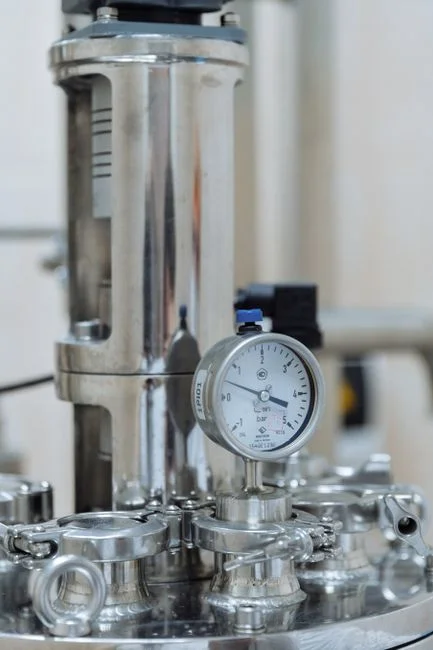
A defensible mining wastewater treatment train begins with equalization and ends with controlled sludge disposal and compliance monitoring. Each operation should remove a defined contaminant class so the next stage receives the condition its design assumes.
- Equalization. Balance variable flow and concentration before chemical dosing. Use peak-flow data and representative sampling to establish basin volume, pumping requirements, and the chemical feed condition.
- pH correction. Adjust acidity or alkalinity to support metal hydroxide precipitation. Genesis Water Technologies identifies pH adjustment as the first mining wastewater treatment step. A PMC review summarized in HydropureWater’s 2026-02 research describes lime raising pH above 10 before thickening in its cited treatment context.
- Coagulation and flocculation. Aggregate suspended solids and fine metal particles into flocs that can be separated. Select chemicals from the solids and metal profile rather than applying a fixed recipe.
- Clarification. Use DAF for buoyant floc, oil, or floatable fines; use lamella clarification where sludge volume and footprint drive selection. The Kennecott record identifies multimedia filtration and sulfide precipitation as treatment options recognized in the nonferrous-metals BAT record (1985-12).
- Filtration. Remove residual solids and colloids before sensitive downstream processes. Specify the expected outlet SDI, not inlet turbidity alone, to protect the next stage.
- Membrane polish. Use UF to remove colloids and suspended solids before RO, and RO where dissolved metals or salts remain above the applicable limit.
The proposed PLC-controlled chemical dosing skid should coordinate pH adjustment, coagulant, and flocculant feed with the clarifier and downstream controls. For solids separation, compare a DAF system for mining wastewater solids separation with a lamella clarifier for metal hydroxide sludge.
A multi-media filter for RO pretreatment handles residual solids and colloids. A hollow-fiber ultrafiltration system provides a further barrier before RO; the supplied product research specifies 0.03 μm PVDF membranes, operation from 2,000 to 40,000 L/h, and inlet turbidity up to 300 ppm (HydropureWater, 2026-02).
An industrial RO polishing system is justified only when dissolved metals or salts must be reduced further. AMPAC USA research summarized in the HydropureWater 2026-02 source reports 50–70% RO recovery for AMD feed, 70–85% for the RO stage of a zero-liquid-discharge train, and greater than 99% rejection of dissolved metals and salts. These are research values, not project guarantees or local limits.
| Stage | Primary purpose | Supplier evidence to request |
|---|---|---|
| Equalization and dosing | Stabilize flow, concentration, and pH | Design flow, detention basis, chemical range, control logic, and peak-condition data |
| Coagulation and clarification | Remove suspended solids and precipitated metals | Solids inventory, sludge yield, overflow and underflow criteria, and target outlet chemistry |
| Filtration and UF | Protect downstream membranes | Outlet SDI, turbidity, membrane material, flux basis, and cleaning strategy |
| RO | Reject residual dissolved metals or salts | Feed basis, recovery curve, rejection basis, concentrate route, and pretreatment dependency |
| Sludge and monitoring | Manage residuals and demonstrate compliance | Cake-volume basis, dewatering duty, flow/pH/conductivity instruments, and POTW recordkeeping plan |
Metal hydroxide sludge must leave the system through a defined route. A plate-and-frame sludge filter press is available in the supplied range of 1–500 m² filtration area (HydropureWater, 2026-02). The operating scope should connect sludge handling, chemistry dosing, clarification, filtration, membrane controls, flow, pH, conductivity, and POTW self-monitoring records.
Choose DAF, Lamella, Multimedia or UF by Site Conditions
The correct clarifier and polishing equipment depend on contaminant behavior, sludge characteristics, downstream requirements, and the receiving limit. No supplied source supports a universal “best” unit or a default flow, footprint, or guaranteed performance for a Canoe operation.
Choose DAF when the floc is buoyant or the wastewater contains oil, FOG, or floatable fines. HydropureWater’s supplied DAF research lists 13 standard models covering 4–300 m³/h, with automatic skimming (HydropureWater, 2026-02). The selection should still be checked against the actual floc density, air-to-solids requirement, polymer compatibility, and peak hydraulic load.
Choose lamella clarification when heavy or voluminous metal-hydroxide sludge and footprint are the controlling constraints. The supplied HydropureWater research reports surface loading rates of 20–40 m/h and chemical-consumption reductions of up to 30% for its lamella clarifiers (HydropureWater, 2026-02). Those values remain product research, not a guarantee for an unidentified Canoe wastewater.
Choose multi-media filtration when residual turbidity and colloids must be removed before RO or another sensitive process. Require an expected outlet SDI; inlet turbidity alone does not establish membrane protection. Choose UF when a higher solids barrier or membrane-feed protection is needed; the supplied 0.03 μm hollow-fiber systems include automatic backwash and air scour (HydropureWater, 2026-02).
| Site condition | Preferred equipment | Key design check |
|---|---|---|
| Buoyant floc, oil, FOG, or floatable fines | DAF | Floatability, air-to-solids ratio, polymer compatibility, and skimming duty |
| Heavy metal-hydroxide sludge and limited footprint | Lamella clarification | Sludge volume, underflow solids, plate spacing, and surface-loading basis |
| Residual solids and colloids before membranes | Multi-media filtration | Target outlet SDI and backwash or media-maintenance requirements |
| Strict membrane-feed protection | UF | Feed turbidity, membrane material, flux basis, and backwash cycle |
| Dissolved metals or salts above the limit | RO after solids removal | Feed chemistry, recovery curve, scaling tendency, pretreatment, and concentrate disposal |
The detailed DAF versus clarifier selection for mining wastewater framework is useful for developing the comparison, but the final selection should use Canoe-area stream chemistry, sewer limits, and the reuse objective.
Turn the Design Basis into a Compliant Equipment Proposal
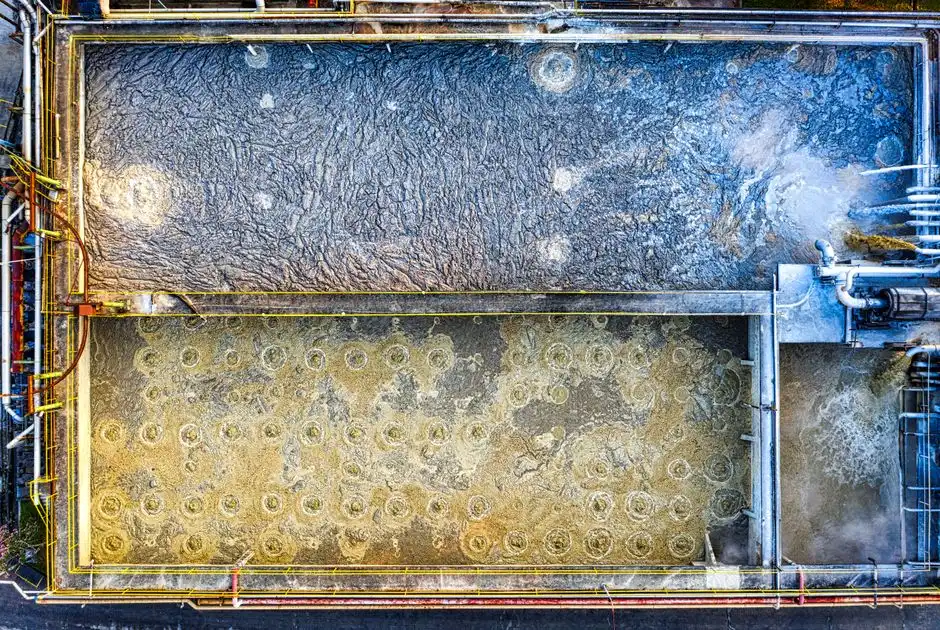
A comparable equipment proposal must identify the governing permit, discharge limit, design flow, influent chemistry, treatment sequence, utilities, controls, sludge route, and performance evidence. A generic mining template or nameplate flow rate cannot establish that the proposed system will satisfy the receiving sewer authority.
Require the proposal to reference the current NPDES permit if applicable, the POTW discharge authorization, applicable categorical standards, and every governing numerical limit. Reject claims based only on “industry standard” treatment. The supplied research does not publish complete-system prices for a Canoe operation; a defensible quotation requires site-specific average and peak flow, representative influent chemistry, current local limits, and recovery objectives.
Ask each supplier to define performance by stream and provide a treatment sequence, mass balance, chemical consumption basis, sludge-generation estimate, control philosophy, utility requirements, commissioning plan, and pretreatment dependencies. Clarification capacity must reflect peak flow; chemical dosing must reflect measured alkalinity or acidity; filtration and UF must have defined feed conditions; RO must include concentrate management.
For process-water reuse, request a recovery curve rather than relying on a nameplate recovery rate. AMPAC USA research summarized by HydropureWater in 2026-02 reports a 40–60% reduction in freshwater intake from internal RO-enabled reuse compared with once-through operation, but actual savings require a site water balance.
Check that chemical dosing, clarification, filtration, membrane controls, sludge handling, and compliance monitoring form one operating strategy. This prevents a membrane skid from being specified without adequate upstream solids removal or a treatment train from being purchased without a permitted sludge destination. A supplier should also show comparable installations with the same unit operations, comparable chemistry, and a similar hydraulic basis; this is more informative than a general reference to integrated water purification.
Before issuing the purchase order, attach the current permits and limits, representative laboratory results, flow records, chemical analyses, reuse targets, utility availability, sludge-disposal route, and a supplier performance guarantee tied to the final design condition.
Frequently Asked Questions
Does 40 CFR Part 436 define all sewer pretreatment limits for a mining plant near Canoe?
No. It is relevant to mining wastewater and is incorporated into NPDES permits, but an indirect sewer discharge is also governed by the POTW’s discharge authorization, local pretreatment limits, and any applicable categorical standards (U.S. EPA, Mineral Mining and Processing Effluent Guidelines). Obtain the current Canoe-area sewer authority’s requirements before finalizing equipment design.
What data should be provided to size a Canoe mining wastewater treatment system?
Provide average and peak flow, representative sampling results for each stream, pH, TSS, metals, any process-specific contaminants, current POTW limits, and reuse objectives. Use peak flow to establish equalization and pumping conditions. The supplied research does not establish a universal flow band for Canoe operations, so do not size from a generic mining range.
Should the system use DAF, lamella clarification, multimedia filtration, UF, or RO?
Use DAF for buoyant floc, oil, or floatable fines; lamella where sludge volume and footprint govern; multimedia filtration for residual solids and colloids; UF for tighter membrane-feed protection; and RO only where dissolved metals or salts must be rejected. The supplied product research lists DAF capacity of 4–300 m³/h, lamella surface loading of 20–40 m/h, and 0.03 μm UF membranes, but these are not site guarantees (HydropureWater, 2026-02).
How should cost and a supplier quotation be evaluated for this equipment?
Request a quotation tied to the same design inputs: peak and average flow, stream-specific chemistry, current local limits, sludge route, utilities, and recovery objectives. Comparable pricing requires the same scope because chemical demand, clarification duty, filtration area, membrane pretreatment, and controls change with those inputs. The supplied research contains no complete-system Canoe price point, so a generic equipment nameplate should not be used as a budget basis.
What creates the greatest compliance risk before sewer discharge?
The main risks are designing to the wrong rule, sampling an unrepresentative stream, omitting peak-flow conditions, under-sizing solids removal before membranes, leaving sludge disposal undefined, or separating controls from compliance monitoring. For a metals wastewater application, compare biological and physical treatment roles in the MBR and activated-sludge comparison for metals wastewater, then include permit approval, integrated controls, sludge handling, and self-monitoring in the project scope.