
Why Containerized MBR Is the Right Fit for San Antonio Camps and Residences
Sizing a containerized MBR STP in San Antonio starts with converting the design population into average dry-weather flow — roughly 50 gallons per capita per day, per Pure Aqua's containerized MBR sizing assumption — and applying a peak factor of 2.0–2.5 to handle morning and shift surges. Convert to m³/day, size the aerobic reactor to keep mixed-liquor suspended solids between 6,000 and 12,000 mg/L (SIGMADAF's MBR operating range), then select membrane area so flux stays below 15–20 LMH, and match the skid to a 20' or 40' high-cube ISO container — MENA-Water cites more than 1,200 m³/day in a single 40-foot ISO container.
Containerized MBRs ship pre-assembled inside 20' or 40' high-cube ISO containers, enabling plug-and-play installation and relocation for temporary construction camps, RV resorts, or phased subdivisions (MENA-Water, via HUBER Technology). The plug-and-play concept matters in South Texas where labor mobilization costs and TCEQ permitting clocks are both unforgiving; a skid that arrives factory-tested, with quality verification done before shipment, shortens the path from delivery to commissioning.
The MBR footprint advantage is also decisive on tight San Antonio infill sites. Because MBR biomass is held at 6,000–12,000 mg/L rather than the 2,000–4,000 mg/L typical of conventional activated sludge, the reactor volume shrinks dramatically, and the secondary clarifier disappears entirely (SIGMADAF). Pure Aqua's MBR-C specifies 460V/3Ph/60Hz with a 68–86°F operating range and a design point of 68°F; San Antonio summer wastewater temperatures can sit above that, so diffuser oxygen-transfer efficiency and blower sizing must be checked against the local design wet-bulb rather than the vendor's catalog number.
Regulatory routing is the other reason to standardize on a containerized MBR. Discharges in Texas fall under 30 TAC Chapter 285 (on-site sewage facilities) for flows below 5,000 gpd, or TCEQ Chapter 317 (TPDES) for larger flows, and the near-reuse-quality effluent an MBR produces — sub-1 µm solids separation — simplifies compliance with either path. For a workforce camp or RV resort owner weighing a buried package plant against a skid, the HydropureWater integrated containerized MBR skid framing is the relevant decision point.
Step 1 — Convert Design Population into Average Dry-Weather Flow
Every defensible sizing sheet starts with a defensible flow number. Pure Aqua's containerized MBR sizing table uses 50 gallons per capita per day (≈190 L/day) as the default residential design assumption, which is the figure that should anchor any subdivision analysis before local data overrides it.
For workforce or vacation camps, increase the per-capita assumption to 75–100 gpd to capture longer showers, laundry throughput, and food-service waste. Where measured data exists from an existing camp or comparable South Texas facility, the measured number should replace the textbook figure; absent that, the 75–100 gpd range is the working assumption to document in the basis-of-design report.
Once average dry-weather flow is set, apply a peak factor of 2.0–2.5 when sizing pumps, equalization, and membrane peak flux for residential and camp duty. The factor is required because morning shower surges, shift changes at labor camps, and meal-time kitchen discharge do not average out at the daily level. Equalization volume should be sized to absorb the diurnal swing before the membrane sees it.
Finally, layer a 1.1–1.2 safety multiplier for high-temperature months. San Antonio summers raise both BOD loading per capita and infiltration/inflow into the collection system, so effective hydraulic and organic load on the MBR climbs even when the population count does not. The combined output of this step — average flow in m³/day, peak flow in m³/day, and a 24-hour equalization target — is the input package for the reactor volume calculation. Pretreatment selection begins here, with a rotary bar screen pretreatment protecting downstream membranes from hair, lint, and grit.
Step 2 — Match the Aerobic Reactor Volume to BOD Loading
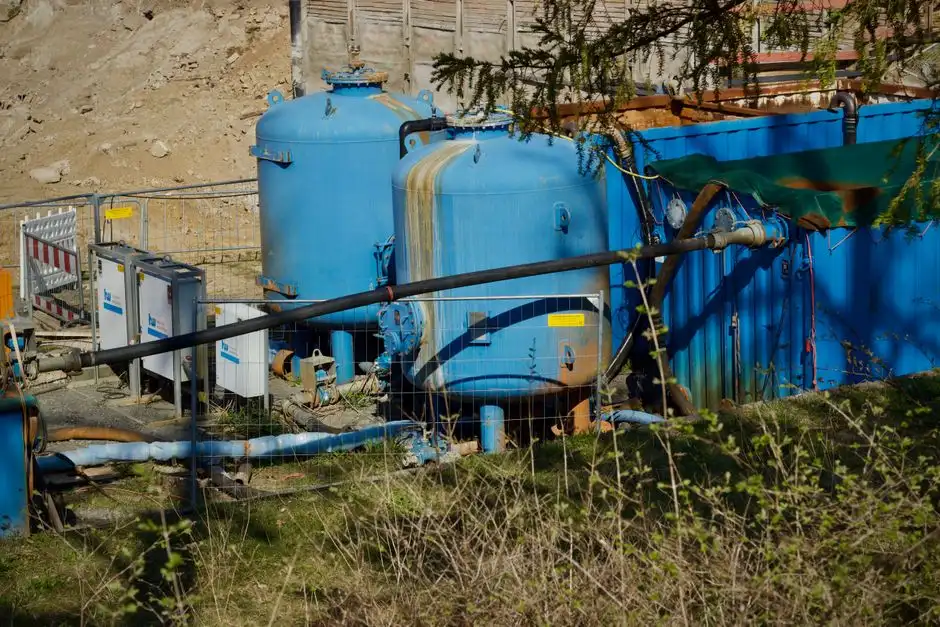
In submerged MBRs, mixed-liquor suspended solids are held between 6,000 and 12,000 mg/L — far above the 2,000–4,000 mg/L typical of a conventional clarifier train, which directly reduces required reactor volume for a given organic load (SIGMADAF). The MLSS window is the design lever: pushing MLSS up shrinks tankage but raises viscosity and reduces oxygen-transfer efficiency, so the engineer has to pick a point inside the window that the aeration system can actually sustain.
Domestic wastewater BOD typically runs 200–250 mg/L. The aerobic volume is sized so the food-to-microorganism ratio sits in the 0.05–0.15 kg BOD/kg MLSS·day range commonly used for MBR design, with hydraulic retention time long enough to complete nitrification in a single aerobic tank or in an aerobic-plus-anoxic configuration where total nitrogen removal is required (SIGMADAF notes the anoxic pre-chamber option for nitrogen-limited discharges).
Fine-bubble diffusers must be specified for the actual summer wastewater temperature in San Antonio, not the catalog reference. Oxygen transfer efficiency drops as temperature rises, and the same aeration grid that scours the membranes to control fouling also has to deliver enough standard oxygen to keep dissolved oxygen above 2 mg/L in the mixed liquor. Pure Aqua's MBR-C places coarse-bubble diffusers at the membrane module for air-scour, and fine-bubble diffusers in the aeration tank for biomass growth — both streams have to be reconciled against the local design temperature.
Pretreatment protects this balance. A rotary drum screen at ~1.5 mm perforation (per Pure Aqua's MBR-C specification) keeps hair, lint, and grit out of the bioreactor — a particularly important measure for camp laundry waste, where fibrous material will blind flat-plate and hollow-fiber membranes alike.
Step 3 — Select Membrane Area and Container Format
Membrane selection sets the effluent quality bar and the container footprint. SIGMADAF's flat-plate membranes use a 0.4 µm nominal / 0.2 µm average pore size, providing a near-absolute barrier to biomass and most bacteria; Pure Aqua's MBR-C hollow-fiber is tighter still at 0.04 µm nominal pore size. Either geometry works for camp duty, but the operating envelope differs — flat-plate cassettes tolerate higher suspended solids and are easier to clean in place, while hollow-fiber packs deliver finer nominal filtration in a smaller cassette footprint.
Net membrane flux should be held at or below 15–20 L/m²·h (LMH) for municipal and camp duty to control fouling; peak instantaneous flux may briefly exceed this during morning peaks, but the average daily flux must stay inside the limit, otherwise transmembrane pressure climbs and chemical cleaning frequency rises (SIGMADAF).
Container selection follows directly from the resulting membrane area. MENA-Water documents more than 1,200 m³/day in a single 40-foot ISO container, with quality testing completed at the factory before shipment. The practical mapping used in the field is: 20' HC skids for flows up to ~200 m³/day, 40' HC for up to ~1,200 m³/day, with multiple 40' skids run in parallel for larger camp clusters. The HydropureWater integrated containerized MBR skid covers 10–2,000 m³/day in a single product line, simplifying the container-to-capacity mapping for South Texas projects, and the DF-series PVDF flat-sheet membrane cassettes are offered in modular configurations to scale inside that envelope.
| Design Population (50 gpd/capita) | Average Dry-Weather Flow | Peak Flow (×2.0–2.5) | Recommended Container Format | Typical Membrane Cassette Configuration |
|---|---|---|---|---|
| 200–400 people | 38–76 m³/day | 76–190 m³/day | 1 × 20' HC skid | Single DF-series cassette stack, 80–150 m² |
| 400–1,000 people | 76–190 m³/day | 190–475 m³/day | 1 × 40' HC skid | Two DF-series cassette stacks, 150–300 m² |
| 1,000–2,500 people | 190–475 m³/day | 475–1,190 m³/day | 1 × 40' HC skid (high-capacity) | Three to four DF-series cassette stacks, 300–500 m² |
| 2,500–6,000+ people | 475–1,140+ m³/day | 1,190–2,850+ m³/day | Multiple 40' HC skids in parallel | Distributed cassette stacks across parallel skids, up to 1,200+ m³/day per 40' unit |
Engineers translating this into a sizing sheet should treat the table as a starting envelope, then refine with vendor-specific cassette areas and the project's own equalization volume.
Step 4 — San Antonio Climate and Site Adjustments
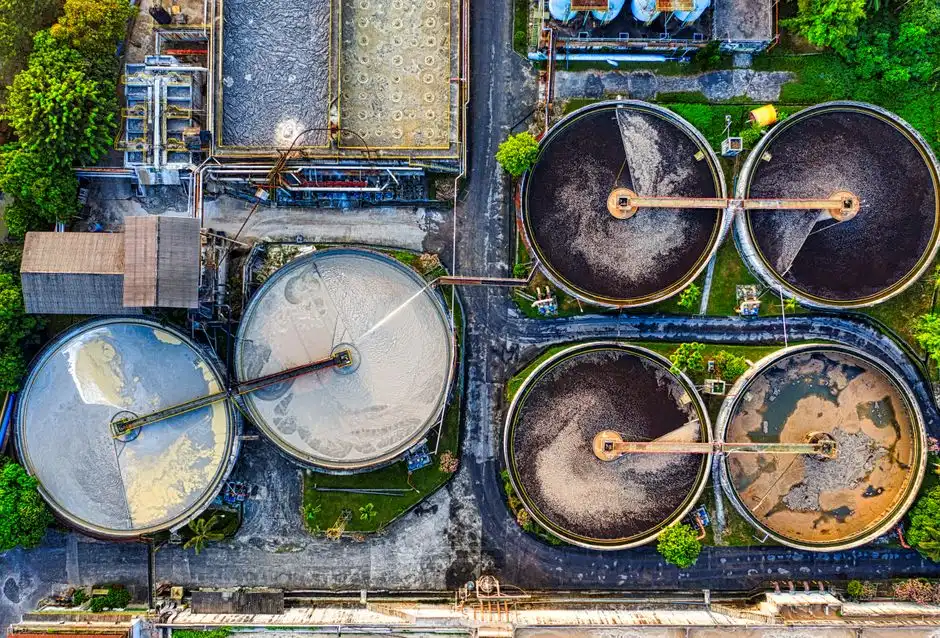
The numbers above hold only if the local climate is respected. Pure Aqua's MBR-C operating range is 68–86°F (20–30°C) with a design point of 68°F; ambient wastewater in San Antonio can exceed the upper bound in shallow collection lines during July and August, which forces derating of diffuser oxygen-transfer efficiency and may require a covered, shaded, or insulated container to protect instrumentation from solar gain and heat soak.
The air-scour design that keeps membranes clean has to be sized for the higher air demand that comes with warm, low-DO mixed liquor. Pure Aqua places coarse-bubble diffusers at the membrane module specifically for this purpose, but the blower must be selected against the local design condition rather than a generic 20°C rating, otherwise scour airflow drops and fouling accelerates through the hottest months.
For camp sites with intermittent occupancy — RV resorts with weekday/weekend swings, seasonal labor camps — specify equalization for at least 24 hours of average flow so the MBR can run at steady state during low-load periods. Without equalization, the membrane sees feast-or-famine flux, which is the single most common driver of premature fouling in packaged MBRs.
Fats, oils, and grease from camp kitchens must be removed upstream. SIGMADAF specifically warns that FOG and hair foul flat-plate membranes and should be intercepted before the bioreactor; a DAF unit for FOG removal upstream of the MBR is the typical guard, sized to the camp's kitchen discharge profile. The pretreatment chain — bar screen, then DAF or grease trap, then bioreactor — is what keeps a containerized MBR inside its design flux band in South Texas summer conditions.
Step 5 — Compliance, Reuse, and Maintenance Planning
The engineering design only matters if it clears the regulatory checkpoints the project will be judged on. For surface discharge or Type I reclaimed water for irrigation, TCEQ Chapter 317 sets effluent BOD/TSS targets that an MBR's <1 µm solid separation easily meets. Containerized MBRs in this class routinely produce BOD and TSS well below 5 mg/L, which is the same band Type I reclaimed water demands before disinfection.
Disinfection still has to be specified. UV or chlorine disinfection is required downstream to meet fecal coliform limits for irrigation reuse, and the disinfection module should be planned inside the same container or as a paired skid so the package arrives as a single compliant unit. A UV disinfection skid is the common pairing for camp installations where chemical handling is undesirable.
Maintenance planning is where most camp operators underestimate the operating commitment. SIGMADAF and MENA-Water both note that only one or two chemical cleanings per year are needed — typically chlorine, citric acid, or caustic — which keeps annual O&M low for a camp operator with limited staff. MBR surplus sludge is small but must still be hauled to a permitted facility, and the volume and frequency should be quoted to the owner during the bid stage so it is not a surprise in year one. For broader effluent quality issues that surface after startup, the MBR effluent troubleshooting guide covers the field fixes; for off-site supervision, remote monitoring for containerized plants is the operating model most EPC firms now specify.
Frequently Asked Questions
What drives the CAPEX on a containerized MBR for a 500-person camp near San Antonio?
The dominant cost drivers are membrane surface area (set by flow and flux limit), the size and number of ISO containers (20' HC vs 40' HC), the aeration blower rating (set by summer design temperature), and pretreatment — typically a rotary bar screen plus a DAF for FOG. The right input to request from each vendor is a priced Bill of Materials keyed to the design flow and the MLSS window, so the bids can be compared on an equivalent basis rather than on catalog list price.
How do I pick between flat-plate and hollow-fiber membranes for a South Texas camp?
Flat-plate cassettes (such as SIGMADAF's 0.4 µm nominal CPVC plates or the DF-series PVDF flat-sheet cassettes) tolerate higher MLSS and are easier to clean in place, which suits camp sites with intermittent staffing. Hollow-fiber modules (such as Pure Aqua's 0.04 µm nominal PVDF) deliver a tighter nominal pore in a smaller footprint but require more careful flux control. The decision input to request from vendors is a fouling-rate curve at the project's design MLSS and temperature, not a generic spec sheet.
How long does delivery and commissioning take once I issue a PO?
Containerized MBRs are pre-assembled and factory-tested, which compresses site work to civil foundations, container placement, and utility hookups. The variable that drives the schedule is permit lead time at TCEQ and the local stakeholder, not the skid build itself; the input to request is the vendor's confirmed factory slot plus a Gantt showing the critical path between purchase order and commissioning.
What is the permitting path for a containerized MBR in Bexar County?
For flows below 5,000 gpd, the project routes through 30 TAC Chapter 285 (on-site sewage facilities) with the local OSSF authority. Above 5,000 gpd, the path is TCEQ Chapter 317 (TPDES), and an MBR's near-reuse-quality effluent simplifies the reuse or land-application application. The right compliance input to obtain before sizing is the design flow at the discharge point and the intended reuse or disposal route, because the regulatory ceiling changes at 5,000 gpd and the effluent targets differ between surface discharge and Type I reclaimed water.