Why the Lake Butler Pretreatment Question Matters in 2026
Pretreatment under 40 CFR Part 403 places the burden on the industrial discharger, not the municipal plant, to remove regulated pollutants before they reach a publicly owned treatment works (POTW). The 2024 Waterkeeper Alliance study made the gap concrete: of 22 wastewater treatment facilities examined, only one had any PFAS limits in its discharge permit and none had PFAS removal technology. The Sumter, South Carolina plant logged PFAS at 118 ppt upstream and 228 ppt downstream over 33 days, a 107 percent increase, and downstream state testing at Brewington Lake reached 7,600 ppt, while adverse health effects are documented at 2 ppt. For Lake Butler operators, that evidence reframes the question from "do we hold a permit" to "what is our facility stripping before the sewer sees it."
Lake Butler, an Orange County, Florida waterbody, runs 17 active water quality sampling stations and 3 hydrologic sampling stations with 358,894 samples on record, the earliest 02/28/1967 and the latest 10/16/2026 per the Orange Water Atlas. Any chemical plant tied into the same collection system is data-visible to the county and to downstream monitoring programs, and biosolids leaving the receiving POTW can carry PFAS into Florida soils. The January 2025 withdrawal of the EPA federal PFAS pretreatment rule left regulation to state agencies and existing Clean Water Act permit conditions, which means local limits, SIU permits, and advanced treatment are no longer optional for a 2026 sign-off.
Lake Butler Water Quality Snapshot (Orange County, FL)
The Lake Butler record on the Orange Water Atlas contains 17 water quality sampling locations, 3 hydrologic sampling locations, and 358,894 samples spanning 02/28/1967 through 10/16/2026. That intensity is a transparency lever for any chemical plant discharging through a connected collection system. A chronic or acute excursion tied to a single industrial user is statistically likely to show up in county summaries, and the public-facing atlas means a permit reviewer, downstream user, or plaintiff's attorney can pull the same data the engineer pulls.
The research supplied does not include numeric thresholds for Lake Butler itself, so the engineer should pull the most recent sampling report from the water atlas and the local POTW before the next permit cycle. The table below captures the structural record that does exist.
| Parameter | Value (Orange Water Atlas) |
|---|---|
| Water quality sampling locations | 17 (active) |
| Hydrologic sampling locations | 3 |
| Total samples on record | 358,894 |
| Earliest sample | 02/28/1967 |
| Latest sample | 10/16/2026 |
Request the parameter list, the most recent annual summary, and any exceedance logs from the receiving POTW to accurately assess effluent impact.
The 40 CFR Part 403 Pretreatment Framework a Chemical Plant Must Follow
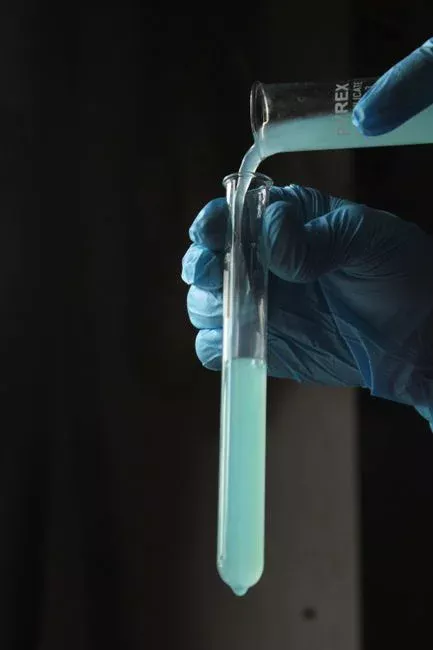
40 CFR Part 403 establishes the federal requirements for industrial users to characterize, classify, limit, and document their waste streams under POTW enforcement authority. For a chemical plant, four steps determine whether the next permit cycle is a renewal or a notice of violation.
- Characterize the waste stream. List regulated pollutants from 40 CFR Part 413 (organic chemicals), Part 414 (inorganic chemicals), and any categorical standards tied to the plant's SIC code. Include PFAS precursors, even if no limit exists today, because the 2024 Waterkeeper Alliance study showed permits frequently omit PFAS entirely.
- Confirm Significant Industrial User (SIU) status with the local POTW. Categorical standards, best management practices (BMPs), and self-monitoring reporting deadlines all hinge on this classification. An SIU designation is the trigger for baseline monitoring reports, 90-day compliance reports, and routine sampling.
- Map each pollutant against the POTW's local limits. Include narrative standards: "no pass-through," "no interference," and any slug-load prohibitions. Local limits are the legally binding number; categorical standards are the floor.
- Build the pretreatment engineering report. Tie each pollutant above limit to a specific removal step in the treatment train, with design basis, expected effluent quality, and residuals handling.
The engineer must also document slug-load control, as batch chemical campaigns, pH swings, solvent surges, and temperature spikes are classic "interference" triggers that lead to compliance actions.
Treatment Train for Chemical Plant Sewer Pretreatment
A workable chemical plant pretreatment train stacks unit operations so each one removes a class of pollutant the next stage cannot handle. The block diagram below is the version an EHS manager can present to a CIU review board.
| Stage | Unit Operation | Target Pollutants |
|---|---|---|
| 1. Headworks | Rotary mechanical bar screen | Rags, plastics, debris, protective PPE fibers |
| 2. Equalization | EQ basin with pH control and automatic chemical dosing | Flow and concentration spikes, pH excursions |
| 3. Primary separation | Dissolved air flotation system or lamella clarifier | Emulsified oils, FOG, colloidal matter, suspended solids |
| 4. Biological (when organics are high) | MBR or WSZ A/O | COD, BOD, biodegradable organics |
| 5. Advanced filtration for PFAS | UF followed by industrial reverse osmosis system | Dissolved PFAS, trace metals, residual organics |
| 6. Disinfection | Chlorine dioxide or UV-C | Fecal coliform, bacteriological load |
Start with a rotary mechanical bar screen to remove debris that would otherwise shred downstream pumps and foul membranes. Equalization follows, with a neutralization basin and automatic chemical dosing for pH adjusters, coagulants, and flocculants; this is the primary defense against slug-load violations. A dissolved air flotation system or lamella clarifier handles emulsified oils and FOG, and the supplier surface loading range of 20–40 m/h is a usable design anchor for sizing. When the influent COD/BOD is high enough to risk pass-through, an MBR or WSZ A/O step takes organics down to a level the membranes can handle. Polishing with UF and an industrial reverse osmosis system is the PFAS control point, and disinfection closes the train against bacteriological violations.
Designing the PFAS-Specific Stage of the Train
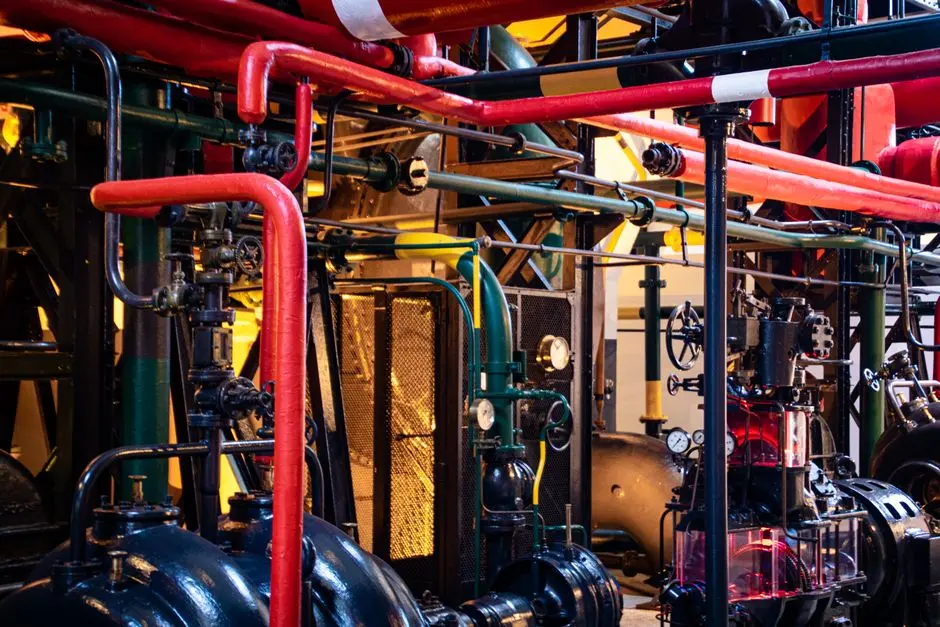
Reverse osmosis and other advanced filtration systems reduce PFAS levels in water by more than 99 percent, according to the 2024 Waterkeeper Alliance report. PFOA is classified by the International Agency for Research on Cancer as a carcinogen and PFOS as a possible carcinogen, so any chemical plant using fluorinated surfactants, fluoropolymers, or PFAS-containing feedstocks should plan for destruction or capture of the concentrate stream rather than sending it back through the head of the plant.
The January 2025 withdrawal of the EPA proposal did not strip regulatory authority. State agencies and POTWs retain Clean Water Act leverage to demand PFAS-specific local limits and discharge monitoring, and most current permits do not list PFAS at all, which is the gap an EHS manager should close in the next application. Equip the PFAS stage with an industrial reverse osmosis system and RO and UF membrane elements sized for the design flow, with redundancy on the high-pressure pump and a documented concentrate handling plan.
Permit-Readiness Checklist for 2026
EHS managers can follow this action list this quarter to ensure a clean permit file. Pull the last 12 months of self-monitoring reports and the most recent POTW compliance inspection letter; the inspection letter is the document that tells you what the control authority actually cares about.
Re-screen the influent for PFAS precursors such as fluorinated surfactants, polymers, and mist suppressants, even if no PFAS limit exists in the current permit, because the 2024 Waterkeeper Alliance study showed permits frequently omit PFAS entirely. Confirm slug-load control plans for batch chemical campaigns, including pH, temperature, and solvent surges that could trigger an "interference" violation. Document biosolids handling: PFAS in influent concentrates in sewage sludge, and the Sumter plant alone produces over 1,000 tons of PFAS-laden sludge per year that is shipped off-site, so the chemical plant should know where the receiving POTW's biosolids end up. A practical framing for the same challenge in semiconductor operations is captured in our guide to semiconductor pretreatment compliance, and high-flow facilities can borrow from high water volume management for manufacturing. For the primary separation step, the tradeoffs are detailed in DAF vs clarifier for chemical wastewater.
Frequently Asked Questions
What does a chemical plant near Lake Butler actually spend to meet 2026 pretreatment limits?
The supplied research does not include a cost figure for bringing a chemical plant into 2026 pretreatment compliance, so any number an equipment vendor quotes is project-specific. The inputs a buyer must request are: design flow (m³/h), influent characterization (COD/BOD/TSS/metals/PFAS), target effluent quality versus the POTW's local limits, and the cost of concentrate and biosolids handling. Without those four numbers, a CAPEX range is not defensible.
How do I pick a pretreatment equipment supplier without inheriting the engineering risk?
Ask for the supplier's reference list of operating chemical plant pretreatment systems, the membrane replacement interval and cost, and the documented effluent quality on a comparable influent. Confirm the supplier can supply an MBR membrane bioreactor, DAF, and RO under one performance warranty, because a multi-vendor train with split warranties is the most common source of post-commissioning disputes. Lead time and delivery commitments should be written into the purchase contract, not stated as "typical."
What is the enforcement risk if our permit does not list PFAS today?
The 2024 Waterkeeper Alliance study found that most permits do not list PFAS at all, but the Clean Water Act still prohibits discharge of any pollutant without permit coverage, and the federal PFAS pretreatment rule was withdrawn in January 2025, leaving state agencies and POTWs to act. The realistic enforcement risk is a local limits revision, a special condition, or a "no pass-through" call, not a federal PFAS citation. The mitigation is documented influent screening, an installed advanced filtration stage, and a concentrate handling plan.
Where do the biosolids from the receiving POTW end up, and why does that matter to us?
The research does not identify the biosolids destination for the specific POTW serving Lake Butler, so the engineer should request the receiving POTW's most recent biosolids management plan. The relevance is that the Sumter, South Carolina plant alone produces over 1,000 tons of PFAS-laden sewage sludge per year, much of which is shipped off-site, and a chemical plant that fails to control PFAS at the front end becomes a contributor to that downstream loading even if the POTW's effluent numbers look clean.