What Whitehall Mining and Metals Plants Are Actually Discharging in 2026
Whitehall-area aggregate washing, crushing, and primary-metals operations fall under the US EPA's ore mining and dressing point source category (40 CFR Part 436), which governs suspended solids, metals, and oil/grease (per the 40 CFR Part 436 mining/metals pretreatment guide). The category covers three stream types a plant engineer must manage: crushing and washing water with high total suspended solids (TSS) and grit; flotation concentrate bleed carrying residual reagents and oil/grease; and clarified process water returning to the mill, which carries the lowest solids load.
Dissolved metals—iron, manganese, and aluminum—typically co-occur with TSS and may require pH adjustment and precipitation chemistry upstream of the primary separator or as a polishing step. The single biggest design constraint is variability: shift cycles, crusher startups, and mill swings produce slug loads that punish equipment with long residence times and reward units that can absorb those swings without losing effluent quality.
DAF vs Clarifier: How Each Unit Actually Works on a Mining Stream
A dissolved air flotation (DAF) clarifier saturates a side stream with air, then releases it through nozzles that generate 30–50 micron microbubbles; these bubbles attach to floc-conditioned solids and lift them to the surface, where a paddle skimmer removes the float while heavier settleable solids drop into a bottom collection zone and are augered out, per Clearwater/SigmaDAF product literature (2026-04). A conventional gravity clarifier—circular or lamella—relies on density contrast; the lamella design uses inclined plates to multiply effective settling area and reach surface loadings a circular basin cannot match, per the HydropureWater lamella clarifier spec (product 10). DAF requires upstream coagulant and flocculant dosing to build a floatable floc, whereas a lamella clarifier tolerates milder chemistry but breaks down when oil/grease films coat the plates. DAF produces a thicker float sludge suited to a downstream plate-and-frame filter press, while clarifier underflow runs wetter and is harder to dewater. DAF trades chemistry and energy for footprint, speed, and sludge dryness, while a clarifier trades residence time and footprint for chemistry simplicity.
Side-by-Side Comparison: DAF vs Clarifier for a 40 CFR Part 436 Site
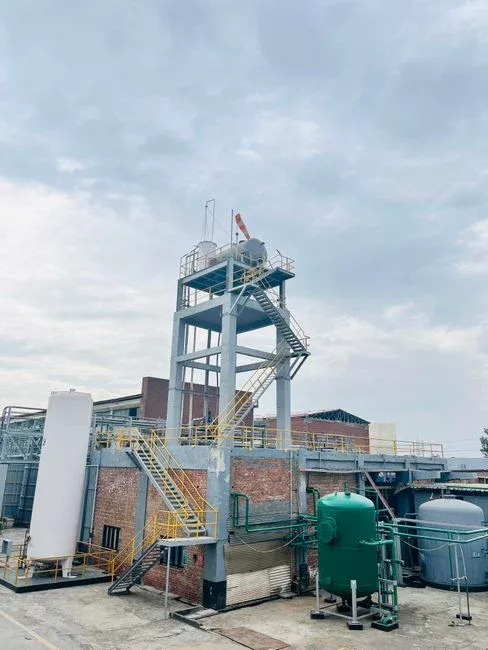
The table below summarizes the trade-offs for a procurement engineer building a 2026 capital memo. The size bands reflect the HydropureWater industrial DAF system range of 4–300 m³/h (product 4) and the lamella clarifier surface loading figure of 20–40 m/h (product 10). Because 40 CFR Part 436 is effluent-quality driven, the unit that most reliably hits the site's daily maximum and monthly average TSS and oil/grease numbers with the least chemistry is typically DAF for most Whitehall plants.
| Parameter | DAF (Dissolved Air Flotation) | Gravity Clarifier (Circular or Lamella) |
|---|---|---|
| Influent TSS suitability | Strong at high and variable TSS, including very high solids loads on FPAC-class units (Clearwater/SigmaDAF, 2026-04) | Best for low-to-moderate TSS; struggles with fine colloidal fractions |
| Oil/grease tolerance | Strong — float carries FOG with the float layer | Weak — oil films coat plates and impair settling |
| Footprint | Small for a given hydraulic load (4–300 m³/h in a compact skid, product 4) | Large for a circular basin; lamella narrows but does not close the gap |
| Surface loading | Set by hydraulic retention, typically a few minutes | 20–40 m/h on lamella plates (product 10) |
| Sludge consistency for filter press | Thick float; easier to dewater, shorter press cycles | Wet underflow; longer press cycles, higher polymer demand |
| Sensitivity to flow swings | Low — short residence time absorbs slug loads | High — long residence time and plate scouring under surges |
| 2026 compliance posture under 40 CFR Part 436 | Strong primary unit, often paired with multimedia polish for direct discharge | Best as a pre-thickener or recirculation-water unit; rarely a sole discharge unit |
When a Clarifier Still Wins in 2026
A clarifier is the preferred choice for large-volume, low-solids clarified process water returning to a mill or washing screen. A lamella clarifier delivers 20–40 m/h surface loading with minimal chemistry, per product 10, and the capex is lower than an equivalent DAF train. A second use case involves remote or unattended sites with no chemical dosing infrastructure, where reagent logistics, shelf life, and pump maintenance are constraints; gravity settling avoids this scope. A third scenario includes streams dominated by coarse, fast-settling grit and negligible oil/grease, where a primary clarifier acts as a grit-removal pre-step before a DAF polishing unit or a multi-media filter for final polishing. A clarifier alone rarely discharges to sewer in 2026 from a 40 CFR Part 436 site; the federal framework is effluent-quality driven, and a single gravity step almost never hits the ore mining subcategory limits on TSS and metals without a downstream separator.
2026 Total-Cost and Footprint View for a Whitehall Line
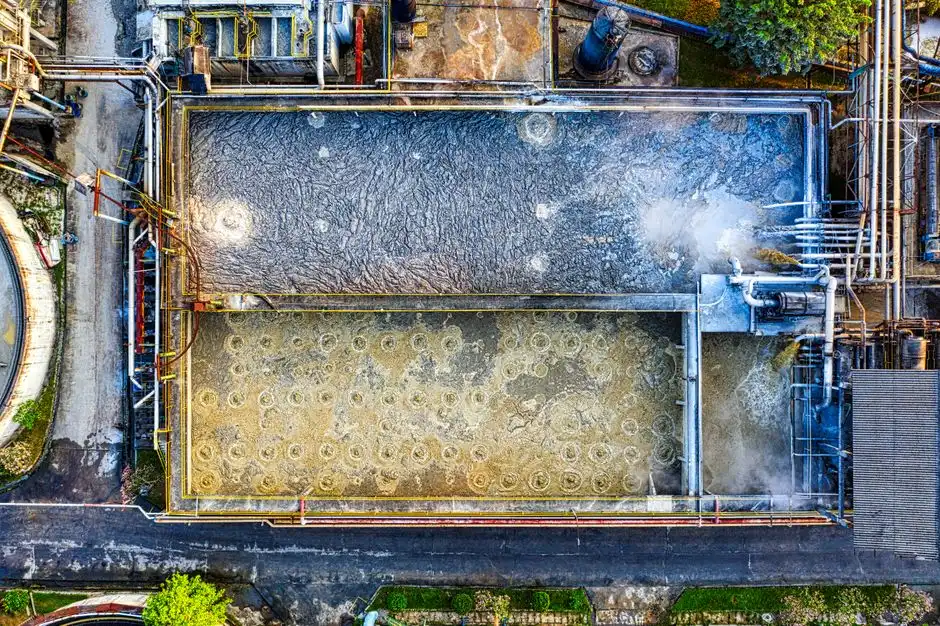
Footprint is a primary factor in capital requests: a DAF unit for a given hydraulic loading occupies substantially less area than an equivalent circular clarifier because the residence time is minutes, not hours (product 4). Chemistry OPEX is a more significant variable; DAF requires an automatic chemical dosing system for coagulant and flocculant (product 8), adding reagent cost, pump maintenance, and inventory, whereas a clarifier can run on pH adjustment alone when the stream is amenable. Downstream impacts also matter: thicker DAF float shortens the cycle time on a plate-and-frame filter press (product 9), while wet clarifier underflow lengthens press cycles and increases polymer demand. Because site influent, 2026 utility rates, and local polymer pricing govern actual TCO, the recommended next step is a bench jar test and a vendor TCO model.
Five-Question Selector Before You Buy
Use this matrix during vendor meetings to evaluate equipment needs. Each "yes" indicates a preference for DAF and a downstream plate-and-frame filter press, while each "no" suggests a lamella clarifier may be sufficient as a primary or pre-thickening step.
| # | Question | If yes → | If no → |
|---|---|---|---|
| 1 | Is influent TSS consistently above ~500 mg/L, or does the stream carry visible oil/grease? | Default to DAF | Lamella clarifier is competitive |
| 2 | Is the flow highly variable across shifts, with crusher or mill startups producing slug loads? | DAF's short residence time absorbs the swing | Clarifier residence time is acceptable |
| 3 | Is there on-site chemical dosing capability (storage, pumps, instrumentation)? | DAF chemistry scope is buildable | Lamella clarifier may be the interim step |
| 4 | Does the sludge feed a plate-and-frame filter press? | DAF float dewater more easily and shortens press cycles | Underflow dewatering is the bottleneck regardless of unit choice |
| 5 | Have you jar-tested or piloted the actual plant stream? | Vendor guarantees on site data are credible | Discount guarantees that are not backed by site-specific testing |
Frequently Asked Questions
How much does a DAF system cost for a Whitehall mining or metals plant in 2026?
No published list price applies. The HydropureWater industrial DAF system (product 4) covers 4–300 m³/h, and a 2026 capital figure depends on flow, materials of construction (304SS versus 316SS), chemistry scope, and whether the unit is a plug-and-play skid or a field-built tank. Buyers should request a sized quotation with a separate chemistry skid and a polymer consumption estimate rather than a per-gallon price.
How do I choose a DAF or clarifier supplier without getting burned?
Shortlist vendors who will run a jar test or pilot on your actual stream before quoting, supply a written 40 CFR Part 436 compliance review for the ore mining subcategory, and commit to sludge consistency targets (percent dry solids) that match your downstream plate-and-frame filter press. Vague performance guarantees without site data are the most common source of post-installation disputes.
Can a lamella clarifier alone meet 40 CFR Part 436 effluent limits in 2026?
Rarely as a single unit on a Whitehall ore mining or metals stream. The HydropureWater lamella clarifier (product 10) is best used as a pre-thickener for high-solids streams or as the primary unit for low-solids recirculation water, followed by a DAF or multi-media filter for the polishing step required to meet federal limits.
What is the typical lead time for a DAF system sized for a mid-size aggregate plant?
Specific lead times are not available in the supplied research. Buyers should request a written schedule from shortlisted vendors that breaks out engineering, fabrication, shipping, installation, and commissioning as a contractual milestone. Compare a similar reference here: the fabricated metals DAF vs clarifier guide and the Toomsboro mining/metals DAF vs clarifier guide.