Why Chemical Plants Near Walker Discharge to a POTW, Not a River
Chemical plants near Walker, US that discharge wastewater to a POTW sanitary sewer must comply with EPA's pretreatment program under 40 CFR Part 403 instead of holding an individual NPDES permit. EPA defines pretreatment standards as pollutant discharge limits for industrial users with indirect discharge (40 CFR 403.3(j)), and forces qualifying POTWs to develop site-specific local limits under 40 CFR 403.5(c). Those local limits protect the POTW from pass-through and interference, are applied at the IU's end-of-pipe at the point of connection to the collection system, and typically cover conventional pollutants (TSS, BOD, pH, oil & grease), toxic metals and organics, and non-conventional parameters such as COD and ammonia.
EPA's NPDES program regulates direct discharges to U.S. waters, while indirect discharges to a POTW sanitary sewer are governed by the pretreatment program under 40 CFR Part 403. According to the Bureau of Ocean Energy Management's Clean Water Act reference, "Direct dischargers … must comply with the effluent limitations guidelines and the new source performance standards in the NPDES permits; indirect dischargers must comply with the pretreatment standards" (boem.gov). For most Walker-area chemical plants with no on-site outfall to a waterway, the legal route is to negotiate with the local POTW, route effluent through a privately owned pretreatment system, and discharge to the sanitary sewer under a POTW-issued permit.
The program is built around two harms. EPA defines pass-through as "a discharge that exits the POTW into waters of the United States in quantities or concentrations that, alone or in conjunction with a discharge or discharges from other sources, is a cause of a violation of any requirement of the POTW's NPDES permit" (40 CFR 403.3(p), epa.gov). EPA defines interference as a discharge that "inhibits or disrupts the POTW, its treatment processes or operations, or its sludge processes, use, or disposal" and is a cause of a POTW NPDES violation or of a violation of sewage sludge use or disposal requirements (40 CFR 403.3(k), epa.gov). Every engineering decision downstream — equalization tank sizing, clarifier area, biological capacity — is justified by keeping pass-through and interference risk below those two definitions.
EPA issues NPDES permits on a 5-year term, but indirect dischargers hold POTW-issued discharge permits (boem.gov; cleanwaterservices.org). That distinction is the first thing an EHS manager should confirm when a project lead asks, "do we need an NPDES permit?" If the discharge goes to a sewer, the answer is no; the answer is a POTW discharge permit under 40 CFR Part 403.
How Local Limits Are Built and Enforced at the End-of-Pipe
Local limits are site-specific numeric or narrative effluent limits, including BMPs, set by the POTW to protect its facility, sludge, and receiving waters; they differ from categorical pretreatment standards (epa.gov). EPA's local-limits guidance tells the POTW how to calculate maximum allowable loadings, collect and analyze data, determine pollutants of concern, and perform annual reviews and periodic reevaluations, which is why a chemical plant can see limits tighten inside a single permit term (epa.gov). The control authority — typically the POTW's pretreatment staff — translates the local-limit calculation into a number written into the industrial user's discharge permit.
The application point is the single most important operational fact for an engineer to internalize. POTWs impose local limits at the end-of-pipe discharge from an industrial user, defined as the point of connection to the POTW's collection system (epa.gov). On-site treatment determines compliance, not the POTW's downstream process. A chemical plant cannot rely on the POTW's biological trickling filter to polish a high-COD stream past a local COD limit. The sample point is the manhole at the property line or the last sampling access structure before the building sewer crosses into the public system.
EPA's 40 CFR 403.5(c) specifies which POTWs must develop local limits, and EPA can enforce local limits that are developed and approved under that section as pretreatment standards (epa.gov). For a Walker-area plant, the practical step is to request the POTW's current local-limits technical documentation, identify the pollutants of concern flagged for the plant's SIC code, and confirm the basis (sludge, NPDES, or both) for each limit. The control authority may apply local limits to both Significant Industrial Users (SIUs) and Nonsignificant Users, with SIUs typically required to submit routine compliance reports (cleanwaterservices.org). An SIU designation triggers baseline monitoring, periodic SMRs, and the slug-control planning that drives the rest of this blueprint.
Pollutants a Walker Chemical Plant Will Be Sampled For
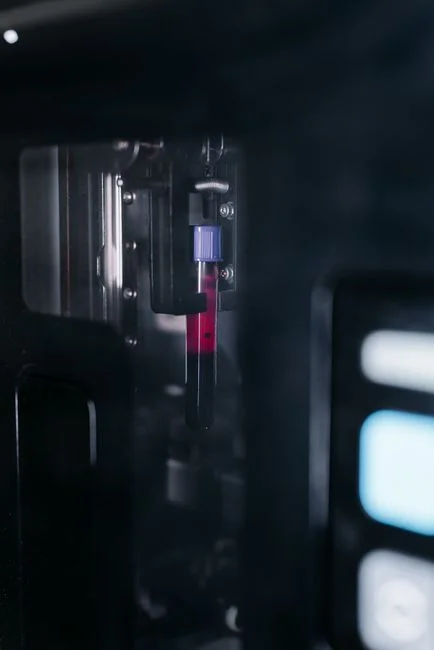
EPA sorts the parameters a sampler can show up to measure into three families. Conventional pollutants per 40 CFR Part 401 include fecal coliform, total suspended solids, biochemical oxygen demand, pH, and oil and grease, and are "contained in the sanitary wastes of households, businesses, and industries" (boem.gov). Non-conventional pollutants per 40 CFR Part 401 include chemical oxygen demand, total organic carbon, nitrogen, and phosphorus (boem.gov). Toxic pollutants "include those pollutants listed by the Administrator under CWA Section 307(a)(1) or any pollutant listed under Section 405(d) which relates to sludge management" (boem.gov). A chemical plant typically sees all three families on a single permit.
Beyond those three buckets, chemical plants typically see site-specific local limits for sulfides, phenols, cyanide, hexavalent chromium, copper, nickel, zinc, lead, and mercury depending on the process. The specific numeric values must be confirmed against the Walker-area POTW's local-limits document; the EPA framework defines the families and the analytical scope, but the numeric ceiling is set by the control authority's own maximum allowable headworks loading calculation. New sources face more rigorous, technology-based effluent limits than existing sources, so greenfield plants must design pretreatment in from day one rather than retrofit (boem.gov).
| Pollutant family (40 CFR Part 401) | Examples | Typical chemical-plant sources | Drives selection of |
|---|---|---|---|
| Conventional | TSS, BOD, pH, oil & grease, fecal coliform | Process washwater, tank rinses, leaks | Bar screen, DAF, equalization/pH control, biology |
| Toxic (CWA 307(a) / 405(d)) | Metals (Cu, Ni, Zn, Pb, Hg, Cr⁶⁺), listed organics, cyanide | Catalyst prep, plating rinses, acid cleaning | Chemical precipitation, lamella clarifier, sludge stabilization |
| Non-conventional | COD, TOC, total nitrogen, total phosphorus, ammonia, sulfides, phenols | Reactor bottoms, solvent recovery, heat-exchanger blowdown | Biological treatment (MBR/activated sludge), DAF, filtration |
The table reorganizes the regulatory taxonomy so the engineer's lab, operations, and procurement teams can map a unit operation to each family. Numeric local-limit values for sulfides, phenols, and the listed metals are not included in the EPA framework excerpt; the buyer must request those from the Walker-area POTW's pretreatment group as part of permit application review.
Pretreatment Train Used to Hit Those Limits
The unit-operation stack a Walker-area chemical plant typically procures runs headworks → equalization/pH control → oil/grease and colloidal removal → metals precipitation and clarification → biological polishing → sludge dewatering. The sequence is dictated by the local-limit families above.
- Headworks: a rotary mechanical bar screen for chemical plant headworks removes rags, plastics, and fibrous debris that would otherwise damage pumps, valves, and downstream biology. Without it, a single polymer bag or wipes slug can take a DAF or MBR offline.
- Equalization and pH control: a PLC-controlled chemical dosing system for pH and precipitant feed stabilizes influent within design bands so precipitation and biology operate as designed. Equalization also dampens slug loads; slug control is required because a chemical plant can deliver a process upset to the collection system in minutes — faster than any biological unit can absorb.
- Oil, grease, and colloidal removal: a DAF system for oil, grease and suspended-solids removal is widely used ahead of biological or chemical polishing in petrochemical and chemical-industry pretreatment. For polymer conditioning ahead of DAF and clarification, see also this polymer dosing for flocculation ahead of DAF and clarification reference.
- Metals precipitation and clarification: a lamella clarifier for chemical precipitation and metals removal combines flocculation and separation in a compact inclined-plate footprint. For broader heavy-metal removal process options for chemical plants, hydroxide, sulfide, and chelating-precipitation chemistries are the three routes a chemical plant will see most often.
- Biological polishing: MBR or activated sludge is added where the local limit or surcharge structure penalizes high BOD/COD. The trade-off is laid out in this MBR versus conventional activated sludge for chemical wastewater comparison: MBR delivers near-reuse-quality effluent in a smaller footprint, conventional activated sludge is cheaper in capex but more sensitive to slug loads.
- Sludge dewatering: a filter press for chemical-plant sludge dewatering closes the loop so the chemical plant is not creating a solids-disposal problem while solving the water one. Chemical-precipitation sludge from the lamella clarifier is the main stream feeding the press.
For a parallel reference in a different U.S. jurisdiction, see this chemical plant pretreatment compliance in a different U.S. jurisdiction walkthrough. The unit-operation sequence is portable; the numeric local limits and the slug-control trigger thresholds are not.
The Compliance Loop: Permit, Monitoring, Reporting, Surcharges
Engineering and administration are linked in a 40 CFR 403 program. The administrative loop keeps a well-designed pretreatment train honest, and the financial loop determines operational costs.
The entry point for a chemical plant discharging anything other than sanitary or domestic wastewater is a nondomestic waste survey; if non-domestic discharge is identified, the POTW walks the facility through a Nondomestic Waste Discharge Application and issues a tailored discharge permit (cleanwaterservices.org). Significant Industrial Users must submit baseline and periodic self-monitoring reports (SMRs); the control authority monitors compliance and publishes annual noncompliance lists (cleanwaterservices.org). Enforcement escalates from warning letter to administrative penalty to potential order to stop discharging, which makes continuous compliance cheaper than episodic fixes (cleanwaterservices.org).
The financial side is where local limits and surcharges overlap. Monthly sewer usage fees are based on actual volume plus strength surcharge fees for high levels of chemical oxygen demand or total suspended solids (cleanwaterservices.org), so the same local-limit number that protects the POTW also drives the plant's OPEX. Industrial capacity fees are calculated using Equivalent Dwelling Units, with 1 industrial EDU = 625 gallons per day; monthly service is metered per 100 cubic feet (CCF) = 748 gallons (cleanwaterservices.org). The slug-control plan is the bridge between the two loops: it is the only mechanism that lets the engineer tell the control authority, in writing, how a slug load will be contained on-site before it reaches the manhole at the point of connection.
The compliance loop follows this cycle: SMR → POTW review → surcharge assessment → slug-control plan update → next SMR. Every step in that loop is a paper artifact an EHS manager must produce, and every paper artifact maps back to a unit operation in the previous section.
Frequently Asked Questions
What does "local limits" actually mean for a Walker chemical plant?
Local limits are site-specific numeric or narrative effluent limits — including BMPs — that the POTW sets to protect its facility, sludge, and receiving waters; they are applied at the industrial user's
Frequently Asked Questions
What permits does a chemical plant need before discharging to a Walker-area POTW sewer?
Chemical plants must obtain an Industrial User Discharge Permit issued by the local Publicly Owned Treatment Works (POTW) control authority. This permit is mandated under the National Pollutant Discharge Elimination System (NPDES) program, specifically governed by the General Pretreatment Regulations found in 40 CFR Part 403.
The permit establishes specific mass-based or concentration-based limits for pollutants, mandatory self-monitoring schedules, and reporting requirements. Facilities must also verify compliance with Categorical Pretreatment Standards (PSES) if they fall under specific industry subcategories defined by the EPA.
Which pollutants are chemical plants typically sampled for under 40 CFR Part 403 local limits?
Facilities are typically sampled for conventional pollutants including Biological Oxygen Demand (BOD), Total Suspended Solids (TSS), pH, and oil and grease. Local limits often specify numeric caps on these parameters to prevent interference with the biological processes at the wastewater treatment plant.
Beyond conventional pollutants, plants are frequently monitored for priority pollutants such as heavy metals (e.g., copper, lead, nickel, zinc, and mercury) and volatile organic compounds (VOCs). Monitoring frequency is determined by the facility's classification as a Significant Industrial User (SIU), often requiring quarterly or semi-annual sampling and analysis by an EPA-certified laboratory.
How much does it cost to build a chemical-plant pretreatment system to meet POTW local limits?
Capital expenditures for pretreatment systems typically range from $250,000 for basic pH neutralization and solids settling units to over $5,000,000 for complex systems requiring multi-stage chemical precipitation, membrane filtration, and advanced oxidation processes. Total cost is highly dependent on the flow rate, measured in gallons per day (GPD), and the chemical complexity of the waste stream.
Operational costs must also be factored, including energy consumption, chemical reagents, sludge disposal fees, and specialized labor. Facilities should conduct a thorough treatability study and engineering design phase, which can represent 10% to 15% of the total project budget, to ensure the selected technology meets the specific 2026 compliance thresholds.
How do you choose a DAF versus a clarifier for a chemical plant hitting oil, grease and metals limits?
A Dissolved Air Flotation (DAF) unit is generally preferred when the waste stream contains high concentrations of fats, oils, and grease (FOG) or low-density suspended solids that rise to the surface. DAF systems utilize micro-bubbles to float contaminants, allowing for efficient skimming, which is highly effective for achieving stringent oil and grease limits.
Conversely, a gravity clarifier is the standard choice for removing heavier, settleable inorganic solids and metal-hydroxide precipitates formed during chemical coagulation and flocculation. If a chemical plant faces high concentrations of dense heavy metals, a clarifier with an inclined plate (lamella) design is often more efficient for footprint management and consistent solids removal compared to DAF technology.
What is the difference between pass-through and interference under EPA's pretreatment rules?
Pass-through occurs when a pollutant is discharged through the POTW into waters of the United States in quantities or concentrations that cause a violation of the POTW's NPDES permit. This violation is directly attributable to the industrial user's discharge failing to be adequately treated by the municipal plant.
Interference occurs when a discharge inhibits or disrupts the POTW's treatment processes, sludge disposal methods, or operations. This may result in the POTW exceeding its toxicity limits, damaging infrastructure, or rendering the biosolids produced by the plant unsuitable for disposal or reuse under 40 CFR Part 503 standards.