Why RO Matters for Pharmaceutical Water Purification
Reverse osmosis is FDA-recognized for pharmaceutical water purification and is capable of producing water of sufficient purity for Water for Injection (WFI) and parenteral solutions when properly designed and validated. The FDA Inspection Technical Guide reports nominal ionic salt rejection of 85–98%, organic substances above 100 molecular weight (including pyrogens, bacteria and viruses) being sieved out, and that two RO modules in series should be considered for parenteral solutions to reduce monovalent ions and bacterial contaminants. A RO system with a deionizer or multiple series modules can reach below 0.1 ppm TDS at about 1 megohm-cm, while the USP WFI monograph caps total solids at 10 PPM, with the parenteral industry commonly targeting 0.1 PPM ionic contaminants or less (FDA ITG, "Reverse Osmosis," published 1980-10-21).
Unlike desalination or boiler-feed duty, pharma water is used as both an active ingredient and a cleaning/rinsing agent, which is why the FDA ITG explicitly benchmarks RO against distillation or equivalent quality. Because RO operates at comparatively low temperature and is relatively energy efficient, it is employed across desalination, wastewater treatment, and concentration of food and pharmaceutical products, and in recent years has been used increasingly for processed water for dialysis, cosmetics and drugs. Sizing an industrial RO system for a GMP plant therefore starts from USP and parenteral quality targets, not from a generic flow number — a discipline that protects the validation case later.
How Reverse Osmosis Rejects What Drugs Must Not See
Reverse osmosis uses a semipermeable membrane under pressure to separate relatively pure water from a less pure solution; when enough counter pressure is applied to overcome osmotic pressure, natural osmotic flow is reversed and water is forced through the membrane (FDA ITG, 1980-10-21). The physical mechanism sets the limits QA will hold the supplier to.
Water molecules form hydrogen bonds inside the RO membrane and fit into the membrane matrix, so they can be pushed through under pressure. Anything that cannot hydrogen-bond and fit is rejected. Most organic substances with molecular weight over 100 are sieved out — oils, pyrogens, and particulates including bacteria and viruses. Salt ions are rejected by a dielectric interaction: higher-valence ions are repelled further from the membrane surface, so divalent sulfate is rejected more efficiently than monovalent chloride. The FDA ITG puts the nominal rejection ratio of common ionic salts at 85–98%, with the exact figure depending on the specific ion, membrane chemistry, and operating pressure. The FDA ITG worked example is that 300 ppm feed TDS yields 15–30 ppm permeate (95% and 90% rejection respectively), illustrating that product quality is a function of feed TDS and recovery target rather than a fixed number.
| Rejection Mechanism | Target Species | FDA ITG Stated Behavior |
|---|---|---|
| Hydrogen-bond sieving through membrane matrix | Water molecules (permeate) | Passes under applied pressure greater than osmotic pressure |
| Size exclusion at molecular-weight > 100 | Oils, pyrogens, bacteria, viruses | Sieved out by the active skin |
| Dielectric charge repulsion | Salt ions | Higher-valence ions rejected more strongly than monovalent |
| Nominal ionic salt rejection (overall) | Common salts (e.g., NaCl, sulfate, chloride) | 85–98% per FDA ITG, 1980-10-21 |
Membrane Construction and Operating Envelope
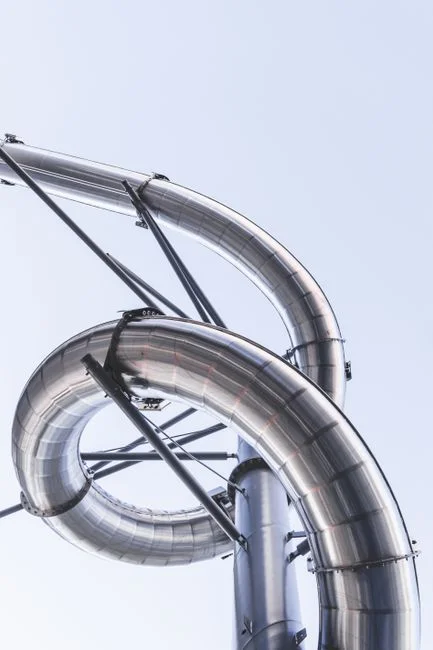
The majority of commercially manufactured RO membranes are made from cellulose acetate, polysulfonate, and polyamide, with other polymers used for specific purposes (FDA ITG, 1980-10-21). The membrane consists of an active skin about 0.25 µm thick on a support layer about 100 µm thick, and that skin is the active barrier that allows water to pass. Two module constructions dominate: spiral-wound sheets of membrane sandwiched with mesh spacers and wound around a permeate tube, and hollow-fibre modules, both assembled into pressure housings.
Operating window is fixed by chemistry. Most cellulose-acetate RO units are designed to operate between 55°F and 86°F (13°C–30°C), so any plant whose source water falls outside that band needs feed-temperature conditioning specified into the skid. Spiral-wound construction is less susceptible to fouling than hollow-fibre, which matters for facilities with variable feed quality or limited pretreatment polish. The FDA ITG notes that a membrane module lasts two to three years on the average — a number that becomes a budgeting input rather than a footnote when feed variability is poorly controlled. Confirming membrane material, module geometry, and guaranteed life should be part of any spare RO membrane elements enquiry.
| Parameter | Value / Description | Source |
|---|---|---|
| Membrane materials | Cellulose acetate, polysulfonate, polyamide (others for specific duties) | FDA ITG, 1980-10-21 |
| Active skin thickness | ~0.25 µm | FDA ITG, 1980-10-21 |
| Support layer thickness | ~100 µm | FDA ITG, 1980-10-21 |
| Cellulose-acetate operating range | 55–86 °F (13–30 °C) | FDA ITG, 1980-10-21 |
| Average membrane service life | 2–3 years | FDA ITG, 1980-10-21 |
Single-Pass vs Two-Pass RO for Parenteral Manufacturing
The FDA ITG explicitly recommends considering two RO modules in series for parenteral solutions, principally to reduce monovalent ions and bacterial contaminants that a single pass leaves behind (FDA ITG, 1980-10-21). The implication is binary: for non-parenteral purified water, single-pass RO with appropriate polishing is a defensible baseline; for parenteral WFI duty, two-pass should be the design starting point, not an upgrade option.
The FDA ITG example is direct: feed water at 300 ppm TDS produces 15–30 ppm permeate (95% and 90% rejection respectively), and a RO system with a deionizer and/or several modules in series can reach less than 0.1 ppm TDS at about 1 megohm-cm. The USP WFI monograph limits total solids to 10 PPM, while the parenteral drug industry commonly sets a 0.1 PPM or less limit on ionic contaminants to preclude stability problems during manufacturing (FDA ITG citing Remington's Pharmaceutical Sciences, 16th ed., 1980). Higher recovery or lower rejection both degrade product water quality, so the two-pass decision must be locked at design stage — adjusting recovery upward later trades directly against the validation envelope. The downstream EDI polishing stage selection then determines how close the train gets to 0.1 PPM under load.
| Configuration | Typical Permeate Quality | FDA ITG / USP Anchor | Implication |
|---|---|---|---|
| Single-pass RO (300 ppm feed) | 15–30 ppm TDS (90–95% rejection) | FDA ITG, 1980-10-21 | Above the 10 PPM USP WFI cap; insufficient for parenteral 0.1 PPM target |
| Two-pass RO (series) | Substantially lower ionic load; targets monovalent ion reduction | FDA ITG, 1980-10-21 | Default for parenteral duty per FDA ITG |
| RO + deionizer (or multiple series modules) | < 0.1 ppm TDS at ~1 megohm-cm | FDA ITG, 1980-10-21 | Aligns with parenteral 0.1 PPM industry target |
| USP WFI monograph | ≤ 10 PPM total solids | USP WFI monograph, cited by FDA ITG | Hard limit; design must stay below under worst-case feed |
Pretreatment Train That Protects Membrane Life
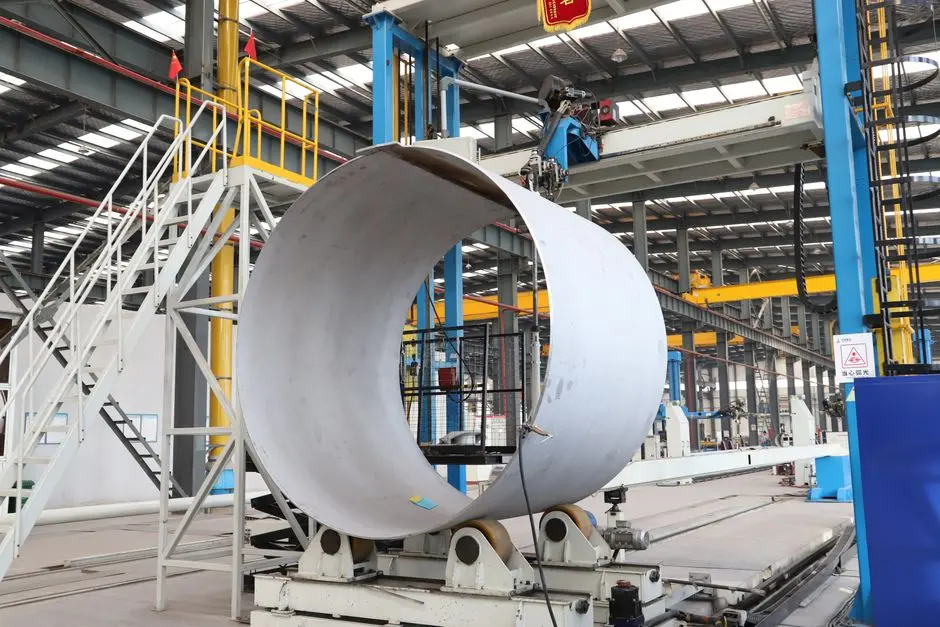
Feed water is passed through a prefilter after pH adjustment, then pumped to the membrane modules at the designed pressure; product water goes to a storage tank and concentrate is drained (FDA ITG, 1980-10-21). Pretreatment may include any combination of sand bed, chlorinator and retention tank, anthracite filter, activated charcoal filter, degasifier, microfilter, neutralizer, and deionizer, depending on feed water and product water targets. Since source-water conditions vary, adequate pretreatment is essential so the dissolved solids and bacterial level of the feed water after prefiltration stay within the designed limits.
The dominant operating problem is concentration polarization or fouling — the gradual build-up of rejected solute on the feed side adjacent to the membrane — and a flush cycle is used to reduce build-up. Because the FDA ITG puts average membrane module life at two to three years, pretreatment choices are not optional polish; they directly set consumable OPEX and replacement frequency. The most common engineering shortcut is to undersize the multi-media pretreatment filter or the automatic chemical dosing system ahead of the membranes, and the audit trail is a fouled first stage that drags the whole train off-spec. Buyers should treat SDI control and chlorine/Chloramine neutralization as contractually enforced, not vendor-discretionary.
Microbiological Control, Dead Legs and Continuous Flow
CDC investigations cited by the FDA found that certain naturally occurring Gram-negative bacteria can multiply in relatively pure RO water, so thorough periodic disinfection of the entire system is essential to acceptable bacterial counts (FDA ITG, 1980-10-21). The most common audit finding on pharma RO systems is biofilm traced to stagnant downstream piping, and the FDA ITG makes the design rule explicit: stagnant water in pipes downstream of the membrane is the major source of bacteria and endotoxin in product water, so dead ends and pipe sections that can collect stagnant water must be eliminated at the design stage.
A membrane's efficiency at rejecting bacteria is better in continuous operation than in intermittent use, so shut-down procedures for non-working hours must preserve minimum flow and operating pressure with a timed internal flush cycle. Feed water and product water should be monitored for microbiological quality, the system disinfected whenever limits are exceeded, and chemicals used in disinfection completely removed after the cycle. Filters or ion-exchangers placed downstream of RO modules are to be avoided per FDA ITG — a rule that simplifies the downstream piping and the validation scope, and points sanitization duty at a downstream UV sterilizer as the final microbial barrier rather than a 0.2 µm filter that the FDA guidance disfavors downstream of RO.
Validation, Monitoring and the 2026 Supplier Checklist
The FDA ITG sets the technical baseline for validation: in-line conductivity probes at key points for continuous monitoring, and chemical and microbial quality tested at predetermined intervals during a production cycle; the equipment must be qualified and the RO system validated periodically, and operated and maintained per manufacturer's instructions so it consistently produces water with acceptable quality (FDA ITG, 1980-10-21). Modular RO units with production rates from a few to several hundred gallons per day are now available from several manufacturers, so capacity per skid, footprint, and redundancy are differentiators — not the technology itself.
A 2026 supplier-qualification checklist for a pharma RO train should include: confirmation of the feed-water design basis and assumed TDS range; two-pass configuration offered for parenteral duty; the offered polishing stage (EDI vs mixed-bed deionizer) with achieved resistivity under load; documented CIP/SIP and sanitization procedure; a validation protocol template referencing current USP water chapters; in-line conductivity and TOC monitoring scope; membrane life and replacement-cost guarantee terms; and reference installs in GMP-regulated pharma. A buyer who can answer "yes" to each row before signing the PO has effectively pre-qualified the skid for the IQ/OQ documentation the QA lead will demand. For a broader facility-level view, the sterile injectables ETP upgrade playbook and the AOP system for pharmaceutical API wastewater engineering guide sit alongside pretreatment sizing in the multimedia filtration design and sizing guide.
| Checklist Item | What the Buyer Should Require in Writing | Why It Matters |
|---|---|---|
| Feed-water design basis | Feed TDS range, temperature, SDI, chlorine/Chloramine assumption | Drives membrane sizing and pretreatment scope |
| Pass configuration for parenteral duty | Two-pass RO as base, not option | Aligns with FDA ITG parenteral guidance, 1980-10-21 |
| Polishing stage | EDI or mixed-bed deionizer; resistivity at duty point | Needed to reach < 0.1 ppm TDS / ~1 megohm-cm |
| CIP/SIP and sanitization | Documented procedure, chemical removal verification | Direct FDA ITG technical requirement |
| Validation protocol template | References current USP water chapters; IQ/OQ scope | Shortens QA review cycle |
| Monitoring scope | In-line conductivity + TOC at defined points; sampling plan | Direct FDA ITG technical requirement |
| Membrane life guarantee | 2–3 year baseline per FDA ITG, with replacement-cost terms | Locks OPEX assumption |
| Reference installs | GMP-regulated pharma, similar duty | Reduces supplier-qualification risk |
Frequently Asked Questions
Can reverse osmosis alone meet USP WFI and parenteral limits?
Yes, when the train is designed and validated against the FDA ITG anchors: nominal ionic salt rejection of 85–98%, 15–30 ppm permeate from 300 ppm feed, and a polishing stage capable of < 0.1 ppm TDS at about 1 megohm-cm (FDA ITG, 1980-10-21). The USP WFI monograph caps total solids at 10 PPM, and the parenteral industry commonly targets 0.1 PPM ionic contaminants, which is why two-pass RO plus polishing is the design baseline for parenteral duty rather than a later retrofit.
What is the total cost of ownership difference between single-pass and two-pass RO?
The FDA ITG figures (300 ppm feed → 15–30 ppm permeate at 90–95% rejection; < 0.1 ppm TDS with two-pass + deionizer) frame the trade-off, but the cost delta between single-pass and two-pass is not stated in the research. A buyer should request a TCO model from each bidder that splits CAPEX (skid, membranes, polishing), OPEX (energy at duty recovery, membrane replacement at 2–3 year life, sanitization chemicals), and the validation cost of the extra pass before selecting the configuration.
What supplier-qualification questions should a pharma buyer ask before signing a PO?
Use the 2026 checklist: confirm the feed-water design basis and assumed TDS range, confirm two-pass configuration is offered for parenteral duty, request the polishing stage and resistivity under load, ask for documented CIP/SIP and sanitization procedures, require a validation protocol template referencing current USP water chapters, confirm in-line conductivity and TOC monitoring scope, secure membrane life and replacement-cost terms (the FDA ITG baseline is 2–3 years), and ask for reference installs in GMP-regulated pharma. A supplier that cannot answer each row in writing is not yet qualified.
Why is continuous flow preferred over intermittent RO operation?
The FDA ITG states that a membrane's efficiency at rejecting bacteria is better in continuous operation than in intermittent use, and that stagnant water downstream of the membrane is the major source of bacteria and endotoxin in product water (FDA ITG, 1980-10-21). Shut-down procedures for non-working hours must therefore preserve minimum flow and operating pressure with a timed internal flush cycle, and dead legs must be eliminated at the design stage — the cheapest biofilm control is piping geometry, not chemicals.
Related Equipment
- industrial RO system — specifications, capacity range, and technical data