Why a Madurai Data Centre Cannot Treat Blowdown as Wastewater
A cooling tower operating at four cycles of concentration sheds roughly 25–30% of its makeup water as blowdown, and that purge stream leaves the recirculating loop four to eight times more concentrated than the supply it replaced (genesiswatertech.com, 2026). On a hyperscale site that translates into blowdown measured in tens of thousands of litres per day, with total dissolved solids (TDS) of 1,200–6,000 mg/L, suspended solids of 10–50 mg/L, and accumulated biocides, scale inhibitors, and corrosion inhibitors that no municipal sewer was designed to receive (genesiswatertech.com, 2026).
Madurai sits in the semi-arid Vaigai basin, where groundwater is hard, surface-water availability is seasonally tight, and any direct discharge of high-TDS blowdown into the Vaigai system is both environmentally and reputationally costly. The national policy direction is converging on the same answer: India's data centre sector is being pushed, through state-level consent conditions and national guidance, to substitute treated wastewater for freshwater in cooling-tower makeup, which makes recovery a compliance prerequisite rather than a sustainability add-on (blog.se.com, 2026-09-29; see also Indian ZLD regulatory developments).
What a Madurai-Site Blowdown Treatment Train Actually Looks Like
A defensible train for a Madurai site follows a fixed sequence: protect the recirculating loop first, polish for membranes next, separate salts with reverse osmosis (RO) or nanofiltration (NF), then deal with the concentrate thermally. Each step maps to an equipment module the EPC can price separately.
Step 1 — Side-stream filtration. Treating 1–5% of circulation flow through self-cleaning filters at 10–25 micron drops blowdown suspended solids to a level downstream membranes can handle. Installed capex for a typical data centre installation runs $50,000–200,000, with minimal opex beyond solids disposal (genesiswatertech.com, 2026).
Step 2 — Ultrafiltration (UF). A PVDF ultrafiltration pretreatment stage at 0.01–0.1 micron removes bacteria, viruses, and colloidal matter ahead of RO, operating at 10–30 psi with 90–95% recovery and chemical cleaning every 1–3 months (genesiswatertech.com, 2026).
Step 3 — Reverse osmosis. An industrial reverse osmosis system delivers permeate at 10–50 mg/L TDS, suitable for direct return to the cooling tower. Operating pressure is 150–400 psi with antiscalant injection; recovery on blowdown is realistically 50–85%, limited by calcium carbonate, calcium sulfate, and silica scaling. A 50,000 GPD unit is $250,000–500,000 installed, with opex of $1.50–3.00 per 1,000 gallons treated (genesiswatertech.com, 2026).
Step 4 — Nanofiltration (alternative). When hardness rather than total TDS is the binding constraint, NF runs at 75–150 psi with 70–85% recovery, leaving monovalent ions largely untouched (genesiswatertech.com, 2026).
Step 5 — Mechanical vapour compression (MVC) or brine concentrator. Thermal evaporation of RO concentrate reaches 95–98% recovery with distillate below 10 mg/L TDS, at 15–25 kWh per 1,000 gallons of distillate. Capex for a 10,000–30,000 GPD unit is $1–3 million (genesiswatertech.com, 2026).
Step 6 — Crystallizer (optional ZLD). For full zero liquid discharge (ZLD), a crystallizer converts the final brine to solid cake for disposal. Overall recovery rises to 95–99%, with capex of $3–8 million and opex of $5–15 per 1,000 gallons treated (genesiswatertech.com, 2026).
A multi-media filter for RO protection ahead of the UF, paired with a PLC-controlled antiscalant and pH dosing skid, keeps membrane life on design and avoids mid-cycle cleaning outages. Conventional brackish-water RO on cooling-tower blowdown plateaus at 75–80% recovery before silica, calcium carbonate, and calcium scaling become unmanageable (ide-tech.com, 2026). Domestic sewage from staff facilities is a separate, much smaller stream best handled by a packaged sewage treatment plant (STP) feeding toilet flushing and landscaping — not by the industrial blowdown train.
| Stage | Function | Key operating envelope |
|---|---|---|
| Side-stream filtration | Cut suspended solids on the recirculating loop | 1–5% of circulation flow; 10–25 micron |
| Ultrafiltration | RO pretreatment; remove colloids, microbes | 0.01–0.1 micron; 90–95% recovery; 10–30 psi |
| Reverse osmosis | Produce cooling-tower makeup permeate | 10–50 mg/L TDS permeate; 50–85% recovery; 150–400 psi |
| Nanofiltration (alt.) | Softening without full demineralization | 70–85% recovery; 75–150 psi |
| MVC / brine concentrator | Recover distillate from RO concentrate | 95–98% recovery; distillate <10 mg/L TDS; 15–25 kWh/1,000 gal |
| Crystallizer (ZLD) | Solidify residual brine | 95–99% overall recovery; solid cake disposal |
Cooling Tower Makeup Reuse vs Discharge Compliance vs ZLD in Madurai
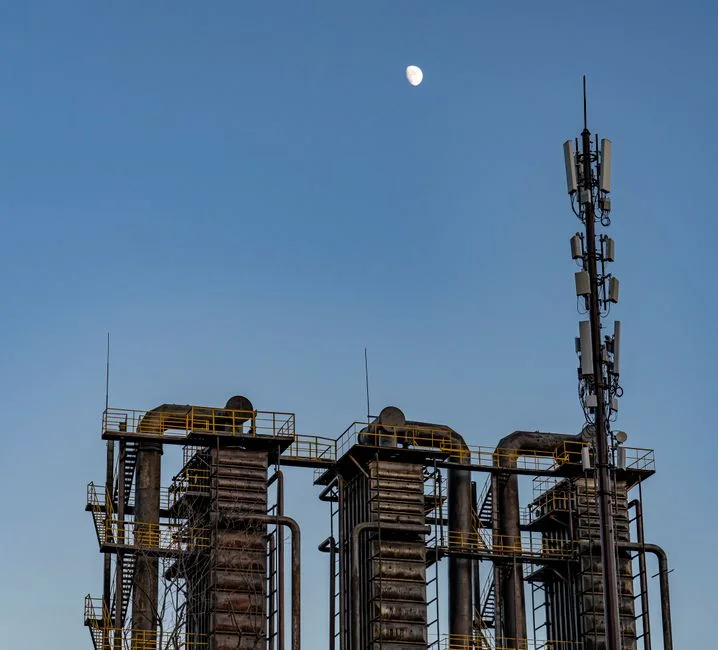
The strategic choice for the Madurai engineer is between three outcomes, each with its own economics.
Reuse as cooling-tower makeup is the highest-value path. RO permeate at 10–50 mg/L TDS blends back into the cooling loop, allowing the operator to push cycles of concentration higher and cut freshwater intake. Typical recovery is 60–85% (genesiswatertech.com, 2026).
Discharge compliance is justified mainly by avoided fees. In water-stressed regions discharge fees now run $5–15 per 1,000 gallons, and some jurisdictions cap discharge TDS below 1,500 mg/L, effectively prohibiting disposal of untreated blowdown (genesiswatertech.com, 2026).
Full ZLD is technically mature but capex-heavy — $3–8 million per installation — and is normally reserved for sites where freshwater is unavailable, or where consent conditions block conventional discharge (genesiswatertech.com, 2026).
Partial ZLD — concentrating blowdown by 80–90% and hauling or deep-injecting the residual brine — captures most of the water benefit at a fraction of full ZLD cost (genesiswatertech.com, 2026).
The decision scales with IT load. A 100 MW facility can demand up to about 2 million litres of water per day, a figure that puts any of the three outcomes into a meaningful capex band (ide-tech.com, 2026). Indian design-build momentum around hyperscale water reuse, including recent India design-build water contracts and parallel work on sites such as cooling blowdown treatment in Khulna, Bangladesh, confirms that high-recovery trains are now mainstream rather than pilot.
| Outcome | Typical recovery | Primary economic driver | Indicative envelope |
|---|---|---|---|
| Cooling-tower makeup reuse | 60–85% | Cut freshwater intake and discharge volume | RO: $250,000–$500,000 installed for 50,000 GPD |
| Discharge compliance | Variable | Avoid $5–15/1,000 gal discharge fees | Permit-driven; treatment sized to TDS ceiling |
| Partial ZLD | 80–90% volume reduction | Lower capex than full ZLD, residual brine off-site | MVC $1–3M for 10,000–30,000 GPD |
| Full ZLD | 95–99% | Discharge not permitted or freshwater unavailable | $3–8M capex; $5–15/1,000 gal opex |
Madurai-Specific Sourcing and Regulatory Overlay
The global technology guidance above has to be pinned to the Vaigai system before it becomes a buildable scope. The water balance for any data centre should start with seasonal sampling of the proposed source — pH, conductivity, TDS, chlorides, silica, hardness, alkalinity, and microbial counts — and the engineer should ask the supplying utility whether further treatment is available before sizing pretreatment (asce.org, 2024-03). Madurai Corporation's treated municipal sewage is a credible makeup source for cooling towers once polished through the train described above, and it aligns with the national direction to substitute treated wastewater for freshwater in data centre cooling (blog.se.com, 2026-09-29). The Tamil Nadu Pollution Control Board (TNPCB) consent to establish and consent to operate will set site-specific ceilings for TDS, chlorides, and biocide residuals, so pretreatment should be designed to stay comfortably below those ceilings, not at them. Closed-loop direct-to-chip liquid cooling recirculates more than 95% of its coolant, cutting evaporative blowdown at the source and shrinking the downstream train accordingly (blog.se.com, 2026-09-29). At a strategic level, India holds around 18% of the world's population within its data centre catchments, which makes community water competition a hard site-selection constraint, not a soft issue (blog.se.com, 2026-09-29; see also CSE's October 2026 roundtable on decentralised wastewater treatment and bulk reuse in India).
2026 Equipment Selection and Budget Framework
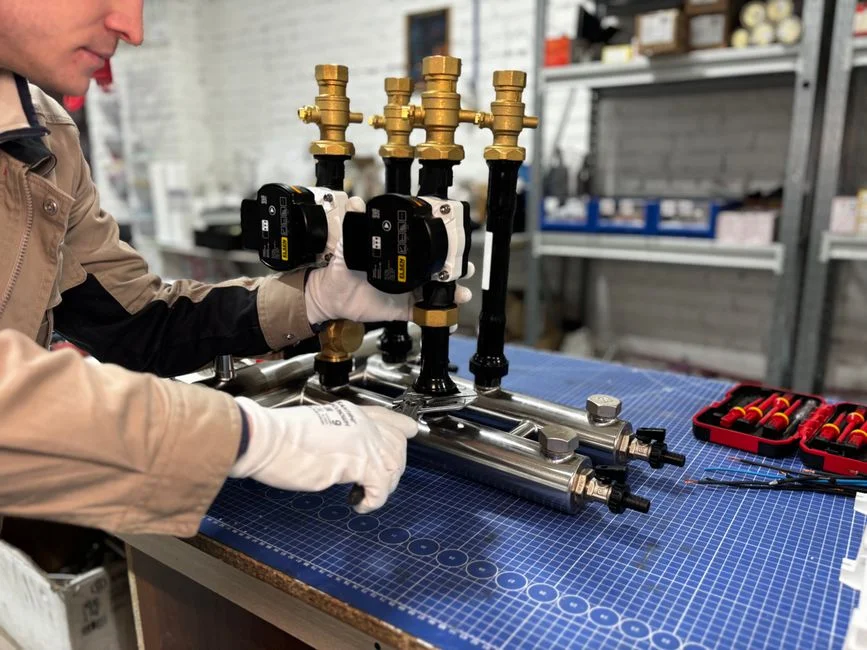
For an EPC tender in 2026, the equipment scope should be built from the source data first and converted to Indian rupees (INR) only for envelope purposes, with final figures driven by vendor quotes and Indian indirect costs. The defensible line items, all from genesiswatertech.com (2026), are:
- Side-stream filtration: $50,000–200,000 installed.
- Blowdown RO at 50,000 GPD: $250,000–500,000 installed; opex $1.50–3.00 per 1,000 gallons.
- MVC for 10,000–30,000 GPD: $1–3 million.
- Full ZLD system: $3–8 million capex; opex $5–15 per 1,000 gallons.
Specify UF and RO membranes as separate line items so that fouling-related replacement is budgeted rather than absorbed into capex, and pair the RO with a PLC-controlled antiscalant and pH dosing skid to protect membrane life. Spare RO and UF membrane elements and supporting valves and media should be carried as priced spares. Domestic sewage from staff facilities belongs to a packaged membrane bioreactor (MBR) integrated wastewater treatment unit sized for peak occupancy, not the industrial blowdown train, and is typically tendered as a separate package. Because the source data is in US dollars, the engineer should request 2026 INR quotations from at least two Indian EPC vendors before locking the budget envelope, and should confirm the prevailing USD–INR rate at the time of tender.
Frequently Asked Questions
What capex should we budget for a cooling-tower blowdown treatment train at a hyperscale Madurai site in 2026?
The source data anchors the envelope in US dollars: side-stream filtration $50,000–200,000 installed, a 50,000 GPD blowdown RO at $250,000–500,000 installed, MVC at $1–3 million for 10,000–30,000 GPD, and full ZLD at $3–8 million (genesiswatertech.com, 2026). Convert these to INR at the prevailing 2026 rate for scoping only, and request firm INR quotations from at least two Indian EPC vendors before issuing the tender.
How do we choose between RO, NF, and ZLD for a Madurai site?
Pick RO when total TDS removal is required to lift cycles of concentration; pick NF when hardness alone binds the design; reserve ZLD for sites where TNPCB consent blocks conventional discharge or freshwater is unavailable (genesiswatertech.com, 2026). Request seasonal water chemistry from the supplying utility and a draft consent envelope from TNPCB before locking the process selection.
Can treated municipal sewage from Madurai Corporation be used as cooling-tower makeup?
Yes, treated municipal sewage is a credible makeup source once polished through the train above, and India's national guidance encourages substituting treated wastewater for freshwater in data centre cooling (blog.se.com, 2026-09-29). Confirm with Madurai Corporation that the nearest STP has spare capacity and a quality envelope compatible with cooling-tower chemistry, and budget for the pipeline and any additional polishing that the source requires.
What is the realistic water-recovery target for a Madurai cooling-tower blowdown system?
Conventional brackish-water RO on blowdown plateaus at 75–80% recovery before silica and calcium scaling become unmanageable, while RO plus antiscalant typically reaches 50–85% recovery and RO followed by MVC pushes overall recovery to 85–95% (genesiswatertech.com, 2026; ide-tech.com, 2026). Full ZLD reaches 95–99% recovery but at materially higher capex.