Why 2026 Zinc Compliance Is Written Against Dissolved Zn²⁺, Not Total Zinc
Zinc runoff environmental impact mitigation in 2026 is governed by the dissolved Zn²⁺ fraction, not by total zinc on the lab report. A 2022 review in Water (MDPI, 2022-01-19) reported that "up to 100% of Zn has been measured as Zn²⁺ in the Zn roof runoff resulting in observable toxic effects," and concluded that "Cu and Zn mainly occur in dissolved and thus bioavailable forms in roof runoff, harmful effects on the environment were detected." That bioavailable fraction is what toxicity tests respond to, what NPDES permits report against, and what treatment equipment must remove.
For an industrial reader, "zinc runoff" is the dissolved Zn²⁺ fraction plus the particulate zinc that leaves a metal roof, a galvanized gutter, a hot-dip galvanizing rinse tank, a cooling-tower blowdown, or an aerial-deposition plume. The 2026 implication is direct: a routine TSS scan that reports total zinc can pass while dissolved Zn²⁺ is still over the receiving-water benchmark, which is why every section below works in the dissolved fraction. The MDPI review also notes that pH controls speciation: "in a pH range of approx. 4.5–7 Zn is mostly in dissolved form as Zn²⁺, the formation of undissolved carbonates and hydroxides such as ZnCO₃ or Zn(OH)₂ rises from a pH of 7 and higher." That solubility boundary is the basis for the 8.5–10 pH setpoint used in the treatment train later in this article.
2026 US Regulatory Numbers: NPDES, POTW, and TMDL Anchors
Zinc is an EPA Priority Pollutant, and 2026 US compliance is set by a combination of NPDES direct-discharge permits, POTW pretreatment limits, and watershed-specific TMDLs. SAMCO (2024) is the most current consolidated source for the headline numbers: "Metal finishers, for example, are limited to a monthly average of 1.48 ppm of zinc content in wastewater," and for POTW discharge, "a centralized treatment facility can expect that its monthly average limits on zinc will range somewhere between 0.252 and 4.50 ppm." Battery anode producers see the same limit expressed as a production-based load: "a monthly average that can range anywhere between 0.42 and 1,946 mg of zinc in wastewater per kilogram of zinc anodes produced."
Those numbers are monthly averages, not grab samples, and they are written against the dissolved fraction specifically because that is the form that reaches surface water, groundwater, and the workforce. Watershed-specific TMDLs can push the monthly average tighter than the standard NPDES number, and combined sewer overflows can release untreated zinc during heavy rain events (MDPI, 2022-01-19). Aerial deposition is the variable that catches even well-run sites: Van Metre and Mahler (2003), as summarized in the City of San Diego review (Weston Solutions, 2011-05), estimated that "approximately 40% of the zinc load was 'aerial deposition,'" and the same San Diego work reports a separate study in which "aerial deposition of zinc could account for up to 74% of the loading, resulting in concentrations in storm water and receiving waters above the water-quality benchmark." That 40–74% range is non-point load that arrives on the wind regardless of how tightly the site itself is run.
| Permit Pathway | 2026 Monthly-Average Limit (SAMCO, 2024) | Design Implication |
|---|---|---|
| NPDES direct discharge (EPA Priority Pollutant, metal finishers) | ~1.48 ppm; varies by facility, industry, technology, and location | Train must guarantee dissolved-Zn monthly average at or below the facility-specific permit number |
| POTW pretreatment (40 CFR 403 and local limits) | 0.252–4.50 ppm depending on receiving POTW | Train must hit the receiving POTW's specific local limit, not a generic number |
| Battery anode production | 0.42–1,946 mg Zn per kg anodes (monthly average) | Load-tracking plus concentration control; production volume is the divisor |
Source Control: The 2011 San Diego Effectiveness Matrix, Re-read for 2026

The City of San Diego's literature review (Weston Solutions, 2011-05) ranked potential administrative management options for zinc building materials. "Zn Ordinance Restricting Use of Architectural Zinc for All Buildings" scored Medium effectiveness with Medium/Low feasibility at $ cost. "Sacrificial Temporary Coatings" scored Medium effectiveness at $$ cost. An "Ordinance Requiring Pre-Patination of Zinc" scored Low effectiveness. "Infiltration Option" scored Medium at $$ cost. "Treatment Option" scored Low effectiveness at $$$ cost. The one High-priority ranking in the entire table went to "Artificial Turf Crumb Rubber Product Substitution," at High effectiveness and $ cost, which is relevant for any site with on-site athletic surfaces that contribute to its zinc load through abrasion of infill.
Translated into industrial terms, the San Diego matrix covers coatings, material substitution, runoff segregation, and pre-patina management as the realistic source-control moves. Two caveats matter in 2026. First, the San Diego table rates "Treatment" as Low effectiveness at high cost, but that rating is for urban stormwater dilution, not for industrial discharge to a numeric permit, so it cannot be read as a verdict on end-of-pipe trains for NPDES or POTW compliance. Second, the MDPI 2022 review reports that "after approximately ten years for Zn … the corrosion rate and runoff rate equalize," so a weathered galvanized roof still sheds dissolved zinc at steady state; coatings and pre-patination lower the early-life spike but do not eliminate the long-term load. Source control is the first move but cannot, on its own, guarantee meeting the 0.252–4.50 ppm POTW range or the ~1.48 ppm metal-finisher NPDES monthly average.
| Option (Weston, 2011-05) | Effectiveness | Relative Cost | Industrial Read-Across |
|---|---|---|---|
| Artificial-turf crumb-rubber product substitution | High | $ | Relevant for sites with athletic surfaces where infill abrasion contributes load |
| Zn ordinance restricting architectural zinc | Medium | $ | Substitution where galvanizing is non-process-critical |
| Sacrificial temporary coatings | Medium | $$ | Coating exposed galvanized roofs, gutters, and structural steel |
| Infiltration option | Medium | $$ | Segregated runoff routed to a vegetated swale, not the process sewer |
| Pre-patina ordinance | Low | $ | Pre-weathering of new zinc surfaces to reduce early-life spike |
| Treatment option (urban stormwater scope) | Low | $$$ | Rated for dilution, not numeric industrial permits |
How Zinc Gets From a Galvanized Surface to a Permit Exceedance
The corrosion-to-runoff chain is what builds intuition for the source-to-discharge path. The MDPI 2022 review (2022-01-19) describes the mechanism: chemical corrosion forms a patina on the metal surface, and then "parts of the corrosion products can be dissolved or become detached and washed off, expressed by the runoff rate of Cu and Zn in g/(m²·a), and discharged into the environment." The review also notes that "the runoff rate is much higher for Zn compared to Cu," which is why galvanized assets are the dominant zinc source on most industrial sites.
Two temporal findings matter for 2026 design. First, "after approximately ten years for Zn … the corrosion rate and runoff rate equalize," so a weathered galvanized roof still sheds dissolved zinc at steady state; patina formation does not eliminate ongoing release. Second, the same review notes that "primarily, it is not the orientation itself but the wind direction that has a direct impact on the runoff rate (wind driven rain)." Every exposed galvanized surface contributes to the wastewater load regardless of orientation, so source control has to be evaluated site-wide, not asset by asset. The bridge to ecological and occupational harm is direct: dissolved Zn²⁺ is toxic to algae and aquatic invertebrates, and SAMCO (2024) lists "nausea, anemia, skin irritation, disruptions to protein metabolism, and arteriosclerosis" for chronic exposure, plus "metal fume fever, a flu-like illness resulting from occupational exposure to zinc or other metals" for plant workers. Those are the symptoms that sit alongside the discharge-permit program.
The 2026 Industrial Zinc Treatment Train, Unit Operation by Unit Operation

A working 2026 zinc train follows a fixed unit-operation sequence, and each step depends on the one before it. The first stage is an equalization basin with PLC-controlled chemical dosing for zinc precipitation, which raises pH to 8.5–10 to convert dissolved Zn²⁺ to low-solubility zinc hydroxide and smooths hydraulic and load spikes; the setpoint must be locked to the downstream clarifier's operating envelope. The second stage is a hydroxide (NaOH, lime) or sulfide (Na₂S) precipitation reactor, which converts dissolved Zn²⁺ to settleable Zn(OH)₂ or ZnS particulate; sulfide achieves lower residual dissolved Zn but generates a sulfide-bearing sludge that complicates disposal. The third stage is a DAF system for precipitated zinc removal or a lamella clarifier for zinc-bearing floc removal, depending on floc density: DAF handles light, high-bubbly floc from hydroxide precipitation, while a lamella clarifier handles denser ZnS floc. The fourth stage is multimedia filtration or a membrane (UF/RO), which catches residual particulate and dissolved zinc and enables water reuse or zinc recovery for resale, supporting the reclamation strategy noted in SAMCO (2024). The fifth stage is a filter press for zinc-bearing sludge dewatering, sized to the clarifier underflow; if press capacity is not matched to underflow, the train bottlenecks within the first quarter of operation. The unit-operation sequence is the same whether the influent is commingled stormwater, a hot-dip rinse overflow, or a cooling-tower blowdown; what changes is the chemistry selection and the downstream polishing target.
| Unit Operation | Function | Operating Anchor | Linkage to Next Stage |
|---|---|---|---|
| Equalization basin + PLC chemical dosing | pH adjustment to 8.5–10; hydraulic and load smoothing | pH locked to clarifier envelope | Sets influent condition for precipitation |
| Hydroxide or sulfide precipitation reactor | Convert dissolved Zn²⁺ to settleable Zn(OH)₂ or ZnS | Chemistry choice drives sludge class | Feeds floc to separation stage |
| DAF or lamella clarifier | Remove precipitated zinc-bearing floc from supernatant | DAF for hydroxide floc; lamella for sulfide floc | Produces sludge underflow and clarified supernatant |
| Multimedia filtration or UF/RO | Catch residual particulate and dissolved zinc | RO enables zinc recovery for resale | Final polishing before discharge or reuse |
| Filter press for sludge dewatering | Produce disposable cake from clarifier underflow | Sized to hydroxide or sulfide yield | Closes the mass balance and disposal loop |
Hydroxide vs. Sulfide Precipitation: Choosing the Right Chemistry in 2026
The chemistry choice is where most 2026 train failures originate, and it has to be tied to a specific permit number rather than a generic target. Lime is cheap and forgiving but generates a high-volume, low-solids sludge that punishes the downstream filter press. NaOH is more controllable but raises OPEX. Na₂S drives residual dissolved zinc to very low levels but produces a sulfide sludge that may push the site into a hazardous-waste classification. The defensible 2026 rule: choose hydroxide (NaOH or lime) when the discharge limit is in the ~1.48 ppm-class NPDES range or the upper end of the 0.252–4.50 ppm POTW range, and when the site has standard, non-hazardous sludge-disposal options. Choose sulfide (Na₂S) when the receiving POTW or a TMDL is pushing the monthly average toward the lower end of the POTW range, because Na₂S achieves lower residual dissolved Zn; the trade-off is sludge handling and disposal cost. The supplier's P&ID should be tied to a documented jar-test result on the site's own wastewater, with the receiving-POTW local limit or the NPDES monthly average set as the design target, not a generic benchmark.
| Chemistry | Residual Dissolved Zn Behavior | Sludge Characteristic | Best-Fit Permit Range |
|---|---|---|---|
| Lime (Ca(OH)₂) | Modest residual at pH 8.5–10; forgiving on dose | High volume, low solids; non-hazardous in most cases | ~1.48 ppm-class NPDES; upper end of 0.252–4.50 ppm POTW |
| NaOH | Tight residual at pH 8.5–10; more controllable | Lower volume than lime; non-hazardous in most cases; higher chemical OPEX | ~1.48 ppm-class NPDES; upper end of 0.252–4.50 ppm POTW |
| Na₂S (sulfide) | Lowest residual dissolved Zn | Sulfide-bearing; potential hazardous-waste classification | Lower end of 0.252–4.50 ppm POTW; TMDL-tight sites |
Subtracting Aerial Deposition From a Site's Measured Zinc Load
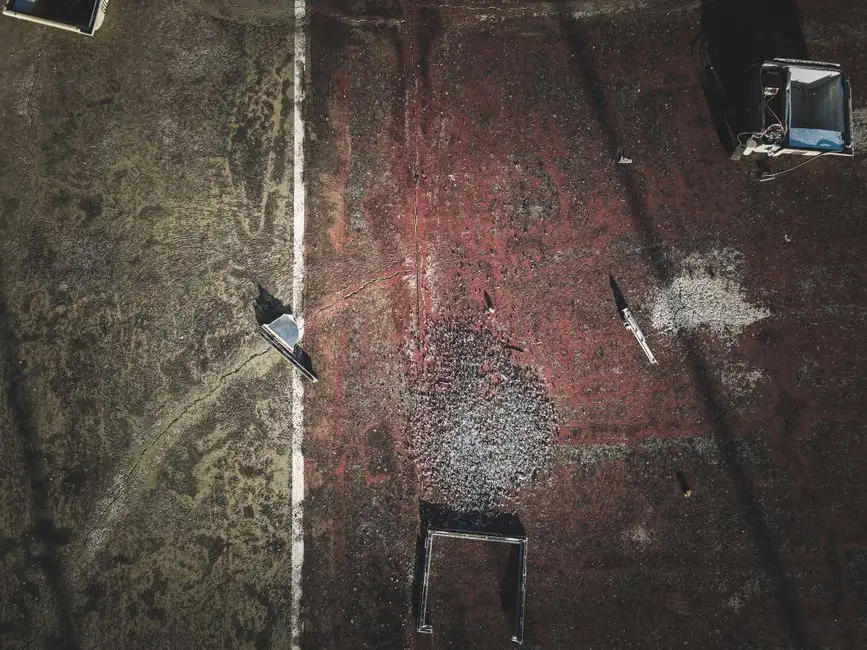
Aerial deposition can drive 40–74% of the zinc load in a watershed, per the Van Metre and Mahler (2003) and San Diego studies summarized in the City of San Diego review (Weston Solutions, 2011-05). That means a site with a tight internal mass balance can still see receiving-water concentrations above the water-quality benchmark because the non-point load arrives on the wind. The operationalized correction is straightforward: a site's measured receiving-water dissolved Zn minus the documented local aerial-deposition background equals the site's true attributable load, and that is the number the train should be sized to. The next step is to participate in any watershed monitoring program so the site's own contribution is documented against the aerial background, rather than being silently masked by it. On the design side, size the train for the tighter of (a) the facility's permit number and (b) the local TMDL target, then validate both with the same influent dataset. The aerial-deposition correction is the practical EHS gap that the top SERP pages leave on the table; without it, a site over-designs a hydroxide train to chase a receiving-water number that is partly non-point load, and over-spends on sludge disposal capacity that the attributable load does not actually require.
2026 RFQ Checklist: What to Demand From a Zinc-Treatment Supplier
The research data does not include a current installed-price for a complete zinc treatment train, so any quoted number would be invented. What a buyer should request from each shortlisted supplier is a priced P&ID tied to a documented jar-test result on the site's own wastewater, a separate line item for the filter press for zinc-bearing sludge dewatering sized to the expected clarifier underflow, and an itemized annual OPEX for chemicals, sludge disposal, and maintenance. Comparing those three documents across vendors is the only defensible way to evaluate cost in 2026. The proposal should also justify the unit-operation choice against the receiving-POTW local limit or the NPDES monthly average, not a generic target: a DAF system for precipitated zinc removal for the hydroxide train, a lamella clarifier for zinc-bearing floc removal for the sulfide train, and PLC-controlled chemical dosing on the equalization basin. For broader clarifier-vs-DAF context across metals, the DAF vs clarifier for mining and metals wastewater in 2026 guide walks through the unit-operation trade-offs, while the fabricated-metals 2026 pretreatment compliance and chemicals-plant 2026 pretreatment compliance references show the same RFQ discipline applied to other permit pathways.
Frequently Asked Questions
What is a defensible 2026 budget range for a dissolved-zinc treatment train?
The research data does not contain a current installed-price for a complete zinc treatment train, so any quoted dollar figure would be invented. A buyer should request three documents from each shortlisted supplier: a priced P&ID tied to a documented jar-test result on the site's own wastewater, a separate line item for the filter press sized to the expected clarifier underflow, and an itemized annual OPEX for chemicals, sludge disposal, and maintenance. Comparing those three documents across vendors is the only defensible way to evaluate cost in 2026.
If our lab report shows total zinc below the permit, are we compliant for NPDES?
Not necessarily. The MDPI 2022 review (2022-01-19) documents that "up to 100% of Zn has been measured as Zn²⁺ in the Zn roof runoff," and SAMCO (2024) confirms that NPDES and POTW limits are set against this bioavailable, dissolved form. A site that passes a total-zinc screen but never measures dissolved Zn routinely fails at the DMR stage, particularly when the upstream process is switching from a particulate-generating chemistry to a dissolved-generating one.
When should we choose sulfide precipitation over hydroxide in 2026?
Choose sulfide (Na₂S) when the receiving POTW or a TMDL is pushing the monthly average toward the lower end of the 0.252–4.50 ppm POTW range, because Na₂S achieves lower residual dissolved Zn. The trade-off is sludge handling: sulfide precipitation typically generates a sludge that requires hazardous-waste handling, which raises OPEX and may force a different disposal contractor. A jar test on the actual wastewater is the only way to confirm which chemistry hits the target at acceptable chemical dose and sludge yield.
What should we verify in a 2026 supplier proposal before signing?
Demand a priced P&ID tied to a documented jar-test result on the site's own wastewater, a separate line item for the filter press sized to the expected clarifier underflow, and an itemized annual OPEX that states the hydroxide-vs-sulfide chemistry choice and its sludge-disposal classification explicitly. The proposal should also justify the unit-operation choice (DAF for the hydroxide train, lamella clarifier for the sulfide train, PLC-controlled chemical dosing on the equalization basin) against the receiving-POTW local limit or the NPDES monthly average, not a generic target.
Should aerial deposition change how we size the treatment train?
Yes. Aerial deposition can drive 40–74% of the zinc load in a watershed (Van Metre and Mahler, 2003; City of San Diego / Weston, 2011-05), and that non-point load arrives regardless of how tightly the site is run. Size the train for the tighter of (a) the facility's permit number and (b) the local TMDL target, subtract the documented local aerial-deposition background from the measured receiving-water dissolved Zn to derive the site's true attributable load, and participate in any watershed monitoring program so the site's own contribution is documented against the background.