Why Moss Point Food and Beverage Plants Can't Skip Pretreatment in 2026
A Moss Point seafood or poultry processor staring at a discharge violation notice from the local POTW faces three layers of regulatory oversight. EPA categorical pretreatment standards set the federal floor, the Mississippi Department of Environmental Quality enforces state industrial discharge rules, and the local POTW writes its own sewer-use ordinance on top of both. The strictest of the three controls the design, and in practice that is almost always the local limit (Crystal Clean, food and beverage wastewater treatment solutions, accessed 2025).
Food and beverage effluent routinely runs 10 to 20 times the BOD of domestic sewage, so a municipal plant sized for residential flows is easily overloaded without pretreatment (Crystal Clean). Penalty exposure escalates through sewer surcharges, increased monitoring, mandatory pretreatment installation orders, permit revocation, and in the worst documented cases, a full production shutdown when discharge problems threaten the POTW's own compliance (Crystal Clean).
Local sewer caps vary by jurisdiction, so a plant twenty miles up the road can face different numeric limits than an identical facility inside the Moss Point service area (Crystal Clean). Confirming the actual numeric caps in writing with the local POTW before procurement is required, as the federal floor rarely defines the binding constraint on a Moss Point food or beverage permit in 2026.
What Comes Out of a Food and Beverage Plant — The Wastewater Profile
The loading profile for a food and beverage plant is dominated by BOD and COD, which routinely exceed levels a sewer district accepts without pretreatment or surcharges (Crystal Clean, food and beverage wastewater treatment solutions, accessed 2025). A dairy, brewery, or rendering line can generate wastewater with BOD levels 10 to 20 times higher than domestic sewage (Crystal Clean). That organic load is the primary driver behind every other design choice downstream.
pH swings are inherent to the process. Citric acid from fruit processing, caustic cleaners from clean-in-place systems, and acid sanitizers cycling through the line push discharge from acidic to alkaline within a single shift (Crystal Clean). Equalization or active neutralization is necessary, because extreme pH damages pipes, kills the biology of downstream treatment, and can release toxic gases in confined spaces (Crystal Clean).
Suspended solids, FOG, and colloidal matter accumulate in clarifiers and need periodic removal. The system loses effectiveness slowly enough that operators do not notice until discharge numbers start climbing (Crystal Clean). Peak flows during washdowns and shift changes can overwhelm systems sized for average conditions, so hydraulic buffering is as critical as treatment kinetics (Crystal Clean). On the Mississippi Gulf Coast, seafood and poultry operations add high salinity and seasonal surge flows that shape how equalization basins are sized; Moss Point processors planning around a menhaden run or a poultry shift change must capture that peak in the basin, not the daily average.
The Five-Stage Pretreatment Train Most Moss Point Plants End Up With
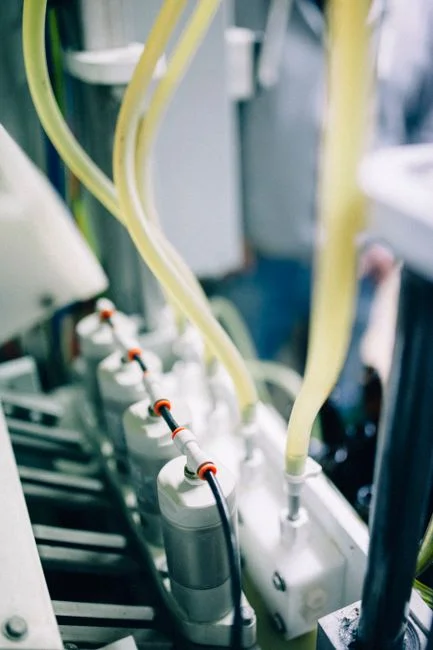
Most Moss Point food and beverage plants converge on the same five-stage train because each stage solves a problem the previous one cannot. Walking through the train stage by stage reveals the bottleneck in any given facility.
Stage 1 is a rotary mechanical bar screen for headworks protection, sized to peak wet-weather flow so that rags, plastics, and fibrous debris from packaging and processing never reach the downstream pumps or biological units (Crystal Clean, food and beverage wastewater treatment solutions, accessed 2025). Skipping this stage is a common cause of downstream pump failures and membrane fouling; the prevention playbook is straightforward and cost-effective relative to the equipment it protects.
Stage 2 is equalization and pH stabilization. The basin dampens BOD spikes and acidic or alkaline swings before they hit the biological units, which keeps the biology alive through sanitation cycles (Crystal Clean). Stage 3 is a DAF system for food and beverage primary clarification, the proven choice for meat, protein, and dairy solids, FOG, and colloidal removal, and a common point of optimization with peroxide-based chemistry for supplemental dissolved oxygen and H2S control (USP Technologies, food and beverage wastewater treatment, accessed 2025).
Stage 4 is biological treatment — activated sludge, sequencing batch reactor, or an MBR membrane bioreactor for food plant biological treatment — to drop BOD and COD. MBR variants are common in Moss Point retrofits because they deliver near-reuse-quality effluent in roughly 60% of the footprint of a conventional activated-sludge train, and the underlying causes of MBR fouling are well-documented and preventable (HydropureWater, MBR membrane fouling causes and prevention, accessed 2025). Stage 5 is pH trim, nutrient (N/P) polishing, and disinfection to meet final POTW and Mississippi DEQ limits and prevent eutrophication in receiving waters (USP Technologies).
| Stage | Function | Primary equipment | Key design driver |
|---|---|---|---|
| 1 — Screening | Remove rags, plastics, fibrous debris | Rotary mechanical bar screen | Peak wet-weather flow |
| 2 — Equalization | Dampen BOD and pH swings | Equalization basin with mixing | Peak vs. average sanitary flow |
| 3 — DAF | Remove FOG, suspended solids, colloids | Dissolved air flotation unit | Surface loading and air-to-solids ratio |
| 4 — Biological | Reduce BOD/COD, partial nitrification | Activated sludge, SBR, or MBR | Loading rate and effluent quality target |
| 5 — Polishing & disinfection | pH trim, N/P removal, pathogen kill | Chemical dosing, UV or chlorination | Final POTW and MDEQ discharge caps |
Sizing the Train for a Mississippi Gulf Coast Food Plant
The clearest sizing benchmark on the Mississippi Gulf Coast in recent years is the Mead & Hunt reference project: a 70,000 gpd system with pH control, high oil and grease removal, one day of effluent storage, a temporary lift station, and a sampling plan, brought online in 10 days (Mead & Hunt, food and beverage wastewater treatment system, accessed 2025). This benchmark serves as a public sizing anchor for Moss Point engineers defending capacity numbers internally.
DAF surface loading and air-to-solids ratio set the floor for hydraulic capacity in the FOG-rich front end of the train (USP Technologies, food and beverage wastewater treatment, accessed 2025). Equalization volume is sized to capture the difference between average and peak flows during sanitation cycles, not against the daily average — a common sizing error that surfaces when a CIP cycle hits the basin (Crystal Clean, food and beverage wastewater treatment solutions, accessed 2025). Biological sizing follows F/M ratio or MBR-specific flux targets, and a complementary MBR membrane bioreactor module with submerged PVDF membranes at 0.1 μm pore size delivers reuse-quality effluent in a smaller footprint than conventional activated sludge.
Final pH, TSS, oil and grease, and total nitrogen limits are usually driven by the local POTW, not the EPA categorical floor. Confirm those caps in writing before procurement, because they are the numbers the system must hit. A high-efficiency sedimentation tank ahead of biological treatment is one common Moss Point retrofit for plants chasing tighter TSS caps without expanding the biological basin.
| Parameter | Reference value | Source | What it tells the engineer |
|---|---|---|---|
| Reference project capacity | 70,000 gpd | Mead & Hunt (accessed 2025) | Real Gulf-area sizing benchmark |
| Time to operational | 10 days | Mead & Hunt (accessed 2025) | Anchor for rapid-deployment framing |
| DAF air-to-solids ratio | Process-specific | USP Technologies (accessed 2025) | Sets hydraulic floor for FOG front end |
| Equalization volume driver | Peak vs. average sanitary flow | Crystal Clean (accessed 2025) | Size basin to peak, not daily average |
| MBR membrane pore size | 0.1 μm (submerged PVDF) | HydropureWater (accessed 2025) | Defines reuse-quality envelope |
Permanent Install vs. Rapid-Deployment Pretreatment: Which One Wins in 2026?
Permanent installations are suitable when a Moss Point plant has 6+ months of runway, a defined effluent envelope, and a capital budget for engineering hours. They optimize lifecycle cost, operator familiarity, and integration with existing building services (Mead & Hunt, food and beverage wastewater treatment system, accessed 2025). A permanent install also allows a plant to right-size DAF and equalization for a standard operating day rather than a worst-case surge.
Rapid-deployment packaged pretreatment — the 70,000 gpd, 10-day system Mead & Hunt describes — fits compliance deadlines, seasonal seafood surge capacity, and surcharge-driven urgency (Mead & Hunt). Single-firm design-build-supply arrangements are now the standard for tight timeframes because they consolidate interface risk between the engineer, contractor, and equipment supplier (Mead & Hunt).
Sludge dewatering downstream of the train — typically a plate and frame filter press for sludge dewatering — is where operators consistently recover the most operating cost. A 2026 design guide for the food processing variant walks through the operating parameters and the layout that pays back fastest. Pairing the filter press with an automatic chemical dosing skid for pH and nutrient trim also reduces the sampling-and-reporting variability that triggers violation notices.
| Decision factor | Permanent install | Rapid-deployment packaged system |
|---|---|---|
| Lead time | 6+ months typical | ~10 days per Mead & Hunt reference |
| Best fit | Stable effluent envelope, capital available | Compliance deadline, seasonal surge, surcharge pressure |
| Procurement model | Engineer-of-record + separate contractors | Single-firm design-build-supply |
| Lifecycle cost | Lower over 10+ year horizon | Higher per gpd, no sunk engineering hours |
| Operator familiarity | Higher after commissioning | Lower initially; skidded systems shorten the learning curve |
Documentation, Monitoring, and What Auditors Actually Look For
Compliance depends on strict adherence to treatment chemistry and record-keeping. Discharge permits specify monitoring requirements, sampling frequencies, and reporting obligations, which depend on the local authority (Crystal Clean, food and beverage wastewater treatment solutions, accessed 2025). Service manifests, treatment verification, and chain-of-custody records are necessary to prove proper handling when Mississippi DEQ or the local POTW audits a hauler relationship (Crystal Clean).
Skid-mounted, factory-tested chemical dosing skids reduce the sampling-and-reporting variability that triggers violation notices. For the disinfection step, a UV sterilizer for water treatment ties into the same monitoring envelope and provides the residual-free disinfection that downstream receiving waters and reuse applications prefer. Operators who treat the documentation stack as part of the process are the ones who survive an unscheduled inspection without a corrective action order.
Frequently Asked Questions
What does a packaged food and beverage pretreatment system actually cost in 2026?
No public price list covers a packaged pretreatment train because the binding driver is the local POTW's numeric caps, the influent profile, and the chosen hydraulic capacity. Request a written proposal that itemizes each stage of the train, the chemical dosing envelope, and the sludge-handling endpoint, then compare proposals on an installed gpd basis. HydropureWater sizing references such as the filter press design for food processing wastewater in 2026 and the Marshall-area food and beverage pretreatment compliance playbook are useful inputs to a budget conversation, but the proposal must reflect your own effluent data.
How do I pick a pretreatment supplier who can actually deliver on the Mississippi Gulf Coast?
Ask for a single-firm design-build-supply arrangement with a documented commissioning record on a comparable flow rate, and require a written schedule that names the equipment-supplier relationships. The Mead & Hunt 1
Frequently Asked Questions
What BOD and TSS limits does the local POTW near Moss Point typically enforce on food and beverage discharges in 2026?
While specific local limits vary by individual sewer use ordinances, facilities discharging into the Moss Point or neighboring Jackson County systems typically face BOD (Biochemical Oxygen Demand) limits ranging from 250 mg/L to 300 mg/L and TSS (Total Suspended Solids) limits between 250 mg/L and 350 mg/L. Discharges exceeding these concentrations generally trigger high-strength surcharges based on a calculated rate per pound of excess mass.
How much does a packaged DAF plus biological pretreatment system cost for a 50,000 to 100,000 gpd food plant on the Mississippi Gulf Coast?
For a complete, turnkey packaged system capable of handling 50,000 to 100,000 gallons per day (GPD), capital expenditures typically range from $450,000 to $850,000. This estimate accounts for site-specific civil works, electrical integration, and the specialized corrosion-resistant materials required to withstand the high-humidity, salt-air environment of the Mississippi Gulf Coast.
How do I size a DAF system for a seafood or poultry processor with seasonal flow swings near Moss Point?
Sizing must be based on peak hydraulic loading and peak organic mass loading rather than daily averages to prevent solids carryover during high-production windows. Engineers utilize a surface overflow rate (SOR) typically set between 1.0 and 2.5 gallons per minute per square foot (gpm/ft²) to ensure effective separation, while incorporating equalization tank capacity capable of holding at least 150% of the maximum daily flow swing to dampen surges.
What documentation and sampling frequency do Mississippi DEQ and local POTW auditors expect from food plant pretreatment systems?
Most local jurisdictions require a minimum of monthly composite sampling for BOD, TSS, Oil & Grease, and pH, with results submitted via a formal Discharge Monitoring Report (DMR). Auditors expect a documented log of daily operator rounds, calibration records for flow meters and pH probes, and detailed manifest records for the off-site disposal of sludge generated by the DAF unit.
Can a temporary pretreatment system really be installed in 10 days to stop sewer surcharges, and what does that scope include?
A 10-day installation is feasible if utilizing skid-mounted, pre-plumbed modular equipment that connects to existing facility infrastructure. The scope includes delivery of the skid, flexible hose connections for influent and effluent, integration of chemical dosing pumps for coagulants and flocculants, and a temporary power distribution panel to bypass the need for permanent structural or electrical grid upgrades.