
Why Fruit Juice Wastewater Defies Off-the-Shelf Filter Press Design
Generic filter press sizing assumes a stable, mineral-leaning sludge, whereas fruit juice wastewater is characterized by high BOD/COD, suspended pectin, and pulp. Press-house liquor carries seasonal load swings that follow the harvest calendar—apple in autumn, citrus in spring, and berries in summer—meaning the activated sludge or DAF float arriving at the press is organic, fibrous, and compressible rather than crystalline.
The US EPA Belt Filter Press Fact Sheet 832-F-00-057 (US EPA, 2000-09) frames dewatering as a tool to reduce residual volume, improve downstream operations, and cut storage, transfer, and disposal costs. A BRIN plate-frame study (BRIN, undated) tested cake formation on simulated activated sludge using CaCO₃ at 1–4% w/w and reported that cotton cloth removed 56.00% of solids at 4% w/w—a mineral-system result that does not transfer cleanly to pectin- and sugar-rich biological sludge from a juice line. A plate and frame filter press can be specified for the duty, but the chemistry upstream must drive the cloth, polymer, and cycle-time choices.
From Press House to Filter Press: Characterising the Sludge You Actually Dewater
Missing influent data is the primary cause of juice-plant dewatering project failures at commissioning. Before any vendor can size a press, the engineer must provide flow (m³/h), TSS (mg/L or % w/w), VSS fraction, pH, temperature, BOD/COD ratio, and a clear statement of the upstream process—DAF, lamella, MBR, or conventional activated sludge—that produced the sludge. Each parameter carries weight: TSS sets the solids loading that the press must convert to cake; VSS fraction predicts polymer demand; temperature affects polymer activation kinetics and filtrate viscosity; and the upstream unit operation sets floc structure and cake compressibility. KUOSI (KUOSI, undated) lists filtration cycle time, desired cake dryness, filter cloth life, and manual versus automatic plate removal as the design parameters that follow this characterisation. A juice line that runs apple in autumn and citrus in spring will see different sugar, acid, and pectin loads, so the design point is the peak harvest week, not the annual average. The table below summarises the minimum data package a vendor needs before a serious sizing proposal.
| Parameter | Why it matters for press sizing | Typical data source |
|---|---|---|
| Flow to press (m³/h) | Sets hydraulic feed rate and pump selection | Flow meter on sludge line; daily composite |
| TSS / % DS at press feed | Drives cake volume via KUOSI V₂ = V₁ × δ₁/δ₂ | Gravimetric TSS, lab |
| VSS fraction | Predicts polymer dose and cake compressibility | Volatile solids test, lab |
| pH and temperature | Polymer activation and filtrate viscosity | Online probe + grab sample |
| BOD/COD | Indicates biological activity and fouling load on cloth | Lab BOD₅ / COD |
| Upstream process | Defines floc structure and compressibility class | Process P&ID |
| Peak vs average loading | Design for peak harvest week, not annual mean | Production schedule + 12-month log |
The same data package serves as the basis for sizing the dissolved air flotation pre-thickening stage or a lamella clarifier upstream. This ensures that the initial characterisation effort remains useful if the design later shifts toward a belt press.
Pre-Thickening and Polymer Conditioning: The Step That Decides Cake Dryness

Optimizing the process upstream of the press is the most effective way to improve filter press performance. Biological sludge from a juice line typically arrives at the press feed tank at 0.5–2% DS; gravity belt thickening or a DAF unit raises that to roughly 3–6% DS, which directly cuts the cake volume the press must produce (KUOSI, undated). Polymer conditioning is mandatory for this duty; cationic polyacrylamide (or cationic starch for high-organic loads) builds the floc that the filter cloth retains, preventing the cloth from blinding within a few cycles. The only reliable way to select polymer type, charge density, molecular weight, and dose is a jar test program on the actual thickened sludge. Bench confirmation is required because fruit juice sludge varies with fruit mix, harvest week, and upstream BOD removal efficiency. Repeatable feed of the selected polymer is the job of an automatic polymer dosing skid tied to the press feed flow. A lamella clarifier ahead of the press feed tank is a common way to lift the feed solids without rebuilding the biological stage.
Plate-Frame vs Belt Filter Press: Which One Fits a Juice Plant?
Confusion often arises between wastewater dewatering presses and juice-recovery belt presses. The US EPA (US EPA, 2000-09) defines a belt filter press as a device that removes water from liquid wastewater residuals to produce cake. The AGICO juice belt press (AGICO, undated), by contrast, is a juice extractor that uses multistage folding and pneumatic pressure to push juice yield to 75–78% from crushed fruit pulp; it is upstream equipment, not a wastewater device. For wastewater dewatering, the choice is between a batch plate-frame press and a continuous belt press. Plate-frame systems deliver higher cake dryness—typically 30–45% DS on conditioned biological sludge—at lower CAPEX per m² of filtration area, requiring batch cycle times and planned cloth-change shutdowns. Belt presses run continuously, hit lower cake dryness, and use less polymer per tonne of dry solids, but they struggle with very fine or compressible floc. The table below maps these trade-offs to a juice plant's requirements.
| Decision axis | Plate-frame filter press | Belt filter press (wastewater duty) |
|---|---|---|
| Operation mode | Batch, fixed cycle | Continuous |
| Cake dryness on conditioned biological sludge | 30–45% DS | Lower than plate-frame |
| Polymer consumption per tonne DS | Higher | Lower |
| Operator exposure | Higher (plate shifting, cloth handling) | Lower |
| Cloth change impact | Planned shutdown | Belt swap, shorter interruption |
| Fit for fine/compressible organic floc | Good with proper cloth and polymer | Weaker on very fine floc |
| Typical juice plant fit | Smaller lines, tight cake handling, dryer feed downstream | Large continuous lines, cake to dryer or co-disposal |
For most juice concentrate, NFC, and cider plants in the small-to-medium throughput band, a plate and frame filter press sized against the harvest peak is the most defensible choice. A belt press only enters the conversation when the downstream cake route can absorb a wetter, lower-solids product.
Filter Cloth Selection for Organic, Fibrous Sludge

Filter cloth is a critical, often overlooked, component of a filter press specification. The BRIN plate-frame study (BRIN, undated) confirms that cloth choice materially changes solids removal; cotton cloth outperformed drill cloth on a CaCO₃ simulation, reaching 56.00% removal at 4% w/w feed. For organic, fibrous sludge, mono/multifilament polypropylene with a weave and air-permeability rating matched to the polymer-conditioned floc size is the baseline. Tighter weaves provide clearer filtrate but blind faster on a sticky, pectin-laden cake, while looser weaves push more fines through and shorten cloth life. KUOSI (KUOSI, undated) lists filter cloth life as a primary design parameter, necessitating a lifecycle approach to procurement. The correct anchor for the weave and permeability decision is the jar-test floc size and the target filtrate clarity.
Sizing a Plate-Frame Press: Worked Example
KUOSI (KUOSI, undated) provides the mass-balance equations that govern plate-frame sizing:
- V₂ (m³) = V₁ × (δ₁ / δ₂), where V is volume and δ is solids content
- Filter area M (m²) = V₂ ÷ V_unit, with V_unit ≈ 15 L/m² (= 0.015 m³/m²)
- Cycle time T = V₂ ÷ (S × M), where S is the per-area filtration rate (m³/h·m²)
Cake volume is the feed volume multiplied by the concentration ratio δ₁/δ₂. For a juice plant generating 10 m³/day of thickened sludge at 2% DS, targeting 35% DS cake (a concentration ratio of 17.5), daily cake volume is 0.571 m³ (571 L). Using V_unit = 15 L/m², the required filtration area is approximately 38 m². This figure covers the daily batch on a single shift, which a vendor will round up to a standard plate count. The cycle time depends on S, which must be derived from bench or pilot testing; the KUOSI equations assume a well-conditioned, low-compressible cake. Sizing is only accurate once a jar test has fixed the polymer dose and pilot testing has established S. A plate and frame filter press quotation should be benchmarked against these mass balance calculations.
Automation, Safety and Cake Handling in 2026
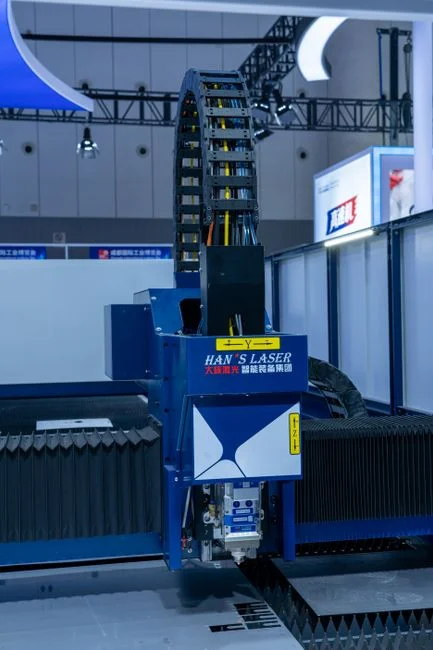
Modern specifications require more than basic functionality. KUOSI (KUOSI, undated) includes automatic plate change, filter cloth cleaning systems, and safety light curtains as essential features to reduce operator exposure to wet, sugary cake and high-pressure hydraulic equipment. Cake handling is a hygiene and odour challenge; a 35% DS fruit-juice cake is pumpable as a paste but remains biologically active, requiring covered conveyors, short residence times, and wash-down stations in the discharge area. PLC integration with the upstream DAF or lamella and the polymer dosing skid is standard for new 2026 installs to avoid the maintenance liabilities associated with standalone controllers.
CAPEX, OPEX and 2026 Compliance Considerations
CAPEX for a plate-frame press scales with throughput, with KUOSI (KUOSI, undated) placing a new dewatering press between $12,000–$45,000 for small plants and roughly $300,000 for medium plants treating 18–55 TPH of solids. OPEX is driven by polymer consumption on organic sludge, followed by power, cloth replacement, wash water, and cake transport. Tightening discharge limits on BOD, TSS, and total nitrogen make the press a compliance enabler, as wetter cake increases residual streams and the risk of excursions during harvest peaks. A press sized to the peak week and matched to the upstream dissolved air flotation pre-thickening stage provides the most robust solution for both CAPEX management and regulatory compliance. For more on this compliance framing, see the food and beverage pretreatment compliance guide, and for the wider ZLD context, the ZLD plant buyer's guide.
Frequently Asked Questions
What CAPEX should a juice plant budget for a filter press in 2026?
KUOSI (KUOSI, undated) places a new dewatering press at $12,000–$45,000 for a small plant and roughly $300,000 for a medium plant treating 18–55 TPH of solids, with multi-press lines above 110 t/h requiring higher budgets. The final cost depends on harvest-peak solids loading, plate count, automation, and materials of contact, requiring an influent data package rather than a generic m² estimate.
How do I choose between a belt filter press and a plate-frame press for a juice plant?
Selection should be based on the downstream cake route. A plate-frame press is preferred when the cake must be 30–45% DS for handling or further drying and the plant can accommodate a batch cycle. A belt press is suitable when the downstream route accepts lower cake dryness and the line is large enough to benefit from continuous operation and lower polymer consumption per tonne DS (US EPA, 200
Frequently Asked Questions
What is a realistic CAPEX range for a filter press sized for a fruit juice wastewater plant in 2026?
For a standard fruit juice facility processing 100 to 500 cubic meters of wastewater per day, CAPEX typically ranges from $65,000 to $220,000 depending on automation levels and metallurgy. This range covers the filter press unit, hydraulic power pack, and sludge feed pump, but excludes installation, civil works, and peripheral polymer dosing systems.
How do I decide between a belt filter press and a plate-and-frame press for a juice plant's biological sludge?
Plate-and-frame filter presses are preferred for biological sludge because they consistently achieve higher cake solids, typically ranging from 30% to 45% dry solids, compared to the 15% to 25% achieved by belt presses. If disposal costs per wet ton are high, the superior dewatering efficiency of a plate-and-frame system often offsets the higher labor requirements and batch-processing nature of the unit.
What data does a filter press supplier need from me before they can size a unit for juice wastewater?
Suppliers require the average and peak daily hydraulic flow rates (m³/day), the total suspended solids (TSS) concentration in mg/L, and the sludge volume index (SVI). Additionally, providing a laboratory analysis of the sludge’s specific resistance to filtration (SRF) and the chemical composition—specifically the concentrations of sugars and organic acids—is critical to determining the necessary filter cloth porosity and chemical conditioning requirements.
Can a juice belt press like the AGICO unit also dewater wastewater sludge, or do I need a separate filter press?
While some specialized belt presses are marketed for both, fruit juice extraction presses are typically engineered for high-pressure expression of raw product rather than the low-pressure flocculation required for waste activated sludge. Utilizing a juice press for wastewater is generally discouraged due to the extreme difference in solids handling; wastewater sludge requires specific polymer conditioning and cloth weave densities that differ from food-grade juice extraction requirements.
What is the compliance risk in 2026 if my filter press is undersized for peak harvest season flow?
Undersizing the unit during peak harvest leads to hydraulic bottlenecks that force the bypass of primary clarifiers or the storage of unstable, high-BOD sludge in open lagoons, which violates most environmental discharge permits. Under 2026 regulatory standards, failure to manage peak loads often results in daily non-compliance fines ranging from $5,000 to $25,000 per violation, as well as the potential for mandatory production halts during the most profitable harvest windows.