Why Onitsha Data Centers Need a Dedicated Blowdown Strategy
A 100 MW data center can consume up to roughly 2 million liters of water per day, and cooling-tower blowdown is the single largest reclaimable stream inside that water balance (IDE Tech, 2026). Onitsha, Anambra State, sits on the Niger/Benue system with seasonal rain-fed reservoirs feeding municipal supply. Wet-season turbidity and dry-season conductivity shift meaningfully, which means the first design deliverable on any Onitsha site is a full feed-water characterization, not a default spec sheet.
Southeastern Nigeria's grid reliability pushes treatment selection toward lower-power options — side-stream filtration, single-pass RO, or NF — rather than high-pressure multi-stage RO or MVC evaporators that add 15-25 kWh per 1,000 gallons (Genesis Water Technologies, 2026). At 4 cycles of concentration, blowdown discards 25-30% of makeup water with TDS at 1,200-6,000 mg/L, the highest-leverage reuse target in the plant (Genesis Water Technologies, 2026). Generic US Southwest or Middle East templates, built around absolute water scarcity, miss the binding constraint here: power and source-water seasonality, not raw water volume. The framework for data center blowdown treatment in Ludhiana addresses a different climate reality, so Onitsha planners should not lift it wholesale.
Blowdown Chemistry: What the Treatment Train Must Handle
Cooling-tower blowdown is brackish by design: TDS runs 4-8× the makeup, typically 1,200-6,000 mg/L, because evaporation concentrates every dissolved species the makeup water carries (Genesis Water Technologies, 2026). Scaling minerals — calcium, magnesium, silica, and alkalinity — drive both membrane scaling risk and the recovery ceiling on any downstream RO. Treatment-chemical residues accumulate in proportion to cycles: biocides, corrosion and scale inhibitors, and dispersants concentrate in the blowdown stream, and legacy chromate or high-phosphate programs make reuse particularly difficult. Suspended solids in blowdown typically run 10-50 mg/L from corrosion products, biofilm fragments, and airborne particulates, and biological content (planktonic bacteria, biofilm-forming organisms) must be neutralized before any membrane step. Cooling-tower target water quality for safe reuse is a tighter envelope than raw blowdown: TDS 500-1,500 mg/L, hardness below 200-400 mg/L as CaCO₃, TSS 10-25 mg/L, pH 6.5-8.5, and HPC under 10,000 CFU/mL (Genesis Water Technologies, 2026). The table below summarizes the gap between raw blowdown and reuse-ready makeup.
| Parameter | Raw blowdown (typical) | Reuse-ready cooling-tower makeup |
|---|---|---|
| TDS | 1,200-6,000 mg/L | 500-1,500 mg/L |
| Hardness (as CaCO₃) | Scales with cycles and makeup | < 200-400 mg/L |
| Suspended solids | 10-50 mg/L | 10-25 mg/L |
| pH | Site-specific | 6.5-8.5 |
| HPC (bacteria) | Variable, often high | < 10,000 CFU/mL |
| Silica, scaling ions | Concentrated | Controlled by antiscalant/recovery design |
Pretreatment: Side-Stream Filtration and UF
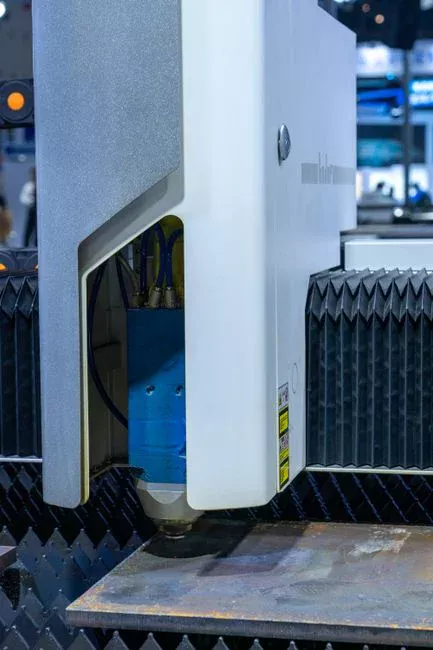
Self-cleaning side-stream filters are the first line of defense, installed at 1-5% of total circulation flow with 10-25 micron rating, and typically run $50,000-200,000 in capex for a data-center installation (Genesis Water Technologies, 2026). They directly enable higher cycles of concentration, which lowers blowdown volume but raises blowdown TDS — both effects must be modeled together or the downstream membrane system gets undersized. Hollow-fiber UF at 0.01-0.1 micron pore size, operating at 10-30 psi with 90-95% recovery and permeate backwash, removes suspended solids, bacteria, and high-MW organics; chemical cleaning is typically needed every 1-3 months (Genesis Water Technologies, 2026). UF permeate is the correct feed quality for RO/NF (target SDI <3) and is a defensible standalone polishing step where the binding issue is biological control rather than TDS reduction. A hollow-fiber UF skid paired with a multi-media filter upstream covers the Onitsha seasonal turbidity swing better than either stage alone. The Onitsha-specific concern: feed conductivity and turbidity move significantly between wet and dry seasons, and oversized backwash capacity plus redundant UF racks reduce CIP trips during the rainy season. The research does not quantify this benefit, so it should be raised explicitly with the OEM during bid review rather than assumed.
Core Recovery: NF, RO, and When to Pick Each
RO removes 95-99% of dissolved solids, producing permeate at 10-50 mg/L TDS at 150-400 psi, with 50-85% recovery on blowdown feed (Genesis Water Technologies, 2026). NF removes hardness, sulfate, and partial TDS — permeate typically 30-50% of feed concentration — at 75-150 psi and 70-85% recovery, with lower energy use and a better fit where hardness rather than full TDS is the binding constraint. Conventional BWRO on CTBD plateaus near 75-80% recovery; high-recovery designs using controlled salt precipitation and dynamic RO operation have reached ~95% recovery with permeate silica around 1 mg/L in an industrial case (IDE Tech, 2026). A 50,000 GPD blowdown RO skid typically runs $250,000-500,000 installed, with opex of $1.50-3.00 per 1,000 gallons including energy, chemicals, membrane replacement, and maintenance (Genesis Water Technologies, 2026). A hyperscale UF+RO primary/secondary configuration has demonstrated 88% overall recovery with 98% TDS rejection across multiple facilities (Genesis Water Technologies, 2026). The industrial RO system selection should be matched to feed water and the relevant RO and UF membrane elements should be specified for blowdown chemistry, not potable reuse.
| Technology | Operating pressure | Recovery on CTBD | Permeate quality | Best fit |
|---|---|---|---|---|
| UF (hollow fiber) | 10-30 psi | 90-95% | SDI < 3, TSS < 1 mg/L | Pretreatment for RO/NF; biological control |
| NF | 75-150 psi | 70-85% | 30-50% of feed TDS, hardness removed | Hardness-driven reuse; lower energy |
| RO (BWRO, conventional) | 150-400 psi | 50-85% | 10-50 mg/L TDS | Full TDS reduction, high-purity makeup |
| RO (high-recovery, salt precipitation) | 150-400 psi + dynamic cycling | ~95% | Permeate silica ~1 mg/L demonstrated | High-recovery reuse on scale-prone CTBD |
Discharge Compliance vs. Reuse vs. Zero Liquid Discharge in Nigeria
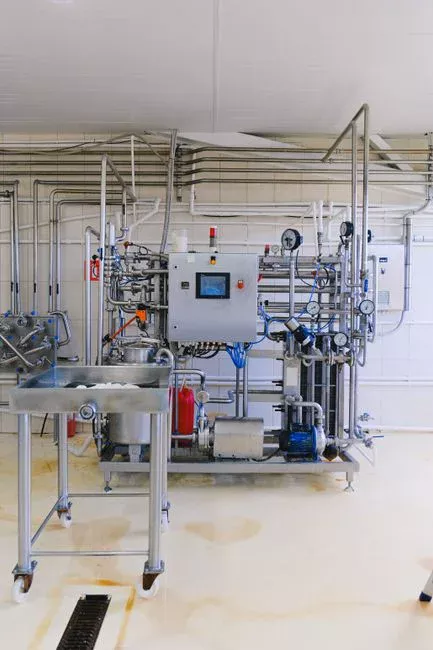
Three end-use strategies map to three very different equipment trains, and not every Onitsha site needs reuse. Discharge-compliance mode polishes blowdown to permit limits with minimal capex, and is relevant where reuse is not economically justified and where the binding constraint is the National Environmental (Surface and Groundwater Quality) effluent limits enforced by NESREA and state regulators through the Federal Ministry of Environment. The research did not provide Nigeria-specific numeric effluent limits, so the more honest move is to confirm TDS, pH, residual chlorine, heavy metals, and biocide-byproduct limits with NESREA and the Anambra State Ministry of Environment before sizing anything. Cooling-tower makeup reuse at 60-85% recovery is the highest-value path for most data centers, but conventional BWRO above ~80% recovery on CTBD requires staged RO or salt-precipitation designs (Genesis Water Technologies, 2026; IDE Tech, 2026). Full ZLD reaches 95-99% overall recovery by sending RO concentrate to MVC (95-98% recovery, distillate under 10 mg/L TDS) and a crystallizer; capex runs $3-8M and opex $5-15 per thousand gallons, and is economic only where discharge is prohibited or water carries a true premium (Genesis Water Technologies, 2026). Partial ZLD, concentrating blowdown by 80-90% volume, captures most of the benefit at a fraction of full-ZLD capex and is the realistic option for mid-size Nigerian sites; the ZLD plant buyer's guide covers the technology comparison in more depth.
| Strategy | Overall recovery | Capex band | Opex band | When it makes sense |
|---|---|---|---|---|
| Discharge compliance | Low (polish only) | Lowest | Driven by discharge fees | Reuse not justified; effluent limits are the binding constraint |
| Cooling-tower makeup reuse | 60-85% conventional; up to ~95% with salt precipitation | RO skid $250-500k at 50,000 GPD | $1.50-3.00/kgal | Most data-center sites; reduces freshwater and discharge volume |
| Partial ZLD (80-90% volume reduction) | 80-90% | Lower than full ZLD | Lower than full ZLD | Mid-size Nigerian sites needing meaningful volume reduction without full ZLD |
| Full ZLD (RO + MVC + crystallizer) | 95-99% | $3-8M | $5-15/kgal | Discharge prohibited; water priced at a premium; hyperscale sites |
Onitsha Sizing Framework and Cost Bands
Size the blowdown stream first: at 4 cycles of concentration, blowdown is approximately 25-30% of makeup, so a 10-million-gallon-per-month facility is sending 2.5-3 million gallons per month to treatment (Genesis Water Technologies, 2026). Pretreatment is sized off circulation flow — side-stream filtration at 1-5% of total circulation — and UF is sized for 90-95% recovery on the blowdown stream itself (Genesis Water Technologies, 2026). The reuse system is sized off the blowdown flow: a 50,000 GPD RO skid treating blowdown is in the $250,000-500,000 capex range with $1.50-3.00 per kgal opex, while full ZLD pushes capex to $3-8M and opex to $5-15 per kgal (Genesis Water Technologies, 2026). MVC evaporator capex is $1-3M for 10,000-30,000 GPD of concentrate, with energy use at 15-25 kWh per 1,000 gallons of distillate (Genesis Water Technologies, 2026). The procurement checklist below is the input set an OEM needs before they can return a defensible quote; the same input discipline applies to data center wastewater treatment in Valencia and to data center blowdown treatment in Singapore, both of which lean on site-specific characterization rather than default specs.
| Item | Sizing rule / value | Source |
|---|---|---|
| Blowdown fraction at 4 cycles | 25-30% of makeup | Genesis Water Technologies, 2026 |
| Side-stream filter capacity | 1-5% of total circulation flow | Genesis Water Technologies, 2026 |
| UF recovery on blowdown | 90-95% | Genesis Water Technologies, 2026 |
| RO skid capex (50,000 GPD) | $250,000-500,000 | Genesis Water Technologies, 2026 |
| RO opex | $1.50-3.00/kgal | Genesis Water Technologies, 2026 |
| Full ZLD capex | $3-8M | Genesis Water Technologies, 2026 |
| Full ZLD opex | $5-15/kgal | Genesis Water Technologies, 2026 |
| MVC capex (10-30k GPD) | $1-3M | Genesis Water Technologies, 2026 |
| MVC energy | 15-25 kWh/1,000 gal distillate | Genesis Water Technologies, 2026 |
Procurement checklist to hand an OEM: site feed-water characterization (TDS, hardness, silica, turbidity across wet and dry seasons), target cycles of concentration, permeate end-use, peak ambient wet-bulb temperature, available floor area, and grid/backup-power budget for the treatment plant. The peak wet-bulb number drives cooling-tower cycles and therefore blowdown volume; the grid budget decides whether MVC is even on the table. Request pilot data on the actual Niger/Benue source water, not generic blowdown, before committing capex.
Frequently Asked Questions
What does a cooling-tower blowdown treatment train for an Onitsha data center actually cost?
A 50,000 GPD RO skid treating blowdown falls in the $250,000-500,000 capex range with operating costs of $1.50-3.00 per 1,000 gallons, while full ZLD moves capex to $3-8M and opex to $5-15/kgal (Genesis Water Technologies, 2026). Side-stream filtration adds $50,000-200,000 on top. The right input for a real quote is site feed-water characterization, target cycles of concentration, and the permeate end-use; without those, any number from a vendor is a placeholder.
When is reuse actually worth it versus just polishing blowdown for discharge in Nigeria?
Reuse is justified when the combined value of avoided freshwater intake, avoided discharge fees, and reduced environmental permit risk exceeds the RO opex of $1.50-3.00 per 1,000 gallons treated. Where discharge permits are obtainable at acceptable cost and the local water tariff is low, polishing for compliance is the lower-risk path. The decision should be made against confirmed NESREA effluent limits and Anambra State discharge fees, not assumed values.
How do I pick between NF, single-pass RO, and high-recovery RO for an Onitsha site?
Pick NF when hardness is the binding constraint and you want 70-85% recovery at 75-150 psi; pick single-pass RO when full TDS reduction matters and 50-85% recovery at 150-400 psi is acceptable; pick high-recovery RO with salt precipitation when you need ~95% recovery on scale-prone CTBD (Genesis Water Technologies, 2026; IDE Tech, 2026). Confirm the choice against feed-water silica and the grid power budget available for the treatment plant.
What should I check on the supplier side before awarding a blowdown treatment contract in Nigeria?
Require pilot data on the actual Niger/Benue source water at the project's seasonal worst case, not generic blowdown; require documented experience with side-stream filtration, UF, and RO trains at the same scale; require a written scope that includes membrane replacement intervals, CIP frequency, and local service response time. Local service depth in southeastern Nigeria is a real differentiator, and the absence of it should weigh against a lower sticker price.