Why Textile Wastewater Is a Strategic Problem for Egypt in 2026
Textile wastewater is not a peripheral environmental issue for Egypt — it is a load-bearing constraint on the country's largest export sector. According to a 2017 HCWW presentation by Dr. Rifaat Abdel Wahaab at World Water Week, the textile sector represents 27% of Egypt's 27,849 formally registered industrial establishments and accounts for more than 34% of total exports, with 7,500 textile companies operating across the country (S3). In several governorates textile manufacturing provides more than 25% of total employment, giving the sector outsized political weight in any enforcement regime (S3). The Egyptian industrial sector as a whole accounts for about 20% of GDP and roughly 20% of the labour force, and textile wet processing sits at the centre of that base (S3).
Water intensity is the structural driver. S3 documents water use in textile wet processing at 60–400 L per kg of fabric depending on the application, meaning a 10 ton/day dyehouse generates hundreds of cubic metres of effluent per day. An Egyptian case study cited in S3 describes a cotton-yarn mill processing 8 ton/day with water consumption of around 1,000 m³/d, the majority of which originates in pretreatment and reactive dyeing. S2 places the broader sector water envelope at 150–500 m³ per ton of fabric and wastewater generation at 300–400 L per kg of product. A 1994–2004 MBDC benchmark showed water and wastewater generation rising 185% and 200% respectively while production rose only 75% — a clear decoupling gap that 2026 plants must close (S2). For a mill in Mahalla El-Kubra or the Port Said free zone, every cubic metre of untreated effluent is a direct liability against both Law 48/1982 compliance and the operating licence.
What Comes Out of an Egyptian Dyehouse: Influent Characteristics
Textile effluents are highly coloured, contain non-biodegradable compounds, and carry elevated BOD and COD; the presence of metals and dye compounds can inhibit biological treatment and in some cases cause failure of biological systems (S3). A 2016 study in the Egyptian Journal of Aquatic Biology and Fisheries on the Port Said industrial free zone confirmed that physical, chemical and microbial characteristics of receiving waters were deteriorated and that many parameters exceeded accepted limits (S1). The pollutant mix extends well beyond dyestuff: sizing agents, scouring chemicals, softeners and finishing auxiliaries add a second layer of refractory organics and salts that pass through conventional biological treatment largely untouched (S2, S3).
Reactive dyeing dominates the problem at most Egyptian cotton mills. S3 describes a cotton-yarn case study where 80–90% of production is reactive dyed and 10–20% is full-bleached, with water consumption around 1,000 m³/d. Under those conditions, more than 90% of inorganic and most organic process chemicals exit with wastewater — there is no "small fraction" to ignore during a compliance audit (S2). Before specifying any treatment train, a mill engineer should pull a representative 24-hour composite sample and test for pH, temperature, COD, BOD, TSS, TDS, colour (Pt-Co), sulphide, residual chlorine and total heavy metals; the research supplied does not include numeric limits for these parameters at the Egyptian mill scale, so the buyer must obtain the values from their own sampling campaign and the current EEAA decree.
| Parameter | Why it matters for design | Source of variation |
|---|---|---|
| COD / BOD | Sizing biological stage sizing; MBR sizing and HRT | Reactive vs direct dye mix, batch vs continuous |
| TSS / TDS | DAF loading, RO recovery, salt balance | Fibre loss, salt-heavy reactive baths |
| Colour (Pt-Co) | Discharge compliance, reuse aesthetics | Residual hydrolysed reactive dye |
| Heavy metals (Cr, Cu, Co) | Sludge classification, biological inhibition | Metal-complex dyes, mordants |
| Temperature & pH swings | Equalisation volume, coagulant dose | Acid/alkaline batch sequencing |
The 2026 Process Train: From Bar Screen to Polishing
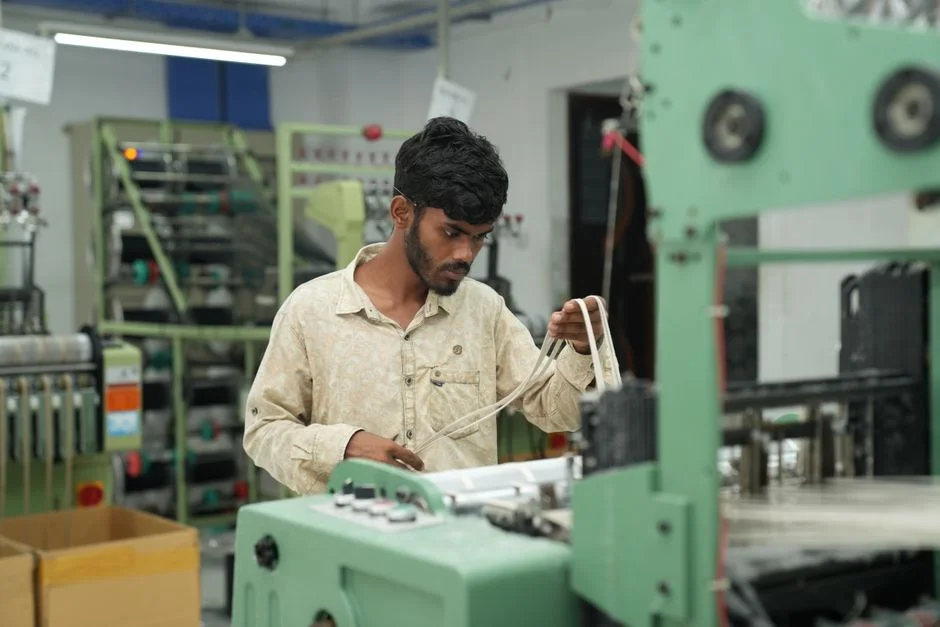
A defensible 2026 textile effluent train for an Egyptian cotton or reactive-dye mill runs in six steps: headworks → equalisation → physico-chemical treatment → biological treatment → tertiary polishing → optional ZLD. Each step targets a specific failure mode documented in Egyptian research, and each can be sourced as a skid-mounted module.
Step 1 — Headworks. A rotary bar screen for textile wastewater headworks with a 5–10 mm aperture protects downstream pumps and membranes from fibres, rags and plastic debris typical of dyehouse effluent (S1, S3). Step 2 — Equalisation and pH correction. Reactive dyehouses alternate acid and alkaline batches; equalisation neutralises shocks before coagulation (S3). Step 3 — Physico-chemical treatment. A DAF unit for textile colour and suspended-solids removal using FeSO₄ + CaO as coagulant aid is documented as effective in the S3 case study for colour, suspended solids and colloidal matter. Step 4 — Biological treatment. An MBR system for biological treatment of textile effluent retains biomass and tolerates the shock loads that crash conventional activated sludge; the submerged PVDF MBR membrane module in the DF series delivers the polishing step. Step 5 — Tertiary polishing. UF and RO remove residual colour, salts and refractory COD so effluent can be reused in the plant — Egyptian case studies name water recovery and reuse as the principal driver for membrane polishing (S2, S3). Step 6 — Optional ZLD. For sites with no sewer access, evaporation/crystallisation closes the loop; the reader should only pursue this after cleaner-production and reuse have been maximised, since S2 flags cost as the principal barrier to end-of-pipe treatment. Across all six steps, the S3 case study shows the largest COD reductions (37–90 mg/L) come from upstream cleaner-production changes rather than from adding tanks.
| Stage | Equipment | Target pollutants | Egypt-specific note |
|---|---|---|---|
| Headworks | Rotary bar screen | Fibres, rags, plastics | Protects downstream MBR/DAF |
| Equalisation | Buffer tank + pH correction | Flow and pH shocks | Acid/alkaline batch swings |
| Physico-chemical | DAF (FeSO₄ + CaO) | Colour, TSS, colloids | Case-study validated (S3) |
| Biological | MBR with submerged PVDF membranes | BOD, COD, inhibitory compounds | Handles non-biodegradable load (S1, S3) |
| Tertiary | UF + RO | Residual colour, salts, refractory COD | Drives reuse economics (S2, S3) |
| ZLD (optional) | Evaporation / crystallisation | Zero liquid discharge | Only after reuse is maximised |
Cleaner Production: The Levers That Cut Load Before Treatment
The cheapest kilogram of COD removed is the kilogram that never enters the drain. S3 documents four specific substitutions implemented at an Egyptian cotton-yarn mill producing 8 ton/day, each with a quantified COD impact.
Substitution 1 — Replace 96% acetic acid with 80% formic acid. One kilogram of acetic acid generates 1.07 kg COD and 0.64 kg BOD, versus 0.21 kg COD and 0.096 kg BOD for the formic acid equivalent; formic is also cheaper and stronger (S3). Substitution 2 — Replace the bi-sulfite step after scouring/bleaching with an H₂O₂-killer enzyme. Final-effluent COD fell by 37 mg/L in the Egyptian case study, with an additional reduction in wastewater volume (S3). Substitution 3 — Shift mono-functional reactive dyes to bi-functional reactive dyestuffs. Fixation rises from approximately 60% to 81%, which translates into a 90 mg/L reduction in wastewater COD per batch (S3). Substitution 4 — Replace chemical scouring (caustic at the boil) with bio-scouring using enzymes at 60°C. Energy consumption falls, TDS in wastewater drops, and process time shortens by 55 minutes (S3). For a deeper dive on advanced oxidation of dye residues, the related Fenton oxidation for dye wastewater guide covers chemistry that complements the biological step.
Underneath these substitutions sit three foundational controls named in HCWW guidance: reduce wastewater volume by cutting washings, recycle less-contaminated rinses, and maintain housekeeping to eliminate leakages and spillages (S3). These are not optional — they are the baseline any 2026 Egyptian plant must demonstrate before any end-of-pipe CAPEX is approved.
Compliance in 2026: Egyptian Law 48/1982 and What Auditors Look For
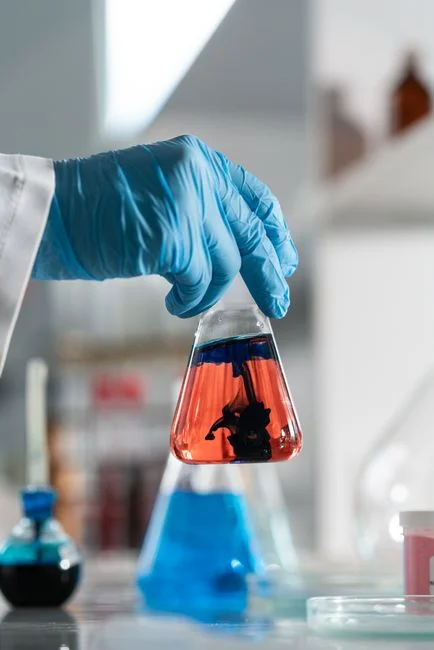
Egyptian industrial wastewater discharge is governed by Law 48/1982, cited as the reference standard in Egyptian WWTP performance surveys (S2). A 2017 survey of WWTPs in Sharkia governorate found that about 75% of facilities met Law 48/1982 limits and about 25% reported violations — textile-sector plants should expect more stringent scrutiny, not less, given the inhibitory effect of dye residues on municipal biological treatment (S2, S3). S2 also notes that for textile finishing, more than 90% of inorganic and most organic process chemicals exit with wastewater; there is no "small fraction" that an auditor will ignore.
Textile mill effluents that pass to municipal WWTPs cause operational problems because metals and dye compounds inhibit biological activity in the receiving plant, and S3 explicitly flags this as a 2026 audit risk. A 2026 inspection will look for evidence of adequate on-site pretreatment before discharge to sewer, and will check that cleaner-production measures are documented and operating. Law 4/1994 and the EEAA enforcement protocols form the operational layer. The research supplied does not include the current numeric EEAA limits for BOD, COD, TSS, oil and grease, sulphide, pH, temperature, colour or total heavy metals; readers must request the current decree values from their local EEAA office before finalising the design envelope, and these values should drive the discharge specification in any supplier tender.
Equipment Selection: What to Specify for Each Stage
The block-flow diagram translates into a concrete shortlist. At headworks, specify a continuous-duty rotary mechanical bar screen with stainless-steel rake teeth sized for peak hourly flow plus a 25% margin; this protects downstream MBR and DAF units from rags and fibres. For pretreatment, specify a DAF unit with micro-bubble flotation, automatic skimming and PLC-controlled coagulant dosing, sized across the 4–300 m³/h band that covers most Egyptian mills; the S3 case study uses FeSO₄ + CaO as the coagulant aid, and an automatic chemical dosing system is the practical implementation of that chemistry.
For the biological step, specify an MBR combining an aeration tank with a submerged PVDF flat-sheet membrane at 0.1 μm nominal pore size; this delivers near-reuse-quality effluent in roughly 60% of the footprint of conventional activated sludge — directly relevant for space-constrained Egyptian sites. For polishing, specify an UF system feeding an industrial RO system for process-water reuse, with the RO operating at up to 95% recovery; UF protects the RO from residual colloids and SDI excursions. Sludge handling requires a plate-and-frame filter press to dewater the combined DAF and biological sludge to a stackable cake. For sites evaluating ZLD, the related 2026 ZLD plant buyer's guide covers thermal versus membrane stage selection, and the inclined plate settler (lamella clarifier) specification guide is a useful counterpoint if DAF is being benchmarked against a lamella clarifier at the primary step.
| Stage | Specification to put on the requisition | Linked product |
|---|---|---|
| Headworks | Rotary bar screen, 5–10 mm aperture, SS304 | GX rotary screen |
| Coagulation | PLC-controlled dosing of FeSO₄, CaO, polymer, H₂SO₄, NaOH | Automatic dosing system |
| Physico-chemical | DAF with micro-bubble generator, automatic skimmer | DAF machine |
| Biological | MBR with submerged PVDF flat-sheet modules, 0.1 μm | MBR system + DF membrane module |
| Tertiary | UF (0.01–0.05 μm) feeding RO at up to 95% recovery | UF system + RO system |
| Sludge | Plate-and-frame filter press, automatic cycle | Filter press |
Building the 2026 Business Case: Cost Drivers and Supplier Checklist
A credible 2026 business case has to combine cleaner-production savings (formic acid, bi-functional dyes, enzyme scouring) with end-of-pipe CAPEX. S2 identifies financial, technical and cultural barriers to optimal wastewater treatment in Egypt, so any plan that addresses only one of the three will struggle at the procurement committee. The supplier quotation should be benchmarked against the OPEX drivers a mill can actually measure: chemical consumption in kg per m³ treated, membrane replacement interval, energy in kWh/m³, sludge cake dryness percent, and water-recovery rate. The research supplied does not contain specific cost figures for any of these items, so each buyer must request unit-price breakdowns from shortlisted suppliers and validate them against their own influent data.
On the CAPEX side, every reputable supplier will ask for flow (m³/d), influent COD (mg/L) and target effluent COD (mg/L); readers who cannot supply these should run a sampling campaign before tendering rather than letting suppliers size on assumptions. The supplier shortlist itself should be evaluated on four Egypt-specific criteria: documented textile references, ability to integrate DAF + MBR + RO in a single skid, in-country commissioning and spares support, and willingness to guarantee effluent values in writing. Compare an end-of-pipe scheme against a ZLD scheme on the value of recovered water, not just on treatment cost — reused process water has direct economic value in water-scarce Egyptian governorates (S2, S3).
Frequently Asked Questions
What is the 2026 process train for treating reactive-dyed textile wastewater in Egypt?
A defensible 2026 train runs in six steps: rotary bar screen → equalisation and pH correction → DAF with FeSO₄ + CaO coagulant aid → MBR with submerged PVDF membranes → UF → RO, with optional evaporation/crystallisation only after reuse is maximised (S2, S3). The sequence is driven by the need to remove colour and suspended solids before biological treatment, then polish for reuse.
How much does a textile wastewater treatment plant cost in Egypt, and what budget should a mill plan for?
The research supplied does not contain CAPEX or OPEX figures for Egyptian textile plants, so no quotation can be quoted here. A buyer should request a unit-price breakdown from shortlisted suppliers covering chemical consumption (kg/m³), membrane replacement interval, energy use (kWh/m³), sludge cake dryness and water-recovery rate, and benchmark these against their own influent flow (m³/d), COD (mg/L) and target effluent COD (mg/L) before signing.
How do I choose between an MBR and an SBR for a space-constrained Egyptian dyehouse?
S1 and S3 identify textile effluent as non-biodegradable and inhibitory, which favours MBR because it retains biomass and tolerates shock loads that crash conventional activated sludge. The MBR also delivers a smaller footprint — relevant for dense Mahalla El-Kubra and Port Said sites — and produces an effluent that can feed an RO polishing step without intermediate clarification.
What compliance risks should an Egyptian textile mill flag for procurement and legal before signing a supplier contract?
Procurement should require suppliers to guarantee effluent values against Law 48/1982 and the current EEAA decree in writing, and should confirm in-country commissioning and spares support. The 2017 Sharkia governorate survey found about 25% of WWTPs in violation of Law 48/1982 (S2), so the contract should include a performance-testing clause and a clear retention schedule tied to documented compliance.