Why Kissimmee fabricated metals plants face a DAF-vs-clarifier decision in 2026
Fabricated metals streams in Kissimmee combine cutting fluids, drawing compounds, quenching oils, rust inhibitors, weld smoke residues and fine metal particulates—a mix of floating, emulsified and settleable fractions that no single unit operation handles equally well. Kemco Systems names dissolved air flotation (DAF) as a typical clarification technology for metal finishing effluents, removing oils, greases, suspended solids, BOD, COD and metals in one stage, while a conventional or lamella clarifier only targets the settleable fraction.
The local compliance envelope—the City of Kissimmee and Osceola County Industrial Pretreatment Program limits on FOG, total metals and pH—applies whether the primary clarifier is a DAF or a gravity unit. The framing question for any 2026 capital project or retrofit is therefore: which technology gives the lowest compliance risk per cubic meter treated for the specific influent profile coming off cutting, stamping, welding, coating and finishing lines?
How a DAF system actually clarifies fabricated metals wastewater
DAF clarifies by attaching microbubbles to contaminants and floating them, rather than waiting for gravity settling. Per Kemco Systems, air is dissolved in wastewater under pressure, then released at atmospheric pressure inside a flotation tank; the released air forms tiny bubbles that adhere to suspended matter, lifting it to the surface for skimming, with the floated sludge then sent to a dewatering device for disposal. Per SigmaDAF USA (Clearwater Industries, 2026-04-27), those bubbles are 30–50 microns—small enough to attach to emulsified oil droplets and colloidal fines common in metalworking baths that would otherwise escape a clarifier overflow. Coagulants and flocculants are typically dosed upstream to agglomerate colloids into flocs that the bubbles can lift efficiently (Kemco Systems), and SigmaDAF USA notes that chemical conditioning through serpentine flocculator mix tubes or chemical mix tanks is standard practice before the flotation cell. Heavier solids still settle into a bottom collection zone and are removed by an auger, so a DAF tank handles both floatables and a fraction of settleables in a single vessel (SigmaDAF USA, 2026-04-27). This dual-function capability allows facilities to address mixed waste streams containing both tramp oil and steel fines in one process step.
How conventional and lamella clarifiers handle the same stream
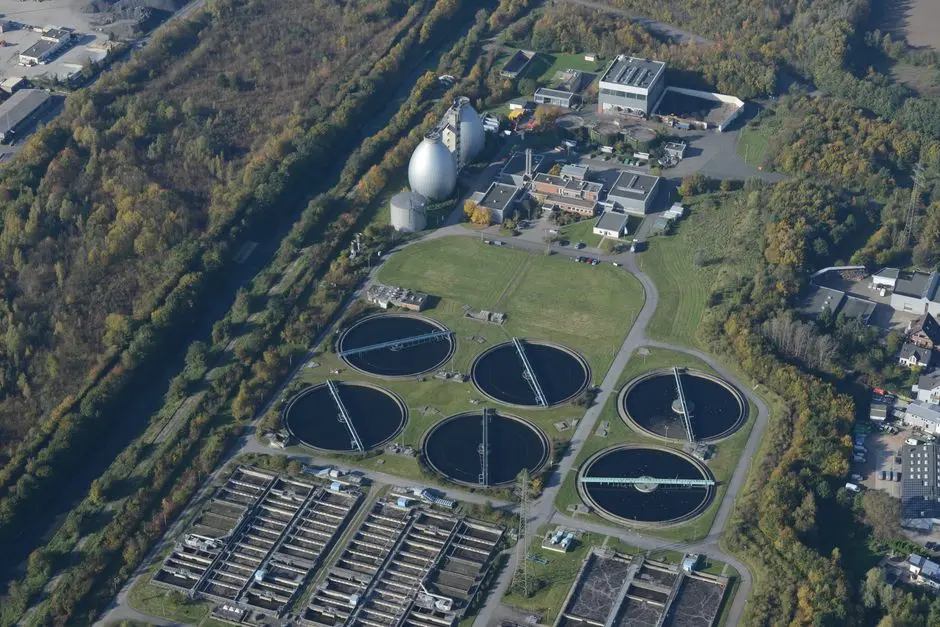
A conventional clarifier relies on Stokes-law settling: heavy metal grit and large suspended solids drop to a sludge hopper while clarified water overflows an effluent launder. Emulsified oils, cutting fluids and colloidal fines do not settle efficiently in a conventional clarifier—they leave with the overflow and tend to foul downstream RO membranes or breach discharge limits, particularly for FOG. Lamella (inclined-plate) clarifiers multiply the effective settling area inside a small footprint and improve capture of fine settleables, but they still depend on particle buoyancy being negative, so they cannot float oils. The practical result for a fabricated metals stream is that a clarifier on its own usually needs a prior oil-skimming or DAF stage if FOG is present, or it must be paired with chemical emulsion breaking upstream, which adds reagents, reaction tank volume and sludge handling. SigmaDAF USA's FPBC DAF system, in fact, integrates lamella pack technology inside the flotation cell "to reduce water flow velocity and obtain maximum separation efficiency," illustrating that the inclined-plate concept is increasingly being grafted onto flotation rather than used as a stand-alone oil-bearing stream solution (SigmaDAF USA, 2026-04-27).
DAF vs clarifier for fabricated metals: side-by-side comparison
The table below provides the data a procurement manager can circulate internally when justifying a 2026 capital line. It pairs the removal targets, footprint, materials and integration scope of each option, grounded in the supplied research.
| Parameter | DAF (e.g., HydropureWater DAF system (4–300 m³/h)) | Lamella / conventional clarifier (e.g., HydropureWater lamella clarifier) |
|---|---|---|
| Primary removal target | Oils, greases, suspended solids, metals, some BOD/COD (Kemco Systems) | Settleable solids only; FOG passes through unless chemically broken |
| Mechanism | 30–50 micron microbubbles attach to and float contaminants (SigmaDAF USA, 2026-04-27) | Gravity settling on inclined plates or in a sludge hopper |
| Footprint / modularity | COMPACT pre-assembled skid for ≤66 GPM; modular two-skid for >66 GPM (SigmaDAF USA, 2026-04-27) | Inclined plates compress footprint but still need a separate chemical/oil stage for FOG streams |
| Standard materials | 304SS standard; 316SS and polypropylene available for corrosive metalworking baths (SigmaDAF USA, 2026-04-27) | Typically carbon steel with coating or stainless; confirm with vendor |
| Typical upstream train | Coarse filtration (hydrocyclone or shaker screen) + pH control + coagulant/flocculant dosing (Kemco Systems) | Often emulsion-breaking chemistry + flocculation if any FOG is present |
| Typical downstream train | Sludge dewatering via filter press (Kemco Systems) | Sludge pump and rake/traveling-bridge care; separate dewatering |
| Operator interfaces | PLC control screen for chemical dosing pumps, skimmer speed, sludge discharge (SigmaDAF USA, 2026-04-27) | PLC for sludge pumping, rake torque and bridge travel |
| Best-fit influent | High FOG, emulsified oils, mixed metal fines, fluctuating pH | Predominantly heavy grit, low FOG, near-neutral pH |
A DAF absorbs more of the fabricated metals stream's variability inside one vessel, while a clarifier either ignores the FOG or off-loads it onto chemistry and an extra skimming stage.
A 2026 selection framework for Kissimmee fabricated metals plants
The decision tree below converts the comparison into an actionable internal review.
- Characterize the influent. Measure FOG, TSS, total metals, pH and temperature across at least one full production shift, because fabricated metals flows vary sharply with shift and part mix.
- Apply the FOG rule of thumb. If FOG is consistently present at meaningful levels or emulsified oils are visible, default to DAF as the primary clarifier; if FOG is negligible and TSS is dominated by heavy metal fines, a lamella clarifier becomes competitive.
- Confirm the local pretreatment envelope. Check the City of Kissimmee / Osceola County FOG, metals and pH limits before sizing, because the chosen unit must hit the local discharge envelope, not a generic factory spec. Request these numeric limits in writing from the local pretreatment coordinator.
- Demand site-specific performance data. Ask suppliers for jar-test or pilot results on your actual stream, hydraulic residence time, air-to-solids ratio and chemical demand; treat any vendor "typical range" as unverified until it is backed by your data.
- Budget the full train. A DAF system rarely stands alone. Kemco Systems lists coarse filtration, pH control, coagulant/flocculant dosing and sludge dewatering as part of a typical scope; a DAF-vs-clarifier cost comparison that ignores the train will mislead. The same logic is laid out in DAF vs Oil Water Separator: Which Cuts FOG Below 10 ppm at Lower OPEX?
This framework identifies the necessary technical requirements, but the final choice depends on site-specific OPEX and CAPEX figures requested from short-listed suppliers.
Sizing, materials and integration considerations specific to Kissimmee
Translation of the framework into RFQ language is where capital projects succeed or stall. Flow coverage is the first number to lock in: the HydropureWater DAF system (4–300 m³/h) spans single-line shops to multi-line facilities across 13 standard models, which is wide enough to cover most Kissimmee fabricated metals plants without forcing a custom build. For materials of construction, request 316SS or polypropylene for any stream carrying acidic pickling, plating rinse or high-chloride cutting fluids; standard 304SS is suitable for neutral oils and coolants (SigmaDAF USA, 2026-04-27). For skid configuration, the breakpoint is 66 GPM—a single-skid COMPACT DAF is plug-and-play below that, while flows above 66 GPM move to a modular two-skid layout (SigmaDAF USA, 2026-04-27). On controls, specify a PLC with trending for air pressure, recycle ratio, sludge blanket and chemical dosing; the supplied research highlights automated control panels as standard for industrial DAF packages and notes the HydropureWater PLC-controlled coagulant and flocculant dosing skid as the typical pairing. Finally, plan the back end: pair the DAF or clarifier with a HydropureWater plate and frame filter press for sludge dewatering, because Kemco Systems notes that filter presses significantly reduce waste volume and hauling cost—a non-trivial line in the OPEX of a Kissimmee plant sending sludge to a Central Florida hauler.
Frequently Asked Questions
How much does a DAF system cost for a fabricated metals plant in 2026?
The supplied research does not provide a purchase or installed price for a DAF system sized to fabricated metals duty, so any quoted figure must come from a vendor RFQ. Buyers should request a budgetary proposal broken into the DAF vessel, chemical dosing skid, control panel, filter press and installation, then normalize proposals to the same scope before comparing. The broader engineering and sizing context for that RFQ is covered in DAF Machine Manufacturer: How to Choose the Right System for Industrial Wastewater (2026 Guide).
What should I ask a DAF or clarifier supplier before signing a 2026 PO?
Ask for in-house or site-specific jar-test data on your stream, a written hydraulic residence time, an air-to-solids ratio, a materials-of-construction traceable to your chemical list, a PLC tag list, and a delivery/lead-time commitment. The supplied research confirms SigmaDAF USA will design "to meet the discharge standards for your specific effluent and industry" (SigmaDAF USA, 2026-04-27), and Kemco Systems determines requirements "through on-site visits, testing, and pilot studies" (Kemco Systems)—both of which set the expectation that a credible proposal is pilot-backed, not catalog-quoted.
Can a lamella clarifier handle fabricated metals wastewater without a DAF?
Only if the influent is dominated by heavy, settleable metal fines with negligible FOG and stable pH; otherwise emulsified oils and colloidal fines will pass through the clarifier overflow and breach local FOG and metals limits. For a peer review of the same trade-off in a different market, see DAF or Clarifier for Fabricated Metals Wastewater in Cincinnati (2026).
What compliance risk should a Kissimmee plant flag for a 2026 DAF vs clarifier decision?
The compliance risk sits in the local Industrial Pretreatment Program envelope: FOG, total metals and pH limits set by the City of Kissimmee / Osceola County are the numbers the chosen unit must hit on every shift. The buyer should request these numeric limits in writing from the local pretreatment coordinator before any vendor selection is finalized, and then size the unit against the worst recorded shift rather than an average day.